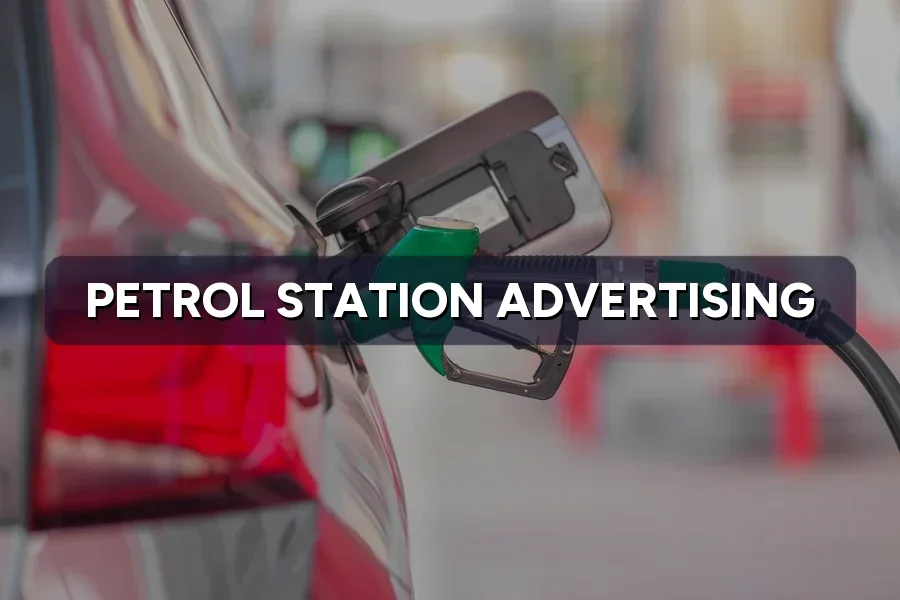
Every driver in Malaysia stops for fuel. For a few minutes they stand at the pump or queue at the counter with little else to look at. Petrol station advertising puts your brand in front of them then, often a few steps from where they can buy.
This guide covers petrol station advertising formats, indicative ringgit costs, audience size, the smallest test worth running and how to measure it. At ZenWeb, a Google Partner agency working with 500+ Malaysian businesses, we plan offline media next to search and social, so each ringgit is judged by the enquiries it brings in.
Forecourt screens are one part of the wider out-of-home market. For every format side by side, read our outdoor advertising costs guide. In the interview below, the head of a large US pump-screen network explains why the fuel stop holds attention.
Source video: Watch on YouTube
Quick Answer: Petrol station advertising places ads on the forecourt and inside the convenience store of fuel stations. In Malaysia the main formats are digital screens at the pump or canopy, pump-top and nozzle posters, banners on pillars and walls, screens and shelf displays inside the store, and sampling booths. Screens sell in time slots; posters and banners sell by the month.
Each format suits a different job:
Forecourt screens are one kind of place-based digital media, like condo and office lift screens and mall screens and roadshows. Google’s Display & Video 360 help page groups these as digital out-of-home: ads served on screens in public places.
Quick Answer: Indicatively, petrol station advertising in Malaysia costs RM 150–500 per station for a four-week forecourt screen cycle, RM 100–350 per in-store screen and RM 150–500 per station for pump-top posters, with minimums of 30–50 stations. Pillar banners run RM 300–1,500 per station a month and sampling about RM 500–2,000 per station a day. Rates vary by media owner.
| Format | How It Is Sold | Indicative Cost | Usual Minimum |
|---|---|---|---|
| Forecourt digital screen (15-sec spot in a loop) | Per station per 4 weeks | RM 150–500 | 30–50 stations |
| Pump-top or nozzle posters | Per station per month, all pumps | RM 150–500 | 20–50 stations |
| In-store screen near the counter | Per store per 4 weeks | RM 100–350 | 30–50 stores |
| Pillar banner or wall poster | Per station per month, incl. print | RM 300–1,500 | 1 month |
| Sampling or roadshow booth | Per station per day, space only | RM 500–2,000 | 2–3 days |
| Shelf strips and standees in store | Per store per month | RM 50–200 | Often tied to stocking the product |
| Production: 15-sec video spot | One-off | RM 500–3,000 | None |
Source: Indicative planning ranges estimated by ZenWeb, 2026, not published rate cards. Rates vary by media owner, fuel brand and station, and exclude SST.
Forecourt media owners rarely publish rate cards, so treat these as planning numbers and ask for a written quote. Four things move the price:
What else could RM 8,000 a month buy?
Before you book 40 forecourts, see how the same budget performs in local search and social ads. Compare ZenWeb’s digital marketing pricing →
Quick Answer: Malaysia had 40.77 million registered vehicles at 30 September 2026, of which 26.6 million were active, per a Transport Ministry reply reported by The Star. Almost 16 million active cars and 9.57 million active motorcycles must refuel regularly, which makes the petrol station one of the few places nearly every road user visits.
| Vehicle Type | Relative Size | Active Vehicles |
|---|---|---|
| Cars | Almost 16.0 million | |
| Motorcycles | 9.57 million | |
| Other vehicles (lorries, buses, vans and others) | About 1.0 million | |
| All active vehicles | 26.6 million (65.3% of 40.77 million registered) |
Source: Transport Ministry written parliamentary reply, as reported by The Star on 7 October 2026 (data as at 30 September 2026). The “other vehicles” row is ZenWeb’s calculation from the published totals.
The station networks are large too. PETRONAS says it runs more than 1,000 stations and about 900 Kedai Mesra stores, and Shell’s June 2025 release puts its count at more than 600 Shell SELECT stores in Peninsular Malaysia. BHPetrol, Caltex and Petron add more.
Two local details matter. Motorcyclists often pay at the counter, so in-store screens reach them better than pump screens. And since 30 September 2025, eligible Malaysians pay RM 1.99 a litre for RON95 under the BUDI95 programme, so subsidised fill-ups still happen in person at the station. Ask each media owner for transaction counts per station, just as you would judge cinema screens by admissions.
Quick Answer: Attention at a petrol station depends on how long people wait in each spot. Drivers spend roughly two to four minutes at the pump and one to three minutes in the store queue, while car wash and EV charging customers wait far longer. Short waits suit one bold message; longer waits suit QR codes and offers that need reading.
| Touchpoint | Typical Wait | Best Format | Message That Works |
|---|---|---|---|
| At the pump | 2–4 minutes | Pump screen, pump-top poster | Brand name and one benefit |
| Store counter queue | 1–3 minutes | In-store screen, shelf display | Product sold in the store, price offer |
| Air, water and vacuum bay | 3–5 minutes | Wall poster | Car care, tyres, workshops |
| Car wash | 5–15 minutes | Poster or screen in the waiting area | QR code to WhatsApp, longer offer |
| EV charging bay | 20–60 minutes | Poster or screen near chargers, where offered | Detailed offers, app downloads |
Source: ZenWeb planning view, 2026. Wait times are planning estimates from campaign experience, not measured survey data.
A 15-second spot may play only a few times during one pump wait, so keep creative simple: a large logo, five or six words and one offer. Save the QR code for the counter queue or the car wash. EV charging changes the maths, since a driver charging for half an hour has time to scan and read; ask media owners which charging sites carry ad space.
Quick Answer: Petrol station advertising in Malaysia suits brands that sell to drivers and riders: drinks and snacks sold in station stores, car care, tyres, workshops, motor insurance, telco plans, e-hailing and delivery recruitment, and food outlets along a busy route. It suits businesses that need repeated local reach. It suits complex B2B services less.
Forecourt ads fit well when:
They fit poorly if your offer needs explaining, you need leads this week, or your budget is under about RM 5,000. Start instead with Google Ads location targeting around your outlet. For drivers already on the road, Google Maps ads and Waze ads reach them in the navigation app instead of at the pump.
Quick Answer: You can test petrol station advertising in Malaysia from about RM 1,500 with a pillar banner at one station, or RM 4,000 with pump-top posters at ten stations near your outlet. A fair forecourt screen test across 30 stations costs about RM 9,000 for four weeks. A combined screen, in-store and sampling campaign runs about RM 40,000.
| Test Setup | Relative Budget | Indicative Budget |
|---|---|---|
| Pillar banner at 1 station, 1 month | RM 1,500 | |
| Pump-top posters at 10 stations near one outlet, 1 month | RM 4,000 | |
| Forecourt screens at 30 stations, 4 weeks, plus video | RM 9,000 | |
| In-store screens at 50 stores, 4 weeks, plus 6 sampling days | RM 18,000 | |
| Screens, in-store and sampling across 100 stations, 8 weeks | RM 40,000 |
Source: Illustrative model by ZenWeb, 2026, built from the indicative ranges above.
Many stations are dealer-run under a fuel brand. A single-station banner may be possible through the dealer, but brand rules still apply. Network media owners cost more but bring screens, scheduling and play reports. Run any test for at least four weeks and keep other ads steady. If you are launching a branch, our guide to new outlet opening marketing shows how to time local media around the opening.
Quick Answer: To book petrol station advertising in Malaysia, map the stations on your customers’ routes, then ask media owners and fuel brands which formats they sell there. Compare quotes per station, confirm brand and council rules, produce short creative that reads from a car, and set up a unique tracking code per station group. Allow two to four weeks.
Check price claims and promotions against our advertising law guide before the creative goes to print.
Quick Answer: Petrol station advertising builds repeated recall with drivers but cannot be clicked. Google Ads reaches people already searching, Meta Ads targets by area and interest, and SEO earns free search traffic over time. The best results come when forecourt ads create interest and online channels catch the search or message that follows.
A rider sees your workshop’s ad at the pump every Monday, then searches “tyre shop near me” when a tyre wears out. If you are not on that page, the forecourt ad helped a rival. Pair forecourt spend with:
On the road, compare digital billboard rates, our billboard versus digital ads breakdown and e-hailing car wraps. For commuters, see LRT and MRT advertising and bus wraps and panels. At home, connected TV ads and traditional TV reach the same households.
Want forecourt ads that lead to real enquiries?
We set up the search, social and tracking around your offline campaign so every scan and search gets counted. Plan it with ZenWeb’s digital marketing team →
Quick Answer: Measure petrol station advertising by giving each station group its own QR code or promo code, then counting scans, WhatsApp chats and sales against a four-week baseline. For products sold in station stores, compare sales at stations with your ads against similar stations without them. Play reports show delivery, not results.
Use more than one signal:
For softer signals, read how to measure brand awareness. To see where forecourts sit beside sponsored content such as native advertising, see every digital advertising channel compared.
Quick Answer: Petrol station advertising in Malaysia reaches drivers and riders at a routine stop, with tests from about RM 1,500 to RM 9,000. Pick stations on your customers’ routes, compare cost per station and plays per hour, track each station group with its own code, and pair the campaign with search and social ads.
Petrol station advertising works best as the first touch in a local plan, not the whole plan. Before you book, compare the cost with what search and social can do for the same money. A clear digital marketing budget makes that decision simple.
Indicatively, RM 150–500 per station for a four-week forecourt screen cycle, RM 100–350 per in-store screen and RM 150–500 per station for pump-top posters, with minimums of 30–50 stations. Rates vary by media owner.
Sometimes. A dealer-run station may rent banner space under the fuel brand’s rules. Screen networks usually sell packages of 30 or more stations.
Drinks and snacks sold in station stores, car care, tyres, workshops, motor insurance, telco plans, rider recruitment and food outlets on busy routes suit it best.
At least four weeks. Forecourt ads work through repeated sightings on weekly fuel stops.
Give each station group its own QR code or promo code, compare enquiries and sales with a four-week baseline, and check sales at stores with and without your ads.
Cite this page: ZenWeb (2026). Petrol Station Advertising Malaysia: Forecourt Screen Ads. https://zenweb.my/blog/petrol-station-advertising/
You may quote our data with this credit and a link. See our Terms of Use.
Not sure if forecourt ads suit your business?
Book a free 30-minute strategy session. We’ll map the stations on your customers’ routes, check your online presence and show you how to split spend between forecourt screens, search and social.
Get A Free Proposal
Complete the form and our team will contact you to discuss your goals. Let’s grow your business.
Chat with us on WhatsApp
Tell us a little about what you need. We'll open WhatsApp with your message ready to send.