

Share this post:
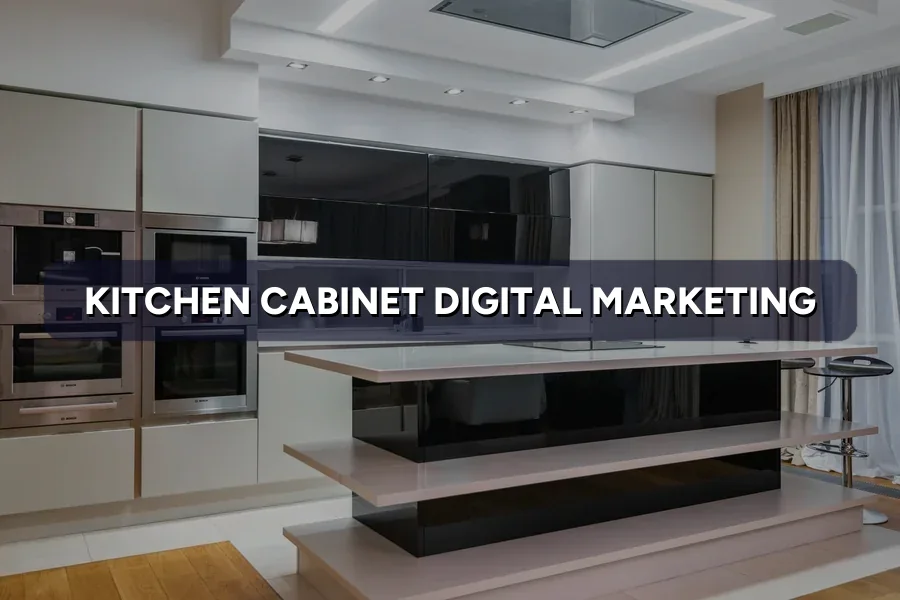
A couple collects the keys to a new unit in Setia Alam on a Saturday. By Sunday night they have opened eleven cabinet makers on their phones. Ten are pages of finished kitchens with no prices. The eleventh shows plywood at RM 330 per foot, aluminium at RM 450, a spec table, a factory address and a three-day 3D drawing turnaround. They book a site measurement with that one on Monday. The other ten never hear about the job.
This guide is for Malaysian cabinet makers and carpentry workshops — kitchen cabinet specialists, aluminium and plywood fabricators, whole-home carpentry contractors, and workshops chasing office pantry, retail fit-out or developer supply. It covers which channel feeds which kind of job, why a portfolio album cannot carry a quotation pipeline, and where CIDB registration sits in a buyer’s approval chain. Four original data sets follow.
ZenWeb runs digital marketing for cabinet makers across a Malaysian client base of 500+ accounts. The pattern repeats: the workshop with better joinery loses the job to the workshop whose pages answered the price question first. ZenWeb closes that gap.
Not sure what one signed cabinet job should cost you to win?
We size a monthly budget against your average job value and the months your installers are actually free. See our digital marketing pricing →
The demand is already searching. The question is whether your workshop is readable on the Sunday night the shortlist gets made.
Source video: Mac Frederick Momentum Digital on YouTube
Quick Answer: Cabinet work is a booked-ahead trade with a long shortlist stage. Homeowners compare six to twelve workshops before anyone visits a showroom, and that comparison happens entirely on pages. A workshop that cannot be priced online is filtered out before the first message is sent.
Reach is not the problem. Malaysia counted 30.7 million active social media user identities in October 2025, per DataReportal — but almost nobody commits RM 15,000 of carpentry from a feed alone.
Getting found nearby is where most workshops start — our guide to local SEO in Malaysia covers the groundwork, and why businesses quietly lose leads explains where the rest leak away.
Quick Answer: Buyers run a four-step filter — material and price research, shortlist, site measurement, then quotation comparison. Most cabinet makers only compete at step three, then wonder why every enquiry arrives already price-anchored to someone else.
Step four is where an unclear quotation loses a job it had already won — and speed matters just as much, as how fast you should follow up with new leads shows.
Quick Answer: Maps feeds repair and replacement work, Google Ads feeds dated renovation jobs, social feeds whole-home packages, and a trade page feeds designers and developers. Pick by the job type you actually want more of.
| Channel | Feeds | Speed |
|---|---|---|
| Google Business Profile | Repairs, door swaps, kitchen tops | Days |
| Google Ads | Dated full-kitchen and VP jobs | Days |
| Instagram, Facebook & TikTok | Whole-home packages, design-led buyers | Weeks |
| SEO | Every material and area query, compounding | Months |
| Trade page & referral | Designers, contractors, developer supply | Months |
Most workshops need two of these running properly rather than five running badly. In practice, digital marketing for cabinet makers starts with Maps plus one paid channel, then adds SEO once the material and area pages exist — which is how a managed digital marketing programme is normally sequenced.
Quick Answer: Cabinet makers rank on pages, not galleries. One page per material, cabinet type and service area gives search engines and AI assistants something specific to quote. A single “Our Projects” album gives them nothing to work with.
The page set that works is unglamorous, which is exactly why so few workshops build it:
Structure comes before blogging. Our SEO service builds this page set first, and tracking your lead sources tells you which page to build next.
Quick Answer: Google Ads earns its keep when the search carries a date and a budget — new-unit fit-outs, full kitchen renovations, commercial pantries. It performs badly on “kitchen cabinet design idea” traffic, which browses for months and buys elsewhere.
Split campaigns by job value, not by product name. A RM 900 door replacement and a RM 60,000 whole-home package should never share a budget, because the system will spend everything on the cheap one and hand you a lovely cost per lead.
Budget against a benchmark — see what Google Ads costs in Malaysia and our Google Ads pricing. Landing pages matter more here than bids, so start with seven landing page fixes.
Quick Answer: Facebook, Instagram and TikTok create cabinet demand rather than capture it. They work hardest on whole-home packages and design-led buyers, who decide over weeks while scrolling, not minutes while searching.
Carpentry has an unfair advantage on video: the work is satisfying to watch and impossible to fake.
Costs shift by season, so plan against real numbers — see Instagram ads cost in Malaysia and our Meta Ads pricing.
Posting finished kitchens daily but the calendar is still thin?
We audit where your cabinet enquiries actually come from and which pages are missing. Get a free Meta Ads and social review →
Quick Answer: A cabinet maker’s website has one job: let a stranger estimate their kitchen, check your materials and warranty, and book a site measurement in two minutes on a phone. Everything else is decoration.
The build list is short and non-negotiable:
Visits but no bookings usually points to a homepage that fails to convert, and what a website really costs in Malaysia sets the budget. Our web design service builds these as standard.
Quick Answer: Commercial and developer jobs die in procurement, not in the workshop. One page carrying your company registration, CIDB grade, deposit schedule, warranty terms and insurance lets a buyer approve you without a meeting.
Renovation and fit-out work sits under construction law, and larger buyers check it. Registration with the Construction Industry Development Board is mandatory for contractors carrying out construction work, and CIDB states that violating Section 25 of Act 520 carries a fine of not less than ten thousand ringgit and not more than one hundred thousand ringgit. If you hold a grade, publishing it is free credibility.
Put the following on one page and link it from every material page:
This is the page that gets forwarded internally, and the cheapest trust asset you will ever build — see how to add trust signals that convert.
Quick Answer: Google Business Profile is a cabinet maker’s highest-return asset and the one most often half-filled. A correct category, real factory photos, product entries with price bands and a steady review flow move you into the Maps top three.
Four things move the needle for a workshop specifically:
Start with setting up Google Business Profile properly, then work through ranking in the Google Maps top three.
Quick Answer: Cabinet content earns enquiries when it answers buying questions, not design questions. Price-per-foot explainers, material comparisons and renovation timelines pull buyers. Mood boards pull people who will never book a measurement.
The four content types that consistently convert for a Malaysian workshop:
If you are starting from zero, our guide to how one blog brings customers shows the mechanics without the fluff.
Quick Answer: The change is rarely more enquiries. It is better enquiries — fewer “how much per feet ah?” messages, more people who already know your material bands and lead time and are messaging to book a measurement.
| What changes | Before | After |
|---|---|---|
| First message | “How much kitchen cabinet?” | “18ft plywood, VP in October, Kajang” |
| Time per enquiry | Days of back-and-forth | Measurement booked same day |
| Job mix | Mostly small repairs and door swaps | Full kitchens and whole-home packages |
| Quiet months | Installers idle after the festive rush | Backlog carried across the dip |
Based on ZenWeb’s client sample of 500+ Malaysian SME accounts (2024–2026), the quality shift arrives before the volume shift, usually inside two months. Telling good leads from bad saves a lot of driving.
Quick Answer: A door replacement costs RM 67 to RM 127 in media. A developer supply account costs RM 4,295 to RM 8,173. Both can be profitable, and one shared budget guarantees the system spends almost everything on the small one.
| Job type | Cost per enquiry (RM) | Enquiry to measurement | Measurement to signed | Cost per signed job (RM) |
|---|---|---|---|---|
| Cabinet repair & door replacement | 18 – 34 | 61% | 44% | 67 – 127 |
| Kitchen top replacement only | 26 – 48 | 54% | 39% | 123 – 228 |
| Full kitchen, plywood | 41 – 79 | 46% | 31% | 288 – 554 |
| Full kitchen, aluminium | 55 – 104 | 42% | 28% | 468 – 885 |
| Whole-home carpentry package | 78 – 146 | 37% | 24% | 878 – 1,644 |
| Office pantry & retail fit-out | 96 – 182 | 33% | 19% | 1,531 – 2,903 |
| Developer bulk supply | 134 – 255 | 26% | 12% | 4,295 – 8,173 |
Source: ZenWeb-managed campaigns, Malaysian cabinet and carpentry accounts, 2024–2026.
Read the two middle columns, not the last one. Small jobs convert at 61% because the decision is immediate; developer supply converts at 12% because it is a procurement decision made over months. One campaign covering both hands nearly all the budget to door swaps — profitable, but it caps your average job value permanently. Splitting them takes an afternoon in Google Ads, and cost per lead by channel gives the wider comparison.
Quick Answer: Maps supplies 46% of repair work and 3% of developer supply. Designer and contractor referral supplies 47% of developer supply and 5% of repairs. The channel that feeds you depends entirely on the size of job you chase.
| Job type | Google Search | Google Maps | Social | ID & contractor referral | Repeat & word of mouth |
|---|---|---|---|---|---|
| Cabinet repair & door replacement | 21 | 46 | 7 | 5 | 21 |
| Kitchen top replacement | 33 | 27 | 9 | 14 | 17 |
| Full kitchen renovation | 38 | 14 | 19 | 17 | 12 |
| Whole-home carpentry package | 31 | 8 | 26 | 24 | 11 |
| Office pantry & retail fit-out | 44 | 6 | 8 | 29 | 13 |
| Developer bulk supply | 29 | 3 | 4 | 47 | 17 |
Source: ZenWeb client tracking, Malaysian cabinet and carpentry accounts, 2024–2026.
Two rows are worth arguing about. Whole-home packages come 26% from social, the only row where a feed pays for itself. Developer supply comes 47% from designer and contractor referral, which is why workshops chasing bulk contracts on Instagram wait a long time — that relationship is won with a trade page and a follow-up habit, and WhatsApp marketing in Malaysia is where the follow-up happens.
Quick Answer: A published price band per foot lifts enquiry-to-measurement conversion to 48%, against 16% for a photo album with “WhatsApp us for quotation”. Every detail that removes a question from the chat raises the share of enquiries that end in a visit.
| Detail published on the page | Relative conversion | Enquiry to measurement |
|---|---|---|
| Price band per foot by material | 48% | |
| Finished kitchens labelled with layout, material and price | 42% | |
| Material, hardware and warranty spec table | 38% | |
| Showroom or factory address with opening hours | 34% | |
| Stated 3D design turnaround time | 31% | |
| Company registration, deposit and warranty terms | 27% | |
| Photo album only, “WhatsApp us for quotation” | 16% |
Source: ZenWeb client tracking, Malaysian cabinet maker and carpentry pages, 2024–2026.
The bottom row is the default for most Malaysian workshops, and it costs roughly two-thirds of the site visits the same traffic could produce. None of the six details above need a rebuild — they need a decision to publish. Our web design team ships all six in the first fortnight, and landing pages that convert explains the layout logic.
Getting enquiries but very few site measurements?
We rebuild the material and pricing pages that decide it, then measure the change. See what a proper website costs →
Quick Answer: Cabinet demand runs to the festive and handover calendars, not the retail one. Enquiries peak in October as households race to finish before Chinese New Year, then collapse in February when nobody renovates during the festive month itself.
| Month | Enquiry index | Index (avg = 100) | Median weeks to installation |
|---|---|---|---|
| January | 94 | 5 | |
| February | 66 | 3 | |
| March | 82 | 4 | |
| April | 90 | 4 | |
| May | 100 | 5 | |
| June | 96 | 5 | |
| July | 104 | 6 | |
| August | 111 | 7 | |
| September | 126 | 8 | |
| October | 139 | 9 | |
| November | 117 | 8 | |
| December | 75 | 4 |
Source: ZenWeb client tracking, Malaysian cabinet and carpentry accounts, 2024–2026. Festive months shift yearly.
The backlog column explains the December collapse. Once lead time passes eight weeks, a December enquiry cannot be finished before Chinese New Year, so buyers stop asking rather than wait. That makes August and September the months your ads must be loudest, not October. Our guides to seasonal SEO planning and fixing a seasonal slump set the timing.
Quick Answer: Across ZenWeb’s home-improvement and fit-out client base (2024–2026), the pattern is a rising share of larger, better-qualified jobs rather than a spike in total messages — and a calendar that survives the post-festive dip.
These ranges hold across location and material specialty, though results vary with installation capacity. Budget context is in our digital marketing pricing, and marketing budgets by industry shows where home improvement sits.
Quick Answer: The expensive mistakes share one shape — making the buyer ask for information you could have published. Hidden price bands, unnamed hardware and a silent inbox on Sunday night cost more jobs than any rival workshop does.
Short-form video is worth doing properly rather than sporadically — TikTok marketing in Malaysia covers the realistic version for a small workshop.
Quick Answer: More cabinet buyers now start in an AI assistant. Assistants quote structured, specific pages — price per foot, hardware brands, warranty years, lead time — and skip vague ones entirely. Publishing plainly is the new ranking advantage.
Three shifts matter for a Malaysian workshop over the next two years:
The workshops that benefit are the ones with a page for every question. That is what an ongoing SEO programme quietly builds, month after month.
Quick Answer: Build a page per material, cabinet type and service area with real price bands and a stated lead time, publish your registration and warranty terms, split campaigns by job value, and advertise two months before the peak. The joinery was never the bottleneck.
Three moves carry most of the result. Restructure the site around materials, cabinet types and areas so search engines, procurement teams and AI assistants can read what you fabricate and by when. Publish price bands and hardware specs, because a buyer who cannot see either assumes the worst. Then close the reply gap — the fastest route to more signed jobs is answering while the shortlist is still open.
Done together, digital marketing for cabinet makers stops being a posting habit and becomes a full installation calendar. Our SEO service is usually where workshops see the compounding start.
Most workshops start between RM 2,000 and RM 6,000 a month across search, Maps and social, plus the website build. Budgets should flex with the calendar, rising from August so the peak arrives with capacity still open. Keep media cost per signed job under roughly 5% of your average job value.
Yes, at least a starting band per foot for each material. Hidden prices filter out serious buyers rather than tyre-kickers, because someone with a handover date simply moves to the workshop that showed a number. Published bands also cut the hours you lose quoting jobs you were never going to win.
Registration with CIDB is mandatory for contractors carrying out construction work in Malaysia, and renovation and fit-out work generally falls within that scope. Penalties for operating without it are significant. Check your own scope with CIDB directly, and if you hold a grade, publish it — commercial and developer buyers look for it before they shortlist you.
They do different jobs. Google catches people who already have a unit, a date and a budget, which suits full kitchens and commercial fit-out. Instagram and TikTok create demand for whole-home packages and design-led buyers. If you only have budget for one, start where your current signed jobs come from.
Google Ads and a properly filled Google Business Profile can produce booked measurements within the first two to four weeks. Material and area pages generally start ranking between month four and month eight. Trade and commercial accounts usually land around month four to six, once your registration and warranty page exists for procurement to read.
Ready to fill the installation calendar before the next peak?
Book a free 30-minute strategy session — we’ll review your site speed, your Google ranking and your material pages, then give you a concrete 90-day plan with realistic media cost per signed job by job type.
Complete the form and our team will contact you to discuss your goals. Let’s grow your business.



Meowketing Specialist
Online


























