

Share this post:
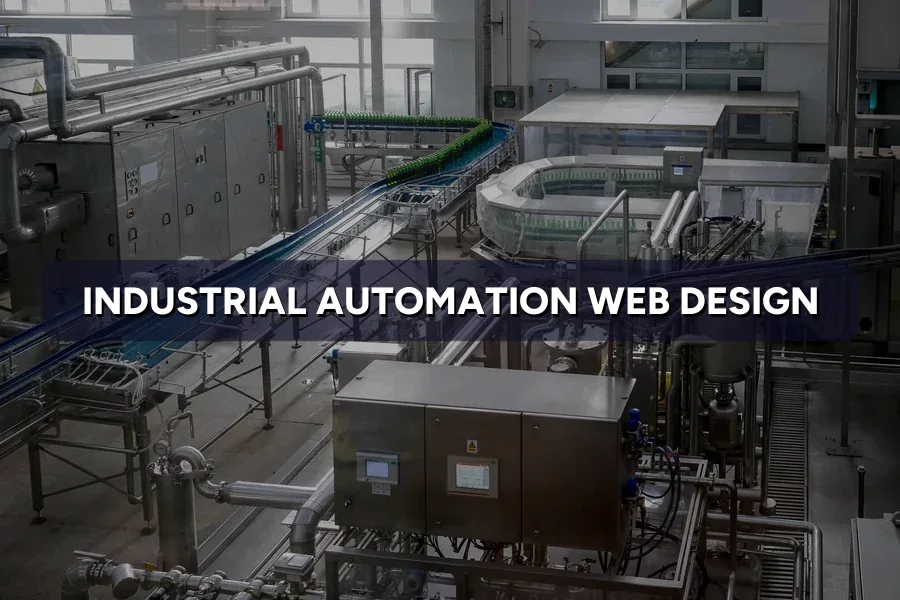
A Penang integrator rebuilt its website in 2024 and gained no traffic at all. Sessions stayed flat at roughly 900 a month. What changed was who filled in the form. Monthly enquiries fell from eleven to seven, and awarded projects went from one a quarter to one a month.
The old site had one Products page listing forty items. The new one had six solution pages, each with a cycle-time table and a two-minute clip of the line running in a customer plant. Fewer people enquired. The ones who did already knew what a palletising cell costs.
This guide is for system integrators, machine builders, control panel and PLC houses, and robotics, vision and warehouse automation suppliers selling into Malaysian plants.
ZenWeb builds web design for Malaysian B2B and industrial clients, and web design for automation firms repeats one pattern: sites lose projects at the shortlist stage, not the enquiry stage. A purchasing agent opens four integrator websites in four tabs and closes two within thirty seconds.
Getting enquiries that die after the first call?
We audit your solution pages, spec blocks and form fields against what a funded plant buyer actually checks. See our web design packages →
Before the page-by-page detail, a short primer on how a B2B site is put together.
Source: Ed Marsh on YouTube
Quick Answer: Three things, in this order: what you build, which plants you have built it for, and whether you can be visited. A plant engineer sorts real integrators from trading companies in about eight seconds. That read matters as much as anything in our channel overview for automation firms.
Most Malaysian integrator homepages open with a stock photo of a robot arm and a line about being a “total automation solution provider”. That sentence describes 200 companies and disqualifies none.
Behind the fold, remember three different people read the site, and only one of them buys. The engineer arrives first, usually months before any budget exists, as our guide to UI and UX design explains.
| Reader | What they came for | Page that serves them |
|---|---|---|
| Process / maintenance engineer | Can this handle my product, my cycle time, my footprint? | Solution-line page with a spec table |
| Purchasing executive | Are they registered, insured, safe and reference-checkable? | Company, safety and client-list pages |
| Plant GM / finance | What does it cost, what does it save, is there a grant? | Payback and ACA grant pages |
Integrators build the purchasing pages well, because tenders ask for them. The engineer pages and the payback pages are the missing two, and those are the two that start projects.
Quick Answer: Every solution line you sell needs its own URL, its own heading, its own spec table and its own enquiry form. A single Products page cannot rank, cannot be linked from a quotation email, and cannot be read on a phone. This is also the structural fix behind SEO for automation firms.
Split by what the plant is trying to solve, not by the hardware brand you stock. A food factory searches for case packing, not a robot model number.
Give every page the same eight blocks in the same order: what it does, throughput, footprint, products handled, platform, a plant photo, a reference line, then the form. That repetition lets an engineer compare two pages in a minute. Depth beats page count, as our must-have features checklist sets out.
Quick Answer: A two-minute clip of your line running in a real plant, with the cycle rate on screen, does more than any rendering or brochure. It answers feasibility, build quality and speed at once. Automation firms that publish line video see roughly a quarter of funded enquiries start on those pages.
Renderings read as marketing. Video of steel moving reads as evidence. That distinction is sharp in industrial buying and largely absent from Malaysian integrator sites.
No permissioned footage? Film your own factory acceptance test. An FAT clip in your workshop is yours to publish and proves the same three things.
Quick Answer: Publish ranges, not quotations. A band such as “RM 180,000 to RM 420,000, payback 14 to 26 months” filters out the unfunded without exposing your margin. Integrators who publish bands get fewer enquiries and a higher share that survive the first call, the same effect we see in Google Ads for automation firms.
Every project is bespoke, and the band still helps. A plant manager with RM 80,000 approved and a RM 300,000 need should learn that on your website, not on a site visit that costs you two engineer-days.
A two-input payback calculator is the strongest version of this, and it gives you a tracked conversion event well before the enquiry arrives.
Not sure which numbers are safe to publish?
We help Malaysian industrial clients set price bands and payback ranges that filter buyers without exposing margin. Talk to our web design team →
Quick Answer: Malaysian plants automate when the tax treatment works, so a dedicated grant page earns its place on an automation website. Explain the Automation Capital Allowance, the MIDA application, the SIRIM technical verification and the paperwork you supply — then link to the official pages rather than restating rules that change.
The Automation Capital Allowance lets qualifying companies claim up to 200 per cent on automation expenditure, capped at RM 10 million, and the incentive runs to 2027. MIDA approval and SIRIM technical verification are required first, per the MIDA Automation Capital Allowance guidelines.
MITI told the Dewan Rakyat that the incentive has drawn more than RM 1.8 billion in additional automation investment, across 609 approved projects. What belongs on your grant page is not tax advice, though. It is the list of documents a customer will ask you for.
Link the MITI Industry4WRD programme page for buyers still working out whether their upgrade counts as Industry 4.0. Never publish an eligibility promise of your own — state the process, point to the authority, offer to help assemble the file.
Quick Answer: Purchasing departments screen integrators on safety before they screen on price. A compliance page covering risk assessment, guarding standards, lockout procedure and your DOSH obligations removes the most common reason a shortlisted integrator gets quietly dropped.
This page is dull to write and gets read more often than your About page. In multinational plants it is usually the first thing forwarded to the EHS manager.
Publish the list even where details vary by project. A buyer scanning four integrator sites wants the one that thought about this before being asked, and trust pages of this kind do more work than most owners expect.
Quick Answer: Web design for automation firms runs RM 8,000 to RM 30,000 in 2026, depending on how many solution lines you sell and how much video and spec content you publish. Below RM 6,000 you are buying a brochure. Our Malaysian web design price breakdown covers the general market; the table below is automation-specific.
| Build tier | Typical range | What is included | Enquiries / month | Funded enquiries / month |
|---|---|---|---|---|
| Brochure refresh | RM 3,500 – 6,000 | 5–8 pages, stock imagery, one contact form | 2 – 4 | 0 – 1 |
| Working integrator site | RM 8,000 – 14,000 | 12–18 pages, one page per solution line, spec tables, RFQ form | 6 – 9 | 1 – 2 |
| Engineered site | RM 18,000 – 30,000 | 25–40 pages, line video, platform partner pages, grant hub, payback tool | 11 – 16 | 3 – 4 |
| Multi-plant / export site | RM 35,000 – 60,000 | Adds configurator, spare-part enquiry portal, English, Bahasa Malaysia and Chinese | 18 – 25 | 5 – 7 |
Source: Build ranges from ZenWeb quoting for Malaysian industrial clients; enquiry outcomes aggregated from ZenWeb-managed campaigns, Malaysia, 2024–2026.
The middle jump is the one worth paying for. Moving from a brochure to a working integrator site roughly triples enquiries, and one to two funded enquiries a month already fills a small team’s survey diary. The top tier only pays back if you sell across borders or run several plants.
Quick Answer: Solution-line pages, line-video pages and the grant hub together take about a quarter of site traffic and produce three-quarters of funded enquiries. The homepage and the blog take almost half the traffic and produce very little, which is why traffic-only reporting misleads automation owners.
| Page type | Share of funded enquiries | Share of sessions | Funded share | Index |
|---|---|---|---|---|
| Solution-line pages | 19% | 34% | 179 | |
| Line video and project pages | 11% | 24% | 218 | |
| Grant and payback hub | 8% | 17% | 213 | |
| Home page | 22% | 9% | 41 | |
| Platform partner pages | 9% | 8% | 89 | |
| Safety and compliance | 6% | 5% | 83 | |
| Blog, careers and about | 25% | 3% | 12 |
Source: Aggregated from ZenWeb-managed campaigns, Malaysia, 2024–2026. Index of 100 means the page type produces funded enquiries in proportion to its traffic.
Blog, careers and about pages pull a quarter of sessions and produce almost nothing. That is fine — they recruit technicians and reassure purchasing. The mistake is judging a rebuild on their traffic.
If the homepage is your top landing page by a wide margin, the solution pages are missing or unfindable, which is the usual pattern behind sites that get traffic but no leads.
Want to know which of your pages produce funded enquiries?
We map page-level enquiry quality for Malaysian industrial sites, then rebuild the three that matter. Compare our web design plans →
Quick Answer: Six fields, not sixteen. Ask for the product being handled, the target throughput, the plant location and the decision timeline. Those four answers tell you whether the enquiry is worth a site survey, and they cost you almost nothing in completion rate.
Automation firms make one of two mistakes: a name-and-email form nobody can qualify, or a twenty-field form nobody completes. Six fields sit between them.
Add a WhatsApp button beside the form. Malaysian plant engineers reply on WhatsApp mid-shift when they will not open email, and our WhatsApp button guide covers the setup.
Quick Answer: Most of your traffic is on a phone, often on plant Wi-Fi or mobile data. Google’s Core Web Vitals guidance puts a good Largest Contentful Paint at 2.5 seconds; past that, enquiry rate on automation sites falls faster on mobile than desktop, and datasheet downloads collapse.
Mobile phone usage in Malaysia reached 99.6 per cent of individuals in 2025, per DOSM, and industrial buyers are no exception. On the automation sites we manage, roughly 64 per cent of sessions are mobile, and the first visit is almost always mobile even when the enquiry later arrives from a desktop.
| LCP band | Mobile enquiry rate | Desktop enquiry rate | Datasheet download rate | Mobile bounce |
|---|---|---|---|---|
| Under 2.0s | 3.8% | 4.6% | 22% | 38% |
| 2.0 – 2.5s | 3.1% | 4.1% | 19% | 44% |
| 2.5 – 4.0s | 1.9% | 3.4% | 12% | 58% |
| Over 4.0s | 0.8% | 2.2% | 5% | 71% |
Source: Aggregated from ZenWeb-managed campaigns, Malaysia, 2024–2026. Thresholds per Google Core Web Vitals guidance.
The desktop column barely moves. The mobile column falls by nearly 80 per cent across the same range, which is how a site that feels fine in the office still loses most of its first-visit engineers.
The culprits are usually uncompressed plant photography, self-hosted video and a full-resolution partner logo slider. Fixing those three moves LCP more than changing host does, and our website speed guide covers the rest. Test on a phone on mobile data inside a plant, not on office fibre, and our mobile-friendly checklist explains the rest of the small-screen job.
Quick Answer: Enquiry volume usually dips for two to three months, then climbs. Awarded projects lag by six to nine months because the capex cycle is slow. Automation owners who judge a rebuild at ninety days almost always judge it during the dip, the same trap we describe in Meta Ads for automation firms.
| Month | Organic sessions | Enquiries | Site surveys | Awarded projects (cumulative) |
|---|---|---|---|---|
| Month 0 (old site) | 640 | 11 | 2 | 0 |
| Month 2 | 580 | 6 | 3 | 0 |
| Month 4 | 790 | 8 | 5 | 1 |
| Month 6 | 1,110 | 10 | 6 | 2 |
| Month 8 | 1,460 | 13 | 8 | 4 |
| Month 10 | 1,900 | 15 | 9 | 7 |
| Month 12 | 2,320 | 17 | 11 | 11 |
Source: Aggregated from ZenWeb-managed campaigns, Malaysia, 2024–2026. Figures represent a typical mid-sized Malaysian integrator moving from a brochure site to an engineered site.
Month two is the part owners hate. Enquiries almost halve as the spec tables and price bands filter out the component shoppers who used to fill the form. Site surveys rise in the same window, which is the signal that matters.
By month twelve the ratio is the real change: eleven enquiries to two surveys becomes seventeen to eleven. Check the signs a rebuild is genuinely due before committing, so the dip is expected rather than alarming.
Quick Answer: Web design for automation firms fails the same five ways: a single Products page, no published throughput figures, self-hosted video that kills mobile speed, a form that asks nothing useful, and no grant page. Each costs shortlist places rather than enquiries, so they go unnoticed for years.
Fix them in that order — the first two change enquiry quality within a quarter. Our pre-approval checklist is worth a read before you sign anything off.
Quick Answer: Web design for automation firms is about giving three different readers the page each of them came for. Solution pages with real numbers, video of the line running, a grant hub, and a form that asks what the machine has to do. Everything else is decoration.
The Penang integrator did not need more traffic. It needed its eleven monthly enquiries sorted before they reached a human. Start with the solution pages, add the video, then the grant hub. In web design for automation firms, speed and language work come after, once the structure is right.
Quick Answer: The five questions Malaysian integrators ask most before commissioning a rebuild: what it costs, how many pages, whether to publish prices, whether the ACA grant needs its own page, and how long before the site produces projects.
Web design for automation firms costs between RM 8,000 and RM 30,000 for a site that works, depending on how many solution lines you sell and whether you publish video and spec tables. Below RM 6,000 you are buying a brochure.
Usually 15 to 40 — one per solution line, plus safety, grant, payback, company and contact pages. Fifteen detailed pages outperform sixty thin product listings.
Publish ranges by solution line, not quotations. A band with a payback estimate filters out unfunded enquiries before they cost you a site survey, while keeping your margin private.
Yes. The incentive allows up to 200 per cent on automation expenditure, capped at RM 10 million, and needs MIDA approval plus SIRIM verification. A page explaining the documents you supply wins projects against integrators who leave the paperwork to the customer.
Enquiries dip for two to three months, site surveys rise from month four, and awarded projects follow from month six. Judge it at six to nine months, in line with the capex cycle.
Ready for a website that fills the survey diary, not the inbox?
Book a free 30-minute strategy session. We review your solution pages, spec content and enquiry form, then give you a build plan with realistic funded-enquiry targets for your solution lines.
Complete the form and our team will contact you to discuss your goals. Let’s grow your business.



Meowketing Specialist
Online


























