

Share this post:
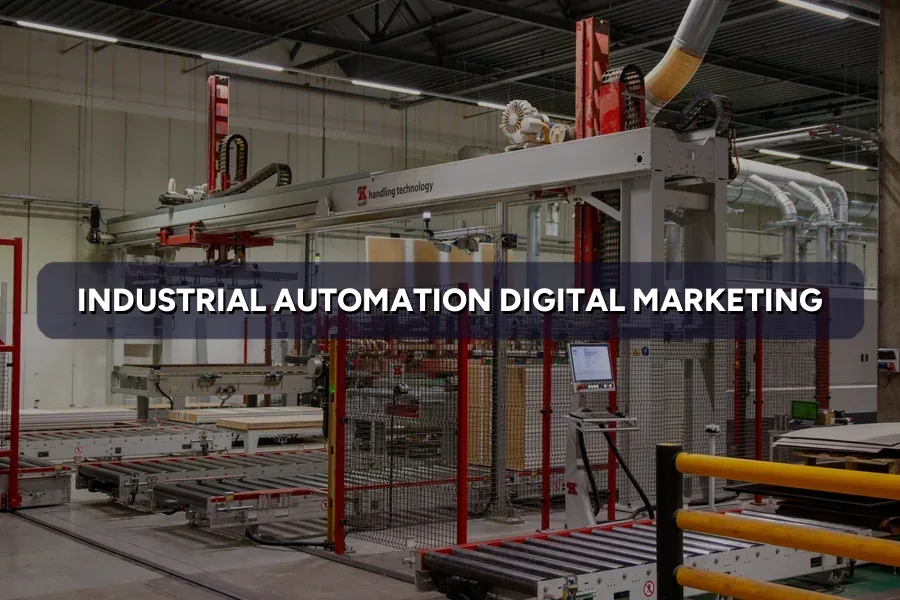
A plant manager in Senai has RM 420,000 approved for a palletising cell and eleven weeks before the shutdown. He opens nine Malaysian integrator websites. Seven show a robot arm and a contact form. Two publish project bands and a list of commissioned lines. Those two get the layout drawing.
This guide is for Malaysian system integrators, panel builders, machine vision specialists, conveyor firms, SCADA and MES integrators and robotics distributors. Four original data sets follow.
ZenWeb runs digital marketing for automation firms across 500+ Malaysian accounts. Most have the engineers and the references. What they lack is a page a technical buyer can screen in two minutes. ZenWeb builds it.
Not sure what an automation campaign should cost?
We size it against your solution mix and project value. See our digital marketing pricing →
Capital is not the problem. MIDA approved RM 131.3 billion of manufacturing investment across 1,354 projects in 2025, with machinery and equipment taking RM 11.0 billion. Visibility is.
Source video: Marketing for Manufacturers: The Tactics Driving Real Growth on YouTube
Quick Answer: Because the buyer changed. Automation used to be sold by a sales engineer over lunch and a plant visit. It is now scoped by a process engineer who has read six supplier sites before anyone picks up a phone.
The incentive architecture moved too. The New Incentive Framework took effect on 1 March 2026, rewarding automation and upskilling outcomes rather than volume. Buyers now ask what your cell does to their headcount ratio.
Quick Answer: In five steps, and project size is the filter at step two. Engineers search the problem, check whether your typical job matches their budget, ask two or three for a figure, book a site survey, then award a small first phase.
Quick Answer: Search ads for immediate enquiry volume, SEO on application pages for compounding work, LinkedIn for plant and engineering decision makers, Meta for retargeting and hiring, and the website as the machine all four feed. Start with the first two.
| Channel | Best for | Speed | Monthly spend |
|---|---|---|---|
| Google Search Ads | Application and equipment queries | Days | RM 1,500–4,000 |
| SEO on application pages | Compounding enquiries, AI citations | 5–9 months | RM 1,800–3,500 |
| Plant, engineering and procurement leads | Weeks | RM 1,000–3,000 | |
| Meta Ads | Retargeting and technician recruitment | Days | RM 500–1,500 |
| Website and technical content | Converting everything above | One-off build | RM 6,000–20,000 |
Sequencing beats the mix. Search ads pay back inside two quarters and show which applications sell; SEO then targets those. Our note on search ads on long B2B cycles covers attribution when the order lands months later.
Quick Answer: Build one page per application, not one page per brand you distribute. A firm with twenty application pages carrying throughput, payload and footprint out-ranks a competitor with a single “Solutions” page every time.
Cross-link them, so a glove manufacturer on the vision page finds the case packing page. The entity logic behind SEO in Malaysia applies; here the entities are applications and platforms.
Quick Answer: Bid on the application plus a qualifier — system, integrator, supplier, cost, Malaysia. Never bid on “automation” alone. That word pulls in marketing-automation buyers, home automation shoppers and test-automation job seekers.
Your negative list does more work than your bid strategy. Block home automation, marketing automation, RPA, course and jobs terms, or roughly a third of spend leaks to people who will never buy a cell. Our cost per lead breakdown shows what a clean account costs.
Quick Answer: They do two different jobs. LinkedIn reaches the engineering manager, plant manager and procurement lead who sign the requisition. Meta is a retargeting and recruitment channel, not a place to sell a cell cold.
On LinkedIn, sell commissioned outcomes rather than capability. Cycle time before and after, OEE points recovered, operators redeployed rather than retrenched. Job-title targeting for production, engineering and maintenance roles at food, glove and electronics manufacturers stays affordable here. Our guide to LinkedIn B2B lead generation covers audience sizing.
On Meta, thirty seconds of a running cell beats any brochure, and it is where you hire the technicians who commission it. Treat it as reinforcement for people who already saw your application pages.
Quick Answer: The site needs four things a brochure lacks: an application page per problem you solve, published project bands, a commissioned reference list with real numbers, and a site-survey request that reaches an engineer the same day.
Application pages plus a reference library cost well above a brochure site — our website cost guide sets out the bands.
Website losing buyers at the project size question?
We rebuild integrator sites around application pages, published bands and a reference library that answers before the call. Talk to our Malaysian team →
Quick Answer: Three things: whether you have delivered under a grant claim, whether your machine designs clear DOSH, and whether your panels satisfy the buyer’s own auditor. Publish each as page text, not as a certificate in a downloads folder.
Write the standards you design to into page text, numbers included. Procurement searches the standard, not your name.
Quick Answer: Local search matters more here than in most B2B categories, because response time is part of the specification. A glove plant in Kuala Langat will not wait a day for an engineer from Johor when a line is down.
Set the Google Business Profile to an engineering or automation category rather than “wholesaler”, list every state you cover with a callout response time, and post commissioning photographs monthly. Reviews from named plant customers carry weight, because buyers worry about after-sales support more than price.
Cluster geography decides where the work is. MIDA recorded 83 projects worth RM 11.3 billion in Pulau Pinang’s electrical and electronics cluster in 2025. Publish a page per cluster you service, with the response time you commit to. Mechanics match any local SEO setup in Malaysia.
Quick Answer: Teach production managers how to scope automation. Payback worksheets, cycle-time explainers, honest posts about which lines will never justify a robot. Telling a buyer not to automate is the cheapest trust you can buy.
Most people scoping their first cell are guessing. They do not know why a vision system false-rejects on a shiny surface, or why changeover time destroys payback on a low-volume line. Content answering that ranks well and half-qualifies the enquiry.
A commissioning engineer explaining a failure on camera beats any capability video, and automation is visual enough to film cheaply. Pair it with the Malaysian B2B marketing playbook so content feeds a pipeline, not an audience.
Quick Answer: The change is rarely more enquiries. It is fewer wasted site surveys. Firms that publish project bands and payback figures see volume rise modestly while out-of-scope enquiries fall by roughly two thirds.
| Measure | Before | After 6–12 months |
|---|---|---|
| Qualified enquiries per month | 3–6, mostly referral | 14–19, mostly search |
| Enquiries outside scope | Around 52% | Under 15% |
| Budgetary quote turnaround | 6–10 working days | Under 48 hours |
| Expansion share of revenue | Around 48% | Around 71% |
Ranges come from ZenWeb’s client sample of Malaysian automation and system integration accounts, 2024 to 2026. The expansion figure matters most: acquisition cost only pays back across phase two and phase three.
Quick Answer: Media cost per won project runs from about RM 135 for sensor and retrofit work to RM 3,520 for a turnkey line. Conversion falls as the engineering burden rises, but two-year account value climbs far faster than acquisition cost does.
| Solution line | Cost per enquiry (RM) | Enquiry to project | Cost per won project (RM) | Median first project (RM) | 24-month account value (RM) |
|---|---|---|---|---|---|
| Sensors, instrumentation and retrofit parts | 31 | 23% | 135 | 18,000 | 96,000 |
| Control panel build and wiring | 46 | 19% | 242 | 34,000 | 178,000 |
| Machine vision and inspection cells | 68 | 15% | 453 | 82,000 | 340,000 |
| Conveyor and material handling lines | 79 | 13% | 608 | 145,000 | 520,000 |
| Robotic pick-and-place cells | 94 | 11% | 855 | 210,000 | 690,000 |
| SCADA, MES and IIoT integration | 112 | 9% | 1,244 | 165,000 | 880,000 |
| ASRS and warehouse automation | 138 | 7% | 1,971 | 480,000 | 1,240,000 |
| Turnkey production lines | 176 | 5% | 3,520 | 1,150,000 | 2,400,000 |
Source: ZenWeb client tracking, Malaysian automation and system integration accounts, 2024–2026.
Note the sensor row. Cheapest to win, smallest job — but whoever supplied a plant’s encoders and safety relays gets asked to quote the palletiser eighteen months later. Retrofit work is the entry point, not a distraction.
Quick Answer: Decisively. Firms publishing nothing get 11.6 enquiries per thousand sessions, but 52% fall outside what they can deliver. Publishing size bands, payback and a commissioned reference list cuts volume to 7.3 and lifts enquiry-to-site-survey from 14% to 41%.
| What the site publishes | Enquiries per 1,000 sessions | Outside scope | Enquiry to site survey | Engineering hours per won project |
|---|---|---|---|---|
| Neither project size nor payback | 11.6 | 52% | 14% | 38 |
| Project size bands only | 9.4 | 27% | 23% | 26 |
| Bands plus typical payback period | 8.1 | 15% | 33% | 18 |
| Bands, payback and commissioned reference list | 7.3 | 8% | 41% | 12 |
Source: ZenWeb client tracking, Malaysian automation and system integration accounts, 2024–2026.
Per thousand sessions: publishing nothing produces 1.6 site surveys and burns 38 engineering hours per project won. Publishing everything produces 3.0 surveys at 12 hours each. Protecting your numbers costs triple the engineering effort for half the work.
Quick Answer: Qualified enquiries climb cheaply to about RM 2,800 a month, where each extra one costs roughly RM 300 in media. Past RM 4,500 the marginal cost passes RM 550, and your engineering desk becomes the bottleneck rather than budget.
| Monthly media spend | Qualified enquiries | Per month | Cost per extra enquiry (RM) | Total quoted value (RM) |
|---|---|---|---|---|
| RM 0 (referral only) | 4 | — | 268,000 | |
| RM 800 | 8 | 200 | 536,000 | |
| RM 1,600 | 12 | 200 | 804,000 | |
| RM 2,800 | 16 | 300 | 1,072,000 | |
| RM 4,500 | 19 | 567 | 1,273,000 | |
| RM 7,000 | 21 | 1,250 | 1,407,000 | |
| RM 11,000 | 22 | 4,000 | 1,474,000 |
Source: ZenWeb client tracking, Malaysian automation accounts, 2024–2026. Quoted value modelled at RM 67,000 per qualified enquiry.
Zero to RM 2,800 buys twelve extra enquiries at about RM 233 each. RM 7,000 to RM 11,000 buys one, at RM 4,000. Compare against the wider Malaysian marketing budget benchmarks before committing to the top tier.
Quick Answer: September is strongest at 10.1% of annual enquiry volume; February is weakest at 5.9%. Automation demand follows the capital budget calendar, not consumer seasons, so the autumn peak is next year’s capex being scoped.
| Month | Share of annual enquiries | Enquiry share | Order value share | Cost per enquiry (RM) |
|---|---|---|---|---|
| January | 8.4% | 7.1% | 71 | |
| February | 5.9% | 5.2% | 104 | |
| March | 7.8% | 8.4% | 78 | |
| April | 8.1% | 8.7% | 75 | |
| May | 8.6% | 8.9% | 71 | |
| June | 8.3% | 8.5% | 73 | |
| July | 8.9% | 8.8% | 68 | |
| August | 9.2% | 9.0% | 66 | |
| September | 10.1% | 9.6% | 59 | |
| October | 9.7% | 10.4% | 62 | |
| November | 8.8% | 9.9% | 69 | |
| December | 6.2% | 5.5% | 98 |
Source: ZenWeb client tracking, Malaysian automation accounts, 2024–2026.
This is a budget calendar, not a festival calendar. Enquiries peak in September and October while plants scope next year’s capex, orders land once the budget clears, and February and December go quiet for the shutdown and the year-end freeze — when cost per enquiry hits RM 104 and RM 98.
Ready to put these benchmarks to work?
We compare your cost per won project against this data and show which solution line is subsidising the rest. Compare our SEO plans →
Quick Answer: Across ZenWeb’s automation and system integration accounts between 2024 and 2026, the pattern is fewer wasted site surveys, faster quotes, and a shift from one-off cells to multi-phase programmes with the same plant.
Quick Answer: The failures are administrative, not creative. Firms hide their work behind client confidentiality, call themselves a “total automation solutions provider”, refuse to publish project ranges, and take a week to return a figure a rival sent in a day.
Quick Answer: Three shifts matter: engineers asking AI assistants to shortlist integrators, incentives rewarding measurable outcomes rather than spend, and buyers expecting an indicative figure online instead of a discovery call.
Quick Answer: Three moves carry most of the result: publish project bands and commissioned numbers on a page per application, run search ads on application-plus-qualifier terms, and return a budgetary figure inside forty-eight hours. Everything else is refinement.
Effective digital marketing for automation firms is not a rebrand. It is a project list turned into pages, a budget range turned into a number, and a figure returned before the engineer finishes their shortlist. See how our digital marketing service works first.
Between RM 1,600 and RM 4,500 a month across search ads and application-page SEO suits most single-office integrators. Return peaks around RM 2,800 — the point to check whether your engineering desk can keep up, not to add budget.
Yes, as bands rather than one figure. A retrofit and a turnkey line sit in very different ranges, and showing both removes buyers who were never going to proceed. Enquiry-to-site-survey rate roughly triples when bands and payback are published.
Yes, provided you bid on applications and qualifiers rather than the word “automation”. A RM 90 click is cheap against a pick-and-place account worth RM 690,000 over two years. “Automation” alone brings software buyers and job seekers.
Publish commissioned numbers so enquiries arrive pre-qualified, then make phase two effortless with retained documentation, a spares list and a named support engineer. Expansion revenue decides whether acquisition cost pays back, and it responds to speed more than spend.
Search ads produce enquiries within days, though quality takes a month of negative keywords to settle. Application pages usually rank between month five and nine. Because capex cycles are long, the first search-sourced project often signs around month eight.
Ready to grow your automation business?
Book a free 30-minute strategy session — we’ll review your application pages, your Google ranking and your competitors, then give you a 90-day plan with realistic cost-per-enquiry and pipeline targets.
Complete the form and our team will contact you to discuss your goals. Let’s grow your business.



Meowketing Specialist
Online


























