

Share this post:
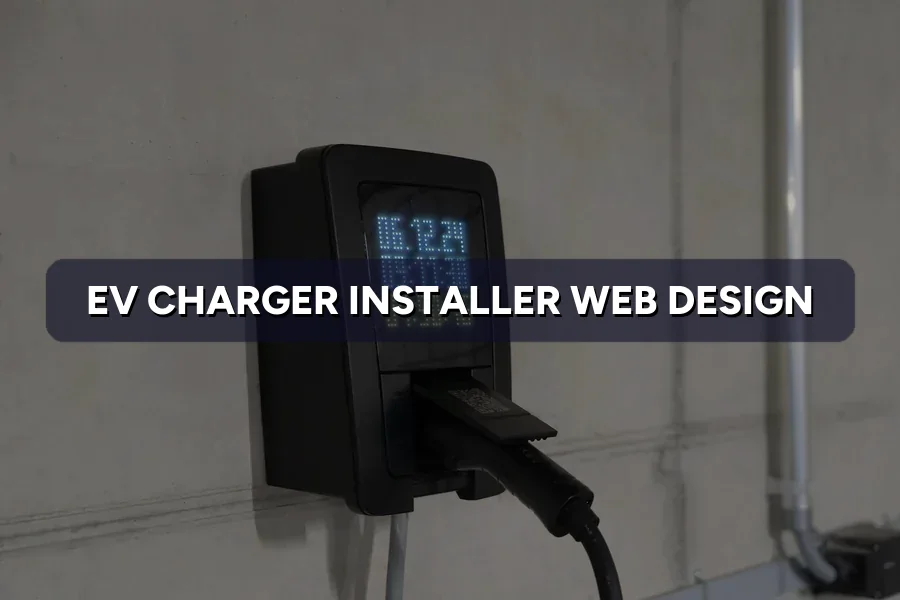
A buyer signs for an EV in Cheras on a Saturday. Delivery is in five weeks. By Sunday night she is on her phone, searching for someone to put a charger on the wall of her porch before the car turns up.
She has three questions and very little patience. How much, all in. Will my house even take it. Who is allowed to touch the DB. If the homepage opens with a stock photo of a white EV on a coastal road and the word “sustainable”, she is gone before the second screen loads.
ZenWeb builds and rebuilds trade websites across 500+ Malaysian client accounts. The demand is real: Malaysia gives individuals income tax relief of up to RM 2,500 on EV charging facilities from YA 2022 to 2027, which puts a deadline and a receipt into every home enquiry. The constraint is a page that converts that buyer into a booked site survey.
This guide covers the homepage, the load-check page, price bands, the enquiry form, the three buyer paths, ST compliance, four datasets, speed, and the mistakes that quietly hand jobs to the next installer. The video below covers the lead logic these pages sit on.
Source video: PromoSEO on YouTube
Quick Answer: An EV charger buyer arrives with a delivery date, not a wishlist. Web design for EV charger installers should answer installed price, phase requirement and ST certification inside the first screen, because the whole decision is being made against a car that is already on its way.
Most EV charger websites are written for someone browsing the idea of going electric. That person is not the buyer. The buyer has signed, paid a booking fee, and now has a hard date on the calendar.
That deadline changes what counts as good design. Lead time is a headline, not a footnote — “site survey in 3 days, installed within 10” beats any tagline on the page. The phase question belongs above the fold, because she has already been told her house “might need three-phase” and has no idea what that means. And the photos have to prove you have wired a porch like hers, not a shopping mall.
The SEO guide for EV charger installers covers how she found you. This one covers whether the page keeps her.
Not sure what your current site does with those visitors?
We rebuild trade websites around one measurable action — the booked site survey. See how our web design service works →
Quick Answer: Good web design for EV charger installers puts five things above the fold: the charger ratings you install, an all-in installed price, a one-line answer on single-phase versus three-phase, your ST registration, and a WhatsApp button. A logo carousel of charger brands is not one of them.
Above the fold on a phone is roughly one thumb-length. Spend it on what the buyer is actually collecting.
The general must-have features for a Malaysian business website still apply. The installed price and the phase line are what separate an installer’s site from a charger reseller’s catalogue.
Quick Answer: Give the supply question its own page. TNB’s own guidance says a single-phase supply carries loads up to 10kW and anything above that needs three-phase, and only TNB can approve the upgrade. Explaining that plainly converts better than any gallery on the site.
This is the question that stalls the enquiry. She has been told her house “may need an upgrade”, has no idea what it costs, and is scared of a five-figure surprise. Almost no installer website answers it.
Write the page in the order the work actually happens:
Written well, this page does the qualifying for you. It also doubles as a trust signal that works on a first visit, because it is the only page on the site that admits some houses cost more.
Quick Answer: Publish an installed price with a stated cable allowance, not the bare hardware price. Hardware alone is the number every reseller already shows, and it is the number that produces an angry phone call when the final quote lands 60% higher.
The usual objection is that the installer down the road will undercut you. That installer already knows your rate. The buyer is the only person who does not, and she is comparing three quotes this week.
The trap here is the unit. A hardware-only price sets an expectation you cannot meet once cable, trunking and breaker are added. Publish the way the job is scoped:
Then list what moves the number: cable distance, whether the run is surface or concealed, spare ways in the DB, and the car’s onboard charger limit. That turns a price page into a qualifying page, which is exactly what landing pages that convert do.
Quick Answer: Eight fields, each used by whoever prices the job: car model, property type, parking arrangement, rough distance from DB to the bay, address, target date, preferred charger rating, and a photo of the distribution board. Drop the open message box.
An open text box costs you two days. You ask for the car model, she replies that evening, you ask how far the porch is from the meter board, and by the third message someone else has quoted her.
Every field should shorten the quote, not lengthen the form — the same logic behind quote request forms that filter out tyre-kickers. If eight fields feels heavy, a multi-step form splits it into three light screens, and a pre-filled WhatsApp button carries the car model into the first chat.
Quick Answer: A working installer site with charger pages, a load-check page and an eight-field form runs RM 6,500 to RM 10,500. Adding the strata and commercial paths takes it to RM 12,000 to RM 19,000. Below RM 3,800 you are buying a product brochure with no quote path.
| Tier | Build cost | What it includes | Build time |
|---|---|---|---|
| Product brochure | Under RM 3,800 | Home, about, charger grid, brand logos, contact form | 1–2 weeks |
| Quote-path build | RM 6,500–10,500 | Charger pages by rating, installed price bands, load-check page, 8-field form with DB photo upload, 15 captioned installs | 5–7 weeks |
| Three-path build | RM 12,000–19,000 | Plus strata and commercial pages, condo-by-name pages, sub-metering FAQ, tracked WhatsApp | 8–12 weeks |
| Network operator | RM 22,000–40,000 | Plus site-feasibility form, station locator, host-partner page, billing and tariff FAQ, bilingual build | 13–20 weeks |
Source: ZenWeb quoted build bands for Malaysian electrical and installation trades, 2024–2026.
Six or seven signed home installations cover the middle tier. That is the honest test of the budget, and the same arithmetic sits behind our breakdown of what web design really costs in Malaysia.
Quick Answer: A homeowner needs an installed price and a DB photo upload. A condo owner needs the JMB approval and sub-metering answer. A commercial site needs load capacity, ST licensing for public charging and a payback estimate. One path cannot serve all three.
Most EV charger websites are built entirely for the first buyer. The other two are worth far more per job and they leave silently.
These are the visitors your Google Ads campaigns for EV charger installers pay most to reach, so a homeowner-only homepage wastes the click.
Have the technical knowledge but nowhere to put it?
We turn installer know-how into the pages that win the quote instead of sitting in a WhatsApp thread. See our web design pricing →
Quick Answer: Put ST registration on the page, not in a PDF nobody opens. Electrical installation work in Malaysia must be done by a registered contractor and competent person, and buyers increasingly check. Name yours, state the wall box approval, and say who issues the test report.
Compliance copy is usually written as a badge. It works far better as an answer to what she is actually worried about: an unsafe charger, a voided insurance claim, and a wall box nobody will service in three years.
Four things belong on the page. Your registration under the Energy Commission’s EVCS guidance, stated plainly. The ST-SIRIM approval status of the wall boxes you fit. The test report handed over at completion. And the warranty split between hardware and workmanship, with what a call-out costs after year one. Buyers are doing what our guide to reading a portfolio before you pay describes — checking the work is really yours, which captioned installs prove and a brand logo strip never will.
Quick Answer: Eight, with a DB photo upload. Three fields fill in fastest, but only 16% of those enquiries can be quoted without a follow-up. Eight fields still complete at 54%, are survey-ready four times out of five, and lift the average quoted value from RM 5,200 to RM 11,800.
| Form configuration | Completion rate | Quotable without follow-up | Median hours to first quote | Avg quoted value |
|---|---|---|---|---|
| 3 fields (name, phone, message) | 71% | 16% | 26 hours | RM 5,200 |
| 6 fields (adds car model, property, bay) | 63% | 44% | 14 hours | RM 7,600 |
| 8 fields + DB photo upload | 54% | 81% | 5 hours | RM 11,800 |
| 12+ fields (full electrical checklist) | 29% | 85% | 4 hours | RM 12,400 |
Source: aggregated from ZenWeb-managed EV charging and electrical installation websites, Malaysia, 2024–2026.
Past eight fields you buy almost no extra clarity and lose a quarter of the enquiries. The jump that matters sits between three and eight: the car model, the cable distance and the DB photo. If a long contact form worries you, split it rather than shorten it.
Quick Answer: WhatsApp carries 61% of EV charger enquiries but the smallest average job at RM 6,300. Email through the commercial page carries 5% and averages RM 96,000, because that is where car park and fleet work arrives. Collapsing everything into WhatsApp removes your largest contracts.
| Channel | Share of enquiries | Survey-ready on arrival | Avg signed contract | Close rate |
|---|---|---|---|---|
| WhatsApp button | 61% | 23% | RM 6,300 | 26% |
| Enquiry form | 22% | 81% | RM 12,900 | 35% |
| Phone call | 12% | 49% | RM 9,100 | 39% |
| Email / commercial page | 5% | 68% | RM 96,000 | 14% |
Source: aggregated from ZenWeb-managed EV charging and electrical installation websites, Malaysia, 2024–2026.
Keep all four paths open and staff them differently. WhatsApp needs a fast reply and a template that asks for the car model; the car park enquiry needs someone who answers in a proposal, not a chat bubble. That gap is also why Meta Ads for EV charger installers and your website have to agree on where the click lands.
Quick Answer: Mobile has gone from 71% to 92% of EV charger website sessions since 2022, and the share of enquiries arriving with a distribution board or meter photo attached has climbed from 6% to 45%. Buyers now do the scoping work themselves, if the page asks.
| Year | Mobile sessions | Enquiry with DB or meter photo | Avg pages before contact |
|---|---|---|---|
| 2022 | 71% | 6% | 4.7 |
| 2023 | 78% | 12% | 4.0 |
| 2024 | 84% | 21% | 3.3 |
| 2025 | 89% | 33% | 2.8 |
| 2026 | 92% | 45% | 2.3 |
Source: aggregated from ZenWeb-managed EV charging and electrical installation websites, Malaysia, 2022–2026.
Two consequences follow. Every charger page has to work as a standalone landing page, because the visitor now sees 2.3 pages before deciding. And the upload box is no longer optional — it is where nearly half of buyers hand you the scope for free. That is why a phone-first layout now decides most installer enquiries.
Getting visits but no DB photos?
A conversion-focused rebuild starts by fixing what the enquiry arrives with. See why traffic stops short of enquiries →
Quick Answer: Assume a mid-range phone on one bar of signal in a basement parking bay. Target under three seconds to a usable page: compressed install photos, no autoplay hero video, and the installed price and WhatsApp button rendering before the gallery.
EV charger sites are heavier than most trades’ for a predictable reason: installers want to show the product looking good, so they load a hero video, a charger carousel and a bank of app screenshots.
Three changes carry most of the gain. Compress and correctly size install photos instead of letting the browser scale a 5MB original. Load the gallery lazily so the price and the button paint first. Cut the autoplay video header, which burns her data in a car park with one bar of signal. Our guide to fixing a slow website covers the diagnostics.
Quick Answer: The recurring faults in web design for EV charger installers are a hardware-only price, silence on the phase question, one combined services page, an open-text enquiry box, and a gallery with no captions. Each pushes the job to the installer who published the number.
Fixing three of these is a fortnight of work, not a rebuild.
Quick Answer: Good web design for EV charger installers publishes the four answers the buyer came for — installed price, phase requirement, who is registered to do the wiring, and how long it takes — then collects the car model and a DB photo in eight fields.
EV charging is one of the few trades where the buyer has a fixed delivery date, a technical question she cannot answer alone, and three quotes to compare this week. Each of those is room for a page that answers plainly while the competition posts another product render.
Start with the load-check page and the eight-field form. They cost the least and move the most, and the rest of the site gets easier once enquiries arrive with a photo of the DB attached. The full digital marketing guide for EV charger installers covers what to run once those pages are live.
Ready to turn your EV charger website into a quote machine?
ZenWeb builds EV charging and electrical installation websites around one measurable outcome — enquiries that arrive with the car model, the cable distance and a photo of the distribution board already attached.
A quote-path build with charger pages, installed price bands, an eight-field form and a load-check page runs RM 6,500 to RM 10,500 and takes five to seven weeks. Adding the strata and commercial paths, condo pages and tracked WhatsApp moves it to RM 12,000 to RM 19,000.
Yes, but publish the installed price with a stated cable allowance, not the bare hardware price. A hardware-only figure sets an expectation you cannot meet once the cable run, trunking, breaker and RCD are added, and the gap turns into a lost quote rather than a signed job.
Car model, property type, parking arrangement, rough distance from the distribution board to the bay, address, target date, preferred charger rating, and an optional photo of the DB. Those eight fields let you quote most home installations without a follow-up message.
Yes, on its own page. TNB’s customer guide states that a single-phase supply carries loads up to 10kW and anything above needs three-phase, and only TNB can approve that upgrade. Showing labelled photos of both meter boards lets a buyer identify hers in seconds and stops the enquiry stalling.
Electrical installation work in Malaysia must be carried out by a registered contractor and competent person, and the wall box should be an ST-SIRIM approved unit installed on a dedicated circuit with a 30mA RCD. Say so on the page, name your registration, and confirm that a test report is handed over at completion.
It does. A condo owner needs the management approval and sub-metering answer; a commercial site needs available load, AC versus DC, licensing for public charging and a payback estimate. Those enquiries arrive by email and average far larger contracts, so sending them to a WhatsApp button loses them.
Complete the form and our team will contact you to discuss your goals. Let’s grow your business.



Meowketing Specialist
Online


























