

Share this post:
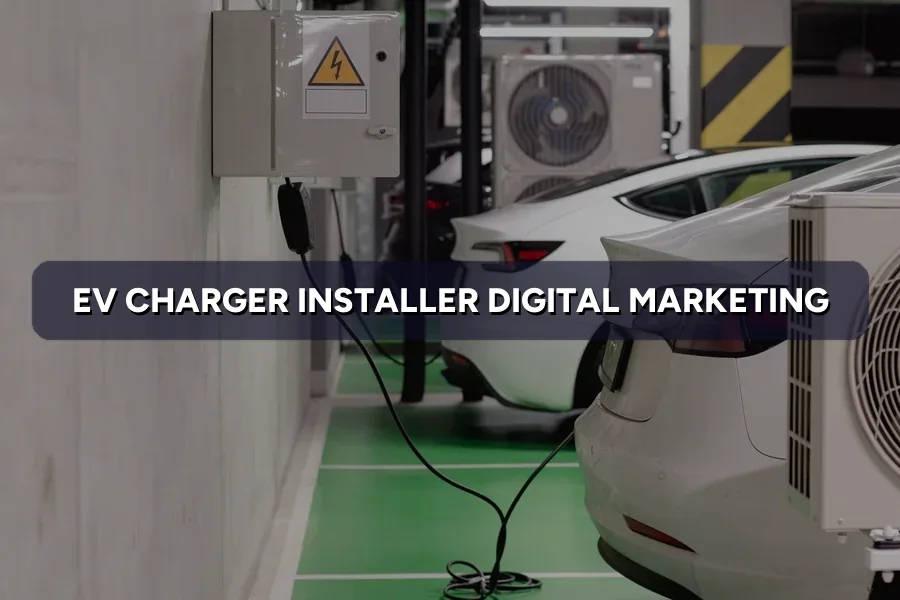
A family in Setia Alam takes delivery of their first EV on a Friday. The salesman mentions a home charger almost in passing. By Sunday night the husband has messaged five installers with the same question: double-storey terrace, single-phase, can you install a 7kW charger and how much? Three reply with a product photo and “PM for price”. One replies on Monday afternoon. The fifth replies in eleven minutes with a supply-and-install band for a single-phase terrace, names what is included, and adds one line that ends the search — we check your incoming supply and spare capacity at the DB first, and the work is done by a contractor registered with Suruhanjaya Tenaga. He surveyed the house that Wednesday.
This guide is for Malaysian EV charging businesses — home AC installers working in landed property, strata and condominium specialists dealing with JMBs and shared risers, solar companies adding charging to their offer, workplace and commercial AC installers, DC fast-charging contractors and charge point operators, fleet and depot charging teams, and electrical contractors moving into EV work. It covers which channel feeds which job size, why your home and commercial work follow completely different demand curves, and why the supply-capacity answer you give verbally at every site survey is the biggest ranking asset you are not using. Four original data sets follow.
ZenWeb runs digital marketing for EV charger installers and energy-adjacent trades across a Malaysian client base of 500+ accounts. The pattern repeats: the better-equipped installer loses to the installer whose page answered capacity, licensing and price first. ZenWeb closes that gap.
Not sure what one signed EV charger job should cost you to win?
We size a monthly budget against your average contract value and the weeks your wiring team is actually free. See our digital marketing pricing →
The demand is real and it is compounding. Malaysia registered 44,813 electric vehicles in 2025, more than double the 21,789 recorded in 2024, and 31,738 in the first half of 2026 alone. Meanwhile public charging sat at 5,624 points at the end of 2025 against a national target of 10,000. Every one of those cars is a household deciding where to charge, and nearly all of them are online first — Malaysian household internet access reached 97.1% in 2025, per the Department of Statistics Malaysia. The video below covers the lead-generation basics for an EV charger installation business; the rest of this guide adapts them to Malaysian conditions.
Source video: The 2026 Digital Marketing Strategy That Actually Works for EV Charger Installers on YouTube
Quick Answer: The buyer has a hard deadline — the car is arriving — and almost no prior knowledge of electrical work. They research for two or three evenings, then message everyone at once. If your answers are not written down, you are not in that batch.
Two things make this trade unusual. The first is the deadline. A smart home job can wait a month; a car that arrives on the 15th cannot. That compresses the whole decision into about a week and rewards whoever is easiest to find and quickest to be specific.
The second is that the customer cannot judge your work at all. A wallbox looks identical whether the cable run was sized properly or not. So they judge what they can see: how clearly you explain the supply question, how fast you reply, and whether your price behaves like a real number or a secret.
That is why the enquiry usually goes to whoever answered the question online first. Our digital marketing guide for solar companies covers the same dynamic in a neighbouring trade, and many installers now sell both.
Quick Answer: The shortlist forms in under a week and rarely holds more than five names. Buyers filter in a fixed order — can my supply take it, are you registered to do the work, and what is the installed price for a house like mine.
The path is consistent enough to build a website around:
Speed matters more here than in most trades because the buyer is messaging everyone at once. Replying within five minutes is a real advantage when three competitors reply the next morning, and handling WhatsApp enquiries properly is most of the sales process in this trade.
Quick Answer: Search and Maps carry home installs, where the buyer already knows what they want. Social builds the brand that wins owners’ group recommendations. Commercial and fleet work comes from a credible website plus direct outreach, not from media spend.
Matching channel to job size is the single decision that fixes most EV charging marketing budgets:
| Job type | Best first channel | Why |
|---|---|---|
| Landed home 7kW AC install | Google Search Ads | Buyer is searching with a delivery date |
| Condo or strata private bay | Organic search on building names | Long research cycle, JMB approval first |
| Solar plus charger package | Organic search and referral | Higher value, comparison-heavy decision |
| Repair, takeover or relocation work | Google Business Profile | Near-me urgency, cheapest enquiries you will get |
| Workplace, retail and fleet sites | Website credibility plus outreach | Procurement reads before replying |
If you are choosing between the two paid platforms first, Google Ads versus Meta Ads for Malaysian SMEs sets out the trade-off in plain terms.
Quick Answer: Malaysians search by their situation, not by charger brand. Pages built around terrace houses, condominiums, single-phase supply and three-phase upgrades outrank brand pages because they match how the question is typed.
Most installer websites are laid out like a supplier catalogue — one page per charger brand. Buyers do not search that way. They search using the only facts they actually know about themselves: what kind of home they live in and what car is coming.
These are exactly the queries that produce enquiries rather than reading traffic, and they compound. Long-tail keyword pages take longer to mature than ads but keep producing after the budget stops.
Quick Answer: Search ads are worth running the moment you can quote an installed band. Split the account by job size, exclude the public-charging and DIY traffic hard, and send every ad group to a matching property-type page.
Three account decisions do most of the work here. Separate campaigns by job size, so an RM 3,500 home install never competes for budget with a commercial site enquiry. Exclude the enormous volume of public-charging searches early — people looking for a charging station near a mall are not buying an installation. And never send a “charger installation terrace house” click to a homepage that opens with brand logos.
Cost per lead climbs fast when the landing page makes the visitor hunt for a price. If yours is rising, the usual causes are fixable on the page, not in the bidding.
Paying too much per EV charger enquiry?
We audit the account and the landing page together, then show where the wasted spend sits by job type. Get a Google Ads review →
Quick Answer: Meta rarely captures a live home install, because that buyer is already searching. It works for reaching people who ordered a car and have not thought about charging yet, and for building the name that gets recommended inside EV owner groups.
The creative that performs is almost always the same shape: a short clip of a finished install in a recognisable Malaysian house, with the cable route visible and the cost band stated on screen. Neat trunking along a terrace car porch does more selling than any product render.
What does not perform is a wallbox photo with specifications. The viewer has not started shopping, so the ad has to show the outcome — a car charging quietly overnight in a normal driveway. Click-to-WhatsApp ads usually beat lead forms here, because the first question is always technical and needs a photo of the DB.
Quick Answer: The website’s job is to make an enquiry scopeable. An installed price band, a plain-language supply explanation, real Malaysian install photos and a WhatsApp button beat anything animated on the homepage.
EV charging websites fail the same way every time. They open with a rendered European driveway, list charger brands, and put the price behind a form. The visitor leaves with the question they arrived with.
Those markers are what turn a browsing visitor into a booked survey; the trust signals that matter most are cheap to add and rarely present.
Quick Answer: Every EV buyer is quietly worried about three things — whether the wiring is safe, whether they need anyone’s permission, and whether their supply can take it. All three answers are public, specific, and missing from almost every installer website.
The regulatory side is not vague. Electrical installation work in Malaysia sits under the Electricity Supply Act 1990 and must be carried out or supervised by a contractor registered with the Energy Commission, and where charging is supplied to other people rather than to your own vehicle, a separate EVCS licence applies. The Energy Commission publishes both its guide on electric vehicle charging systems and a public list of EVCS licensees. Pointing at both costs you nothing and separates you from whoever arrives with a screwdriver.
Write the four answers your buyer is carrying:
Written that way, the section reads like an installer protecting the customer rather than an installer selling. That is exactly what a trust signal is, and it is the page most likely to be quoted back to you during the survey.
Quick Answer: EV owners search by where they live, and strata owners search by their building. A page naming a condominium you have already wired, its car park layout and what its JMB required will outrank a generic town page every time.
Maps enquiries are the cheapest and closest-to-buying enquiries in this trade, which is why ranking in the Google Maps top three usually produces booked surveys before your organic pages have matured, and why a properly filled Business Profile is the first thing we set up.
Quick Answer: Commercial buyers do not fill in forms. They read your site quietly to decide whether you are safe to put in front of a committee or a board, then call. Build the page that survives that reading.
A property manager risks a complaint from every owner in the building. A fleet manager risks vehicles that cannot run tomorrow morning. Neither is persuaded by a photo gallery. Both want evidence that you can be scheduled, that the paperwork will be correct, and that somebody answers when a charger goes down.
A commercial page that works names your capacity in charge points per month, your lead time from confirmed order, whether you handle the utility application and the licensing route, who supervises on site, and how faults are handled after handover. Add one completed multi-point reference, even a small one.
This is a slower channel with a far higher contract value, and it rewards the same clarity that consumer pages do. Our B2B marketing guide for Malaysian businesses covers the outreach side that pairs with it.
Quick Answer: Media cost per signed job runs from roughly RM 24 for a landed home charger to RM 3,925 for a DC fast-charging site. The cost rises steeply with job size, but contract value rises faster, so the big jobs stay worth chasing.
| Job type | Cost per enquiry (RM) | Enquiry to survey | Survey to job | Cost per signed job (RM) |
|---|---|---|---|---|
| Landed home 7kW AC charger | 12 – 21 | 79% | 64% | 24 – 42 |
| Condo or strata private bay | 19 – 33 | 66% | 47% | 61 – 106 |
| Solar plus charger package | 34 – 58 | 58% | 39% | 150 – 256 |
| Workplace car park, 2 to 6 points | 62 – 104 | 49% | 33% | 383 – 643 |
| Retail or F&B destination AC bank | 96 – 162 | 44% | 28% | 779 – 1,315 |
| Fleet or logistics depot charging | 145 – 246 | 40% | 24% | 1,510 – 2,563 |
| DC fast-charging site, 50kW and above | 180 – 305 | 37% | 21% | 2,317 – 3,925 |
Source: ZenWeb client tracking, Malaysian EV charging and electrical contracting accounts, 2024–2026. Blended across search, Maps and social.
Read the last column against your own contract value, not against another installer’s cost per lead. A DC site enquiry costing RM 3,500 to win is cheap against an RM 180,000 build and ruinous against an RM 12,000 one. That is the whole calculation, and it is why cost per sale rather than cost per lead is the number to manage.
Quick Answer: Organic search and Google Ads together produce half of all EV charging enquiries. But developer, JMB and fleet tenders — only 6% of enquiries — carry an average contract value roughly six times higher than anything else.
| Channel | Enquiry share | Cost per enquiry (RM) | Enquiry to job | Avg contract value (RM) |
|---|---|---|---|---|
| Organic search | 27% | 11 | 29% | 6,900 |
| Google Search Ads | 23% | 46 | 26% | 7,600 |
| Google Business Profile and Maps | 16% | 4 | 34% | 5,200 |
| Meta Ads | 12% | 28 | 14% | 4,800 |
| EV dealer and installer referral | 9% | 3 | 48% | 6,100 |
| Organic social and short video | 7% | 9 | 12% | 4,300 |
| Developer, JMB and fleet tender | 6% | 118 | 19% | 41,500 |
Source: ZenWeb client tracking, Malaysian EV charging accounts, 2024–2026.
Referral converts best and costs almost nothing, but it cannot be scaled on demand. Tender work carries the value but arrives rarely. Search and Maps are the only two channels you can genuinely turn up, which is why they deserve the first ringgit and the first month of work.
Quick Answer: Return per ringgit peaks at the RM 5,000 tier, at about RM 12.20 of signed contract value for every RM 1 of media spend. Above that it falls — not because demand runs out, but because most installers run out of licensed wiring crew.
| Monthly budget (RM) | Signed contract value | Signed value (RM) | Jobs / month | Return per RM 1 |
|---|---|---|---|---|
| 1,000 | 9,600 | 5 | 9.60 | |
| 2,500 | 27,500 | 11 | 11.00 | |
| 5,000 | 61,000 | 19 | 12.20 | |
| 10,000 | 108,000 | 28 | 10.80 | |
| 20,000 | 174,000 | 39 | 8.70 |
Source: ZenWeb client tracking, Malaysian EV charging accounts, 2024–2026. Bar width is relative, capped at the RM 10,000 tier.
The practical reading is that RM 5,000 a month is a review point, not a ceiling. If you want the RM 10,000 tier to pay, add crew capacity first, then spend. Guidance on allocating a small marketing budget applies if you are still below the RM 2,500 tier.
Quick Answer: Landed-home work has fallen from 74% of installer contract value in 2022 to 47% in 2026, while strata and commercial work has grown to fill the gap. Average contract value has risen from RM 4,100 to RM 7,200 over the same period.
| Year | Landed home | Strata and condo | Commercial, fleet and public | Avg contract value (RM) |
|---|---|---|---|---|
| 2022 | 74% | 9% | 17% | 4,100 |
| 2023 | 68% | 13% | 19% | 4,600 |
| 2024 | 61% | 17% | 22% | 5,400 |
| 2025 | 54% | 21% | 25% | 6,300 |
| 2026 | 47% | 25% | 28% | 7,200 |
| 2027* | 41% | 28% | 31% | 8,100 |
Source: ZenWeb client tracking, Malaysian EV charging accounts, 2022–2026. *2027 modelled projection.
Two consequences follow. Your website now has to satisfy two very different readers on the same visit — a homeowner who wants a price, and a building manager or fleet lead deciding whether you are safe to shortlist. And the strata segment, which is growing fastest, is won on approval know-how rather than on hardware.
Quick Answer: The usual starting point is a Facebook page, dealer referrals and a price list. The usual fix is four pages, an installed band, a Business Profile and a reply routine — not a bigger ad budget.
| Area | Before | After |
|---|---|---|
| Website | One page, charger brands, contact form | Property-type pages with installed bands and supply answers |
| Enquiry source | Dealer referral and Facebook only | Search, Maps and social, tracked separately |
| Reply time | Next working day | Under 15 minutes during working hours |
| Typical job | Single home charger | Home installs plus repeat strata and workplace work |
Nothing on that list is exotic. It is the same four moves in every trade where the buyer cannot inspect the workmanship: publish the price shape, publish the technical answer, be findable locally, and reply first.
Quick Answer: The recurring errors are selling hardware brands instead of installed outcomes, hiding price, buying public-charging traffic by accident, and relying on car dealers for a pipeline they do not control.
The last two are cheap to fix and produce the fastest change. Everything else in this guide depends on knowing which enquiries turned into jobs.
Quick Answer: Digital marketing for EV charger installers in Malaysia works when the website answers supply capacity, licensing and installed price, and when each channel is pointed at the job size it is good at. The rest is budget discipline and reply speed.
The trade is maturing quickly. EV registrations doubled in 2025 and grew another 85% in the first half of 2026, public charging is still well behind target, and the work itself is shifting from single driveways towards strata car parks and commercial sites with far higher contract values. That favours installers who are findable at the moment the car is ordered and who write down the answers everyone else gives verbally at the survey.
Start with the property-type pages, the installed bands and the Business Profile. Add search ads once you can quote a band. Add social once you have footage of your own finished work. Then measure by signed contract value per channel, not by enquiry count, and move the money accordingly. If you would rather have all of that built and managed together, our digital marketing programme handles the site, the channels and the tracking as one piece of work.
Most installers start between RM 1,000 and RM 5,000 a month across search, Maps and social, plus the website build. Return per ringgit peaks around the RM 5,000 tier, so treat that as the point to review crew capacity rather than budget. Keep media cost per signed job under roughly 5% of your average contract value, and add wiring capacity before pushing spend higher.
Yes, at least an installed band by property type, stated as supply and install with exclusions named. Buyers already know what kind of house they live in, so hiding the band does not protect your margin — it removes you from the shortlist. Then state what moves a quote up: cable run length, trunking versus concealed work, distribution board upgrade, a separate meter, or a three-phase conversion.
Electrical installation work falls under the Electricity Supply Act 1990 and must be carried out or supervised by a contractor registered with the Energy Commission. Some installers handle this through a registered partner instead. Either arrangement is workable, but state clearly on your website which one applies to you — it is one of the first things a cautious buyer looks for and almost nobody publishes it.
In most stratified developments the management body needs to approve works involving the common property, and buildings commonly ask for an agreed cable route, a separate meter arrangement and proof of who is doing the wiring. Requirements differ between buildings, so check the specific management’s rules at the survey. Saying on your website that you prepare that submission removes a step the owner was quietly dreading.
Google Ads and a properly filled Google Business Profile can produce booked surveys within the first two to four weeks. Property-type, supply and objection pages generally start ranking between month four and month eight. Strata, workplace and fleet enquiries usually begin around month three to six, once a commercial page exists that names your capacity, lead time and fault response.
Ready to keep your installation calendar full all year?
Book a free 30-minute strategy session — we’ll review your site, your Google ranking and your pricing pages, then give you a concrete 90-day plan with realistic media cost per signed job by job type.
Complete the form and our team will contact you to discuss your goals. Let’s grow your business.



Meowketing Specialist
Online


























