

Share this post:
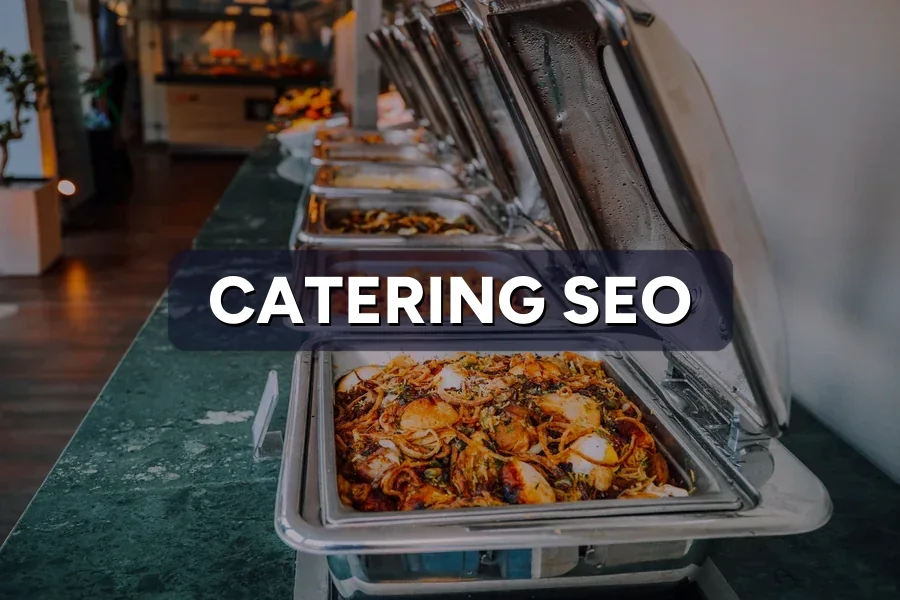
Nobody books a caterer the way they book a restaurant. A restaurant search happens at 7pm for tonight. A catering search happens on a Tuesday afternoon for a wedding five months away, from someone holding a headcount, a budget per head and a date they cannot move.
That single difference changes everything. This guide is for caterers, kenduri specialists and corporate food operators who fill their calendar through WhatsApp referrals and now want enquiries arriving on their own.
ZenWeb runs SEO for caterers across 500+ Malaysian accounts. The same handful of page types keep filling the calendar.
Not sure which catering searches you can realistically win?
We map your event types and coverage areas against the caterers already ranking. Compare our SEO plans →
Before the catering specifics, a short primer on what search engines actually reward.
Source video: Google Search Central on YouTube
Quick Answer: Because the buyer is planning, not hungry. A caterer is chosen weeks or months before the event, so SEO for caterers has to catch a research phase that a restaurant never sees, then survive a shortlist of three quotations.
The market is bigger than most owners assume. Malaysia’s Department of Statistics counts event catering as one of the three arms of food and beverage services, an industry of 136,453 establishments producing RM 99.0 billion in gross output.
Almost none of that demand searches the way a diner does. Your prospect is comparing per-head prices, checking whether you can handle 400 guests on a Saturday, and quietly deciding whether your website looks like a business that will still exist by the event date.
Quick Answer: Event type first, then price per head, then menu, then halal proof. Brand names barely appear, which is why long-tail phrasing decides who gets into the shortlist of three.
The path is remarkably consistent across weddings, kenduri and corporate work:
Quick Answer: Event type plus area, every time. “Catering Malaysia” belongs to directories and marketplaces, while “catering kenduri kahwin Rawang” faces perhaps four real rivals and one properly built page can take it inside a quarter.
Sort the whole site into five clusters and give each cluster real pages instead of one long services page:
Malay queries deserve their own pages, not a translated footer. “Katering murah” and “harga catering satu pax” carry serious volume across Selangor and the east coast, and a bilingual build usually doubles the phrases one caterer can hold.
Quick Answer: Publish a band and the minimum headcount, not a single figure. Price per pax is the second thing searched and the last thing most Malaysian caterers publish, so a priced page wins the comparison before a rival is ever contacted.
“WhatsApp us for a quotation” is not a pricing strategy. It is a message sent to three caterers, answered by whoever replies first.
The usual objection is that every job is custom. True, and that is exactly why a band beats silence. “RM 18 to RM 32 per pax for buffet, minimum 100 guests” sets the frame before negotiation and stops you quoting for events you never wanted.
Then explain what moves the number: protein choice, live stations, service crew, equipment rental, delivery distance and the surcharge for a Saturday in wedding season. Good SEO for caterers starts with that page, because a prospect who understands the maths argues about it far less.
Want your pricing page written without giving the game away?
We build price bands from your real cost sheet, not generic F&B copy. See how our SEO team works →
Quick Answer: Menus uploaded as images or PDFs are close to invisible to search. Published as real text, every dish name becomes a phrase you can rank for, which is how a simple on-page fix unlocks hundreds of dish-level searches.
Most Malaysian caterers design a beautiful menu card, export it as a JPEG, and wonder why “catering nasi minyak Kajang” never brings anyone. A picture carries no words for Google to read, and an assistant cannot quote a dish it cannot see.
Give each package its own page with every dish written out, the headcount it suits and what the crew sets up. Someone searching a specific dish has already chosen the cuisine, which makes them a far warmer enquiry than a browser typing “catering”.
Quick Answer: State your halal position in text, on its own page, with the certificate number if you hold one. It is the single most-checked fact in Malaysian catering and the one most websites leave to a logo image that machines cannot read.
Certification for a catering premise runs through JAKIM’s MYeHALAL system on the Halal Malaysia Portal, and buyers verify it there. Write the certificate number, the certified premise address and the expiry as plain text so a prospect can check it in a minute.
If you are not certified, say so and explain what you do instead: Muslim-owned kitchen, no pork or alcohol, separate utensils, food handler training and typhoid certificates for every crew member. Corporate and government buyers ask this in writing anyway.
Quick Answer: A single “Our Services” page listing eight event types ranks for none of them. Each event needs its own URL, its own photos and its own price band, or the pages quietly compete with each other.
The trap is the template. Eight event pages built from one paragraph with the occasion swapped read as thin content to Google and as boilerplate to a bride comparing quotations.
| Page | Search it answers | Must include |
|---|---|---|
| Event page | Event type plus town | Headcount range, price band, real photos |
| Menu page | Named dish or cuisine | Every dish in text, portions, add-ons |
| Pricing page | Price per pax queries | Bands, minimum pax, delivery and crew charges |
| Coverage page | Catering plus area name | Towns served, travel charge, past venues |
| Halal and terms page | Certification, deposit, cancellation | Cert number, deposit rule, postponement policy |
Quick Answer: Corporate buyers search in English, in office hours, and shortlist on paperwork rather than photos. Give them a page built for procurement and repeat event work follows the first successful order.
An admin executive ordering lunch for 60 people has a different checklist from a bride, and almost no catering website answers it:
Corporate work is smaller per order but repeats monthly, which makes it the steadiest revenue you have.
Quick Answer: Caterers deliver across a radius rather than serving at one address, so map pack visibility depends on setting a service area properly and backing it with a page for each town you actually cover.
Four habits decide the ranking, and none of them cost money:
Keep the profile alive with posts about seasonal menus and new venues, and treat it as a page you manage rather than a listing somebody created once.
Quick Answer: People now ask assistants for “halal buffet catering in Puchong under RM 25 per pax” and get a shortlist. Only caterers who published a price band, a menu and a certificate in plain text can be quoted in that answer.
Hidden pricing hurts twice here. A page saying “contact us for a customised quotation” gives an assistant nothing to repeat, so it recommends the caterer who published RM 22 per pax for a hundred guests.
Keep prices, menus, minimum headcounts and halal status as real HTML, answer each common question in a short paragraph beneath it, and date any seasonal package so last Raya’s promotion is not still being quoted next year.
Quick Answer: Event type plus area converts best at 9.4 percent of sessions, while corporate catering searches close hardest at 45 percent of enquiries. Generic “catering Malaysia” traffic converts at 1.1 percent, which is why the head term disappoints so many owners.
| Keyword cluster | Share of organic sessions | Session to enquiry | Enquiry to confirmed booking |
|---|---|---|---|
| Event type + area | 27% | 9.4% | 38% |
| Price per pax queries | 24% | 6.8% | 24% |
| Menu or dish names | 15% | 5.1% | 31% |
| Corporate and office catering | 11% | 4.2% | 45% |
| Halal certification queries | 6% | 3.4% | 41% |
| Generic catering Malaysia | 17% | 1.1% | 12% |
Source: ZenWeb client tracking, Malaysia, 2024-2026.
Quick Answer: Event-plus-area pages reach the top ten around month five, menu pages by month six, and the national head term almost never. That order should decide your build sequence and explains why the first quarter feels slow.
| Page type | Month 3 | Month 6 | Month 9 | Month 12 |
|---|---|---|---|---|
| Event type + area page | 16 | 7 | 3 | 2 |
| Menu or dish page | 24 | 11 | 5 | 3 |
| Corporate catering page | 33 | 15 | 7 | 4 |
| Price per pax page | 41 | 21 | 10 | 6 |
| Generic head term | 82 | 66 | 51 | 38 |
Source: ZenWeb client tracking, Malaysia, 2024-2026. Median position across tracked catering accounts.
Quick Answer: About RM 470 per confirmed booking in the first quarter, falling to roughly RM 62 by month eighteen as the same event pages keep working. Paid search holds near RM 240 throughout, which is where the compounding argument comes from.
| Period | Relative cost | Organic cost per booking | Paid search comparison |
|---|---|---|---|
| Months 1-3 | RM 470 | RM 240 | |
| Months 4-6 | RM 236 | RM 232 | |
| Months 7-12 | RM 118 | RM 245 | |
| Months 13-18 | RM 62 | RM 238 |
Source: ZenWeb client tracking, Malaysia, 2024-2026. Bars show relative organic cost per confirmed booking.
Quick Answer: Enquiries peak in the two months before each season, not during it. January and February run hottest ahead of Ramadan and Raya, November follows for annual dinners, and August is the quiet month worth building content in.
| Period | Enquiry index | Dominant segment | Median lead time |
|---|---|---|---|
| January – February | 126 | Buka puasa, CNY, Raya open house | 7 weeks |
| March – April | 94 | Last-minute Raya, then weddings | 2 weeks |
| May – June | 99 | Weddings and kenduri | 3 months |
| July – August | 80 | Corporate lunches, Merdeka events | 3 weeks |
| September – October | 99 | Annual dinner planning | 10 weeks |
| November – December | 108 | Annual dinners, year-end parties | 6 weeks |
Source: ZenWeb client tracking, Malaysia, 2024-2026. Index of 100 equals the annual average enquiry volume.
One warning: Ramadan and Raya move about eleven days earlier each year, so the early-year peak drifts steadily. Plan the Raya campaign against the actual dates, not the month it fell in last year.
Want next Raya’s bookings to land on your pages?
We work backwards from your busiest weeks and sequence the build. Talk to our Malaysian team →
Quick Answer: Hiding the price, posting menus as images, running one page for every event type, ignoring Malay searches, and leaving the site to sleep between seasons. Each is fixable inside a quarter with a sequenced plan.
Quick Answer: Build a page per event type, a page per menu, a priced page with real bands and an honest halal page. Those four carry most of the result, and a properly sequenced plan compounds them.
SEO for caterers rewards whoever answers the questions rivals avoid. What it costs per pax, what is on the tray, whether the halal certificate is current: every straight answer removes a reason to message somebody else.
Start with the event and menu pages because they rank fastest, then coverage, then pricing and halal. Keep paid search running until organic cost per booking drops below it, usually around month five. Built in that order, and paired with a disciplined WhatsApp routine, it behaves like a second sales channel.
Quick Answer: Caterers ask most about timelines, how many pages a small operation needs, whether SEO beats Meta ads, and whether a published price loses them jobs. Plan detail sits on our SEO pricing page.
Event-plus-area pages usually reach the top ten within four to five months. Menu pages take around six months, and the national head term rarely lands inside a year. Publishing real price bands, full menus and halal details shortens all three.
Not better, just different. Meta ads fill a Raya package in days at a fairly fixed cost. SEO takes months but keeps getting cheaper per booking. Most caterers run both, then shift budget once organic cost per booking drops below paid, around month five.
Around twelve to eighteen. One page per event type you genuinely serve, one per menu package, a pricing page, a halal and terms page, and a page for each town you deliver to regularly. Thin duplicated town pages hold the whole site back.
It usually wins better ones. Price searchers are the largest group in the market and they filter you out silently when the figure is missing. A published band removes the bargain hunters and brings the rest in already comfortable with your number.
Ready to fill your catering calendar from search?
Book a free 30-minute strategy session. We review your event pages, your map profile and the caterers ranking above you, then give you a 90-day plan.
Complete the form and our team will contact you to discuss your goals. Let’s grow your business.



Meowketing Specialist
Online


























