

Share this post:
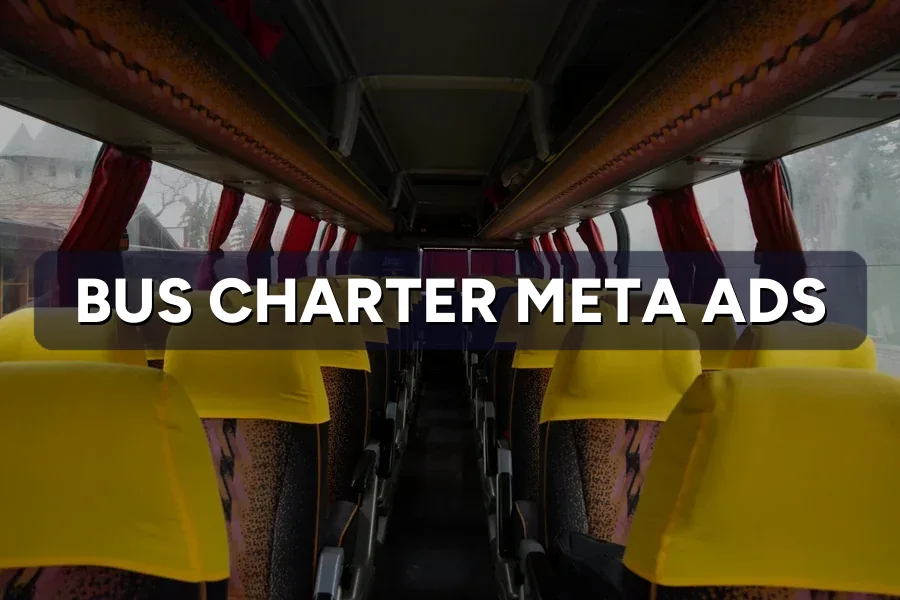
Search advertising waits for someone to type “sewa bas”. Meta reaches the same person three weeks earlier, while the trip is still an idea in a group chat and nobody has decided anything yet.
That difference changes everything about how the account is built. On Facebook and Instagram you are not answering a question — you are giving a planner a reason to save your number before she asks four operators for quotes. ZenWeb runs Meta Ads for bus charter firms across 500+ Malaysian SME accounts, and every figure below comes from that tracking.
Wondering what a charter Meta account should cost to run?
We size the budget against your seat sizes, your depot districts and the contract work you actually want more of. See our Meta Ads pricing →
Ahead: who you are really reaching, how to build the audience, what creative books buses, where the click should land, and which placements to switch off.
Source video: Watch on YouTube
Quick Answer: Meta creates charter demand rather than capturing it. Enquiries cost roughly half what search enquiries cost, but they arrive earlier and softer, which is the real difference behind every Facebook Ads versus Google Ads comparison in this trade.
Most operators judge Meta by search standards and conclude it does not work. The enquiries are chattier, the dates are vaguer, and a third of them are still choosing between a bus and three MPVs.
Judged properly, it does two jobs no search campaign can do:
Quick Answer: Nobody on the bus books the bus. The buyer is a school clerk, an HR executive, a wedding sibling or a tour agent — four people with different worries and one shared fear of being blamed if the bus is late. Write to the organiser, not the rider, as the wider charter marketing plan assumes throughout.
Charter ads fail most often because they sell comfort. The organiser is not thinking about legroom. She is thinking about thirty people standing at a gate at 6.30am and whether her name is on that decision.
What each buyer needs to see before she messages:
Quick Answer: Three audiences carry a charter account: a radius around each depot, a lookalike built from your past booking list, and retargeting of people who already opened a chat. Interest targeting comes last, which is the opposite of how most Facebook targeting setups in Malaysia are built.
A bus is mobile but a depot is not. Targeting the whole peninsula buys impressions in towns your driver cannot reach before dawn without an overnight move.
Set the audiences in this order:
Give broad delivery a fair test too. Meta’s automated audience often beats hand-built stacks once fifty conversions exist, though it needs the pixel and WhatsApp events wired up first.
Quick Answer: Every charter operator posts the same photo of a parked coach. A thirty-second walk down the aisle showing seat pitch, aircon vents and the luggage bay outperforms it on cost per enquiry, because it answers what the organiser is actually unsure about. That is the core of ad creative that converts.
The exterior shot tells the buyer nothing she does not already assume. The interior tells her whether forty adults will be comfortable for three hours, and whether the bus is five years old or fifteen.
Four creative angles that carry charter accounts:
Shoot once a quarter. Charter creative burns out fast in a small radius, and frequency climbing past three is what drives your cost per enquiry up, not the algorithm turning against you.
Not sure how small a charter budget can start?
A single depot radius with two creatives needs far less than most operators assume, provided the chat path is tracked. Check the minimum budget that still works →
Quick Answer: The organiser wants one answer — is the 44-seater free on the 18th. A chat gives it in minutes; a form gives it tomorrow. That is why click-to-WhatsApp ads carry the majority of charter conversions in tracked accounts.
Sending charter traffic to a Facebook page album is the most expensive habit in this trade. The buyer scrolls twelve photos of the same coach, learns nothing about availability, and leaves.
Set the chat path up properly:
Quick Answer: Most charter quotes go silent because the trip date moved, not because the price was wrong. A cheap retargeting layer keeps you visible until the date firms up, and it produces the cheapest enquiries in the account.
An operator sends a quote, hears nothing, and writes the lead off. Six weeks later the same organiser books whoever is in front of her when the budget clears.
Three retargeting audiences worth running permanently:
Quick Answer: Name the permit classes you hold, keep every claim checkable, and never imply that a government agency endorses your company. Two rulebooks apply at once here — APAD’s six bus licence classes and Meta’s Advertising Standards — and running Meta Ads for charter firms means satisfying both.
APAD splits the bus industry into six licence classes — stage, express, intermediate, school, worker and charter — with excursion buses licensed under the tourism vehicle category. The class you hold decides the work you may legally quote, so it also decides which campaigns you may honestly run.
Safe, useful claims for a charter ad:
One Meta-specific trap catches charter operators regularly: driver recruitment ads are treated as employment ads, so they sit in a restricted category with narrower targeting than your charter ads. Run hiring campaigns in a separate ad set and never inside the campaign selling trips.
Quick Answer: Interior walkthrough video produces charter enquiries at RM 31 and books 41% of them. The fleet photo album costs RM 52 an enquiry and books 22%. Boosted page posts are the worst option in the account at RM 88, which is why generic Malaysian cost-per-lead benchmarks mislead in this trade.
| Creative format | Share of spend | CPM (RM) | Cost per enquiry (RM) | Enquiry to booking | Avg job value (RM) |
|---|---|---|---|---|---|
| Interior walkthrough video | 26% | 21.60 | 31 | 41% | 2,150 |
| Seat-size offer card | 21% | 18.40 | 38 | 34% | 1,900 |
| Driver and route reel | 18% | 24.80 | 29 | 37% | 1,740 |
| Fleet photo album or carousel | 14% | 16.20 | 52 | 22% | 1,680 |
| Client trip testimonial | 9% | 26.40 | 44 | 46% | 4,300 |
| Contract and shuttle explainer | 7% | 19.30 | 57 | 51% | 38,000 |
| Boosted page post | 5% | 12.80 | 88 | 15% | 1,200 |
Source: ZenWeb client tracking, Malaysia, 2024–2026. Spend shares total 100% of tracked charter Meta spend.
The contract explainer looks poor on enquiry cost at RM 57 and is the most valuable creative in the table. It produces few enquiries, but each one is a shuttle contract averaging RM 38,000 rather than a weekend hire worth RM 2,150.
Quick Answer: Retargeting books a charter job for RM 36, the depot radius for RM 85 and broad automated delivery for RM 94. Interest targeting costs RM 174 per booked job, almost five times retargeting. Worth knowing before handing the job to Meta’s automated audience.
| Audience type | Share of conversions | Cost per enquiry (RM) | Enquiry to booking | Cost per booked job (RM) |
|---|---|---|---|---|
| Depot radius, 20–30km | 34% | 33 | 39% | 85 |
| Broad automated delivery | 21% | 29 | 31% | 94 |
| Retargeting, site and chat | 19% | 21 | 58% | 36 |
| Booking list lookalike, 1% | 17% | 36 | 44% | 82 |
| Interest and job-title layers | 9% | 47 | 27% | 174 |
Source: ZenWeb client tracking, Malaysia, 2024–2026. Bars scaled to the largest conversion share in the table.
Retargeting cannot be scaled — it is capped by how many people the other audiences reach first. Treat it as the layer that pays for the account, and the depot radius as the layer that feeds it.
Quick Answer: Meta’s instant form produces the cheapest charter enquiry at RM 19 and the slowest reply at nearly four hours, booking 21%. WhatsApp costs RM 27, gets a reply in six minutes and books 49%. The gap mirrors what the same operators see in Google Ads for charter firms.
| Ad destination | Share of conversions | Cost per enquiry (RM) | Enquiry to booking | Cost per booked job (RM) | Median first reply |
|---|---|---|---|---|---|
| Click-to-WhatsApp | 52% | 27 | 49% | 55 | 6 minutes |
| Meta instant form | 22% | 19 | 21% | 90 | 3 hours 40 minutes |
| Seat-size page on your site | 15% | 41 | 44% | 93 | 22 minutes |
| Messenger | 7% | 34 | 30% | 113 | 48 minutes |
| Call ad | 4% | 58 | 55% | 105 | Immediate |
Source: ZenWeb client tracking, Malaysia, 2024–2026. Reply time measured from lead received to first operator response in working hours.
The instant form is not badly built — it is badly served. Leads sit in a download nobody checks until evening, by which point the organiser has messaged two other operators.
Want the ads, the site and the search side pulling together?
Paid social works hardest when the rate pages and organic listings behind it already answer the same questions. See how charter SEO supports the ads →
Quick Answer: Facebook Feed carries 38% of charter impressions and books 42% of its enquiries. Audience Network delivers the cheapest impressions at RM 6.20 CPM and the dearest enquiries at RM 79, booking only 9%. That pattern sits behind most complaints about rising Facebook Ads costs in Malaysia.
| Placement | Share of impressions | CPM (RM) | Cost per enquiry (RM) | Enquiry to booking |
|---|---|---|---|---|
| Facebook Feed | 38% | 19.40 | 30 | 42% |
| Instagram Reels | 17% | 14.10 | 36 | 29% |
| Instagram Feed | 14% | 21.80 | 35 | 33% |
| Facebook Reels | 12% | 11.60 | 41 | 26% |
| Stories, Facebook and Instagram | 11% | 12.90 | 46 | 24% |
| Facebook Marketplace | 5% | 9.80 | 63 | 18% |
| Audience Network | 3% | 6.20 | 79 | 9% |
Source: ZenWeb client tracking, Malaysia, 2024–2026. Bars scaled to the largest impression share in the table.
Reels earn their place as the cheapest way to get the aisle walkthrough seen, then hand the buyer to Feed and retargeting to close. Judged alone on booking rate, they look worse than they are.
Quick Answer: Six faults show up in nearly every charter account audit, and none of them need a bigger budget to fix. They are the trade’s version of the reasons Facebook Ads produce no sales in any local service business.
Quick Answer: Build around the depot radius, film the inside of the bus, land every click in WhatsApp and keep a permanent retargeting layer. In ZenWeb client tracking that combination produces charter enquiries at RM 27 and booked jobs at RM 55.
Meta will not replace the search enquiries that arrive with a date already fixed. What it does is fill the weeks between them, and put your name in front of the organiser before she starts asking around.
Done properly, Meta Ads for bus charter firms stop being a page-boosting habit and start feeding the calendar. The rate pages built for those ads then earn their keep across every other channel too, which is where the broader charter marketing plan takes over.
Yes, but for a different job than search. Meta reaches the organiser while the trip is still being planned, producing enquiries at about RM 27 and booked jobs at RM 55 in ZenWeb client tracking. The enquiries are softer than search enquiries, so they need a fast chat reply to convert.
The inside of the bus. Interior walkthrough video produces enquiries at RM 31 and books 41% of them, against RM 52 and 22% for a fleet photo album. Show seat pitch, aircon, the luggage bay and the seat count on screen.
WhatsApp for almost every campaign. It carries 52% of charter conversions, gets a first reply in about six minutes, and books 49% of enquiries. Instant forms book 21%, and their median first reply is nearly four hours. Use forms only if the leads reach a phone immediately.
A 20 to 30km radius around the depot, then a retargeting layer once traffic exists. Retargeting books a job for RM 36 against RM 174 for interest and job-title targeting, so the depot radius feeds the account and retargeting pays for it.
Audience Network, and usually Facebook Marketplace. Audience Network delivers the cheapest impressions at RM 6.20 CPM but enquiries cost RM 79 and only 9% become bookings. Keep Facebook Feed, Instagram Feed, Reels and Stories.
No. APAD licenses buses by class — stage, express, intermediate, school, worker and charter, with excursion buses under the tourism vehicle category — and the class decides what work you may legally quote. Advertise only the classes you hold, never imply official endorsement, and keep driver recruitment ads in a separate campaign because employment ads carry their own targeting restrictions.
Ready to stop boosting posts and start filling the calendar?
We build charter Meta accounts around your depot districts, film creative that shows the inside of the bus, and route every click into a tracked WhatsApp chat. Tell us your seat sizes and where your buses sleep, and we will show you what the quiet months should be producing.
Complete the form and our team will contact you to discuss your goals. Let’s grow your business.



Meowketing Specialist
Online


























