

Share this post:
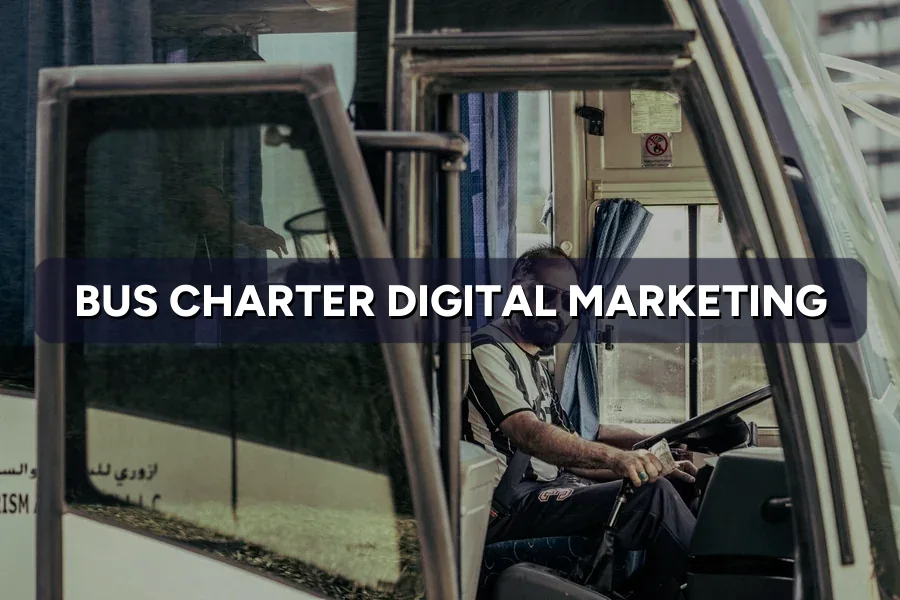
APAD splits the bus industry into six licence classes, and charter work touches three. Bas Carter, Bas Sekolah and Bas Pekerja are separate permits with separate approved operating areas. Most charter websites mention none of them, and lose the buyers who care most.
If you run a bus charter firm in Klang Valley, Johor or Penang and your bookings still arrive by phone from the same few tour agents, this guide is for you. It covers which channels earn contract work, how to show permit and safety credentials, and four data sets on enquiry cost, monthly demand, contract value and where charter enquiries are heading.
ZenWeb runs digital marketing for bus charter firms and other Malaysian fleet operators across 500+ accounts. The pattern repeats: operators chase seasonal trips and leave the recurring contracts to whoever answered the tender email first.
Not sure what a charter campaign should cost?
We match a monthly figure to your fleet size and route coverage in one call. See our digital marketing pricing →
First, a short primer on building the plan behind all of this.
Source video: Shaun Academy on YouTube
Quick Answer: Because the buyer changed. School and factory contracts used to move through introductions; now an admin executive searches, compares three operators in an afternoon, and asks for permit details in the first message. A working channel mix decides whether you are one of the three.
Charter buying in Malaysia has quietly moved online. DataReportal’s Digital 2026 Malaysia report puts internet penetration at 98.0 percent. The HR executive told to arrange a factory shuttle does not phone the operator her predecessor used. She searches, opens four tabs, and messages whoever looks legitimate.
That shift favours operators who publish. A firm with a page explaining worker shuttle contracts, seat capacities and permit coverage gets shortlisted by people it has never met. A firm with a phone number and three bus photos waits for the referral that no longer comes.
Quick Answer: They start with a date and a headcount, not a brand. They search a route or seat size, check whether you look licensed and insured, then message two or three operators at once. How you handle that first message usually decides the job.
Contract buyers add a procurement layer, but the shortlist forms the same way. The pattern across charter accounts:
Quick Answer: Google Ads and your map profile fill next month’s calendar. SEO wins the contract searches that repeat every year. Meta Ads suit family and event work. Weigh each channel’s cost per lead against the contract value behind it.
| Channel | Best for | First leads | Watch out for |
|---|---|---|---|
| Google Ads | Dated trips and urgent replacements | Days | Driver job seekers and bus buyers |
| SEO | School, shuttle and route contracts | 4-8 months | One thin page for every service |
| Google Business Profile | Near-me and depot-area searches | Weeks | Empty review pipeline |
| Meta Ads | Weddings, tours, community groups | Days | Price shoppers with no fixed date |
Quick Answer: Charter SEO is won on seat size, route and contract type, not on the phrase “bus rental Malaysia”. Structured SEO builds one page per real search, so a school clerk and a factory HR executive each land where their answer already is.
Almost every operator publishes one “our services” page listing everything. It ranks for nothing. Build these instead:
Answer the question in the first 40 words of every page. That is also how you earn a mention in Google AI Overviews, which now answer “how much to rent a bus” before anyone clicks.
Want these pages built and ranking?
We map the capacity and route pages your competitors never published. Compare our SEO plans →
Quick Answer: Split the account by job type, not by keyword theme. Urgent-date, contract and tour searches behave nothing alike, and a structured build stops a wedding budget from eating your shuttle leads.
Three campaign groups carry most charter accounts. Urgent-date terms name a place and a size, like “sewa bas 44 seater KL”. Contract terms name the arrangement, such as employee transport, and convert slowly at higher value. Tour terms name a destination and spike with holidays.
Your negative keyword list matters as much as your bids. Block driver vacancies, bus sales, driving licence queries and express ticket searches. Without them a RM 5,000 budget bleeds a third of its clicks. Set a realistic monthly budget first, because three thin campaigns learn nothing.
Quick Answer: Meta finds groups before they know the date, so judge it on confirmed bookings, not enquiry count. Run it around the calendar rather than the funnel, and build creative around the trip instead of the discount.
Four angles do most of the work:
Keep remarketing windows at 90 days. Someone who priced a company trip in March books it in June.
Quick Answer: A charter website has one job: turn a date and a headcount into a quote request you can answer in minutes. That needs a short form, visible fleet details, permit credentials and a WhatsApp button on every screen. Build for that flow.
Charter buyers browse on a phone between meetings, so a page built to convert matters more than a homepage slider.
Quick Answer: Your permit class decides which jobs you may legally quote, so it belongs on the page, not in a drawer. Publishing it filters out work you cannot take and wins the buyers who check. Put it on a site built to show credentials.
APAD licenses land public transport in Peninsular Malaysia, and its bus framework separates the classes clearly. Four points belong in front of buyers:
Add insurance cover, driver identification cards and your maintenance interval. Procurement teams score those, and the operator who already published them answers a tender questionnaire in an hour.
Quick Answer: Set your profile as a service-area business covering the districts you actually pick up from, not just your depot postcode. Then ask for a review the week a contract renews. Pair it with a properly set-up profile.
Charter searches are stubbornly local: people search the pick-up point, not the depot. List the industrial parks, schools and hotels you serve, set the category to bus charter rather than transportation service, and upload trip photos monthly.
Reviews carry unusual weight because a bad charter ruins someone’s event in public. One unanswered complaint about a late pick-up can stall a term of school enquiries, so build a steady review habit and protect your map ranking.
Quick Answer: Write about the parts of a charter that go wrong. Breakdown cover, relief drivers, what happens when a group runs three hours late. Nobody else publishes it, and the buyer reading it stops comparing on price. That is content doing sales work.
A buyer who has read your breakdown policy is no longer shopping on day rate alone.
Publish what your operations team already knows: what the day rate covers, when overtime starts, who pays tolls and parking, whether a relief driver joins long runs, and your standby plan if a bus fails at 6am. Then let your operations manager walk through one real quotation on camera. In B2B buying, the person signing wants a face attached to the fleet.
Quick Answer: Volume rises, but the bigger change is mix. Recurring contracts replace weekend one-offs and weekday utilisation climbs, because a funded channel mix reaches buyers during their planning window.
| Measure | Referral and phone only | After 6 months |
|---|---|---|
| Monthly quote requests | 12-22 | 55-95 |
| Average first reply | 3-8 hours | Under 20 minutes |
| Quote to confirmed booking | 14-19% | 26-34% |
| Contract share of revenue | Under 20% | 35-50% |
| Weekday fleet utilisation | 40-55% | 65-80% |
Source: ZenWeb client tracking, Malaysia, 2024-2026. Individual results vary.
Quick Answer: A wedding enquiry costs under RM 40 and rarely returns. A factory shuttle enquiry costs three times more and renews for years. Ranking your channels on cost per lead puts the two in the wrong order.
| Job type | Cost per enquiry | To confirmed booking | Books again in 12 months |
|---|---|---|---|
| Factory and worker shuttle | RM 90-160 | 18% | 74% |
| School run contract | RM 40-75 | 24% | 68% |
| Corporate day charter | RM 55-95 | 31% | 42% |
| Tour and event charter | RM 25-50 | 22% | 19% |
| Wedding and family group | RM 18-38 | 27% | 8% |
Source: ZenWeb client tracking, Malaysia, 2024-2026.
Quick Answer: Twice, in opposite directions. School work peaks in March and August; tour, family and corporate work peaks in June and December, exactly when school runs stop. Budget by segment, not by month, and plan seasonal content ahead of each swing.
| Month | School and institutional | Corporate, tour and family |
|---|---|---|
| January | 118 | 68 |
| February | 92 | 78 |
| March | 129 | 85 |
| April | 111 | 95 |
| May | 84 | 108 |
| June | 62 | 130 |
| July | 121 | 88 |
| August | 127 | 96 |
| September | 108 | 102 |
| October | 116 | 111 |
| November | 74 | 128 |
| December | 58 | 140 |
Index, annual average = 100. Source: ZenWeb client tracking, Malaysia, 2024-2026.
Quick Answer: A wedding is worth a couple of thousand ringgit once. A daily factory shuttle across two shifts runs into six figures a year. Setting your acquisition budget by contract value is what separates a full fleet from a busy weekend.
| Contract type | Relative value | Annual revenue |
|---|---|---|
| Wedding or family day trip | RM 1,500-3,000 | |
| Tour agency subcontract | RM 8,000-18,000 | |
| Corporate events and staff trips | RM 12,000-30,000 | |
| School run, one route | RM 45,000-70,000 | |
| Factory shuttle, two shifts | RM 90,000-160,000 |
Source: ZenWeb client tracking, Malaysia, 2024-2026. Bars show relative value.
Quick Answer: Phone enquiries are halving, search enquiries are doubling, and WhatsApp holds steady in the middle as the place deals actually close. Meanwhile the cost of a booked charter keeps rising, which rewards operators building organic visibility now.
| Year | Phone and walk-in | Website and search | Cost per booked charter | |
|---|---|---|---|---|
| 2022 | 46% | 39% | 15% | RM 210 |
| 2023 | 39% | 43% | 18% | RM 232 |
| 2024 | 31% | 46% | 23% | RM 258 |
| 2025 | 25% | 47% | 28% | RM 279 |
| 2026 | 20% | 46% | 34% | RM 305 |
| 2027* | 16% | 44% | 40% | RM 338 |
*Modelled projection. Source: ZenWeb client tracking, Malaysia, 2022-2026.
Quick Answer: Across the vertical charter sits in, the six-month pattern is three to four times more quote requests, a booking rate that roughly doubles, and a revenue base that stops swinging with the school calendar once the channel mix runs properly.
Fleet size sets the ceiling. Reply speed decides how close an operator gets to it.
Ready to put these benchmarks to work?
We benchmark your enquiry cost and contract mix against this data and show where the gap sits. Talk to our Malaysian team →
Quick Answer: Chasing one-off trips, hiding rates, one page for every service, quoting hours late, and leaving permit details off the site. Each is fixable in a month with a sequenced plan.
Quick Answer: AI answer engines are absorbing rate questions, corporate buyers increasingly expect live availability rather than a callback, and ESG reporting is turning employee transport into a board-level line item. Get cited early.
The first shift is immediate. When someone asks an assistant what a 44-seater costs from Penang to Cameron Highlands, the answer is built from pages that stated a figure and showed their working. Vague pages are invisible, however long they have ranked.
The second is operational. Buyers who book meeting rooms in two clicks resent waiting a day for a bus quote, so instant estimates are becoming an edge rather than a luxury. The third is quiet but growing: companies reporting on emissions and staff welfare want documented shuttle arrangements, which favours operators who keep records rather than promises.
Quick Answer: Publish rate guidance, build one page per contract type, and put your permit classes where buyers see them. Those three moves lift charter results faster than any budget increase, and a coordinated channel plan compounds them.
Charter work is not one market. It is a contract business hiding behind a booking business, and the winners are the operators whose websites speak to procurement rather than to holidaymakers.
Start with those three moves. Then fund one fast channel and one compounding channel together, and measure on cost per contract won.
Quick Answer: Charter operators ask most about monthly budget, which channel fills the calendar fastest, whether publishing rates hurts them, and how long SEO takes. Plan detail sits on our pricing pages.
Most established operators spend RM 4,000 to RM 9,000 a month across ads, SEO and management. Below RM 2,500, campaigns rarely gather enough data to optimise. Fleet size, not ambition, should set the ceiling.
Google Ads, usually within two weeks, because it reaches people who already have a date and a headcount. A well-kept Google Business Profile comes close for far less, but needs a few weeks of reviews and trip photos first.
Publish a range and the conditions behind it rather than a fixed price. Buyers comparing three operators need something to anchor on, and clear inclusions filter out price-only shoppers while keeping contract enquiries in play.
Expect four to eight months for competitive capacity and route searches, with district pages ranking sooner. It moves faster if you publish real rate guidance and fleet specifications, which most operators still avoid.
Ready to grow your bus charter business?
Book a free 30-minute strategy session. We review your site, your ranking, and your competitors, then give you a 90-day plan with realistic cost-per-lead targets.
Complete the form and our team will contact you to discuss your goals. Let’s grow your business.



Meowketing Specialist
Online


























