

Share this post:
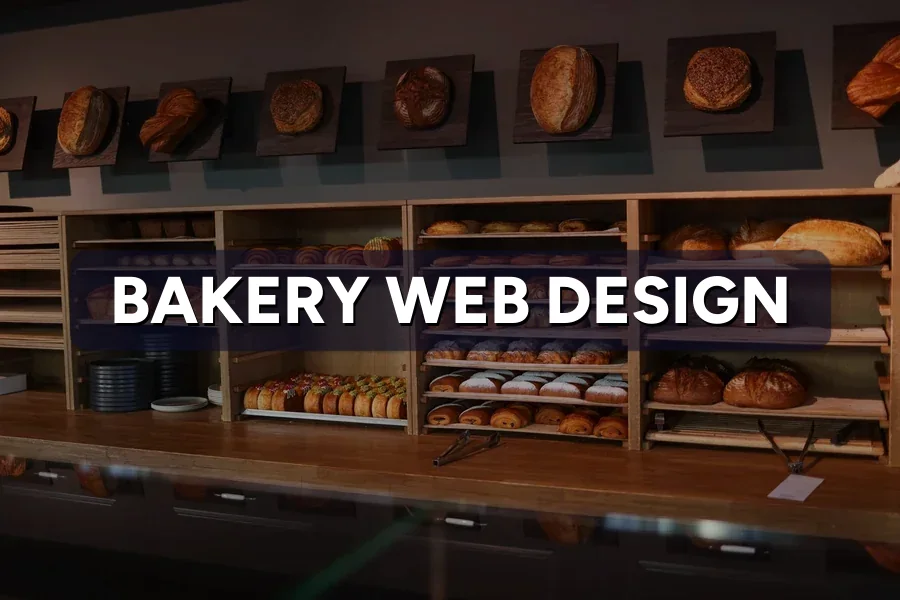
Most Malaysian bakery websites are a photo album with a phone number. Gorgeous cakes, a story about the founder’s grandmother, and no price anywhere. The visitor already saw four other bakeries doing exactly the same thing, so they close the tab and message whichever one showed a number.
Web design for bakeries is really order design. ZenWeb builds and rebuilds food business websites across Malaysia, and the pattern in bakery accounts repeats itself: the photos are fine, the traffic is fine, and the kitchen still spends its mornings answering “how much for 6 inch” on WhatsApp instead of baking.
Plenty of likes, hardly any orders through the website?
The fix is usually three pages, not a full rebuild. See how we build websites that take orders →
The heaviest lifting is done by the ordering flow, so it helps to see how a food ordering system is actually assembled and wired to delivery and pickup.
Source video: Mr Web on YouTube
Quick Answer: A bakery site is judged on one number: how many visitors send a date, a size and a flavour. Web design for bakeries starts there, which is why the wider marketing mix for bakeries stalls when the site cannot take an order.
Someone ordering a birthday cake is not browsing. The party is on Saturday, they are on the sofa on Tuesday night, and they have about fifteen minutes. They open a few bakeries, skim, and message whoever answered the most questions on the page.
Quick Answer: Five things: what you bake and where you deliver, a starting price, an order button, a WhatsApp button, one halal or licence line. Everything else belongs further down, the same discipline behind a Malaysian business website that works.
The first screen on a phone is roughly 600 pixels tall, and that is the entire negotiation. A full-width hero photo of a wedding cake captioned “Baked With Love Since 2016” spends all of it saying nothing useful.
| Element | What it must say |
|---|---|
| Headline | Custom cakes and pastries, delivered across named districts |
| Price signal | “6-inch cakes from RM 120. Cookie jars from RM 38.” |
| Primary button | “Price my cake”, opening the builder, not a contact page |
| Secondary button | WhatsApp, pre-filled so the visitor sends in one tap |
| Trust line | Halal status, licensed premises, next available slot |
Two buttons is the ceiling. A third splits attention and costs you the builder clicks, which produce the best orders.
Quick Answer: Publish starting prices by size and product line, not a full menu of every design. It roughly doubles the share of enquiries that end in a deposit, the same effect visible in Meta Ads for bakeries.
The usual objection is that every custom cake is different, so a published price will be wrong. True, and beside the point. The buyer is not asking for a final figure. They want proof you are in their range before they spend an evening describing a unicorn theme.
Add one line on what pushes a quotation up: sculpted shapes, sugar flowers, same-week rush, weekend delivery to a hotel. Buyers who read that trust your number more, not less.
Quick Answer: Five taps ending in a price range, not a promise. Size, style, flavour, date, delivery zone, then a range on screen before you ask for a phone number. It is the single strongest page web design for bakeries can produce, and the core of any bakery website build.
A cake builder gives the visitor the answer they came for and collects the exact fields your kitchen needs to quote, all before anyone opens WhatsApp.
Show the range before asking for contact details. Gate the number behind a form and you lose most visitors at the exact moment they were ready to talk.
Quick Answer: Six fields maximum: delivery postcode, collection date, size, flavour, occasion, phone. Design photos come after the chat opens, which is how you stop traffic arriving with no orders attached.
Bakeries over-build the form because the kitchen wants the full picture before replying. Every extra field is another reason to abandon on a phone at 11pm.
The moment the form submits, open WhatsApp with a pre-filled summary of what they chose. The buyer sees their own cake described back to them and replies straight away. Wiring the WhatsApp button and payment gateway properly is usually a one-day job.
Not sure whether you need a rebuild or just a better order form?
We scope both before quoting. Compare our web design packages →
Quick Answer: One trust strip under the hero, one detailed page near the bottom. State your halal position honestly, whether you hold JAKIM certification or simply use halal ingredients, and prove it the way visitors actually read trust signals.
Halal is the sharpest question a Malaysian bakery gets, and most sites answer it with a logo in the footer. That is the worst of both worlds: it looks like a claim, and it explains nothing. Say it in sentences instead.
Quick Answer: Your own cakes photographed on your own table, a serving guide, a cut cross-section, and the lead time. Styled stock imagery is the most common reason product pages stop converting.
Every bakery can buy the same photo of a pastel drip cake. Buyers saw it on the last three sites they opened, so it registers as nothing. What proves the kitchen is specific and slightly imperfect:
Caption each photo with the occasion and district. It reads as proof to a human and gives search engines local context, which is where SEO for bakeries starts earning.
Quick Answer: Sites with price bands and a cake builder convert 8.4% of visitors, against 2.3% for a photo-gallery brochure. Add checkout and it reaches 10.6%, with 88% of orders arriving dated, so the build pays for itself in kitchen time.
| Website type | Visitor to enquiry | Median time on page | Enquiries with date and size |
|---|---|---|---|
| Link-in-bio page only | 1.2% | 0:29 | 8% |
| Photo-gallery brochure, “PM for price” | 2.3% | 1:04 | 17% |
| Menu pages with published price bands | 5.1% | 2:11 | 46% |
| Price bands plus cake builder | 8.4% | 3:22 | 71% |
| Builder plus online checkout and deposit | 10.6% | 3:51 | 88% |
Source: ZenWeb client tracking, Malaysian bakery and cake studio websites, 2024-2026.
The jump that matters is not the last row. It is brochure to published price bands, which more than doubles conversion for one afternoon of copywriting. That single step is where web design for bakeries earns its money.
Quick Answer: A required reference-photo upload. Only 29% of mobile visitors get past it, against 44% on desktop. Since nearly all bakery traffic is mobile, per DataReportal’s Digital 2026 Malaysia report, that one field decides the form, and splitting it into steps only helps once it is gone.
| Form field | Mobile completion | Desktop completion | Action |
|---|---|---|---|
| Delivery postcode | 95% | 96% | Keep |
| Collection or delivery date | 88% | 91% | Keep |
| Cake size and servings | 82% | 87% | Buttons |
| Flavour choice | 77% | 84% | Buttons |
| Budget range | 64% | 72% | Optional |
| Written design description | 46% | 58% | Chat |
| Required reference photo upload | 29% | 44% | Remove |
Source: ZenWeb client tracking, Malaysian bakery order forms, 2024-2026.
Everything above 70% earns its place. The bottom two belong in the WhatsApp chat, where a customer sends five Pinterest screenshots in seconds without thinking of it as a form.
Quick Answer: A custom site with a builder and checkout produces around 118 orders a month by month six, against 14 for a social page with WhatsApp only. Cost per order falls as the tier rises, the argument behind Malaysian web design price tiers.
| Build tier | Relative output | Orders / month | Year-one cost per order |
|---|---|---|---|
| Custom site, builder, checkout and tracking | 118 | RM 9 | |
| Custom site with published price bands | 71 | RM 12 | |
| Template site, lightly customised | 39 | RM 16 | |
| Social page and WhatsApp only | 14 | RM 23 |
Source: ZenWeb client tracking, Malaysia, 2024-2026. Equal traffic assumed across tiers.
The free option is not free. It costs more than twice as much per order and produces a fraction of the volume, which is the trap most home bakeries hit in year one.
Quick Answer: A homepage carrying over 4MB of photos loads in 6.3 seconds and converts 1.6% of visitors. Keep it under 500KB and the same page converts 8.9%, comfortably inside Google’s 2.5-second LCP threshold and worth fixing first.
| Homepage image weight | Speed (LCP) | Mobile bounce | Visitor to enquiry |
|---|---|---|---|
| Under 500KB | 1.6s | 38% | 8.9% |
| 500KB to 1MB | 2.1s | 44% | 7.4% |
| 1MB to 2MB | 2.9s | 53% | 5.2% |
| 2MB to 4MB | 4.1s | 64% | 3.1% |
| Over 4MB | 6.3s | 74% | 1.6% |
Source: ZenWeb client tracking, Malaysian bakery websites on mid-range Android over mobile data, 2024-2026.
This is the one table to show a bakery owner who insists on a twenty-image homepage slider. Every megabyte of decoration costs roughly two percentage points of conversion, and mobile-friendly is not the same as fast. Compress every photo to under 200KB, lazy-load the gallery, and drop the video background.
Planning a rebuild before the festive season?
Four to six weeks is the realistic window for a builder and checkout. Talk to our web design team →
Quick Answer: Both, split by product. Ready-made items go through checkout like any Malaysian online store; custom cakes take a fixed deposit online and settle the balance later. Deposits are what stop no-shows.
Most Malaysian bakeries run two businesses on one site: an over-the-counter range that can be bought outright, and custom work that needs a conversation. Designing one checkout for both is why so many bakery carts sit empty.
Quick Answer: Hiding prices, burying the halal answer, demanding a reference photo, and uploading uncompressed images. All four are fixable in a week, and all four show up in most budget Malaysian websites. They are the four faults we correct first in any web design for bakeries project.
Fix the price signal and the WhatsApp handover first. Those two move more orders than a full redesign, and you can measure the change within a fortnight.
Quick Answer: Publish price bands by size, build a five-tap cake builder, answer the halal question in sentences, compress the photos, and hand the buyer into WhatsApp with their order already typed. That is web design for bakeries doing its job.
None of this needs a big budget. The price bands take an afternoon, compressing the gallery takes an hour, and the builder takes a few weeks. What it needs is the decision to stop treating the website as a portfolio and start treating it as the first half of an order. Do that before the festive rush, and the busy season arrives at a site that answers questions instead of asking them. When you are ready, our web design team can scope it with you, and Google Ads for bakeries can fill it once it converts.
Quick Answer: Bakery owners ask most about build cost, cake builders and published pricing. Package detail sits on our web design pricing page.
A lightly customised template site runs a few thousand ringgit. Full web design for bakeries, with a cake builder, checkout and tracking, sits higher and returns roughly three times the monthly orders, so cost per order falls as the tier rises.
A builder lifts conversion from around 2% to over 8%, and 71% of those enquiries arrive with a date and size. A contact form collects names; a builder collects quotable orders.
It loses price-shoppers, who rarely book anyway, and wins the larger group who fear a surprise figure after describing their theme. Published bands more than double the enquiry rate.
Not as a required field. Only 29% of mobile visitors finish a required photo upload. Ask in the WhatsApp chat instead, where customers send five screenshots without hesitating.
Want a bakery website that takes orders while you bake?
Book a free 30-minute review. We go through your product pages, your order form and your speed on a real phone, then map the fastest route to more paid deposits.
Complete the form and our team will contact you to discuss your goals. Let’s grow your business.



Meowketing Specialist
Online


























