

Share this post:
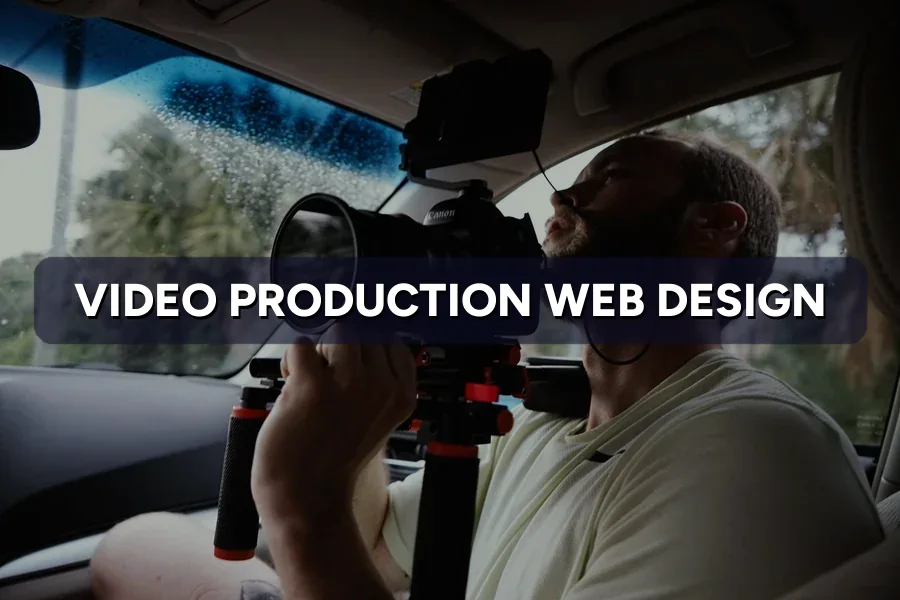
Most Malaysian production houses have a website built to impress other filmmakers. Full-bleed autoplay reel, a grid of stills, a “Get in touch” box at the bottom. It wins compliments from the industry and almost nothing from the people who sign purchase orders.
The person deciding your fate is usually a marketing executive or a procurement officer on a locked-down office laptop, comparing three shortlisted houses in a spreadsheet. They need to know which formats you shoot, what a job costs, how fast you deliver, whether your licensing is in order, and what they can forward to their boss. A reel answers none of it.
This guide to web design for video producers covers page structure, rate transparency, reel playback, brief forms, case study pages and the compliance page Malaysian houses skip — with four data sets along the way.
ZenWeb builds websites for video production companies across Malaysia, alongside the wider production house marketing mix. The patterns below come from that work.
Beautiful reel, empty brief inbox?
We rebuild production sites around format pages, rate bands and a brief form that qualifies. See our web design packages →
Start with why a reel-first site loses to a plainer competitor.
Source video: Tooltester on YouTube
Quick Answer: A corporate brief is decided by two or three people who never meet you. The reel convinces the one who already likes your work; the other two are checking scope, price band and licensing. A plainer site that answers all three beats a beautiful one that answers only the first.
Nobody shortlists a production house on craft alone. By the time your site is open, the buyer has already seen your work somewhere — an agency recommendation, a LinkedIn post, a past job. The site is the second look, and the second look is administrative.
Watch the actual sequence. The marketing executive opens all three shortlisted houses and builds a comparison for the boss: formats, indicative cost, turnaround, licence position. Whichever site fills that comparison fastest gets forwarded. Whichever site makes them ask gets left open in a tab until Friday.
That reframes the whole brief for web design for video producers: the site is a source document for someone building a case internally. Design it to be quoted from.
Quick Answer: Two very different visitors. The corporate buyer arrives on a managed office laptop with an old browser, a throttled connection and autoplay blocked. The SME owner arrives on a phone at night. Your site has to work on both, and most production sites are built for neither.
Malaysian internet use runs through phones — DataReportal’s Digital 2026 report for Malaysia puts mobile at the centre of it year after year, and SME enquiries follow suit. But corporate video money moves through office machines, and those are the harsher test.
What the managed laptop does to a typical production site: blocks autoplay, disables sound, sometimes blocks the video CDN entirely, and renders your 4K hero loop as a black rectangle with a spinner. The buyer sees nothing, assumes the site is broken, and moves to the next tab.
So web design for video producers has to work with the video switched off. Put text above the fold on every screen — what you produce, for whom, from which city, starting at what — and treat the reel as an invitation rather than a wall. The phone checklist in our note on mobile-friendly websites in Malaysia covers the consumer half.
Quick Answer: A rate guide and a format page produce far more qualified briefs than the showreel homepage, even though the homepage gets the most visits. The reel earns attention; the pages with numbers on them earn the brief that finance can approve.
| Landing destination | Visitor to brief form | Briefs that qualify | Avg stated budget |
|---|---|---|---|
| Rate guide with bands published | 4.6% | 71% | RM 18,400 |
| Format page (corporate profile, TVC, event) | 3.9% | 64% | RM 15,100 |
| Written case study page | 3.1% | 68% | RM 21,700 |
| Capability deck download page | 6.2% | 49% | RM 12,900 |
| Showreel homepage | 1.2% | 33% | RM 6,800 |
Source: ZenWeb client tracking, Malaysia, 2024-2026.
Read the last two columns together. The capability deck pulls the most form fills and the weakest briefs, because a free PDF attracts researchers as well as buyers. The case study page pulls fewer forms and the largest budgets, because only a serious buyer reads a full project write-up.
The homepage row is the uncomfortable one. It gets most of the traffic and produces the smallest briefs, which is what you would expect from a page that shows work without naming a price or a scope. The same logic drives the paid side — the Google Ads guide for video producers covers where a paid click should land instead.
Quick Answer: Give corporate profile films, TVC and brand ads, event coverage, product and e-commerce video, training and internal comms, and animation a page each. One “Services” page listing six formats describes none of them properly and ranks for none of them either.
A corporate profile film and a two-camera conference shoot share a camera and nothing else. One is a scripted month with a director; the other is a crew, a call sheet and a 72-hour turnaround. Written as a shared bullet list, both sound vague.
Format pages are where web design for video producers stops being decoration. Each answers in order: what the format is, typical shoot days, what the fee covers, the rate band, two or three sample films, delivery window, then the brief button.
This structure is also what earns rankings, which is why the SEO guide for video producers treats format pages as the backbone rather than a dropdown label — the same principle behind good service page SEO.
Quick Answer: A self-hosted 4K autoplay hero can push first paint past twelve seconds on an office connection and drops brief submissions by roughly three-quarters. A muted poster frame with click-to-play, streamed rather than self-hosted, gets the same reel watched more often and loads in under three seconds.
| Hero approach | Initial weight | Office load | Reel played | Brief rate |
|---|---|---|---|---|
| Autoplay hero | ||||
| Self-hosted 4K loop | 42.0 MB | 12.4 s | 18% | 0.6% |
| Self-hosted 1080p loop, compressed | 9.8 MB | 5.9 s | 31% | 1.4% |
| Click-to-play hero | ||||
| Poster frame, streamed player on click | 1.6 MB | 2.3 s | 44% | 3.8% |
| Poster frame plus headline and rate band | 1.7 MB | 2.4 s | 41% | 4.9% |
| Static-first hero | ||||
| Still frame, reel linked below the fold | 0.9 MB | 1.8 s | 26% | 3.4% |
| No reel on homepage at all | 0.7 MB | 1.5 s | 9% | 2.1% |
Source: ZenWeb client tracking, Malaysia, 2024-2026.
The two click-to-play rows are the point. Removing autoplay does not hide your work — it more than doubles the share of visitors who actually watch it, because the reel now plays when someone chooses rather than while they are still deciding whether the page loaded.
The last row is the useful counterweight. Stripping the reel entirely gives the fastest page and a worse brief rate, so speed alone is not the answer. If your site is stuck in the top band, our guides on fixing a slow website and failing Core Web Vitals cover the pipeline.
Site takes twelve seconds on an office laptop?
We rebuild heavy production sites around streamed playback and static-first heroes. See how we build video production websites →
Quick Answer: Replace the blank “Message” box with five specific fields: format, deadline, budget band, intended usage, and where the video will run. Every field you add costs you some submissions and buys you a quote you can actually write without three follow-up emails.
The blank enquiry box is the default because it feels friendly. In practice it produces “Hi, how much for a video?” — a message that takes four replies to turn into something quotable, by which time a faster house has sent a proposal. A brief form is the opposite trade: it filters, and the filtering is the feature. Someone unwilling to tick a budget band was never going to sign a purchase order.
Five fields is the ceiling — our note on contact forms that are too long covers where drop-off starts, and our walkthrough of quote request forms covers the wording. Then answer fast: speed to lead decides more shortlists than craft does.
Quick Answer: Corporate buyers sell you to their boss using a PDF, not a link. Give them a downloadable capability deck and a published rate guide so your case gets made accurately in a meeting you are not in.
Most production houses miss this entirely. The buyer likes your work, then has to justify the spend to a manager who will never open your website. What they need is something attachable.
A capability deck is eight to twelve pages: who you are, the formats, crew and kit, three named projects with outcomes, your licensing and insurance position, indicative rate bands, contact details. Gate it behind a two-field form — name and work email — not a full brief.
The rate guide is the harder decision and the higher-value one. Malaysian corporate video pricing already circulates through agency procurement lists, so publishing bands hides nothing — and it stops you being shortlisted for jobs you cannot serve. Name the variables beside each band — shoot days, crew size, locations, talent, animation minutes, usage term — so the number reads as a starting point rather than a quote. Our breakdown of video production pricing in Malaysia covers what typically sits in each band.
Quick Answer: Give every finished job a written page, not a thumbnail in a grid. Name the industry, the city, the crew size, the delivery window and what the client did with the film. Case study pages produced the largest average budgets in our tracking above.
A grid of thumbnails asks the visitor to guess. A written page tells them: manufacturing client in Shah Alam, two-day shoot, four crew, first cut in nine working days, used for a trade show and paid social for twelve months. That proves you have done their exact job, shows the scale you work at, and establishes the price band without quoting a figure.
Written project pages are also the strongest raw material for social — the Meta Ads guide for video producers covers how one job becomes creative, and it is why trust signals beat another award badge.
Quick Answer: Publish one page covering your FINAS licensing position, your drone permit process, your insurance cover, your usage-rights ladder and how you handle talent releases and personal data. It is the page procurement checks and the page almost no Malaysian production site has.
Craft gets you shortlisted. Legal review is where shortlisted houses drop out, usually over questions nobody thought to answer publicly.
On ownership, the Copyright Act 1987 treats a commissioned work as transferring to the party who commissioned it unless the parties agree otherwise in writing. Put your preferred position in your published terms.
Quick Answer: Brief volume moves within two months of publishing format pages and a rate guide. Average project value takes longer — roughly six to nine months, as the rate guide and rights ladder gradually filter out the small jobs and attract the bigger ones.
| Month | Qualified briefs | Avg signed value | Briefs over RM 25k |
|---|---|---|---|
| Month 0 (before rebuild) | 3.2 | RM 9,400 | 11% |
| Month 2 | 5.8 | RM 10,200 | 17% |
| Month 4 | 7.1 | RM 12,600 | 24% |
| Month 6 | 8.4 | RM 15,900 | 33% |
| Month 9 | 9.0 | RM 19,300 | 41% |
| Month 12 | 9.3 | RM 21,800 | 46% |
Source: ZenWeb client tracking, Malaysia, 2024-2026.
Notice the two curves move at different speeds. Brief volume nearly doubles by month four and then flattens — that is the format pages doing their work and running out of new search demand to capture.
Average value keeps climbing after volume stops, which is the rate guide and the rights ladder slowly changing who bothers to write in. Producers who judge a rebuild at month three see only the first curve and conclude the site raised traffic but not revenue. The revenue arrives two quarters later. Our note on traffic without leads covers the sites where neither curve moves.
Want bigger briefs, not just more of them?
We start with format pages, rate bands and the rights ladder, then work outwards. Compare our web design packages →
Quick Answer: A reel-site refresh with proper playback runs about RM 4,000 to RM 7,500. A format-page site with published rate bands sits around RM 8,500 to RM 16,000, and adding case study pages, a gated deck and a compliance section takes it to roughly RM 17,000 to RM 32,000.
| Tier | Relative cost | Cost range | Build time |
|---|---|---|---|
| Reel-site refresh | RM 4,000 – 7,500 | 2-3 weeks | |
| Format-page site with rate bands | RM 8,500 – 16,000 | 5-7 weeks | |
| Full procurement-ready build | RM 17,000 – 32,000 | 8-12 weeks | |
| Multi-city and bilingual build | RM 33,000 – 55,000 | 12-16 weeks |
Source: ZenWeb project data, Malaysia, 2024-2026.
Tier two is where most Malaysian houses should start — roughly the value of one mid-sized corporate film, and the tier that produced the curve in the previous section. The jump to tier three buys case study pages, the gated deck and the compliance section: worth it once format pages are already earning briefs, premature before that. Our breakdown of website costs in Malaysia and our web design pricing put these tiers in wider context.
Quick Answer: Five cost the most: a self-hosted autoplay hero, “contact us for pricing”, a thumbnail grid instead of written project pages, a blank enquiry box, and a site whose newest work is three years old.
Each is a choice made for the production house’s comfort rather than the buyer’s, and each is a place where web design for video producers quietly costs money. Fixing most takes an afternoon and a settings change, not a rebuild — the same instinct behind our list of must-have features for Malaysian business websites.
Good web design for video producers is administrative work dressed as creative work. Split the site by format, publish the rate bands, kill the autoplay, write up the finished jobs, ask five real questions on the brief form, and put your licensing position in public.
If you do only three things this quarter: publish a rate band on every format page, swap the autoplay hero for a poster frame with a play button, and write up your last five projects properly. Those moved the numbers above further than any redesign. The reel was never the problem. The path from admiring a film to approving a purchase order was.
A reel-site refresh runs about RM 4,000 to RM 7,500. A format-page site with published rate bands sits around RM 8,500 to RM 16,000. Adding case study pages, a gated deck and a compliance section takes it to roughly RM 17,000 to RM 32,000.
No. A self-hosted 4K autoplay hero pushed load past twelve seconds on office connections in our tracking and dropped brief submissions to 0.6%. A muted poster frame with click-to-play loaded in 2.3 seconds and got the reel watched by 44% of visitors.
Yes, as bands with the variables named — shoot days, crew size, locations, usage term. The rate guide was the strongest landing destination in our tracking, producing 4.6% brief rates. Hiding the number mostly filters out buyers who were ready.
Five fields: format as a dropdown, deadline as a date, budget band as ranges, intended usage, and where the film will run and for how long. A blank message box collects enquiries that take four follow-up emails to become quotable.
Yes for corporate and agency work. Procurement and legal check licensing, insurance and rights before craft. A page stating your FINAS position, your drone permit process under CAAM, your insurance cover and a priced usage-rights ladder removes the objections that stall contracts.
Ready for a production site that wins briefs?
Book a free 30-minute strategy session — we’ll review your format pages, your reel playback and your brief form, then give you a concrete 90-day plan with realistic cost per signed project.
Complete the form and our team will contact you to discuss your goals. Let’s grow your business.



Meowketing Specialist
Online


























