

Share this post:
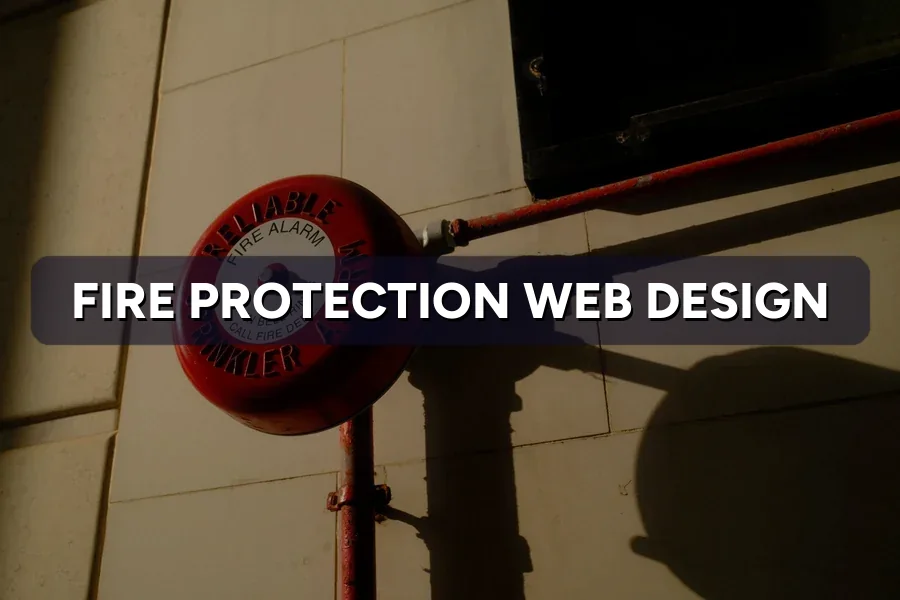
Most fire protection websites in Malaysia look identical. A red header, a stock photo of a sprinkler head, four icons labelled Design, Supply, Install, Maintain, and a contact form asking for name, email and message.
The buyer opening that page is rarely browsing. A Bomba officer has left a notice, the fire certificate lapses in six weeks, or the alarm panel has tripped three nights running. Your website is being checked, not admired.
ZenWeb builds and rebuilds websites for fire protection and compliance-led trades across 500+ Malaysian accounts. The same gap keeps appearing: the firm is genuinely registered and technically strong, and the website proves neither.
Getting site visits but no maintenance contracts?
We rebuild the enquiry path before touching the visuals. Compare our web design packages →
Before the detail, a look at how B2B sites are converting now.
Source video: B2B website design examples on YouTube
Quick Answer: One buyer has a deadline, usually a Bomba notice or a fire certificate renewal. The other is scoping a new installation through an M&E consultant. They need different pages, and most sites are built for neither.
The deadline buyer wants three things confirmed in about twenty seconds: that you are registered, that you cover their building type, and that someone will pick up. That person converts on a phone, often outside office hours.
The project buyer is slower and heavier. A consultant or developer is checking whether you can be listed as a vendor, whether your CIDB grade covers the contract value, and whether your company profile can be attached to a submission.
Serving both from one homepage produces a page that says nothing sharply. The fix is structural: a fast compliance path for the deadline buyer, and a documented capability path for the project buyer, both signposted above the fold.
Quick Answer: Four elements: the systems you maintain, the states you cover, one registration line in plain text, and a single primary action. Everything else waits for the second scroll on a properly structured site.
Read as a sentence, a strong hero says: Fire alarm, hose reel, hydrant and sprinkler maintenance for factories and stratified buildings in Selangor, KL and Negeri Sembilan. Bomba-registered fire safety contractor. Get a maintenance quotation.
That single line does the qualifying work of an entire brochure. It names the systems, the building types, the coverage area and the credential, so an unsuitable enquiry filters itself out before your team spends an hour on it.
Two habits cost enquiries. A rotating slider buries the second message on a phone, and twin equal-weight buttons split attention. Choose one primary action, and keep the WhatsApp button as a quieter secondary route.
Quick Answer: Roughly two in five website enquiries come from a Bomba notice or a fire certificate renewal. Those close best and expect the fastest reply, so the site should be designed around them.
| Enquiry trigger | Share of enquiries | Reply window expected | Close rate | Typical first contract |
|---|---|---|---|---|
| Annual servicing or extinguisher refill due | 26% | 3 working days | 24% | RM 3,200 |
| Fire certificate renewal approaching | 23% | 2 working days | 38% | RM 9,500 |
| Bomba notice or failed inspection | 18% | Same day | 46% | RM 14,000 |
| System fault or nuisance alarm | 14% | Same day | 41% | RM 6,800 |
| New build or renovation package | 12% | 1 week | 17% | RM 120,000 |
| Vendor or panel registration | 7% | 1 week | 11% | RM 45,000 |
Source: ZenWeb client tracking, Malaysia, 2024-2026.
Read the close-rate column next to the reply window. The two triggers that close best also expect an answer the same day. That makes response design part of web design: a visible phone number, an after-hours note, and a form that lands where someone is watching.
Quick Answer: Give each system its own page. Hose reel, hydrant, wet and dry riser, sprinkler, fire alarm and detection, gas suppression, extinguishers, emergency lighting and smoke control. Buyers search the system, not the trade.
A single “Our Services” page with eight bullet points is the most common structural fault in this industry. It cannot rank, it cannot answer a specific question, and it gives your sales team nothing to send.
One page per system solves all three. Each page should carry the same short spine: what the system is, which building types must have it, what an annual inspection covers, what typically fails, and what a replacement costs in ranges.
Add a second layer by building type, because a JMB committee and a plastics factory read the same words differently: stratified residential, factory and warehouse, shopping complex, school and hostel, hospital and clinic, data centre. That structure is shared infrastructure. Paid clicks land on a matching page, and fire protection SEO finally has something to rank.
Quick Answer: Print the registration numbers as text and link to the public register. A scanned certificate proves nothing a reader can check; a number plus a directory link does.
This industry attracts unregistered operators, and building managers know it. That works in your favour if checking you takes one click rather than an email.
Skip the logo wall. Ten manufacturer badges and a satisfaction seal read as decoration. One checkable registration number outperforms all of them, and it is the cheapest trust element you will ever add, as our guide to website trust signals explains.
Quick Answer: Six fields, one screen, no message box. Name, phone, building type, location, systems installed and fire certificate expiry. The expiry date is what turns an enquiry into a scheduled job.
Standard advice says shorten the form. For fire protection that is only half right. Cutting fields lifts submissions but strips out everything that makes a lead workable, and a survey costs a technician half a day. Swap fields instead of deleting them.
Two build details matter more than the field list: tap-target buttons instead of dropdowns, and a numeric keypad for the phone number. Give the form its own page as well, which is why a dedicated landing page outperforms a homepage for paid clicks.
Quick Answer: Publish the profile as a readable web page with the PDF as a download. Consultants and procurement teams check the page first, then attach the file to a vendor submission.
Almost every Malaysian fire protection firm has a company profile deck. Almost none publish its contents as text, so none of it is searchable, quotable by an AI assistant, or readable on a phone in a car park.
Put the substance on the page: registered entity and incorporation year, Bomba and CIDB registrations, insurance cover, and the headcount split between technicians and engineers. Add the systems you handle, the sectors you serve, three or four reference projects with building type and year, and any ISO certification. Then offer the PDF for the vendor form.
Reference projects carry most of the weight. “48-unit stratified block, Cheras, hose reel and alarm panel replacement, 2025” is worth more than a gallery of red pipes, and each one gives the site a feature buyers actually use.
Quick Answer: The fire certificate renewal explainer outperforms every other page, followed by individual system pages and the maintenance contract page. The homepage and the about page barely register.
| Page published | Relative enquiries | Index | Build effort |
|---|---|---|---|
| Fire certificate renewal explainer | 100 | Low | |
| Individual system pages | 78 | Medium | |
| Maintenance contract page | 64 | Low | |
| “Received a Bomba notice” page | 51 | Low | |
| Building-type pages | 44 | Medium | |
| Reference project records | 33 | Medium | |
| Homepage on its own | 19 | High | |
| About us page | 8 | Low |
Source: ZenWeb client tracking, Malaysia, 2024-2026.
Read the effort column alongside the index. Three of the top four are low-effort pages that a firm can write from knowledge it already has, while the expensive homepage redesign sits near the bottom.
Quick Answer: Publish ranges for the repeatable work and stay silent on project installation. Extinguisher servicing, hose reel inspection and annual maintenance bands can be published; a sprinkler package cannot.
Firms resist this for a fair reason: every building differs and a published figure invites arguments. But the buyer searches for a number anyway, and silence lets a competitor set the expectation before you are contacted.
The workable split is by predictability.
Not sure what your site should cost to build?
Our packages are priced by what the site has to do, not by page count. See our web design pricing →
Quick Answer: A site that produces workable enquiries sits between RM 6,500 and RM 20,000, depending on how many system and building-type pages are written. Below RM 3,500 it is a template with a logo.
| Tier | Build cost | Build time | What it includes | Qualified enquiries a month |
|---|---|---|---|---|
| Brochure template | RM 1,800 to RM 3,500 | 1 to 2 weeks | Six pages, one services list, generic contact form | 1 to 2 |
| Compliance-led site | RM 6,500 to RM 12,000 | 4 to 7 weeks | System pages, FC renewal explainer, credential strip, six-field form, readable company profile | 9 to 16 |
| Contract-engine site | RM 13,000 to RM 20,000 | 7 to 10 weeks | Everything above plus building-type pages, maintenance contract path and FC expiry capture | 20 to 34 |
| Multi-branch tender build | RM 20,000 to RM 32,000 | 10 to 16 weeks | Separate project and servicing paths, branch pages, document library, CRM handover, BM and English | 35 to 60 |
Source: ZenWeb client tracking, Malaysia, 2024-2026. Enquiry figures assume the site is supported by active search and paid traffic.
That last column only holds if traffic exists, so the build belongs in the same conversation as the paid search plan. Broader build costs across industries sit in our website pricing guide, and the case for rebuilding rather than patching is in our redesign cost breakdown.
Quick Answer: Enquiries build from March and peak in July and August, when servicing contracts and certificate renewals cluster. November to February is the trough, and it is when a rebuild should happen.
| Month | Enquiry index | Quote to contract | Note |
|---|---|---|---|
| January | 82 | 21% | New budgets not released yet |
| February | 88 | 23% | Factory shutdown window for pipework |
| March to April | 109 | 27% | Audits and insurance renewals |
| May to June | 116 | 29% | Certificate renewals cluster |
| July to August | 121 | 31% | Annual peak, servicing contracts renewed |
| September to October | 104 | 26% | Next-year capex planning starts |
| November to December | 79 | 18% | Year-end shutdown, approvals slow |
Source: ZenWeb client tracking, Malaysia, 2024-2026.
A rebuild takes four to ten weeks. Starting in November puts the new system pages in the index before the March climb. Start in May and you spend your two best months watching a staging site.
Planning a rebuild before the next renewal season?
We scope compliance-led sites around the service diary, not the page count. Explore our web design service →
Quick Answer: Aim for the main content within 2.5 seconds on 4G. Your buyer is often standing next to a riser cabinet in a basement with one bar of signal.
Google treats 2.5 seconds or less as a good Largest Contentful Paint. Fire protection sites regularly land at six or seven because the gallery loads uncompressed site photos straight from a technician’s phone.
The fixes are dull and effective: compress the photos, drop the hero video, remove the slider, lazy-load below the fold. Most sites recover three seconds using the checklist in our page speed guide.
Mobile layout matters just as much. With Malaysian internet use overwhelmingly mobile-first, the phone number must be tappable, the FC page must be readable without pinching, and the form must fit one thumb reach, as our mobile-first guide sets out.
Quick Answer: One services page instead of system pages, scanned certificates instead of registration numbers, a profile locked in a PDF, and a form that ignores the fire certificate date. Most sites carry all four.
None of these are expensive to fix, and together they explain the gap between a firm that looks capable and a firm that gets called. If the whole layout feels wrong rather than one element, the problem is conversion structure, which our CRO basics guide covers. Where your audience mixes languages, the bilingual site trade-offs are worth reading, and these same pages are where your Meta campaigns will land.
Quick Answer: Fire protection web design works when the site proves compliance quickly. Publish registration numbers as text, build a page per system, explain the certificate renewal, and capture the FC expiry date on a site built for enquiries.
Very little of this needs an expensive redesign. The credential strip is an afternoon, the renewal explainer is a day, and the system pages are a fortnight of writing down what your engineers already say on site visits.
The harder part is resisting the brochure instinct. Fire protection demand is genuinely evergreen because the law renews it every year, so the firm that documents its capability clearly is the one the building manager finds at the point the deadline lands. That is a website decision, and it sits alongside the rest of your fire protection marketing plan.
Quick Answer: Firms ask most about build cost, build time, publishing prices and how to display Bomba registration. Package detail sits on our web design pricing page.
Between RM 6,500 and RM 12,000 for a compliance-led site with system pages, a fire certificate explainer and a qualifying form. Expect RM 13,000 to RM 20,000 once building-type pages and a maintenance contract path are added. Template builds under RM 3,500 rarely produce workable enquiries.
Four to seven weeks for a compliance-led site, and seven to ten weeks once building-type pages and a maintenance contract path are included. Start in the November to February trough so the pages are indexed before the March climb.
Publish ranges for repeatable work such as extinguisher servicing, hose reel inspection and annual maintenance bands, with clear inclusions and exclusions. Hold back on installation packages and explain what drives the price instead.
As plain text in a credential strip under the hero, with the registered company name, registration number and CIDB grade, plus a link to the public ePREMIS contractor directory. A scanned certificate image proves far less than a number a buyer can verify.
Ready to turn your website into a service diary?
Book a free 30-minute strategy session. We review your enquiry path, page speed and competitors, then give you a 90-day plan with realistic enquiry and contract targets.
Complete the form and our team will contact you to discuss your goals. Let’s grow your business.



Meowketing Specialist
Online


























