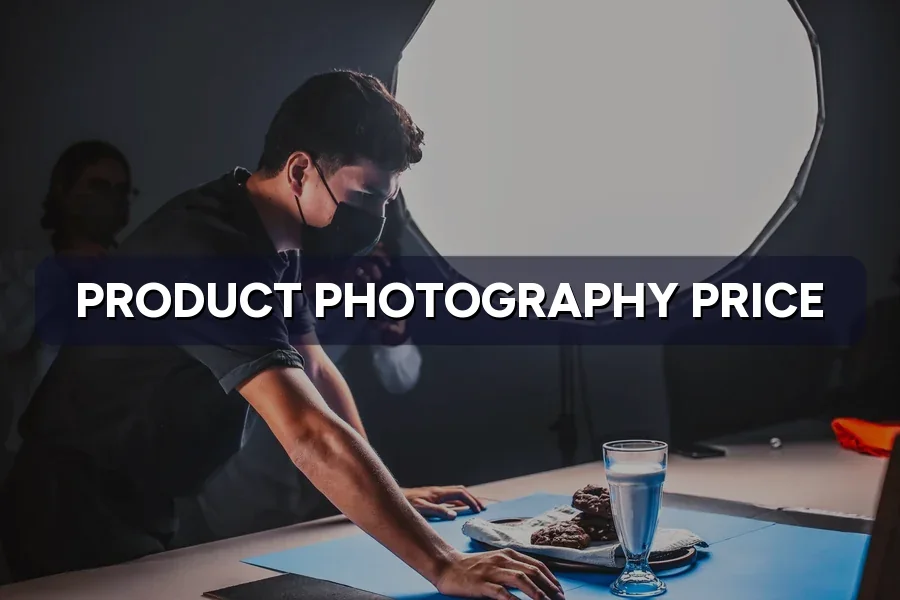
You have 40 new SKUs to list on Shopee and your own website before the next sale. One photographer quotes RM25 per photo. Another quotes RM180 per product. A studio asks for RM2,800 for a full day. Which one is fair, and which one is the cheap option that costs you more later?
Product photography Malaysia pricing looks messy because every supplier quotes in a different unit. This guide puts them on one scale. You will see 2026 per-item rates in ringgit, what each tier includes, the extras that inflate quotes, and when shooting it yourself makes sense. It comes from ZenWeb, a Google Partner agency with 500+ Malaysian clients, many of them online sellers. If you need images for team pages or your About page rather than products, our guide to corporate photoshoot prices covers that instead.
Good photos only pay off when people see them.
We plan product visuals, listings and ads together, so the shoot feeds your sales channels. See our digital marketing packages and pricing →
Before the numbers, this short tutorial shows how a simple white-background setup works. It helps you judge what a photographer is really charging for.
Source video: Adaptalux on YouTube
Quick Answer: Product photography in Malaysia costs about RM15 to RM50 per image for plain white-background e-commerce shots and RM60 to RM200 per product for a three- to five-angle set. Styled lifestyle images run RM80 to RM300 each, and on-model fashion looks cost RM150 to RM500 per look before the model’s fee.
The product photography Malaysia ranges below come from quotes we see when planning listings and ad creative for local sellers, checked in October 2026. They assume small to medium products shot in a studio, basic retouching included, and digital use only.
| Shot type | Priced per | Typical rate | Usually included |
|---|---|---|---|
| White-background shot | Image | RM15–RM50 | Background cut-out, basic clean-up |
| E-commerce angle set | Product (3–5 images) | RM60–RM200 | Front, back, side, detail |
| Flat lay | Image | RM60–RM200 | Simple props, overhead angle |
| Lifestyle or styled shot | Image | RM80–RM300 | Set build, props, colour grading |
| On-model fashion look | Look (2–4 images) | RM150–RM500 | Photography only; model billed apart |
| 360° spin | Product | RM150–RM500 | 24–72 frames, web file |
| Listing image design | Image | RM30–RM120 | Text callouts, size chart, badges |
Source: ZenWeb estimate from freelance and studio quotes seen on client e-commerce projects in Malaysia, October 2026. Small to medium products, standard retouching, digital use. Licence.
Two things stand out. First, “per image” and “per product” are not the same unit, so always convert a quote to cost per finished, usable image before comparing. Second, the photo is often only half the listing. Words matter too, and our guide to product description writing prices shows what that part costs per item.
Quick Answer: Budget shooters give you a clean cut-out and little else. Mid-range freelancers add consistent lighting, colour matching and a few revisions. Studios add styling, props, set design and a shot list planned around your sales channels. The cheapest tier often needs more of your time to brief, check and fix.
Use this table to line up product photography Malaysia quotes item by item. A low price is fine when you only need catalogue shots. It becomes expensive when the colours are off and buyers return the product.
| Item | Budget shooter | Experienced freelancer | Studio |
|---|---|---|---|
| Lighting | Light box or one light | Two to three lights, consistent | Full studio lighting per product |
| Retouching | Background removal only | Dust, reflections, colour match | Detailed retouch, compositing |
| Styling and props | None | Basic props you supply | Stylist and props sourced |
| Revisions | Rarely | One round | Live review on set |
| File sizes | One size | Square plus web size | Every channel crop |
File specs matter more than most sellers expect. Google Merchant Center’s image rules require at least 500 x 500 pixels, recommend 1500 x 1500 pixels or more, and ban promotional text overlays on the main product image. Ask your photographer to deliver clean main images plus separate designed versions. If you also want help putting those images live, see our breakdown of product upload service prices.
Quick Answer: Yes. Setup time is the same whether a photographer shoots 5 products or 100, so the per-item rate falls as volume rises. In our illustrative example, a white-background shot costs about RM45 each for 10 images, RM30 for 50, RM20 for 200 and RM15 for 500 or more.
The chart below holds the product type and retouching level steady. Only the batch size changes, which is how most product photography Malaysia suppliers set volume discounts.
| Batch size | Per image | Batch total |
|---|---|---|
| 10 images | RM45 | RM450 |
| 50 images | RM30 | RM1,500 |
| 200 images | RM20 | RM4,000 |
| 500+ images | RM15 | RM7,500+ |
Source: illustrative scenario by ZenWeb based on volume discounts seen in Malaysian product photography quotes, 2026. Small products, one angle each, basic retouching. Bars share one scale. Licence.
The lesson is simple: batch your shoots. Instead of booking a photographer every time three new items arrive, hold them and shoot a quarter’s launches in one day. Sellers who publish lots of listings each month can also pair this with a flat-fee design subscription for the banner and listing graphics built from those photos.
Quick Answer: Per-item pricing suits small, simple batches where you know the exact image count. Day rates, usually RM800 to RM2,500 for a half day and RM1,500 to RM4,500 for a full day, suit styled or on-model shoots where setup changes often. Ask how many finished images a day rate realistically delivers.
Each model shifts risk to a different side:
A simple test: divide the day rate by the number of finished images the photographer commits to. If a RM2,000 day yields 80 lifestyle images, you pay RM25 each, far below per-item lifestyle rates. If it yields 15, you pay over RM130 each. The same logic applies to creative talent priced by the session, such as TikTok Live host rates.
Quick Answer: The usual extras are models, styling, props, advanced retouching, extra crops, rush delivery and product courier fees. Red flags include no sample edit, no colour-matching promise, vague revision terms and quotes that do not say how many final images you receive.
Here is how common add-ons stack up against a basic per-image rate.
| Add-on | Priced per | Typical extra |
|---|---|---|
| People and styling | ||
| Model | Half day | RM300–RM1,200 |
| Hair and make-up | Session | RM200–RM600 |
| Stylist and props | Shoot | RM300–RM1,500 |
| Post-production | ||
| Advanced retouching | Image | RM20–RM80 |
| Ghost mannequin edit | Image | RM15–RM50 |
| Extra crops and sizes | Image | RM5–RM15 |
| Logistics | ||
| Rush delivery (24–48 hours) | Job | +25% to +50% |
| On-location shoot | Trip | RM150–RM500 |
Source: illustrative ranges by ZenWeb based on add-on charges seen in Malaysian product photography quotes, October 2026. Actual fees vary by supplier and city. Licence.
Watch for these red flags in a quote:
Model usage works much like voice usage, which our guide to voiceover rates in Malaysia explains in detail.
Want photos that also work as ads?
We plan product shots with your listings and paid campaigns in mind, so one shoot covers both. Compare our digital marketing package prices →
Quick Answer: For 30 products with three images each, DIY costs roughly RM1,100 in kit and software, plus two to three days of your time. A freelancer costs about RM3,000, and a studio about RM5,200 with styling. DIY wins only when you shoot often and have someone patient to do it.
The chart below splits each route into its cost parts. Software prices were checked on the Canva pricing page in October 2026: Canva Pro is listed at US$144 a year for one person and includes background removal. We converted at about RM4.20 per US$1, so roughly RM600 a year.
| Route | Cost parts | Total |
|---|---|---|
| DIY (first shoot) | Lights, backdrop, tripod RM500 + Canva Pro RM600 a year; your phone or camera | ≈RM1,100 |
| Freelance photographer | Photography RM2,400 (RM80 per product) + retouching RM600 | ≈RM3,000 |
| Studio with styling | Photography RM3,600 (RM120 per product) + retouching RM600 + stylist and props RM1,000 | ≈RM5,200 |
Source: Canva pricing page (Canva Pro US$144 a year, converted at about RM4.20 per US$1), checked October 2026; equipment, freelancer and studio figures are ZenWeb mid-range estimates. Navy = equipment or photography, green = editing or software, amber = styling. Bars share one scale. Licence.
DIY looks like the cheapest route to product photography in Malaysia, but the hidden cost is time and consistency. Three days of a staff member’s time, uneven lighting between batches and a learning curve all add up. A freelancer suits most growing sellers. A studio pays off for hero products, launches and anything you will run as an ad. If you are weighing several freelance roles at once, our guide to marketing freelancer rates in Malaysia lists what each one charges. Free images are rarely an option for your own products, but they can fill blog and banner gaps, as our guide to stock photo licence costs explains.
Quick Answer: Send a shot list with every SKU, the angles and sizes you need, and reference images. Prepare the products before the shoot so no paid time is wasted. A clear brief is the easiest way to hold the per-item price you were quoted.
Video is often added to the same day. Short clips need their own planning, and our guides to short video package prices and video editing rates show how those costs build up.
Quick Answer: Hand it over when the photos feed paid ads, a new website or a large marketplace launch, and you need them planned with copy, uploads and campaigns. Handle it yourself when you only need a few catalogue shots and have time to brief a photographer.
Booking a photographer is easy. Making the images sell is the harder part. That is where a managed approach helps:
Photos for paid social are a different budget line, covered in our Meta ad creative cost breakdown. Video ads may also need a writer, so see our guide to video script writing rates. Sellers planning their wider budget should read about Shopee and Lazada seller fees, e-commerce website costs and graphic design pricing. When you are ready, the ZenWeb digital marketing pricing page shows what our packages include.
Product photography Malaysia rates start from about RM15 per plain image and rise with angles, styling, models and rush timelines. The headline number on a quote rarely tells the full story. Convert every quote to cost per usable image, ask for the add-ons in writing and batch your products into fewer, bigger shoots. Do that, and good product photos become one of the cheapest ways to lift your conversion rate.
Most online listings work well with three to six images per product: a clean main shot, two or three angles, a close-up detail and one lifestyle or in-use image. Fashion and furniture often need more to show fit and scale.
Yes, for simple catalogue shots. A recent phone, two soft lights and a white backdrop can produce usable images. Consistency is the hard part, so keep the same setup and settings for every batch.
A photographer can often shoot 30 to 60 simple products in a day. Retouched files usually arrive within three to seven working days. Styled and on-model shoots take longer to plan and edit.
Usually you get the right to use them for your business, while the photographer keeps copyright. Check the agreement, and if models appear, confirm how long you can use their images in paid ads.
Cite this page: ZenWeb (2026). Product Photography Price Malaysia: Per-Item Rates 2026. https://zenweb.my/blog/product-photography-price-malaysia/
You may quote our data with this credit and a link. See our Terms of Use.
Want product photos that actually sell?
Talk to our team. We will plan your visuals, listings and ads together, so every shoot brings in more orders.
Get A Free Proposal
Complete the form and our team will contact you to discuss your goals. Let’s grow your business.
Chat with us on WhatsApp
Tell us a little about what you need. We'll open WhatsApp with your message ready to send.