Most landing page advice reads like a checklist written somewhere else a decade ago. Shorten the form. Use one call to action. Add a testimonial. All true, all vague, and none of it tells a Malaysian owner which change to make first on a page already burning ad spend.
There is a local wrinkle too. Here, a large share of enquiries arrive by WhatsApp or phone, and a default analytics setup counts neither. So the page you are about to “optimise” may be doing better than the dashboard says, and the change worth the most is not on the page at all — it is in the counting. If your traffic is fine but the phone stays quiet, start with why a site gets traffic but no leads.
Below are twelve fixes ordered by the lift we have measured across ZenWeb-managed pages. First a definition, because it decides what you measure: optimisation means changing one page so more of the same visitors enquire — not a redesign, not more traffic. Extra traffic is a monthly cost that stops when you stop paying; a higher enquiry rate keeps paying, as CRO versus more traffic sets out. Three things must be true before any of it is readable:
That counting gap sits underneath most conversion rate optimisation work in Malaysia. Skip it and you are redecorating in the dark.
Not sure which fix your page needs first?
A page audit usually finds two or three changes worth more than a redesign. See how our web design and conversion work runs →
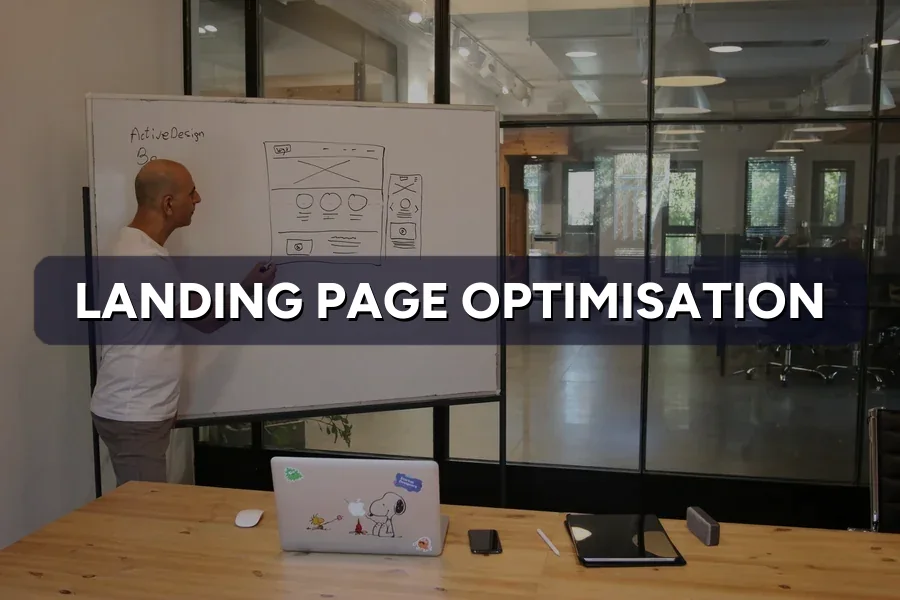
The walkthrough below covers the diagnosis method before the Malaysian numbers.
Source video: Ultimate Guide to Landing Page Optimization: Strategies to Boost Your Conversion Rates on YouTube
Quick Answer: A Malaysian service quote page converts at a median 4.8% once form, WhatsApp and call enquiries are all counted. Appointment booking pages run higher at 7.2%, and industrial product enquiry pages much lower at 2.7%. Page purpose moves the number more than industry does.
Global benchmarks mislead. Unbounce found a median 6.6% conversion rate across 41,000 landing pages in Q4 2024, but that pool leans on downloads and signups — low-commitment actions. A page asking for a renovation quote asks far more. The table splits the median by what the page actually requests.
| Page purpose | Median rate (%) | Typical range |
|---|---|---|
| Event or class signup | 11.4 | 5.0–20.2% |
| Guide or price list download | 9.5 | 4.2–18.0% |
| Appointment booking | 7.2 | 3.4–13.1% |
| Service quote request | 4.8 | 2.1–9.4% |
| Free consultation (B2B) | 3.6 | 1.5–7.8% |
| Industrial product enquiry | 2.7 | 0.9–5.6% |
Source: ZenWeb client sample, n=500+, 2024–2026. Licence.
Read the range, not the median. A quote page at 2.1% and one at 9.4% are both “normal”, so the benchmark is a starting point, never a verdict. What separates the two ends is almost always the twelve items below.
Quick Answer: The first screen decides whether the visitor reads anything else. Four fixes carry it: match the headline to the ad that brought them, name the offer in plain terms, remove the navigation menu, and put one action above the fold. Nothing below the fold saves a first screen that fails.
These four carry over from your ads. The same message-match logic in Google Ads landing pages applies, and a mismatch costs twice — Quality Score and lost enquiries.
Quick Answer: Cutting form fields produced the largest median lift at 34% across ZenWeb-tracked pages, followed by headline message match at 29% and adding a WhatsApp option beside the form at 26%. Proof blocks and nav removal help, but they are finishing work, not headline work.
The chart ranks six single changes by the median lift measured afterwards, on pages where nothing else moved in the same window. It is ordering guidance, not a guarantee.
| Change made | Relative lift | Median lift | Pages |
|---|---|---|---|
| Cut form fields | +34% | 120 | |
| Headline matches the ad | +29% | 96 | |
| WhatsApp beside the form | +26% | 140 | |
| Load time under 2.5s | +21% | 88 | |
| Navigation menu removed | +14% | 110 | |
| Proof next to the button | +11% | 74 |
Source: ZenWeb client sample, n=500+, 2024–2026. Licence.
One caution on the top row. Cutting fields lifts volume and can lower quality, because those fields were doing the filtering. If sales complains about tyre-kickers, qualify after the enquiry rather than putting the fields back.
Want these three fixes done properly on your page?
One page built around one action usually beats a five-page rebuild for lead volume. Compare a landing page design service →
Quick Answer: The middle of the page is where willing visitors quietly give up. Four fixes cover it: cut the form to what sales actually uses, split long forms into steps, give WhatsApp and calls equal weight to the form, and turn the thank-you page into a next step rather than a dead end.
These four also decide whether an enquiry survives to become a sale. A tidy form feeding a mailbox nobody checks is not a win — that gap is what lead response automation is for.
Quick Answer: Speed costs mobile visitors far more than desktop ones. Pages loading under 1.5 seconds convert mobile traffic at 5.9%, while pages over six seconds manage 0.9%. The mobile-to-desktop gap widens from half a point to nearly two points as the page slows down.
The interesting part is not that slow pages convert worse. It is that the penalty lands almost entirely on mobile, where most Malaysian SME traffic sits. The table shows enquiry rate at five load-time bands, split by device.
| Load time | Mobile (%) | Desktop (%) | Gap (pts) |
|---|---|---|---|
| Under 1.5s | 5.9 | 6.4 | −0.5 |
| 1.5–2.5s | 4.6 | 5.8 | −1.2 |
| 2.5–4.0s | 3.0 | 4.9 | −1.9 |
| 4.0–6.0s | 1.8 | 3.7 | −1.9 |
| Over 6.0s | 0.9 | 2.6 | −1.7 |
Source: ZenWeb client sample, n=500+, 2024–2026. Licence.
In the 4-to-6-second band, speed is worth more than any copy change. The usual culprits are uncompressed hero images, four slider plugins, and a chat widget loading on first paint. More on mobile in why phone visitors never enquire.
Quick Answer: The last four fixes are about trust and evidence: put proof next to the button rather than in a separate section, keep a call button in thumb reach on mobile, use exit prompts sparingly, and watch real visitor behaviour before guessing at the next change.
Fix 12 belongs last in the list but first in practice. Everything above is a strong prior; watching your own visitors turns it into a decision about your page.
Quick Answer: On a page holding 1,000 visits a month, a realistic run moves the conversion rate from about 2.4% to roughly 4.4% over twelve weeks, taking monthly enquiries from 24 to 44 and cost per lead from RM92 down to about RM50 — with no increase in ad spend.
The point is the shape, not the exact figures. Gains arrive in steps as each batch ships, then flatten. Anyone promising a smooth upward line every week is describing a chart, not a project.
| Measure | Week 0 | Week 3 | Week 6 | Week 9 | Week 12* |
|---|---|---|---|---|---|
| Conversion rate (%) | 2.4 | 3.0 | 3.6 | 4.0 | 4.4 |
| Monthly enquiries | 24 | 30 | 36 | 40 | 44 |
| Cost per lead (RM) | 92 | 74 | 61 | 55 | 50 |
* Projection. Illustrative scenario modelled on ZenWeb client benchmarks, 2024–2026. Licence.
Notice the ad spend never moves. That is the argument for fixing the page before buying clicks — the same RM2,200 a month buys 44 enquiries instead of 24. For the cost side, see what you actually buy from lead generation services.
Want a run like this on your page?
We start with the counting, then ship fixes in batches so each can be read on its own. See ZenWeb’s web design and conversion service →
Quick Answer: Run the fixes in six stages over about twelve weeks: fix the tracking, watch real visitors, ship the first-screen changes, cut the form, do speed and proof, then re-read the numbers. Ship in batches so each batch has a readable before and after.
This is the sequence we use on client pages. It keeps every change readable and stops you rebuilding a page that was only mis-measured.
If the page feeds a longer buying process, run a sales funnel audit alongside it. Three habits reverse the gains: changing five things at once so you cannot tell what worked, reading results after three good days, and redesigning without re-measuring. That last one is the costliest — a prettier page that quietly dropped from 4.1% to 2.8% goes unnoticed for months. Write the baseline down first, and see landing page pricing in Malaysia for what a rebuild should cost.
Quick Answer: Landing page optimisation is a short, ordered project rather than an endless one. Count every enquiry channel, fix the first screen, cut the form, add WhatsApp, get under 2.5 seconds, and read the result honestly after twelve weeks.
Almost every Malaysian SME page we open has the same three problems: it counts only forms, it says something different from the ad that brought the visitor, and it asks for more than the sales team ever reads. Fix those and you have captured most of the available lift before touching the design.
The rest is smaller and slower — speed, proof placement, a better thank-you page. That order is the real argument here; the twelve fixes are the specifics. Worked examples sit in landing pages that convert, and ZenWeb runs this process for Malaysian SMEs across web design, SEO and ads.
Expect a readable result two weeks after each batch of changes, and a meaningful lift by week twelve. Pages under 500 visits a month take longer because weekly numbers swing too much to read. Tracking fixes show up immediately, but that is a measurement change, not a performance one.
For a service quote page counting form, WhatsApp and call enquiries, 4.8% is the median across ZenWeb-managed pages, with a normal range of roughly 2% to 9%. Booking pages run higher and industrial enquiry pages lower. Compare against pages asking the same commitment as yours.
Optimise first if you already spend on ads. A page change is a one-off cost that improves every future visit; extra traffic is a recurring cost that stops when you stop paying. Once the page performs, traffic compounds on a better base instead of a leaky one.
Use a separate page for any paid campaign. A homepage serves everyone, so it cannot match a specific ad promise or focus on one action. Homepages convert paid traffic at a fraction of a purpose-built page’s rate, mostly because of the menu and split attention.
Three to four is the sweet spot: name, phone number, and one line describing the job. Email is optional when WhatsApp is offered, since most Malaysian buyers continue the conversation there. Add fields only when sales can point to a decision they make with that information.
Ready to get more leads from the traffic you already have?
Book a free 30-minute strategy session — we’ll review your landing page, your tracking and your competitors, then give you a concrete 90-day plan with realistic enquiry-rate and cost-per-lead targets.
Complete the form and our team will contact you to discuss your goals. Let’s grow your business.



Meowketing Specialist
Online