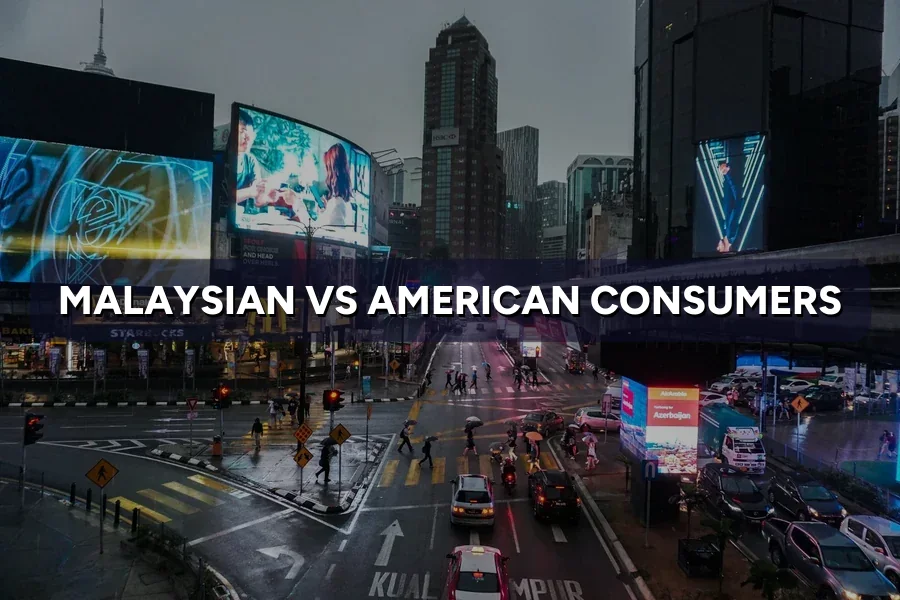
Most American teams assume Malaysian buyers will behave like US buyers because they read English and use the same apps. They search on Google, scroll Facebook and watch YouTube, so the US playbook should transfer. In practice, the same campaign often gets plenty of clicks in Malaysia but far fewer finished leads and sales.
The gap comes from habits, not language. This guide compares Malaysian vs American consumers on the six habits that matter most to advertisers, then shows which Google Ads and Meta Ads settings to change. It draws on campaigns ZenWeb runs for foreign brands as a Google Partner agency with 500+ clients. For the full market-entry picture, see our digital marketing guide for US companies expanding to Malaysia.
Selling to Malaysians from the US?
A Kuala Lumpur team can turn these habits into campaigns, landing pages and WhatsApp flows that run on Malaysian hours. See our digital marketing services for foreign brands →
This short lecture on cross-cultural consumer behaviour explains why the same product can be bought for different reasons in different markets.
Source video: Professor Greer on YouTube
Quick Answer: Malaysian vs American consumers use the same platforms but buy differently. Malaysians prefer a chat before buying, switch between three languages, involve family in decisions, compare prices across marketplaces, pay with local bank transfers and e-wallets, and shop in festive peaks. American buyers are more likely to self-serve through forms, cards and one-click checkout.
The platform overlap is real. Google held 92.99% of Malaysian search in August 2026, per StatCounter, compared with 86.1% in the US, and DataReportal’s Digital 2026: Malaysia shows a market that is almost fully online. The difference is what people do after the click:
| Habit | Typical American buyer | Typical Malaysian buyer |
|---|---|---|
| First contact | Form, email, self-serve checkout | WhatsApp chat with questions first |
| Language | English, some Spanish | English, BM and Chinese, often mixed |
| Decision maker | Usually the individual | Often shared with spouse, parents or boss |
| Price research | Brand site, Amazon, reviews | Shopee, Lazada, TikTok Shop and chats |
| Payment | Credit card, Apple Pay, PayPal | FPX, DuitNow QR, e-wallets, cards |
| Buying peaks | Black Friday, holiday season | Hari Raya, CNY, Deepavali, 11.11, 12.12 |
Our side-by-side of Malaysia vs US digital marketing covers the channel side, and our broader guide to Malaysian consumer behaviour for foreign brands looks beyond the US comparison.
Quick Answer: Malaysians message first because a quick WhatsApp chat lets them check price, stock, delivery and whether a real person stands behind the brand. For a foreign company, that chat builds trust. Ads that end on a long form lose many buyers who would happily have started a conversation.
In the US, a buyer who wants a quote usually fills in a form and waits for an email. In Malaysia, the same buyer taps a WhatsApp button, asks two or three questions and decides within the chat. This is the single biggest habit gap between Malaysian vs American consumers, and it changes three things in your ads:
This is how first contact splits in the US and Malaysian campaigns we manage for American brands:
| First contact | US campaigns (grey) vs Malaysian campaigns (navy) | US / MY |
|---|---|---|
| Web form | 58% / 26% | |
| WhatsApp or chat | 12% / 57% | |
| Phone call | 19% / 13% | |
| 11% / 4% |
Source: From ZenWeb client tracking of American brands running both US and Malaysian campaigns, 2024–2026. Median share of tracked first-contact leads; bar widths scaled to the largest value in the table. Licence.
Our guide to WhatsApp marketing in Malaysia covers reply scripts and routing, and our guide to working with a Malaysian marketing agency for US firms explains how to cover chats while the US team sleeps.
Quick Answer: Malaysia is multilingual and more family-centred than the US. Buyers read English, Bahasa Malaysia and Chinese, and many bigger purchases are discussed with family or a boss first. Ads that speak each community’s language and show shared benefits usually outperform US-style ads built around personal achievement.
The population mix matters for targeting. Among citizens, DOSM’s Q1 2026 figures show 58.3% Malay, 22.1% Chinese, 12.3% Other Bumiputera and 6.5% Indian. Cross-cultural research, such as Hofstede’s widely used cultural dimensions model, also places Malaysia as far more collectivist than the US. For Malaysian vs American consumers, that gap shows up in ads in four ways:
This is how conversions split by ad language in the Malaysian campaigns we run for American brands:
| Region | English (navy) · BM (blue) · Chinese (green) | EN / BM / ZH |
|---|---|---|
| Klang Valley | 62% / 21% / 17% | |
| Penang | 45% / 17% / 38% | |
| Johor | 44% / 28% / 28% | |
| East Malaysia | 48% / 36% / 16% |
Source: Aggregated from ZenWeb-managed campaigns for American brands in Malaysia, 2024–2026. Median share of tracked conversions where all three languages ran; mix varies by category and budget. Licence.
Our guide to multicultural marketing in Malaysia covers creative for each community, and localising a Malaysia website for US companies covers the landing pages behind those ads.
Quick Answer: Malaysian buyers are more price-checking and more cautious about unknown foreign sellers than American buyers. They compare prices on marketplaces, look for RM prices, local payment options and a Malaysian contact, and trust reviews from people like them. Showing those signals on your landing page usually lifts conversion more than a cheaper click.
American shoppers are used to trusting a brand’s own site and paying by card. Many Malaysians first check the same product on Shopee or Lazada, then look for signs that a foreign seller is real and local enough to deal with. Payment matters too: FPX bank transfer and DuitNow, run by PayNet, sit alongside cards and e-wallets. This is what adding each trust signal did to landing-page conversion in our tests for foreign brands:
| Trust signal added | Relative lift in conversion rate | Lift |
|---|---|---|
| WhatsApp button with a +60 number | +34% | |
| Prices shown in RM | +22% | |
| FPX and e-wallet payment | +18% | |
| Reviews from Malaysian customers | +16% | |
| Local address and SSM number | +12% | |
| BM or Chinese version of the page | +11% |
Source: From ZenWeb client tracking across foreign-brand landing pages in Malaysia, 2024–2026. Median relative lift versus the page without that signal; lifts do not simply add up. Licence.
Our list of trust signals Malaysians expect from foreign brands goes deeper. For consumer products, test marketplaces early; our guide to Shopee Ads in Malaysia shows how to start small. Company registration itself belongs with SSM and investment questions with MIDA.
Is your US landing page ready for Malaysian buyers?
We build localised pages with RM prices, WhatsApp, FPX and BM or Chinese versions, then connect them to tracked ads. Explore web design and localisation →
Quick Answer: American demand peaks around Black Friday and the year-end holidays. Malaysian demand has several peaks: Chinese New Year early in the year, Ramadan and Hari Raya, mid-year sales, and the 11.11 and 12.12 marketplace events. Malaysians also browse and chat late in the evening, well outside US office hours.
Timing is where Malaysian vs American consumers drift furthest apart. A US media plan that saves budget for November will underspend in Malaysia’s biggest months. Raya’s timing also moves each year, so the calendar needs checking annually. This is how lead demand moves through the year in the Malaysian campaigns we manage for foreign brands:
| Period | Lead demand index | Index |
|---|---|---|
| Jan–Feb (CNY) | 112 | |
| Mar–Apr (Ramadan, Raya) | 119 | |
| May–Jun (mid-year sales) | 91 | |
| Jul–Aug (Merdeka) | 85 | |
| Sep–Oct (Deepavali) | 89 | |
| Nov–Dec (11.11, 12.12) | 127 |
Source: Aggregated from ZenWeb-managed consumer campaigns for foreign brands in Malaysia, 2024–2026. Median lead volume per period against the yearly average; Raya months shift with the Islamic calendar. Bar widths scaled to the highest period. Licence.
Plan creative six to eight weeks ahead of each peak. See our Malaysian marketing calendar, plus guides to Hari Raya campaigns, Chinese New Year marketing and 11.11 and 12.12 sales.
Quick Answer: Open RM-billed ad accounts, split campaigns by language, add WhatsApp as a conversion, schedule ads and replies in Malaysian time, give Facebook a bigger share of social budget, and rebuild the calendar around Malaysian festivals. Cheaper clicks than in the US are a bonus, not the strategy.
Knowing how Malaysian vs American consumers differ only helps if it changes the account. Apply these six changes in order:
For budgets, compare digital marketing cost in Malaysia vs the USA with ringgit benchmarks for Google Ads cost in Malaysia and Facebook Ads cost in Malaysia. Our 90-day digital plan for an American brand launch in Malaysia puts these steps on a timeline.
Want one RM fee for search, social and pages?
Our bundles combine SEO, Google Ads, Meta Ads and localisation in a single monthly plan your US finance team can budget ahead. Compare digital marketing packages in Malaysia →
Quick Answer: The key differences between Malaysian vs American consumers are chat-first contact, three languages, family input, price checking, local payments and multiple festive peaks. American brands that build these into their ad accounts, landing pages and calendar usually turn Malaysia’s cheaper clicks into real sales.
Shared English makes Malaysia feel familiar, but buyers here expect a conversation, a local price and a brand that feels present. Treat those habits as campaign settings and the US playbook becomes a strong starting point rather than a costly copy. For the service mix we use with overseas brands, see our digital marketing services, and read our guide to expanding your business to Malaysia for the wider picture.
Often, yes. American origin signals quality in many categories. Trust still depends on local proof: RM prices, a Malaysian WhatsApp number, local payment options and reviews from Malaysian customers.
English reaches many urban and B2B buyers, but not everyone. BM and Chinese campaigns reach large segments that English ads miss, especially in Penang, Johor and East Malaysia.
Many Malaysians prefer to ask questions in a WhatsApp chat before sharing details in a form. Add click-to-WhatsApp ads and a WhatsApp button, and reply quickly in Malaysian hours.
It exists but is smaller than in the US. Chinese New Year, Hari Raya, 11.11 and 12.12 usually drive more demand, so plan budget and creative around those peaks.
Turn Malaysian buying habits into ads that convert
Book a free 30-minute call at a time that suits the US. We will review your current ads and pages against these habits and map a Malaysian channel mix in RM.
Complete the form and our team will contact you to discuss your goals. Let’s grow your business.



Meowketing Specialist
Online