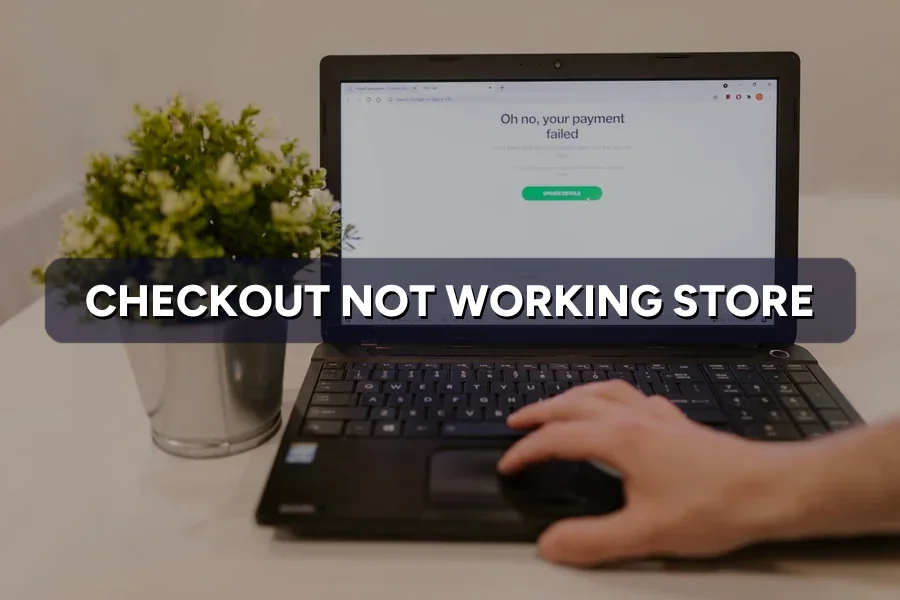
A customer found your store, liked a product, added it to the cart, and went to pay. Then the checkout froze on a spinning wheel, threw an error, or the “Place Order” button did nothing. They tried once more, gave up, and bought from someone else. You never even knew they were there.
Of every problem an online store can have, a checkout not working is the one that hurts most. It breaks at the exact moment someone is ready to hand over money. A slow homepage loses browsers; a broken checkout loses buyers. That’s why it needs fixing today, not next week.
The reassuring part is that a broken checkout is rarely a broken store. Nine times out of ten it’s one link in the chain — a payment gateway, a plugin, a cache setting — not the whole thing. This guide from the ZenWeb web design and care team walks through why checkouts break, what it costs while it’s down, and the exact order to fix it in.
Checkout down and losing orders right now?
We fix broken checkouts fast and keep online stores running. See how we build and maintain stores →
Most Malaysian online stores run on WooCommerce, so the steps below lean that way — but the logic is the same on any platform. This short video walks through fixing a WooCommerce checkout that isn’t working before we get into the detail.
Source video: How To Fix WooCommerce Checkout Page Not Working (Tutorial 2026) on YouTube
Quick Answer: A checkout not working usually comes down to one broken link: a payment gateway with wrong or expired keys, a plugin or theme conflict after an update, cart and checkout pages that got cached when they shouldn’t be, or an SSL problem. It’s rarely the whole platform failing — it’s one step in the buying chain that stopped responding.
Think of a checkout as a short chain of steps. The shopper adds to cart, the checkout page loads, they fill in their details, the payment gateway takes over, and a confirmation comes back. If any one link breaks, the whole thing stops — and to the customer it all looks like the same dead end.
That’s the key to fixing it fast: you’re not looking for a hundred problems, you’re looking for the one weak link. The usual suspects are the same on most Malaysian stores:
One quick check first: is only the checkout broken, or is the whole store down? If nothing loads at all, that’s a different problem — start with our guide on a website that’s down and not loading instead.
Quick Answer: Across the broken checkouts our web design team repairs, payment gateway problems and plugin conflicts cause the clear majority. Caching, SSL, and script errors make up most of the rest. So when a checkout isn’t working, the fastest path is to check the gateway and recent plugin changes first — not to rebuild the page.
It’s tempting to assume the worst — a hacked store, a dead server. In reality the causes cluster tightly. Here’s how the broken checkouts we’re asked to fix break down by root cause.
| Root cause | Share of cases | Scale |
|---|---|---|
| Payment gateway misconfigured or expired | 34% | |
| Plugin or theme conflict after an update | 27% | |
| Cart / checkout pages wrongly cached | 16% | |
| Expired or missing SSL / security block | 12% | |
| JavaScript error from a script | 7% | |
| Server, session, or hosting issue | 4% |
Source: ZenWeb checkout repair work, Malaysian SME stores, 2024–2026. Typical breakdown, not guaranteed. Licence.
The pattern is clear. Six in ten broken checkouts come down to the payment gateway or a plugin conflict. Start there and you’ll solve most cases before you ever touch code.
Quick Answer: Every hour a checkout isn’t working, you lose the orders that would have come through it — and unlike a slow page, a broken checkout loses people who were ready to pay. Even a store with modest traffic can lose thousands of ringgit over a weekend, plus the wasted ad spend behind every visitor who hit the wall.
Shoppers already abandon carts at a high rate for ordinary reasons. Baymard Institute puts the average documented cart abandonment rate at 70.22%, and finds that 15% of shoppers have walked away specifically because a site “had errors or crashed.” A broken checkout turns that occasional error into a wall every single buyer hits.
Here’s roughly what that wall costs, based on typical Malaysian SME order values while a checkout is fully down.
| Store size | Orders/day | Avg order | Lost/day | Lost/weekend |
|---|---|---|---|---|
| Small | 8 | RM120 | RM960 | RM2,880 |
| Growing | 25 | RM150 | RM3,750 | RM11,250 |
| Established | 80 | RM180 | RM14,400 | RM43,200 |
Illustrative scenario based on typical Malaysian SME order values, 2024–2026. Figures are modelled examples, not guaranteed. Licence.
And that’s only the direct sales. If you drive paid traffic to the store, every click that lands on a broken checkout is money spent for nothing. It’s the same wasted-spend problem behind rejected Google Ads — except this time the ad worked and the store let you down.
Not sure how much a broken checkout is costing you?
We’ll check your store end to end and get it taking orders again. Get a store health check →
Quick Answer: Fix a checkout not working by working the chain in order: confirm the store loads, clear all caches, deactivate recently updated plugins, switch to a default theme to test, then check the payment gateway keys and mode. Test a real order after each step. Stop the moment checkout works again — the last thing you changed was the cause.
Don’t change five things at once. Change one, test a real order, and move on only if it still fails. That way you know exactly what fixed it. Here’s the order that finds most faults fastest.
Quick Answer: Most checkout failures we see in Malaysia happen on mobile and around FPX online banking, where the shopper leaves the store to authorise payment and doesn’t return cleanly. Cards and e-wallets fail less often but still trip up. Knowing where your checkout breaks tells you which payment path to test first.
Malaysian shoppers pay in ways that add extra handoffs — FPX bounces them to their bank, e-wallets open another app — and every handoff is a place the return trip can fail. Here’s where the broken checkouts we fix actually break, by payment method.
| Payment method | Share of failures | Scale | Common failure point |
|---|---|---|---|
| FPX online banking | 41% | No clean return after the bank page | |
| Credit / debit card | 29% | 3D Secure step fails or times out | |
| E-wallet (TNG, GrabPay, Boost) | 19% | App switch drops the session | |
| Buy now, pay later (Atome, SPayLater) | 11% | Eligibility check blocks the order |
Source: ZenWeb checkout repair work, Malaysian SME stores, 2024–2026. Typical breakdown, not guaranteed. Licence.
Most of this happens on phones, where the return trip from a bank or wallet app is fragile and a heavy page makes it worse. If your checkout drags on mobile, fixing images that are too heavy and slowing the site often steadies the whole payment flow.
Quick Answer: Fixing a broken checkout tends to pay back immediately, because the demand was already there — buyers were trying to pay and couldn’t. Once the path is clear, completion rates, daily orders, and payment success climb back within days, not months. It’s one of the fastest-returning fixes an online store can make.
Unlike SEO or ads, you’re not creating new demand here — you’re unblocking demand you already had. That’s why the recovery shows up so quickly. Here’s the kind of before-and-after our web design team sees after clearing a checkout fault.
| Metric | Before fix | After fix | Change |
|---|---|---|---|
| Checkout completion rate | 41% | 72% | +31 pts |
| Completed orders per day | 12 | 21 | +75% |
| Payment errors per 100 attempts | 23 | 3 | -87% |
| Avg time to complete checkout | 3m 10s | 1m 40s | -47% |
Source: ZenWeb checkout repair work, Malaysian SME stores, 2024–2026. Typical results, not guaranteed. Licence.
The jump is quick because nothing new had to be built. The moment the path clears, the orders that were bouncing off the wall start landing instead.
Quick Answer: Keep a checkout working by testing it on a schedule, updating plugins on staging first, and never caching cart or checkout pages. A quick weekly test order and a proper web design and care plan catch faults before customers do — because you rarely notice a broken checkout until sales go quiet.
The cruel part of a broken checkout is that nothing shouts. The store looks fine from the front; only the orders stop. A few simple habits keep it from happening quietly:
A checkout not working is the most urgent problem an online store can have, because it stops people at the exact moment they want to pay. But it’s rarely as bad as it looks. It’s almost always one broken link — a payment gateway, a plugin, a cache setting — and once you find it, the fix is quick and the sales come straight back.
Work the chain in order: confirm the store loads, clear the cache, deactivate recent plugins, test the theme, then check the gateway — placing a real test order after each step. Then keep it from returning with a weekly test order and staged updates. Your checkout is where your store earns its living, so it deserves that small bit of routine care.
Checkout still broken and losing you orders?
Book a free 30-minute session — we’ll test your checkout on mobile and desktop, find exactly what’s blocking orders, and give you a clear plan to get your store taking payments again.
A checkout that broke suddenly almost always follows a change — a plugin or theme update, a payment gateway switch, or an expired SSL certificate. Think back to what changed just before orders stopped. Clear your cache first, then undo the most recent change and test a real order. That usually points straight to the cause.
A dead “Place Order” button is usually a JavaScript conflict from a plugin or theme. Deactivate recently updated plugins one at a time, testing after each, then switch to a default theme to check. Clearing your cache and browser cache first rules out a stale page. If it still fails, note any error and check the payment gateway settings.
Open your homepage and a product page in a private browser window. If they load and only the checkout fails, it’s a checkout problem — start with the cache and payment gateway. If nothing loads at all, the whole site is down, which is a hosting or domain issue and a different fix. Knowing which it is saves you time.
Not directly, but it hurts the signals Google watches. Shoppers who hit a broken checkout bounce back to the results and click a competitor, which tells Google your page didn’t satisfy them. It also wastes any ad spend sending traffic there. Fixing checkout protects both your sales and your store’s reputation with search engines.
Try the basics yourself — clear the cache, deactivate recent plugins, test the theme and gateway. Many checkouts come back with those steps. If it’s still broken after that, or you can’t risk the store being down while you experiment, bring in a web team. A broken checkout costs money every hour, so paid help often pays for itself the same day.
Complete the form and our team will contact you to discuss your goals. Let’s grow your business.



Meowketing Specialist
Online