

Share this post:
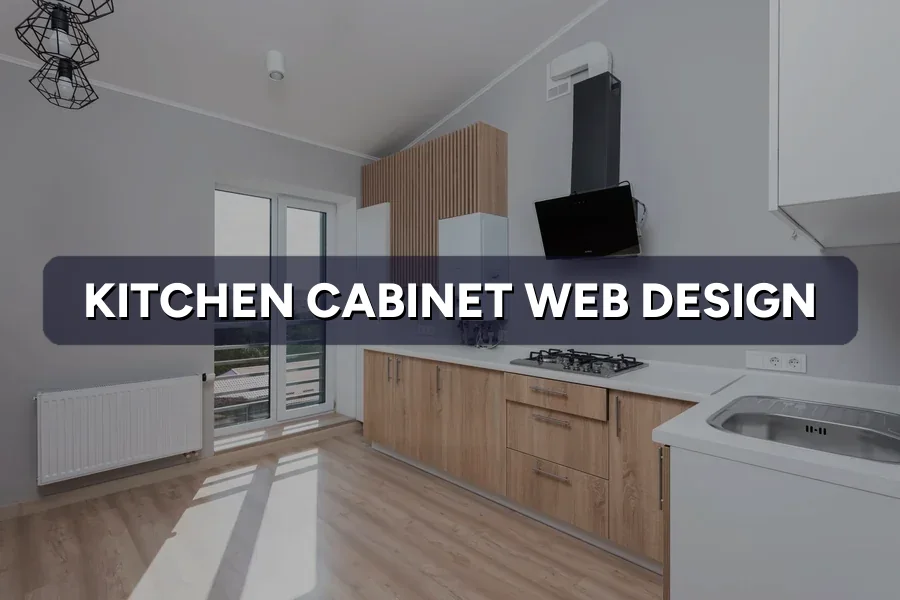
Most cabinet maker websites in Malaysia open with a rendered 3D kitchen nobody built, three icons, and a form asking for name, email and message. The homeowner scrolls, learns nothing about price or material, and goes back to Facebook.
That visitor is usually comparing four workshops at once, often at night, on a phone, with a floor plan from a newly handed-over unit open in another tab. Your site is where your claims get checked.
ZenWeb builds and rebuilds websites for cabinet makers and other high-ticket trades across 500+ Malaysian accounts. The pattern repeats: the renders look good, the specification is missing.
Getting website visits but no measurement appointments?
We fix the quote path before touching the visuals. Compare our web design packages →
Before the sections, a short overview of how remodelling websites win higher-value jobs.
Source video: Contractor Growth Network on YouTube
Quick Answer: A cabinet website specifies rather than sells. The buyer already wants cabinets; they are deciding material, price band and workshop. Your pages exist to answer those three questions faster than the four tabs beside you.
A retail site creates desire. A cabinet maker’s site resolves a decision that is already made. By the time somebody lands on you, they have a kitchen with fixed dimensions and a renovation budget with a fixed ceiling. Four questions decide whether they message:
Answer those and the enquiry arrives with a floor plan attached. Miss them and you collect “how much per foot?” messages, no matter how strong the wider cabinet marketing stack is.
Quick Answer: Four things: what you make and where you install, a starting price per running foot, one credibility line, and a single action. Everything else waits for the second scroll on a properly structured cabinet site.
The first phone screen is roughly 600 pixels, and web design for cabinet makers wins or loses the enquiry there. Spending it on a rotating slider of rendered kitchens is the most common waste in this trade. A stronger hero reads like a sentence a salesperson would actually say:
Custom kitchen cabinets for landed homes and condos in Klang Valley. Solid plywood from RM 330 per foot, full aluminium from RM 480. Own workshop in Balakong, 12-year track record.
Then one button. Two habits quietly cost enquiries here: a slider that buries your second message, and twin equal-weight buttons that split attention. Pick one primary action, and keep the WhatsApp link as a quiet secondary.
Quick Answer: One comparison table covering carcass material, door finish, water behaviour, expected life and price band. Malaysian buyers shop material first, so the table earns more time on page than any gallery.
Cabinet buyers arrive confused by terms your industry invented. Melamine, MFC, moisture-resistant plywood, ACP doors, 4G and 6G aluminium all sound like grades of the same thing, and most of them are not. A single honest table beats five pages of prose, and it is the page that gets bookmarked and forwarded to a spouse.
Three rules make it useful rather than promotional. Give each material a real weakness, not a fake one. State how it behaves under a leaking sink, because the wet kitchen is where Malaysian complaints start. Give a price band per running foot so the reader can self-select before contacting you. If you are unsure what depth to write at, planning the site content properly is the step most workshops skip.
Quick Answer: Yes, as bands by material with stated inclusions, never as a fixed quotation. Buyers who cannot find a number leave to find one elsewhere, and the workshop they find it on gets the enquiry.
Every cabinet maker gives the same objection: publish prices and competitors copy them, or customers anchor too low. Both are less costly than the alternative. Prices already circulate in renovation groups, and an unpriced site simply removes you from the shortlist before anyone speaks to you.
Publish the band and the boundary together. A page that says solid plywood carcass with melamine doors, RM 300 to RM 420 per running foot, including basic hinges and soft-close, excluding countertop and appliances does two jobs: it filters the RM 4,000 budget away, and it makes your quotation feel consistent when it lands. Detail on how ranges are built sits in our guide to price presentation on Malaysian sites.
Quick Answer: Records, not photos. Each entry carries the unit type, kitchen length in feet, material, hardware brand, install month and a cost band. Twelve documented jobs outperform two hundred untagged images.
Nearly every workshop already has thousands of site photos. The problem is that a wall of them tells a buyer nothing they can compare themselves against. A gallery becomes a sales tool the moment each entry answers “is this my kitchen?”
Filters by unit type and material matter more than a lightbox. The same discipline buyers use to judge a portfolio before paying is exactly what a homeowner applies to yours.
Quick Answer: Six fields with a file upload, on one screen, with no message box. Name, phone, district, property type, approximate run length, and a floor plan or kitchen photo. The upload is what turns an enquiry into a quotable job.
Standard advice says cut fields until the form is as short as possible. For cabinet work that is half right. Fewer fields raise submissions but strip out everything your estimator needs, and a site measurement costs a half day. Swap fields instead of deleting them.
Build details matter as much as the field list: tap targets instead of dropdowns, a numeric keypad for the phone field, and an upload that accepts a plain phone photo.
Form collecting messages instead of measurable jobs?
We rebuild cabinet enquiry forms around the estimator’s checklist. Explore our web design service →
Quick Answer: On their own page, written in plain terms, linked from every product page. Name the hinge and drawer brands, state what the warranty covers and excludes, and print your SSM number and workshop address.
Cabinet buyers have all heard a horror story: deposit paid, workshop unreachable, doors swollen by year two. That fear works in your favour if your site makes verification easy rather than asking for trust.
Three placements do most of the work. A short credibility strip under the hero with company name, SSM registration number and workshop location. A warranty page that separates carcass, door finish and hardware, and says plainly what water damage does to cover. A hardware page naming actual brands, because a named runner brand is checkable and “premium imported hardware” is not.
Workshops that also trade or process timber products carry registration duties under Section 13(1) of the Malaysian Timber Industry Board Act 105, and stating that status is a quiet credibility win. Broader signals are covered in our guide to website trust signals.
Quick Answer: Under three seconds on 4G, and Google treats 2.5 seconds as the good threshold. Cabinet sites fail this more than most trades because the gallery is the whole product, so image weight decides the outcome.
Google’s Core Web Vitals guidance sets a good Largest Contentful Paint at 2.5 seconds or less. A cabinet gallery of uncompressed 4MB photographs will not come close, and the visitor who leaves during the load never sees the price band you worked hard to publish.
| Mobile load time | Enquiry rate | Gallery scroll depth | Cost per enquiry |
|---|---|---|---|
| Under 2.0 seconds | 4.6% | 68% | RM 31 |
| 2.0 to 3.0 seconds | 3.4% | 57% | RM 42 |
| 3.0 to 4.5 seconds | 2.1% | 41% | RM 68 |
| 4.5 to 7.0 seconds | 1.2% | 27% | RM 119 |
| Over 7.0 seconds | 0.6% | 16% | RM 238 |
Source: ZenWeb client tracking, Malaysia, 2024-2026.
Scroll depth is the column that matters for this trade. Once the gallery stops loading, the buyer never reaches the record that matched their unit type. Compression, lazy loading and correctly sized thumbnails usually recover two to four seconds, and the wider case sits in our mobile-first guide.
Quick Answer: Published price bands lift enquiries furthest, then the material comparison table and documented project records. Homepage sliders and looping 3D renders barely register, whatever your paid social sends them.
| Element added | Relative lift | Index | Build effort |
|---|---|---|---|
| Published price bands per running foot | 100 | Low | |
| Material and finish comparison table | 81 | Low | |
| Project records with dimensions and cost band | 74 | Medium | |
| Floor plan or photo upload in the form | 63 | Medium | |
| Showroom page with map and appointment slots | 47 | Low | |
| Hardware brand and warranty page | 35 | Low | |
| Homepage slider and looping 3D render | 4 | Medium |
Source: ZenWeb client tracking, Malaysia, 2024-2026.
Read the effort column alongside the index. The top two are the cheapest things on the list, and both are writing tasks rather than development work. That is the quiet advantage in web design for cabinet makers: most of what moves the number can ship in a week without touching the theme.
Quick Answer: A site that qualifies properly sits between RM 5,500 and RM 9,500, rising to RM 16,000 once a running-foot estimator and filterable gallery are built. Below RM 3,000 you are buying a template.
| Tier | Build cost | Build time | What it includes | Qualified enquiries a month |
|---|---|---|---|---|
| Template starter | RM 1,500 to RM 3,000 | 1 to 2 weeks | Five pages, contact form, supplier renders | 1 to 3 |
| Qualifying site | RM 5,500 to RM 9,500 | 3 to 5 weeks | Price bands, material table, six-field form with upload, 12 project records | 7 to 14 |
| Gallery and estimator site | RM 10,000 to RM 16,000 | 5 to 8 weeks | Everything above plus a running-foot estimator, filterable gallery, showroom booking | 16 to 28 |
| Multi-segment build | RM 16,000 to RM 24,000 | 8 to 12 weeks | Separate homeowner, designer and developer paths, bilingual pages, CRM handover | 26 to 46 |
Source: ZenWeb client tracking, Malaysia, 2024-2026. Enquiry figures assume the site is supported by active search and paid traffic.
The enquiry column only holds where traffic exists, so the build belongs in the same conversation as the campaign plan. Timelines here are realistic rather than optimistic, and our build-timeline guide explains where the weeks go.
Quick Answer: Enquiries peak from September to October, when buyers work backwards from a Chinese New Year deadline, and collapse in February during the factory shutdown. Rebuild in the quiet window, not the rush, and align paid search to the same curve.
| Period | Enquiry index | Quote-to-deposit rate | Note |
|---|---|---|---|
| January | 84 | 22% | Festive cut-off passed, diaries already full |
| February | 71 | 18% | Annual trough, workshops shut one to two weeks |
| March to April | 104 | 25% | Restart, vacant possession handovers feed in |
| May to June | 112 | 28% | Mid-year window, school holiday installations |
| July to August | 97 | 24% | Steady volume, unhurried buyers |
| September to October | 131 | 31% | Annual peak, buyers counting back from the festive deadline |
| November to December | 118 | 29% | Deposits close fast, lead times stretch past the holiday |
Source: ZenWeb client tracking, Malaysia, 2024-2026.
A rebuild takes three to eight weeks, so starting in February or March puts a finished site in front of the September peak with several months of indexing behind it. Waiting until August means rebuilding through your two best months.
Planning a rebuild before the next peak season?
We scope cabinet websites around the installation diary, not the page count. See our web design pricing →
Quick Answer: Give each buyer type its own page and its own form. Homeowners need price bands and finished kitchens; designers need lead times and trade terms; developers need capacity, sample units and payment schedules.
Most Malaysian workshops sell to three buyers with one homepage, and it dilutes all three. The homeowner wants reassurance, the designer wants to know if you can hit a handover date, and the developer wants monthly fabrication capacity. Mature web design for cabinet makers splits those into separate paths.
Separate pages also give each segment its own search entry point, which is how organic search for cabinet makers compounds. One generic homepage competes for none of those queries well.
Quick Answer: Supplier renders instead of real installs, an uncompressed gallery, no price signal, and a form that asks for a message. Most cabinet sites carry three of the four at once.
None are expensive to fix, and together they explain why web design for cabinet makers so often looks respectable and still fills nobody’s measurement diary. If the layout itself feels off, the problem is structural, which UI and UX basics explain. Where Malay, English and Chinese buyers mix, our guide to bilingual Malaysian sites covers the trade-offs.
Quick Answer: Web design for cabinet makers works when the site specifies instead of decorates. Publish running-foot bands, compare materials honestly, document real installs, and build the form around a floor plan on a site built for enquiries.
Almost none of this requires an expensive redesign. Price bands take a day to write, the material table an afternoon with your production supervisor, and twelve project records a fortnight of photos your installers already have on their phones.
The harder part is resisting the render-led instinct this trade inherited from furniture catalogues. Spend the budget on proof and specification and web design for cabinet makers stops being decoration, becoming a page your sales team is happy to send people to.
Quick Answer: Workshops ask most about build cost, build time, whether to publish prices, and whether an online estimator is worth it. Package detail sits on our web design pricing page.
Between RM 5,500 and RM 9,500 for a site that qualifies enquiries properly, and RM 10,000 to RM 16,000 once a running-foot estimator and filterable project gallery are included. Template builds under RM 3,000 rarely produce workable enquiries.
Three to five weeks for a qualifying site, and five to eight weeks if an estimator and filtered gallery are part of the build. Start after the Chinese New Year shutdown so the site is indexed before the September peak.
Publish bands by material with clear inclusions and exclusions, not fixed quotations. It filters out buyers with unrealistic budgets and anchors serious ones to your pricing before the site measurement.
Yes, once the site already has traffic. It sorts small jobs from full kitchen runs before your estimator spends a half day travelling, and it captures the run length and property type you need to quote.
Ready to turn your cabinet website into a measurement diary?
Book a free 30-minute strategy session. We review your quote path, gallery weight and competitors, then give you a 90-day plan with realistic enquiry and deposit targets.
Complete the form and our team will contact you to discuss your goals. Let’s grow your business.



Meowketing Specialist
Online


























