

Share this post:
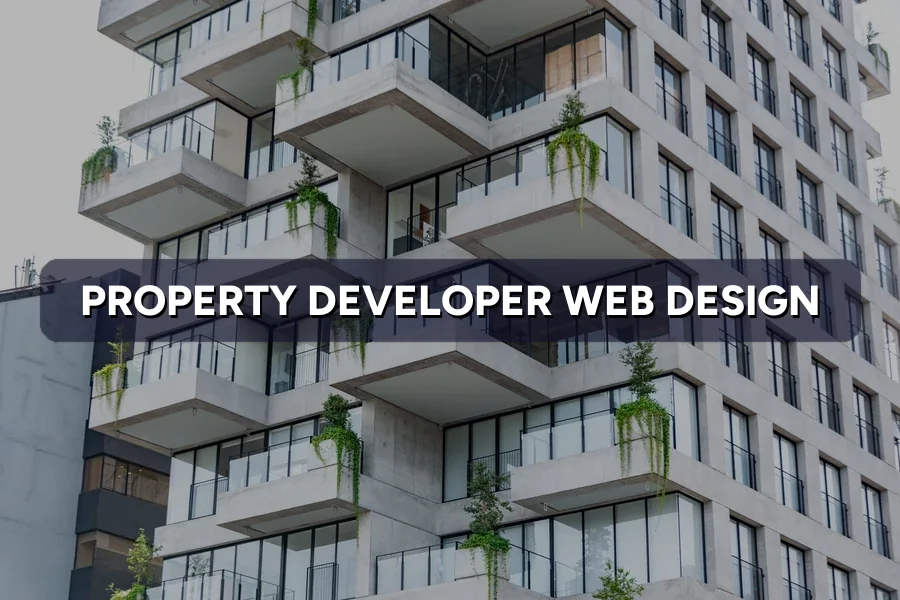
Malaysian property buyers no longer start at a billboard — they start at a Google search, a Reels scroll, or a WhatsApp forward, and within seconds they are on your website. NAPIC’s Q3 2025 report shows 28,672 unsold completed units and RM 17.25 billion of overhang value, so the developer site is the last filter before a booking. Fix the four failures we see on most sites — slow mobile load, hidden price band, no WhatsApp CTA, no downloadable brochure — and the same ad spend converts two to three times harder. That is the lever this guide on web design for property developers in Malaysia unpacks; the walkthrough below sets the scene.
Source video: How To Make A Real Estate Website with WordPress 2025 on YouTube
Quick Answer: Web design for property developers in Malaysia matters because nearly every buying journey now passes through the developer website, and 53% of mobile visitors leave a page slower than three seconds. Buyers scan in three quick passes — trust check, project filter, deep look — then tap WhatsApp. The site has to serve all four moments, not dump a brochure.
The economics are tighter than the last cycle: loan approval is slower and NAPIC’s 28,672 unsold units mean every launch fights a smaller pool. Per DataReportal’s Digital 2026: Malaysia report, over 62% of web traffic comes from a phone, so a site that is not mobile-first is invisible to two-thirds of buyers. Google’s March 2026 update also tightened mobile Largest Contentful Paint — the time the biggest visual takes to load — from 2.5 to 2.0 seconds, and sites passing all three Core Web Vitals convert roughly 24% higher than those that fail.
Web design for property developers in Malaysia has to compress those four moments onto a mobile screen and still feel uncluttered, ending in a one-tap chat where over 90% of property conversations now happen. The portals do not help: PropertyGuru and iProperty pull 3.8M monthly visits but own the lead, so a converting site is how you build direct demand.
Quick Answer: A high-converting developer site has eight pages that each carry one job — Home, Projects index, Project microsite, About, News and Awards, Careers, Investor Relations, and Contact. Every page carries a sticky WhatsApp button and a brochure-download CTA. Web design for property developers in Malaysia lives or dies on whether those eight pages do their jobs.
Most sites we audit pair a beautiful homepage with weak interior pages. The fix: give each page one conversion job. Home leads with a hero, the latest launch, and a price-from anchor; the Projects index is a filterable grid by location, price, type, and status; and the project microsite — hero film, site plan, layouts, brochure, sticky enquiry form, WhatsApp CTA, and an APDL block — is where bookings are won. About, News, Careers, IR, and Contact each carry their own trust or SEO job. Good web design for property developers in Malaysia treats every page as a possible first impression, because for a Google or AI-search arrival it often is.
Quick Answer: The site must hit LCP under 2.0 seconds, INP under 200 milliseconds, and CLS under 0.1 on mid-range Android — Google’s March 2026 thresholds. Sites passing all three convert roughly 24% higher than those that fail. On Malaysian developer sites the biggest gains come from hero-image compression, lazy-loaded galleries, and removing carousel sliders.
Mobile is the primary device — over 62% of property research happens on a phone, and Google indexes the mobile version, so Core Web Vitals are the technical floor. The chart shows mobile LCP across roughly 40 Malaysian developer sites we audited in 2024–2026.
| Mobile LCP band | Share of sites | Visual |
|---|---|---|
| Good (under 2.0s) | 14% | |
| Needs improvement (2.0–4.0s) | 38% | |
| Poor (4.0–6.0s) | 32% | |
| Critical (over 6.0s) | 16% |
Source: ZenWeb audits of 40 Malaysian property developer sites, 2024–2026; thresholds per Google PageSpeed Insights documentation and Web Almanac 2025.
Roughly 86% of Malaysian developer sites still fail mobile LCP, and each second above the floor pushes bounce up sharply. The four reliable speed wins in web design for property developers in Malaysia: compress the hero to WebP under 200KB, drop auto-playing homepage video, lazy-load gallery thumbnails below the fold, and move off cheap shared hosting to a tuned LiteSpeed or VPS setup. Do this before spending another ringgit on ads or SEO.
Quick Answer: Three tools carry lead capture on a developer site — a sticky WhatsApp button, a short enquiry form with a brochure download, and a “Book a sales gallery visit” CTA. Web design for property developers in Malaysia that ships without all three loses 40–60% of qualified buyers to the next developer in the search result.
The chart shows click-to-lead conversion by capture mechanism across our active developer accounts.
| Capture mechanism | Visit-to-lead rate | Visual |
|---|---|---|
| Sticky WhatsApp button (mobile) | 4.8 – 7.2% | |
| E-brochure download form | 3.5 – 5.0% | |
| Sales gallery visit booking | 1.8 – 3.0% | |
| Generic “Contact Us” form | 0.8 – 1.6% | |
| Newsletter signup only | 0.3 – 0.7% |
Source: ZenWeb operational data, Malaysian property developer client websites, 2024–2026. Industry cross-check: Omnichat property developer WhatsApp lead-generation benchmarks.
A sticky WhatsApp button beats every form by 3–5x because it uses the channel buyers already prefer. The brochure download adds email captures for a 12–24-month nurture; the sales-gallery booking is the highest-intent lead. Stack all three, and add two or three qualifying questions — budget, location, timeline — which lift the qualified-lead rate from about 30% to 60% without dropping volume.
Want a lead-capture audit on your current developer site?
We benchmark your WhatsApp CTA, brochure flow, and form qualifying questions against 12 active Malaysian developer sites. See our web design service for property developers →
Quick Answer: Build a master developer site for brand and a subfolder microsite — not a new domain — for any project above RM 80 million GDV or RM 20,000 monthly ad spend. Then brief the visual stack around the buyer journey: a 15–30s hero film, real photography, a 3D tour, zoomable floor plans, a drone aerial, and a sales-gallery walkthrough.
The answer is to use both. The master site hosts brand, the project index, About, awards, news, and IR, and ranks for the developer name. A subfolder microsite (yoursite.com/projects/the-altair/) hosts one project’s full pitch and ranks for the project name and “new launch” terms — a subfolder beats a subdomain because it shares the master domain’s authority. Under RM 80 million GDV, keep the project as a deep page; above it, build a subfolder microsite; a standalone domain suits only ultra-luxury or internationally marketed launches, which need 3–6 months of SEO catch-up.
Visuals do the bulk of the persuasion, and Malaysian buyers spot an over-rendered hero instantly. Brief a 15–30 second hero film, real stills of the show unit and sales gallery, a Matterport 3D tour (which Matterport links to roughly 300% higher engagement and 22% higher 30-day sale rates), zoomable floor plans buyers can forward to family, a drone aerial that sells location to cross-border buyers, and a sales-gallery walkthrough. Never launch the microsite until that stack is complete — half a visual story converts half as well.
Quick Answer: Most Malaysian property developers should build on WordPress with Elementor (master site) on a tuned LiteSpeed host, or Webflow for design-led teams. Custom builds only make sense above RM 500 million GDV with a real-time inventory or unit-availability dashboard. It is rarely a coding problem; it is an architecture, content, and speed problem.
Platform choice is oversold in pitches. Here is the honest comparison by cost and fit.
| Platform | Typical build cost | Best fit | Watch-out |
|---|---|---|---|
| WordPress + Elementor | RM 8,000 – RM 28,000 | Boutique to mid-tier developers, 1–6 projects | Speed needs LiteSpeed + caching done right |
| WordPress + Houzez / RealHomes | RM 10,000 – RM 35,000 | Developers with 10+ active projects, IDX listings | Theme can feel generic; needs custom design |
| Webflow | RM 18,000 – RM 55,000 | Design-led brands, listed groups | Higher monthly hosting; smaller MY pool |
| Headless (Next.js + CMS) | RM 45,000 – RM 120,000 | Top-speed needs, JV portals, large groups | Marketing team must brief code-side updates |
| Fully custom build | RM 80,000 – RM 250,000+ | Listed developers with live inventory or booking | Long timeline (4–9 months); ongoing dev cost |
Source: ZenWeb client engagements 2024–2026; market cross-check: Laman7 Malaysia web design pricing guide and Ulement Malaysia WordPress website cost guide 2026.
For most developers, start with WordPress + Elementor on a tuned LiteSpeed host and build subfolder microsites per launch; move to Webflow or headless only once the marketing team can own that discipline. Web design for property developers in Malaysia rarely loses on platform choice — it loses on a slow theme, a bloated builder, or a RM 30-a-month hosting plan.
Quick Answer: A modern developer site has to rank in Google and earn citations in AI Overviews, ChatGPT, and Perplexity — so it needs clean H1–H4 structure, FAQ and RealEstateListing schema, fast mobile load, and answer-shaped paragraphs. It also has to display APDL details per project, follow HDA disclosure rules, and meet PDPA consent on every form.
SEO has shifted in two years. Google’s AI Overviews now sit atop many property searches, and ChatGPT, Perplexity, and Gemini cite only a few sites per answer. Build the SEO and AEO (Answer Engine Optimisation) layer in from day one: one H1 per page; schema (RealEstateListing on projects, Organization on the master site, FAQPage on guides, VideoObject on hero films); Open Graph images so WhatsApp forwards do not preview broken; 40–80-word answer-shaped paragraphs AI engines can lift; and a clean sitemap submitted to Search Console. For web design for property developers in Malaysia, getting cited in “best Iskandar Puteri new launches” wins consideration the buyer never typed in. For the deeper playbook, see our guide on SEO for property developers in Malaysia.
Compliance is part of the design, not a legal afterthought. Each advertised project needs a visible APDL block — Developer’s Licence number, Advertisement Permit number, vacant possession date, land tenure, and title type — in the microsite footer, not buried in a PDF. Under the Housing Development Act, the site must accurately represent built-up area and facilities and avoid CGI showing features outside the approved plan. Every lead form needs a clear PDPA consent checkbox (never pre-ticked), a linked privacy policy, and a data-deletion path. Listed developers like Sunway and SP Setia display these details prominently — a clean block reads as a trust signal, a hidden one as suspicious.
Quick Answer: A healthy developer site runs at 8–25k monthly visits per active project, 2–5% visit-to-lead conversion, mobile LCP under 2.0s, bounce under 45%, and at least 30% of leads from WhatsApp or brochure download. Web design for property developers in Malaysia that misses two or more of these signals is leaking money.
Treat the ranges below as a monthly checklist with the first action to take when each threshold trips.
| KPI | Healthy range | Warning | First action |
|---|---|---|---|
| Monthly visits per active project | 8k – 25k | Under 4k | Re-audit SEO and Google Ads alignment |
| Mobile LCP | Under 2.0s | Over 3.0s | Compress hero, lazy-load gallery, upgrade host |
| Mobile bounce rate | Under 45% | Over 60% | Audit hero clarity and load speed |
| Visit-to-lead conversion | 2.0 – 5.0% | Under 1.0% | Add sticky WhatsApp, brochure gate, qualifying questions |
| WhatsApp share of total leads | 30 – 55% | Under 15% | Make WhatsApp the primary CTA |
| Organic share of total visits | 35 – 55% | Under 20% | Add SEO content, schema, and AEO blocks |
Source: ZenWeb operational data, Malaysian property developer websites, 2024–2026; benchmarks cross-checked with Tooltester 2026 website load time and bounce rate study.
Any two signals slipping at once usually means a structural issue — slow host, weak content, or a CTA buried below the fold — not a tuning problem. The six recurring mistakes that bleed 10–25% of leads each are the same ones above: slow mobile load, hidden price band, no sticky WhatsApp, no downloadable brochure, gated floor plans, and a broken APDL block. Pin the six KPIs to a monthly dashboard and treat web design for property developers in Malaysia as living infrastructure, not a one-off build.
Quick Answer: Web design for property developers in Malaysia is the conversion floor under SEO, Google Ads, and Meta Ads. SEO drives organic discovery into project pages, Google Ads pushes intent traffic into landing pages, and Meta Ads creates demand and drops buyers into WhatsApp. All three depend on a fast, clear, lead-capture-ready site — without it, every channel leaks.
The four channels work as one system, and the website is the chassis. SEO for property developers in Malaysia drives free traffic, but ranks only on a fast site with schema. Google Ads for property developers in Malaysia buys high-intent clicks, and a slow landing page burns Quality Score and inflates cost per click. Meta Ads for property developers in Malaysia creates demand on Facebook, Instagram, and Reels, then routes the click into a lead form or WhatsApp — but a weak About page or broken microsite kills the booking the ad started. The site is the only owned asset; the rest rent attention from platforms. Our digital marketing for property developers in Malaysia guide ties the four together — done well, the same Meta spend converts at 2–3x.
A WordPress + Elementor master site typically runs RM 8,000–RM 28,000 one-off, plus RM 6,000–RM 20,000 per project microsite. Webflow builds run RM 18,000–RM 55,000, and fully custom builds with live inventory start at RM 80,000. Most boutique to mid-tier developers do not need the custom tier.
A focused WordPress + Elementor build is 6–10 weeks, assuming visuals are produced in parallel. Webflow is 8–12 weeks; headless or fully custom builds run 4–9 months. Projects usually slip on content and visuals, not code — brief photography, drone, and the 3D tour first.
Above RM 80 million GDV or RM 20,000 monthly ad spend, yes — build a subfolder microsite under the master domain. Below that, a deep project page is enough. Standalone domains suit only ultra-luxury or international-marketed launches.
Show a price-from anchor (from RM 480k). It pre-qualifies the buyer in three seconds and increases the share of serious enquiries, while hiding the price entirely loses buyers to developers that show theirs. The detailed price list can stay as an e-brochure download.
The active project microsite is the highest-leverage page — where the buyer compares three or four launches and decides whether to WhatsApp the sales team. The master-site About and Projects index are trust anchors but rarely close the booking directly.
Malaysian buyers no longer decide in the sales gallery. They decide on a phone, late at night, scrolling between two or three developer sites. The one that loads fast, shows the price band, drops them into WhatsApp, and offers the brochure in one tap wins the booking — even if a rival’s building is more beautiful. The one-screen playbook for web design for property developers in Malaysia: a fast WordPress + Elementor master site, a subfolder microsite per launch, sticky WhatsApp and brochure CTAs, a complete visual stack, schema and AEO baked in, an APDL block in every footer, and six KPIs tracked monthly.
Web design for property developers in Malaysia is the cheapest leverage point in the marketing stack. A RM 25,000 rebuild can repay itself on five booked units and lift Meta, Google Ads, and SEO performance for years. In a 2026 market with 28,672 unsold units and tightening loan approval, that edge is the difference between a sold-out phase and a year-end write-down. See our full property developer marketing pillar for the wider stack, or talk to us to apply this playbook to your launch.
Want this playbook applied to your developer site?
We rebuild and audit Malaysian property developer websites against this exact playbook. See our web design pricing for property developers → or book a strategy call →
Written by the ZenWeb content team. We design, rebuild, and run digital marketing for 40+ Malaysian property developer and agency websites, and benchmark Core Web Vitals, lead-capture flows, and conversion data across active developer accounts.
Complete the form and our team will contact you to discuss your goals. Let’s grow your business.



Meowketing Specialist
Online


























