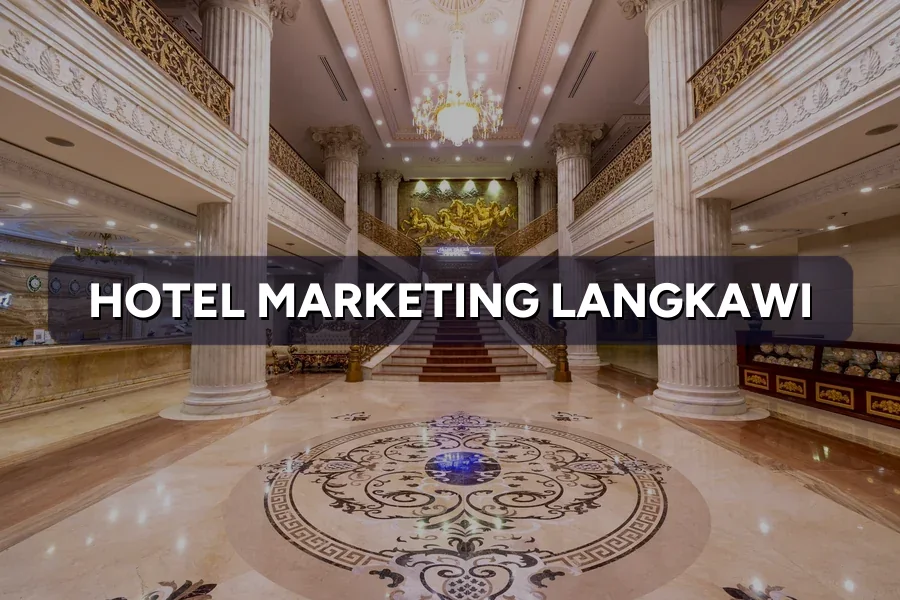
Langkawi runs on rooms. The island pulls millions of visitors a year to the beach strip at Pantai Cenang and the duty-free shops and Jetty Point ferries in Kuah. Others come for the luxury resorts along Datai Bay and Tanjung Rhu, or the SkyCab cable car up Gunung Mat Cincang. Add the chalets and island-hopping operators around Pantai Tengah, and almost every business here depends, directly or indirectly, on filling beds.
That dependence makes hotel marketing in Langkawi its own discipline. Guests rarely walk in off the street. They plan weeks ahead from Kuala Lumpur, Singapore, the Middle East, or Europe, searching “Langkawi beach resort” or “best hotel Pantai Cenang” long before they land at Langkawi International Airport. The island is also brutally seasonal: a room that sells out over the year-end holidays can sit empty through the September monsoon.
At ZenWeb, a Google Partner agency with 500+ Malaysian clients, we run digital marketing for hospitality businesses from city hotels to island resorts. This guide shows how hotel marketing in Langkawi works in 2026. You’ll see where guests discover and book rooms, when demand swings, what each channel costs, and how to grow the direct bookings you keep the most margin on.
Losing too much of every booking to OTA commission?
We build direct-booking systems that win rooms back from the aggregators. See our hospitality marketing services →
Before the numbers, the short video below covers Google Business Profile and local search — the foundation every Langkawi hotel is discovered on.
Source video: Surfside PPC on YouTube
Quick Answer: Most Langkawi hotel bookings still come through OTAs like Booking.com and Agoda, then Google Search, Maps, and Hotel Ads, then direct channels, social, and tour operators. Across ZenWeb’s hospitality accounts, OTAs drive close to half of all bookings — which is exactly why direct channels are where the margin is won back.
A guest’s journey is long and split across screens: they dream on Instagram, compare on Google, read reviews, then book wherever it feels easiest — and for most travellers, easiest still means an OTA. If your hotel is hard to find on Google Maps, or your website is slow on a phone, you quietly hand that guest to Booking.com and pay in commission. The table shows where bookings actually land.
| Booking channel | Share of bookings |
|---|---|
| OTAs (Booking.com, Agoda, Expedia, Traveloka) | 45% |
| Google Search, Maps & Hotel Ads | 22% |
| Direct (own website + WhatsApp) | 15% |
| Instagram & TikTok discovery | 10% |
| Travel agents & tour operators | 8% |
Source: ZenWeb client tracking, Malaysian hospitality accounts, 2024–2026.
The goal is not to abandon OTAs — they are real demand. It is to stop them being your only shopfront. A strong Google Business Profile, clean Maps listing, and fast booking page move guests from “found you on Agoda” to “booked you direct”. That same local-search discipline sits behind our wider digital marketing across Kedah, the state Langkawi belongs to.
Quick Answer: Langkawi demand swings hard by season. The dry months from November to April are the peak — year-end holidays and Chinese New Year sell out the island. The southwest monsoon from May to October is the trough, with September and October the quietest and wettest. Spend should rise weeks before each peak, not during it.
Year-round flat advertising wastes money here because demand is anything but flat. Weather and school holidays drive the calendar far more than in a mainland city. International guests chase the dry season; domestic families travel on term breaks and long weekends. The index below tracks island occupancy demand across the year.
| Period | Demand index |
|---|---|
| Year-end & New Year (mid-Dec–early Jan) | 158 |
| Chinese New Year & long weekends | 138 |
| School holidays (March & June) | 124 |
| Shoulder (Feb, April, November) | 104 |
| Early monsoon (May–July) | 82 |
| Peak monsoon low (Sept–Oct) | 64 |
Source: ZenWeb client tracking, Langkawi & island-resort accounts, 2024–2026 (indexed).
The pattern tells you when to push and when to protect margin. Open year-end and CNY rates early and advertise hard four to six weeks ahead, while international guests compare. In the monsoon trough, switch to domestic travellers and value stays — spa breaks, longer-stay deals, weekday offers — instead of burning budget on cold reach. This spend-where-demand-is logic runs through all our digital marketing work for Langkawi businesses.
Quick Answer: OTAs charge Langkawi hotels roughly 15–25% commission on every booking and keep the guest’s contact details. A direct booking through your own website costs far less to win and hands you the guest data to bring them back. Shifting even a few points of share from OTA to direct lifts profit more than raising rates.
OTAs are not the enemy — they are paid demand. The trap is leaning on them so heavily they own your guest and skim a quarter off every room. A guest who books on Agoda is Agoda’s guest; one who books direct is yours to remarket, upsell, and win back next monsoon. It is the same commission squeeze that F&B operators across the Klang Valley feel with delivery apps — and the answer is the same: build a channel you own. The table compares what each channel costs per RM100 of room revenue.
| Channel | Cost per RM100 | Who owns the guest |
|---|---|---|
| OTAs (Booking, Agoda, Expedia) | RM15–25 | The OTA |
| Metasearch (Google Hotel Ads, Trivago) | RM8–15 | Shared — you take the booking |
| Social ads (Meta, TikTok) | RM6–14 | You |
| Direct website + SEO & Maps | RM3–8 | You, fully |
| Repeat guests (email & WhatsApp) | RM1–4 | You, fully |
Source: ZenWeb client tracking, Malaysian hospitality accounts, 2024–2026.
Every booking you move from OTA to direct keeps roughly an extra RM15–20 of every RM100 in your pocket — and gives you a guest you can bring back.
Winning direct does not mean undercutting OTAs and breaking rate parity. It means matching the rate, then giving guests a reason to book with you: a free airport transfer, a late checkout, a spa credit, or a best-rate guarantee on a fast booking page.
Want more bookings that skip the commission?
We benchmark your direct-vs-OTA split and build the gap back into direct revenue. Get a free direct-booking review →
Quick Answer: A healthy Langkawi hotel marketing budget puts the biggest shares into the direct-booking website and Google, then social, then metasearch and OTA optimisation, with the rest on email retention and photography. The exact split shifts with property type, but direct-booking infrastructure should always lead the spend.
Most Langkawi hoteliers ask the same question: where does the next ringgit go? The split below is the frame we use across hospitality accounts. It weights the channels you own, where each ringgit compounds instead of leaking out as commission.
| Layer | Share of budget | What it buys |
|---|---|---|
| Direct-booking website & booking engine | 22% | The channel you keep the most margin on |
| Google (Search, Maps, Hotel Ads) | 22% | Catches high-intent “book now” searches |
| Social content & ads (IG/TikTok) | 20% | Builds the dream months before the trip |
| Metasearch & OTA optimisation | 18% | Rate parity, listing content, review scores |
| Email/CRM & guest retention | 10% | Brings past guests back, cheapest rooms sold |
| Photography & content production | 8% | Sells the room before the guest arrives |
Source: ZenWeb client tracking, Malaysian hospitality accounts, 2024–2026.
Tilt the frame to your property. A luxury resort on Datai Bay leans on photography and international social. A Pantai Cenang boutique leans on Google and metasearch where comparison shoppers cluster, and a budget chalet on reviews and repeat domestic guests. The shape holds; the weighting follows your guest. ZenWeb plans this split as part of our digital marketing services for hotels.
Quick Answer: A Langkawi hotel marketing system is built in layers: a fast website with a real-time booking engine, a polished Google Business Profile, dream-building social, then metasearch and OTA optimisation, then email retention. Each layer makes the next cheaper, so the build order matters as much as the budget.
For most Langkawi properties the build order is the same, whether it is a beach resort or a hillside villa. Build in this sequence and each layer makes the next pay off harder:
These are not five projects; they are one machine. The website takes the booking, Google wins the search, social creates the want, metasearch and OTAs feed demand in, and retention repeats it. Run the stack in order and your direct share climbs every season.
Ready to build your booking system in the right order?
We map the layers to your property type, season, and budget so nothing leaks. Plan my Langkawi hotel marketing →
Quick Answer: The local-search foundation that fills Langkawi hotel rooms — Google Business Profile, fast websites, and channel-owned bookings — powers other Malaysian businesses too. Langkawi sits in Kedah’s tourism north, a short hop from Penang, and ZenWeb runs the same playbook across industries and cities nationwide.
Langkawi does not market in isolation. Many guests route through Penang or the wider northern corridor, and the same local-search discipline that lifts a resort also lifts a clinic, a shop, or a property launch. If you run more than a hotel, these city and industry guides apply the same 2026 playbook to other trades:
Quick Answer: Choose a Langkawi hotel marketing agency on five things: a goal set in direct bookings, real hospitality results, account ownership, scope over headline price, and a team that understands island seasonality. Judge them on rooms filled and commission saved, not on follower counts.
Langkawi has few specialist hotel-marketing agencies on the island itself. Most properties use Penang or Kuala Lumpur agencies, lean on freelancers, or let the OTAs market by default — which is how commission quietly eats the year. The real question is which partner grows your direct bookings. ZenWeb is the strongest full-service choice for revenue-driven hotels: a Google Partner team with 500+ clients running web, SEO, Google Ads, social, and metasearch under one roof. Use these five steps before you sign:
Hotel marketing in Langkawi is not about chasing one viral reel. It is two disciplines done well: timing spend to the island’s sharp seasons, and building channels you own so OTAs stop taking a quarter of every room. Know where guests book, push before the dry-season and festive peaks, and protect margin through the monsoon with domestic and value stays.
Start with a booking-ready website and strong Google Business Profile, build the dream on social, feed demand through metasearch, and bring guests back with retention. Do that, and Langkawi’s seasonality stops being a threat and becomes the rhythm you plan around — more rooms filled, at a better rate, kept directly.
Most Langkawi hotels invest between RM2,500 and RM10,000 a month on marketing, depending on property size and how many channels run. Google Ads, Meta Ads, and metasearch need a separate media budget on top of management fees. The right figure is whatever keeps your cost per direct booking well below the OTA commission you would otherwise pay.
Build a direct channel you own: a fast booking-engine website, a strong Google Business Profile, and Google Hotel Ads. Then match OTA rates and add a direct-only perk like free airport transfer or a spa credit. You keep rate parity but give guests a reason to book direct, shifting share off the 15–25% commission channels over time.
Advertise hardest four to six weeks before the dry-season and festive peaks — the year-end holidays, Chinese New Year, and the March and June school breaks — while guests are still comparing. Through the May–October monsoon, especially September and October, shift to domestic travellers and value stays rather than spending flat on cold international reach.
Yes. International guests plan further ahead, search in English, and book through OTAs and metasearch; domestic guests from the peninsula travel on school holidays and long weekends and respond to Malay-language offers and WhatsApp. The build order stays the same, but language, channel weighting, and timing should shift between the two audiences.
Google Ads, metasearch, and social ads can bring bookings within days, while Google Business Profile and organic social usually take two to three months to build momentum. Because Langkawi is seasonal, judge results across a full demand cycle, not a single quiet monsoon month — the earliest wins come from paid channels while organic ranking catches up.
Ready to fill more rooms in Langkawi?
Book a free 30-minute strategy session — we’ll review your website, your Google ranking, and your direct-vs-OTA split, then give you a clear 90-day plan with realistic occupancy and direct-booking targets.
Complete the form and our team will contact you to discuss your goals. Let’s grow your business.



Meowketing Specialist
Online