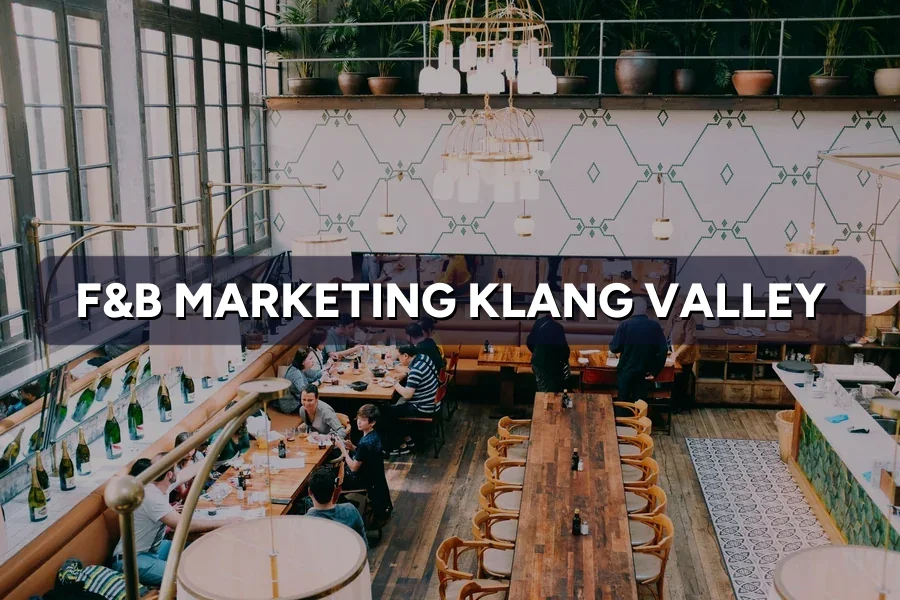
The Klang Valley is the biggest plate in Malaysia. Think of the kopitiam in Klang’s old royal town, the brunch cafés along Telawi in Bangsar, and the late-night supper spots of SS15 in Subang Jaya. Add the halal family restaurants around Shah Alam and the mamak that never close across Petaling Jaya, and you have a conurbation that feeds millions every day across nine municipalities. It is the densest, richest, and most fiercely contested F&B market in the country.
That density is exactly why F&B marketing in the Klang Valley is its own discipline. A valley diner rarely walks in cold. They search “best brunch near me” or “bak kut teh Klang”, switching between Bahasa Malaysia, English, and Cantonese depending on where they are. And the valley is not one market: what fills a Mont Kiara café leaves a Klang trader’s stall empty. The outlets that win read each district instead of blanketing the region.
At ZenWeb, a Google Partner agency with 500+ Malaysian clients, we run F&B marketing across the Klang Valley every week, from single cafés in Puchong to multi-outlet groups spanning PJ, Subang, and KL. This guide shows how it works in 2026. You’ll see where valley diners discover their next meal, what a new diner costs by zone, when demand rises and falls, and how to spend so the quiet weekday tables fill.
Tables sitting empty on weekdays?
We map the channels that actually bring valley diners through your door — by district, not by guesswork. See our Klang Valley F&B marketing services →
The short video below covers Google Business Profile and local search — the foundation every valley restaurant is found on — before we get into the numbers.
Source video: Surfside PPC on YouTube
Quick Answer: Most Klang Valley diners find restaurants on Google Maps and Search first, then Instagram and TikTok, then delivery apps. Across ZenWeb’s valley F&B accounts, roughly a third of new diners arrive from Google and a fifth from delivery apps — so being missing on Maps quietly costs the most tables.
A valley restaurant lives or dies on the first screen a hungry person sees. Someone in Damansara types “lunch near me”, a Subang parent searches “kid-friendly restaurant”, a Klang uncle asks “bak kut teh open now”. If you are not in those results — with photos, hours, and reviews — you do not exist for that table. Delivery also weighs a little heavier here, because the valley’s dense townships order in more often.
| Discovery channel | Share of new diners |
|---|---|
| Google Search & Maps | 33% |
| Instagram & TikTok | 26% |
| GrabFood & foodpanda | 21% |
| Word of mouth & WhatsApp | 12% |
| Facebook & review sites | 8% |
Source: ZenWeb client tracking, Klang Valley F&B accounts, 2026.
The lesson is not to “pick one channel”. Maps and Search catch people who are already hungry and nearby; Instagram and TikTok create the craving a few days earlier. That is why a strong Google Business Profile plus local SEO in Kuala Lumpur is the floor under everything else — the cheapest steady stream of diners a valley restaurant has.
Quick Answer: The cost to win a new diner swings hard across the Klang Valley, from RM12–22 in the KL core to RM5–10 in Klang. Rents, competition, language, and how affluent the crowd is all change by district, so targeting by zone is what makes F&B marketing in the Klang Valley pay.
This is the single biggest mistake we see: treating “the Klang Valley” as one audience. A Mont Kiara expat brunch crowd and a Klang trading-town lunch crowd want different food, read different languages, and cost very different amounts to reach. The table below shows what a new diner typically costs across the valley’s main zones.
| Zone | Cost per new diner | What drives it |
|---|---|---|
| KL core (KLCC, Bukit Bintang, Bangsar, Mont Kiara) | RM12–22 | Highest rents and ad costs; affluent but crowded |
| Petaling Jaya (SS2, Damansara, Jaya One) | RM9–16 | Mature, English-leaning, fiercely competitive |
| Subang Jaya & Sunway (SS15, USJ) | RM7–13 | Students and young families; social-led |
| Shah Alam | RM6–12 | Halal/family crowd, BM search, lighter paid competition |
| Klang | RM5–10 | Under-digitised; heritage F&B and trading crowd |
| Cheras & Puchong | RM6–12 | Dense mass-market townships; delivery-heavy |
Source: ZenWeb client tracking, Klang Valley F&B accounts, 2024–2026.
Each zone needs its own touch — the website and search foundation under each outlet should match its crowd:
In the Klang Valley, the same RM1,000 buys you twice as many diners in Klang as it does in Bangsar. The map matters as much as the menu.
Not sure which valley zone to back?
We benchmark your cost per new diner against your district’s averages, free. Get a free Klang Valley F&B review →
Quick Answer: Klang Valley dining demand swings hard by season. Chinese New Year reunion dinners and Ramadan buka puasa buffets are the two yearly peaks. The week after Hari Raya empties the whole conurbation as families balik kampung, and a normal weekday is the deepest trough. Spend should rise before the peaks.
Year-round, flat campaigns waste money here because demand is anything but flat. The valley is full of migrants and commuters from other states, so the post-Raya exodus hits harder than in a settled town. For a week, large parts of the conurbation simply leave. The index below tracks how valley dining demand moves across the year.
| Period | Demand index |
|---|---|
| Chinese New Year (reunion dinners) | 148 |
| Ramadan (buka puasa buffets) | 138 |
| Deepavali & year-end parties | 128 |
| June school holidays | 108 |
| Typical non-festive weekday | 74 |
| Week after Hari Raya (valley empties) | 72 |
Source: ZenWeb client tracking, Klang Valley F&B accounts, 2024–2026 (indexed; 100 = annual average).
The pattern tells you when to push and when to protect margin. Open reunion and buffet bookings four to six weeks before Chinese New Year and Ramadan, when valley diners start searching “CNY set menu PJ” or “buka puasa buffet Shah Alam”. In the post-Raya lull, run retention instead — WhatsApp offers to past diners and light social to the locals who stayed. It is the same spend-where-demand-is logic behind our broader digital marketing work for valley businesses.
Quick Answer: A healthy Klang Valley F&B budget puts roughly a third into social content and ads and a fifth into Google Business Profile and local SEO. The rest spreads across website, paid search, delivery promos, and loyalty. The exact split shifts by district: social-heavy for Subang and Sunway, search-heavy for Klang. But the shape holds.
Most valley outlets ask the same question: where does the next ringgit go? The split below is what we use across our F&B accounts — a frame to tilt toward the channel your district favours.
| Layer | Share of budget | What it buys |
|---|---|---|
| Social content & ads (IG/TikTok) | 30% | Builds crave; strongest for cafés and brunch |
| Google Business Profile & local SEO | 20% | Cheapest steady diners; wins “near me” |
| Website & booking | 18% | Menu, photos, one-tap WhatsApp or table booking |
| Paid search (Google Ads) | 17% | Catches “book tonight” intent fast |
| Delivery promos & loyalty | 15% | Slow-lunch orders plus repeat visits |
Source: ZenWeb client tracking, Klang Valley F&B accounts, 2024–2026.
The number that matters is cost per new diner, not likes or reach. A viral reel that fills no tables is just noise. Tilt the split toward where your zone lives: heavier on social for the Subang and Sunway student crowd, heavier on search for the under-digitised Klang trade. Then judge every channel on covers, not vanity metrics.
Quick Answer: A Klang Valley F&B marketing system is built in layers: a fast website with menu and booking, a polished Google Business Profile, crave-building social, then paid ads and delivery, then loyalty. Each layer makes the next cheaper, so the build order matters as much as the budget.
For most valley restaurants the build order is the same, even when the cuisine and area are not. Build in this sequence and each layer makes the next pay off harder:
These are not five projects; they are one machine. The website carries the menu and booking, Google wins the “near me” search, social creates the want, ads and delivery capture it, and loyalty repeats it. Groups that span the valley simply run the stack per district.
Ready to build your valley F&B system in the right order?
We map the layers to your cuisine, district, and budget so nothing leaks. Plan my Klang Valley F&B marketing →
Quick Answer: Choose a Klang Valley F&B marketing agency on five things: a goal set in covers, real F&B results, account ownership, scope over headline price, and one team that understands district-level targeting. The valley is full of agencies and freelancers, so judge them on tables filled, not awards.
The Klang Valley has the deepest agency pool in Malaysia, from full-service shops around Bangsar and Damansara to thousands of freelancers and social-only “F&B specialists”. Names you may meet locally include Kingdom Digital and countless boutique studios — useful context, but the question is which one fills your tables. ZenWeb sits among the full-service options, and for cover-driven restaurants we believe it is the strongest choice: a Google Partner team with 500+ clients running web, SEO, ads, and social under one roof. Use these five steps before you sign:
F&B marketing in the Klang Valley is not about chasing one viral moment. It is about knowing the valley is many markets stacked together: a premium KL core, an English-first PJ, a young Subang, a halal Shah Alam, an under-digitised Klang. Read each one before you spend. Know where your diners look, what each costs by zone, and connect the channels so they feed each other.
Start with a fast website and a strong Google Business Profile, build the crave on social, capture it with paid and delivery, and bring diners back with loyalty. Time your push to the festive peaks, protect margin in the post-Raya exodus, and the valley’s scale stops being a threat and starts being the reason you grow.
Most valley restaurants invest between RM2,000 and RM8,000 a month on F&B marketing in the Klang Valley, depending on how many channels run and how aggressive the growth target is. Google Ads, Meta Ads, and delivery promos need a separate media budget on top of management fees. The right figure is whatever keeps your cost per new diner below the profit a table brings.
The KL core — KLCC, Bukit Bintang, Bangsar, and Mont Kiara — is the priciest, with new diners often costing RM12–22 because of high rents and fierce ad competition. Klang and Shah Alam are the cheapest to reach, partly because fewer rivals there market well online. That gap is why budgets should be set by zone.
Yes. A Subang Jaya student crowd lives on Instagram and searches in English; a Klang trading crowd responds to Google and word of mouth; a Shah Alam family crowd searches in Bahasa Malaysia for halal sets. The build order stays the same, but the channel weighting, language, and creative should shift district by district.
Target locals who are already nearby, not cold reach. Run weekday-only offers to past diners over WhatsApp, retarget recent website and Instagram visitors, and use Google Business Profile posts to push lunch sets. A small, well-aimed budget on quiet days fills more covers than a big festive splash.
Paid ads and delivery promos can bring diners within days, while Google Business Profile and organic social usually take two to three months to build momentum. In our valley F&B data, integrated setups reach positive ROI around month three on average. The earliest wins come from Google while social ranking catches up.
Ready to fill more tables across the Klang Valley?
Book a free 30-minute strategy session — we’ll review your website, your Google ranking, and your district competitors, then give you a clear 90-day plan with realistic cost-per-diner and booking targets.
Complete the form and our team will contact you to discuss your goals. Let’s grow your business.



Meowketing Specialist
Online