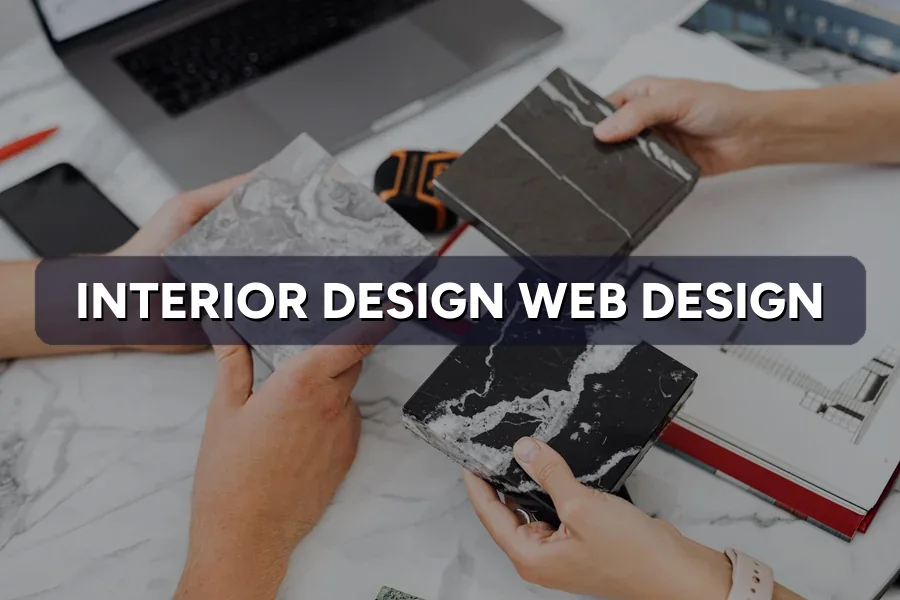
Most Malaysian interior design studios treat their website as a brochure — mood boards, a few finished rooms, an “About Us” paragraph, and a contact form nobody fills. It looks fine — it just does not generate enquiries.
This guide rewires that thinking. Web design for interior designers in Malaysia is not about aesthetics in isolation — it is about turning the homeowners who land on your page into qualified leads. We cover what a converting site looks like in 2026, its cost, the speed and mobile standards Google ranks on, the lead-capture patterns that beat templates, and how it ties into your wider interior design digital marketing strategy.
The video below from The Little Design Corner covers five practical tips on structuring a designer-focused website.
Source video: The Little Design Corner on YouTube
Quick Answer: Web design for interior designers in Malaysia is the difference between getting found and being skipped. Homeowners shortlist three to five firms online first; a slow site or hidden portfolio loses the brief before the first reply.
The buying journey is now almost entirely digital. A homeowner in Mont Kiara scrolls Instagram, clicks a portfolio link, lands on your site, and decides in about 15 seconds. Three pressures make this matter more than two years ago:
Quick Answer: Effective web design for interior designers in Malaysia covers nine elements: a clear above-the-fold promise, portfolio grid, case studies, services page, pricing transparency, designer profiles, social proof, multiple lead-capture points, and a fast footer with WhatsApp.
Treat every page as one question, answer it within the first scroll, then make the next action obvious. Most Malaysian sites bury the answer and ask for a 12-field form. Good design inverts that — answer first, capture second. The working anatomy:
Quick Answer: Web design for interior designers in Malaysia ranges from RM 1,500 DIY templates to RM 35,000 premium agency builds. The RM 6,000 to RM 12,000 boutique-agency tier suits most established studios.
Pricing varies more than in most industries because the visual bar for “good” is higher. The realistic spread per tier in 2026:
| Tier | Investment (RM) | Timeline | Included | Best for |
|---|---|---|---|---|
| DIY template | 1,500 – 3,000 | 1 – 2 weeks | Wix or Squarespace template, your own images, basic contact form | Solo designer, first six months in business |
| Freelancer | 3,500 – 7,500 | 3 – 5 weeks | Custom WordPress design, 8 to 12 pages, basic SEO setup, contact form | Small studio with one to three designers |
| Boutique agency | 6,000 – 12,000 | 5 – 8 weeks | Full custom design, portfolio CMS, schema markup, page-speed optimisation, WhatsApp integration, on-page SEO, copy guidance | Established firm, 5 to 15 staff, RM 2M+ annual revenue |
| Full agency | 12,000 – 25,000 | 8 – 14 weeks | Brand strategy, UX research, custom illustration or 3D, advanced CMS, analytics setup, A/B testing infrastructure | Award-winning firms, multi-location, premium positioning |
| Premium agency | 25,000 – 35,000+ | 14 – 20 weeks | Bespoke creative direction, motion design, custom development, multilingual, full marketing infrastructure | Luxury brands, hospitality clients, regional ambition |
Source: Aggregated from ZenWeb-managed campaigns, Malaysia, 2024–2026.
The boutique-agency tier is where most established studios land — a site that holds its own visually, ranks, and converts, without the brand-strategy phase that triples the timeline. Below RM 3,500 you buy a template competitors will outrank.
Quick Answer: Portfolio is the highest-value section in web design for interior designers in Malaysia. Lead with finished hero shots, group projects by style or property type, and give every project a dedicated page. Generic galleries do not convert.
Most Malaysian ID sites treat the portfolio as a photo dump — dozens of images, no captions, no story. But the portfolio is where buyers self-qualify: a homeowner planning a Mont Kiara condo refurb is not looking for a bungalow project. Three structural moves separate one that converts from one that just exists:
Malaysian connections vary; a buyer on 4G will not wait six seconds for a hero shot. Compress every JPEG under 200 KB, use WebP with fallback, lazy-load below the fold, and size images for the device — or your photography becomes a bounce rate.
Quick Answer: Google’s Core Web Vitals — LCP under 2.5 seconds, INP under 200 milliseconds, CLS under 0.1 — decide whether your web design for interior designers in Malaysia ranks. Most ID sites fail two of three; the fix is image compression, lazy loading, and a lean theme.
Page speed is where ID sites lose the most rankings — heavy photos kill load times, rankings, and traffic. The gap between typical and target in 2026:
| Metric | Typical Malaysian ID site | Google target | Performance bar |
|---|---|---|---|
| Largest Contentful Paint | 4.2 seconds | Under 2.5 seconds | |
| Interaction to Next Paint | 340 milliseconds | Under 200 ms | |
| Cumulative Layout Shift | 0.18 | Under 0.10 | |
| Mobile homepage weight | 5.8 MB | Under 1.5 MB | |
| Time to First Byte | 1.4 seconds | Under 0.8 seconds |
Source: ZenWeb audits of 40+ Malaysian interior design websites, 2024–2026, benchmarked against Google’s Core Web Vitals thresholds.
The fixes are not exotic: WebP images, lazy-loading, deferred JavaScript, a lightweight theme, a Malaysia-region CDN, and disabling unused plugins. A clean WordPress build gets all three Core Web Vitals green within a week. Pair the speed work with the interior design SEO guide and rankings follow in two to three months.
Quick Answer: SEO has to be baked into web design for interior designers in Malaysia from day one, not bolted on. The foundations: clean URL structure, semantic HTML, image alt text, schema markup for LocalBusiness and Service, and keyword-targeted content per page.
“SEO done later” projects usually rewrite the whole site. URL slugs, heading hierarchy, image filenames, and internal linking are what your ranking compounds on. The five foundations every ID site needs from launch:
/projects/mont-kiara-condo-modern-japandi/, not /?p=247.Quick Answer: Generic “Contact Us” forms convert at around 1.2 percent in most web design for interior designers in Malaysia. Multi-step qualifying forms, WhatsApp click-to-chat, and budget estimators outperform them by two to five times.
The most common pattern is a ten-field form at the bottom of the homepage, converting at roughly 1 in 90 visitors. The fix is matching form length to the visitor’s stage:
| Lead capture pattern | Visitor-to-lead rate | Relative performance |
|---|---|---|
| WhatsApp floating button | 5.8% | |
| Budget / package estimator | 4.2% | |
| Multi-step qualifying form (3 to 5 steps) | 3.6% | |
| Free consultation booking widget | 2.8% | |
| Generic contact form (10+ fields) | 1.2% |
Source: Aggregated from ZenWeb-managed campaigns, Malaysia, 2024–2026.
Stack two or three patterns, not one. Total lead volume can be five to seven times higher than a single generic form.
Quick Answer: WordPress remains the safest CMS for web design for interior designers in Malaysia — flexible, SEO-friendly, easy to hand over. Pair it with a lightweight theme (GeneratePress, Astra, or Kadence) and a Malaysia-region host or CDN, and avoid heavy page builders unless you have an in-house developer.
Tech-stack decisions feel boring at proposal stage but decisive later — the wrong CMS or theme adds two seconds per load and locks you into rebuilds. Pragmatic guidance:
Quick Answer: The most common mistakes in web design for interior designers in Malaysia are hiding pricing, treating the homepage as an “About Us,” stock photos, ignoring mobile, and burying the WhatsApp number. Each cuts lead volume by 30 to 60 percent.
The same mistakes recur across Malaysian ID sites, and all are easy to fix:
Quick Answer: Web design for interior designers in Malaysia is the foundation, not a channel. Google Ads and Meta Ads drive bookings within weeks, but only if the site converts; SEO compounds over six to twelve months. Web design first, paid second, SEO in parallel.
The right question is not “which channel?” but “what is my conversion bottleneck?” If the site does not convert, paid traffic burns money. The comparison for a studio on a baseline budget:
| Channel | Setup cost (RM) | Monthly cost (RM) | Time to first lead | Lead quality |
|---|---|---|---|---|
| Web Design (organic) | 6,000 – 12,000 | 200 – 500 (hosting + maintenance) | Immediate, but volume grows with traffic | High — buyer chose to visit |
| SEO | 2,000 – 5,000 (audit + setup) | 2,500 – 6,000 | 3 – 6 months | Very high — high intent |
| Google Ads | 1,500 – 3,500 (setup) | 3,000 – 15,000+ (ad spend) | 7 – 14 days | High — search intent |
| Meta Ads | 1,500 – 3,500 (setup + creative) | 2,000 – 10,000+ (ad spend) | 5 – 10 days | Mixed — interest-based, needs nurturing |
Source: Aggregated from ZenWeb-managed campaigns, Malaysia, 2024–2026.
Practical sequencing for a RM 15,000 to RM 30,000 quarterly budget: web design first, then Meta Ads for interior design for fast pipeline, with SEO in parallel. Google Ads enters once you have validated which services convert best.
Not sure which channel mix fits your studio?
Get a free 30-minute review of your site, ranking, and competitors. See our web design service →
Quick Answer: A 90-day build for web design for interior designers in Malaysia covers four phases — strategy and content (weeks 1 to 3), design (weeks 4 to 7), build (weeks 8 to 11), and launch (week 12). Skip phase one and the rest collapses.
Most projects miss deadlines because content is not ready. Run content as the long-pole task:
The biggest risk is content: with 50 finished projects but no photography or written briefs, week one becomes week six. Assign a content owner from the start.
Quick Answer: Web design for interior designers in Malaysia is the highest-leverage investment a studio can make in 2026 — it sets the ceiling on every other channel. Budget RM 6,000 to RM 12,000, build mobile-first, lead with portfolio, and treat lead capture as a design problem.
The Malaysian interior design market is competitive, visual, and decided online before any human contact. Studios that treat their website as a strategic sales asset pull ahead of competitors who outspent them on ads. The wider interior design industry guide covers the full picture; this piece drills into the design layer. Start with the basics — a fast mobile site, a portfolio organised by buyer intent, transparent pricing, lead capture — then layer in SEO, schema, and analytics, and run paid traffic into it. Site first, channels second.
Most established firms should budget RM 6,000 to RM 12,000 for a boutique-agency build with custom design, portfolio CMS, page-speed optimisation, schema, and WhatsApp integration. Solo designers can start at RM 3,500; premium agencies around RM 25,000.
Yes. WordPress remains the safest, most flexible choice for its SEO maturity, large local developer pool, and easy migration. Pair it with a lightweight theme like GeneratePress or Kadence and avoid heavy multi-purpose themes.
A realistic timeline is 90 days: content three weeks, design four weeks, build four weeks, launch and QA one week. Content readiness is the most common cause of delays, not design or development.
Yes. A “from RM 80,000 for a 3-bedroom condo turnkey” anchor improves lead quality. Hidden pricing reads as expensive and filters out budget-aligned buyers before they message you. Show ranges, not exact quotes.
Replace your ten-field contact form with a WhatsApp floating button plus a three-step qualifying form. This typically lifts visitor-to-lead conversion three to five times for web design for interior designers in Malaysia, with implementation under a week and no rebuild.
Ready to grow your interior design business?
Book a free 30-minute strategy session — we will review your site, your Google ranking, and your competitors, then give you a concrete 90-day plan with realistic CPL and pipeline targets.
Complete the form and our team will contact you to discuss your goals. Let’s grow your business.