

Share this post:
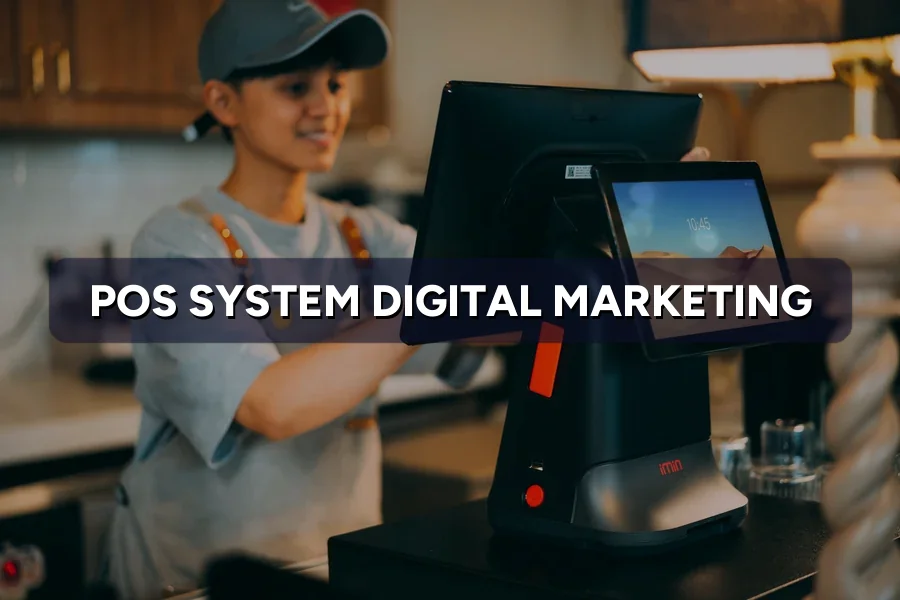
If you sell point-of-sale software or hardware to Malaysian businesses, the playbook that works for a dental clinic only gets you halfway. A POS buyer is rarely impulsive — they compare vendors, request demos, and check LHDN compliance before signing. This guide shows how digital marketing for POS system in Malaysia should be built around e-invoice compliance, multi-outlet expansion, and a long payback per closed account, with benchmarks from ZenWeb-managed retail and F&B campaigns.
The video below from Toast shows how modern POS platforms position themselves as full operating systems.
Source video: Toast on YouTube
Quick Answer: Digital marketing for POS system in Malaysia must account for SME-grade budgets, a long evaluation cycle for multi-outlet operators, and one 2026 compliance driver — the LHDN e-invoice mandate. Generic SaaS marketing under-delivers because POS buyers want to see real hardware and local support before they sign.
The Department of Statistics reports more than 1.2 million SMEs across Malaysia, and retail alone contributes roughly 8.6% of GDP. Add the F&B trade — mamak, kopitiam, cafes, franchise chains — and you have a deep, fragmented buyer pool. Three structural realities shape the plan:
Any programme of digital marketing for POS system in Malaysia that ignores e-invoice positioning leaves demand on the table — buyers are searching for “POS with e-invoice” right now. See our POS system industry hub for the wider picture.
Quick Answer: Digital marketing for POS system in Malaysia turns a business owner searching for “best POS for restaurant Malaysia” into a booked demo, a paid subscription and eventually a multi-outlet rollout. It covers SEO, paid search, paid social, video, lifecycle email and a conversion-built website.
A POS demo request differs from a generic SaaS signup — the buyer expects a call within 24 hours, a real walk-through, and often an on-site visit. A clean POS marketing stack in 2026 has five layers:
Quick Answer: SEO is the cheapest long-term channel for Malaysian POS vendors, but only if you write for buyers who already know they need a system. Comparison pages, segment landing pages (F&B vs retail vs salon) and e-invoice compliance guides convert far better than generic “what is a POS” articles.
In digital marketing for POS system in Malaysia, reverse the usual order: start with bottom-funnel pages that rank for buyer-intent terms, then build supporting content above them. The four highest-converting page types, in priority order:
For the full SEO playbook, schema markup that earns AI Overview citations, and the keyword clusters that earn pipeline, see our deep dive on SEO for POS system in Malaysia and our SEO services.
Quick Answer: Google Ads for Malaysian POS vendors runs on three layers — branded search to defend your name, competitor terms to win share, and category terms for demos. Expect cost per qualified demo of RM 90 to RM 320, with branded search below RM 30.
Google Ads is the fastest channel to test demand and the easiest to mis-spend. Skip broad terms like “POS software” that pull in students and overseas traffic, and start narrower. A working structure for Malaysian POS brands:
Our breakdown of bid strategy, conversion tracking and Responsive Search Ads (the format that auto-mixes headlines and descriptions) sits in the Google Ads for POS system guide, with packages on the Google Ads pricing page.
Quick Answer: Meta Ads work harder for POS vendors than almost any other B2B category in Malaysia, because the buyer lives on Facebook and Instagram. Use 30-second product videos, testimonials in Bahasa Malaysia or Mandarin, and tight Klang Valley or Penang geo-targeting.
Many POS teams treat Meta as an afterthought — a mistake, because restaurant and retail owners in Malaysia live on Facebook, where a 30-second demo of your POS taking a payment beats any infographic. Practical rules of thumb for paid social:
For creative briefs and cost benchmarks, see our companion guide on Meta Ads for POS system in Malaysia and our Meta Ads service.
Quick Answer: A POS website is a demo engine, not a brochure. Five elements lift signups: a segment-specific value proposition, real hardware above the fold, visible pricing tiers, an e-invoice compliance badge, and a one-tap WhatsApp CTA.
You can run the best SEO and Google Ads programme and still convert badly if the landing experience is slow, generic, or built on stock photos. The patterns that earn demos:
For layout patterns, demo-page wireframes and WhatsApp Business integration, see web design for POS system in Malaysia, with cost ranges on the web design pricing page.
Quick Answer: Across ZenWeb-managed Malaysian POS accounts in 2026, blended cost per qualified demo runs RM 90 for single-outlet F&B, RM 165 for single-outlet retail, RM 280 for multi-outlet chains and RM 320 for enterprise retail.
| POS buyer segment | Avg CPD (RM) | Visual |
|---|---|---|
| Single-outlet F&B (cafe, mamak) | RM 90 | |
| Single-outlet retail (kedai, salon) | RM 165 | |
| Multi-outlet chain (3–10 outlets) | RM 280 | |
| Enterprise retail (10+ outlets) | RM 320 |
Source: ZenWeb operational data, Malaysian POS vendor campaigns under management, 2024–2026.
Lifetime value scales faster than the cost ladder. A single-outlet cafe at RM 99/month over 36 months returns RM 3,564 against an RM 90 demo; a five-outlet chain at RM 450/month per outlet returns RM 81,000 against an RM 280 demo. That gap is why digital marketing for POS system in Malaysia has to be disciplined about segment.
Quick Answer: Across the Malaysian POS campaigns we manage, organic search, Google Ads and Meta together drive roughly 75% of demo pipeline; partner referrals, walk-ins and YouTube fill the rest. F&B leans Meta, retail leans search.
| Channel | Share of pipeline | Visual |
|---|---|---|
| Organic search (SEO) | 31% | |
| Google Ads (paid search) | 24% | |
| Meta Ads (Facebook + Instagram) | 20% | |
| Partner / reseller referral | 12% | |
| Direct / WhatsApp inbound | 8% | |
| YouTube / video discovery | 5% |
Source: ZenWeb operational data, blended across F&B and retail POS vendors, 2024–2026.
In digital marketing for POS system in Malaysia, search-intent channels (SEO plus Google Ads) deliver over half of all qualified demos, and Meta is the strongest paid-social channel — far ahead of LinkedIn — because the SME buyer lives on Facebook.
Quick Answer: Demo requests from branded Google Ads and partner referrals close highest (45–58%). Cold Meta leads close lower (18–24%) but are 4× cheaper, so they still win on pipeline-per-ringgit, with free-trial signups in between.
| Lead source | Demo → Paid | Avg time to close | Cost per demo |
|---|---|---|---|
| Partner / reseller referral | 58% | 12 days | RM 60 |
| Branded Google Ads | 45% | 18 days | RM 30 |
| Organic search (SEO) | 32% | 22 days | RM 70 |
| Free trial signup | 28% | 25 days | RM 110 |
| Cold Meta Ads | 22% | 32 days | RM 95 |
Source: ZenWeb client tracking across 14 Malaysian POS vendor accounts, 2024–2026.
The right mix depends on stage. A new brand needs branded and competitor Google Ads to defend its name; a mature brand with resellers should double down on the partner channel.
Quick Answer: Across the same cohort, blended cost per demo rose 32% from 2023 to 2026, driven mostly by Google Ads inflation. SEO, partner referrals and WhatsApp inbound are the only channels where cost per demo stayed flat or improved — partly thanks to the 2026 e-invoice search surge.
| Channel | 2023 | 2024 | 2025 | 2026 |
|---|---|---|---|---|
| Google Ads | RM 145 | RM 175 | RM 205 | RM 240 |
| Meta Ads | RM 70 | RM 80 | RM 90 | RM 95 |
| Organic search (SEO) | RM 85 | RM 78 | RM 72 | RM 70 |
| Partner / reseller | RM 75 | RM 68 | RM 62 | RM 60 |
| WhatsApp inbound | RM 40 | RM 36 | RM 32 | RM 30 |
Source: ZenWeb operational data, same-cohort Malaysian POS clients tracked across 2023–2026.
Teams that pair paid acquisition with strong SEO, a partner programme and WhatsApp inbound hold blended cost per demo flat even as ad costs rise — which is why durable digital marketing for POS system in Malaysia rarely rests on one channel.
Quick Answer: The five most expensive mistakes in digital marketing for POS system in Malaysia are generic homepages, untracked Google Ads, ignoring WhatsApp, no partner channel, and skipping e-invoice positioning — each fixable in under 30 days.
Quick Answer: Choose a partner who has run POS or SaaS B2B accounts in Malaysia, not a generalist. Ask for category case studies, cost per demo by segment, and how they measure pipeline against monthly recurring revenue.
Generalist agencies often treat POS like generic e-commerce, but the funnel, tracking and creative for digital marketing for POS system in Malaysia all differ. Five questions to ask before signing:
ZenWeb runs digital marketing for POS system in Malaysia across all of these layers — see our SEO agency page, or contact us to scope a POS engagement.
Quick Answer: A practical 90-day plan for digital marketing for POS system in Malaysia: month one, fix tracking and build segment plus e-invoice compliance pages; month two, switch on branded and competitor Google Ads and launch Meta video; month three, add WhatsApp inbound, a partner programme and YouTube demos — expect first signed merchants inside 45 days.
The plan is deliberately small. Month-by-month:
Discipline beats ambition. The teams that win at digital marketing for POS system in Malaysia pick three channels, measure them properly, and stick with them long enough for the funnel to compound — and the e-invoice tailwind helps only vendors who show up for those searches.
Most growth-stage POS brands should plan for 12% to 25% of monthly recurring revenue once they have paying merchants. Early-stage vendors can sustain a fixed RM 4,000 to RM 10,000 a month on one or two channels rather than spreading it thin.
Run Google Ads first to validate which keywords produce demos and paying merchants, then use that data to prioritise the SEO roadmap. Pure SEO takes 4 to 9 months on a new domain, while branded and competitor Google Ads can produce demo requests in the first week.
Yes — it is the single biggest demand driver this year. Phase 4 began on 1 January 2026, and merchants under the RM1 million turnover exemption need a compliant POS by 1 January 2027. Search volume for “e-invoice POS Malaysia” has roughly tripled year on year, so vendors who position around compliance win those demos almost by default.
Match the offer to the segment. For single-outlet F&B and retail under RM 200/month, a free trial or freemium plus strong onboarding wins. For multi-outlet chains above RM 400/month per outlet, demo flows convert more pipeline because the operations head and finance team want a conversation first. Many mid-tier brands run both.
Branded and competitor Google Ads can produce demo requests in week one, while SEO typically takes 3 to 6 months. A full blended channel mix for digital marketing for POS system in Malaysia — SEO, paid, retargeting, partner referrals and WhatsApp inbound — usually starts producing signed merchants inside 45 to 60 days for well-priced products.
Ready to grow your Malaysian POS brand?
Book a free 30-minute POS marketing strategy session — we will review your site, your Google ranking and your top three competitors, then hand you a concrete 90-day plan with realistic cost per demo and pipeline targets.
Complete the form and our team will contact you to discuss your goals. Let’s grow your business.



Meowketing Specialist
Online


























