

Share this post:
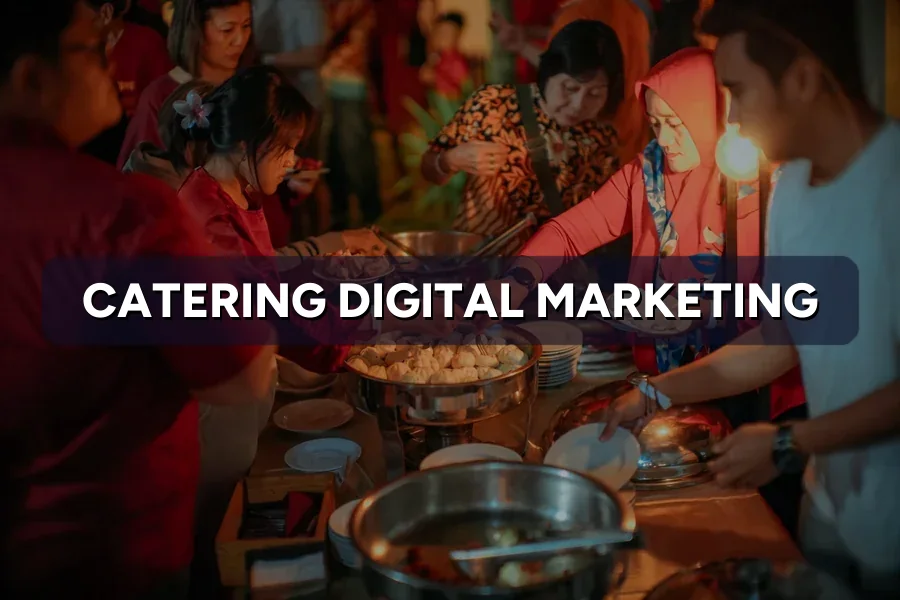
A catering enquiry is really a request for one number: how much per pax. The date is fixed, the headcount roughly known, and the host is in a group chat waiting on three caterers.
If you run a catering business in Klang Valley, Penang or Johor and most bookings still arrive through relatives or one loyal corporate client, this guide is for you. It covers the channels worth funding, the certification signals that matter, and four data sets on enquiry cost, quotation speed, order value and the catering calendar.
ZenWeb runs digital marketing for caterers across 500+ Malaysian accounts. The pattern repeats: the caterer who quotes fastest with proof attached wins, even at a higher price per head.
Not sure what a catering campaign should cost?
We match a monthly figure to your kitchen capacity and event mix in one call. See our digital marketing pricing →
First, a short primer on marketing a catering business online.
Source video: Al Shan on YouTube
Quick Answer: Because catering demand is event-driven, not habit-driven. Nobody has a regular caterer until a wedding, a kenduri or a company dinner forces the search. A funded channel mix decides whether that search lands on you.
A restaurant builds regulars. A caterer cannot. Most households book catering a handful of times in their life, and corporate buyers only think of you when the last supplier disappoints.
So visibility at the planning moment is the whole game. DataReportal’s Digital 2026 Malaysia report puts internet penetration at 98.0 percent, with 35.4 million Malaysians online. Digital marketing for caterers is how you get into that phone comparison.
Quick Answer: They search a per-pax price question, check the caterer is halal certified, then message two or three for quotations at once. The shortlist forms in a day, and how you run that WhatsApp thread decides the booking.
Corporate buyers add procurement and often a tasting, but the opening moves match. The household pattern:
Quick Answer: Start with Google Business Profile and Google Ads for events this quarter, build SEO for the per-pax price searches that compound, then use Instagram and Meta for food proof. Judge each on cost per confirmed booking, not cost per enquiry.
| Channel | Best for | First bookings | Watch out for |
|---|---|---|---|
| Google Business Profile | Near-me and district searches | Weeks | Stale photos from one old event |
| Google Ads | People with a date already fixed | Days | Job seekers and recipe searches |
| SEO | Per-pax price and menu research | 3-7 months | A menu PDF that Google cannot read |
| Meta and Instagram | Food proof and event remarketing | Days | Cheap enquiries with no event date |
Quick Answer: Caterers rank by publishing the one thing rivals hide behind a contact form: real per-pax prices by event type. Structured SEO turns those pages into enquiries you currently rent from Google Ads.
Build one strong page per event type, not a gallery with a menu PDF:
Answer the price question in the first 40 words of the page. That also earns a mention in Google AI Overviews, which now answer “how much is catering per pax” before anyone clicks.
Want these pages built and ranking?
We map the per-pax and event pages your competitors have never published. Compare our SEO plans →
Quick Answer: Split the account into wedding, corporate and kenduri campaigns, then guard it with a long negative keyword list. Catering terms attract recipe searches and job hunters, and a structured build keeps them out.
The negative list matters as much as the keyword list. Block catering course, catering job, catering equipment, resepi and trolley rental. Without them a RM 4,000 budget loses a large share of clicks to people who will never book. Set a realistic starting budget first, because spend spread across three campaigns never learns.
Quick Answer: Meta cannot create an event, so judge it on confirmed bookings, not enquiry volume. It works as food proof and seasonal remarketing, and creative built around the buffet line beats another menu graphic.
Reach is not the constraint. Meta’s own tools show Facebook reaching 23.0 million and Instagram 16.1 million Malaysians in late 2025. Getting seen is easy; getting an event date is not. Three angles carry the weight:
Keep remarketing tied to the event cycle. Someone planning a wedding six months out stays a live audience; someone who booked last Raya is not back until next year. Instagram ad costs in Malaysia reward tight audiences here.
Quick Answer: A catering website has one job: turn a phone browser into a quotation request in under a minute. That needs visible per-pax bands, a four-field form and a WhatsApp button on every screen. Build for that flow.
Keep the form to four fields. Every extra field on a page built to convert costs completions, and this one gets filled in between venue viewings.
Quick Answer: JAKIM certifies caterers under its food premises scheme, and corporate buyers now ask for the certificate before the menu. Publishing it alongside your food handler training separates you from a home kitchen on a site built to show credentials.
Three compliance facts belong in front of customers, not in a footer:
Add your kitchen address and capacity. A buyer placing a 500-pax order wants to know where the food is actually cooked.
Quick Answer: Ask for the review while the team is packing down and the host is still thanking you. That one habit lifts map rankings faster than anything else and costs nothing. Pair it with a properly set-up profile.
List the districts you deliver to, set the category to caterer rather than restaurant, and upload real event photos monthly.
Reviews carry unusual weight because the risk is social. A host who serves cold food to 300 guests remembers it for years, so one unanswered complaint stalls a season. Reply properly to negative reviews and keep your map ranking steady through the quiet months.
Quick Answer: The best catering content teaches hosts how to read a quotation. It sounds generous and it is ruthless, because a host who knows what to check disqualifies the cheap quote without you naming anyone. That is content doing sales work.
Teach the host what to check, and the cheapest quotation in the family group chat disqualifies itself.
Publish the checklist your coordinator uses: staff per 100 guests, whether crockery is included, what happens if the headcount rises, who clears up, and the top-up rate if food runs out. Then film your head chef walking through one real quotation. Chef-led video works because the host is handing a stranger the one thing every guest remembers.
Quick Answer: Volume rises, but the bigger shift is mix. Quotations go out the same day, corporate contracts appear, and the average order climbs, because a funded channel mix reaches planners before a relative recommends someone else.
| Measure | Referral-only | After 6 months |
|---|---|---|
| Monthly enquiries | 15-25 | 60-110 |
| Quotation turnaround | 4-12 hours | Under 45 minutes |
| Enquiry to confirmed booking | 12-17% | 23-30% |
| Average confirmed order | RM 1,800-2,800 | RM 3,200-5,500 |
| Corporate and contract share | Under 12% | 25-35% |
Source: ZenWeb client tracking, Malaysia, 2024-2026. Individual results vary.
Quick Answer: Household enquiries from Google Search cost RM 18 to RM 32 and book about 21 percent of the time. Corporate enquiries cost far more and book better, which is why cost per lead misleads caterers.
| Channel and segment | Cost per enquiry | Quoted | Booked |
|---|---|---|---|
| Google Search, wedding and kenduri | RM 18-32 | 44% | 21% |
| Google Search, corporate and contract | RM 55-95 | 37% | 26% |
| Meta lead ads, household events | RM 5-12 | 19% | 6% |
| Organic search and menu pages | RM 3-9 | 48% | 25% |
| Google Business Profile | RM 2-7 | 55% | 30% |
Source: ZenWeb client tracking, Malaysia, 2024-2026.
Quick Answer: Same day, and inside 30 minutes if you can. Household enquiries quoted that fast book at about 38 percent, falling to 5 percent once the quotation takes more than a day, because the host has already shown someone else’s numbers to the family group chat.
| Quotation sent within | Share of enquiries | Household booked | Corporate booked |
|---|---|---|---|
| Under 30 minutes | 14% | 38% | 29% |
| 30 minutes to 2 hours | 23% | 31% | 27% |
| 2 to 6 hours | 27% | 24% | 25% |
| 6 to 24 hours | 22% | 13% | 19% |
| Over 24 hours | 14% | 5% | 11% |
Source: ZenWeb client tracking, Malaysia, 2024-2026.
Corporate buyers tolerate a slower quotation, but punish a vague one. Households want a per-pax figure; corporate buyers want an itemised quotation they can forward to finance unedited.
Quick Answer: A corporate contract enquiry from Google Search confirms at around RM 6,800, more than seven times an office lunch trial. Source decides order size before the menu does, which is why lead value beats lead count for caterers.
| Source and event type | Relative order size | Average order |
|---|---|---|
| Google Search, corporate contract | RM 6,800 | |
| Google Search, wedding reception | RM 4,200 | |
| Instagram and Meta, wedding | RM 2,900 | |
| Google Business Profile, kenduri | RM 2,100 | |
| Any source, office lunch trial | RM 950 |
Source: ZenWeb client tracking, Malaysia, 2024-2026.
Want more corporate catering enquiries?
We build the separate corporate campaign and landing page most caterers never split out. See our Google Ads plans →
Quick Answer: The Ramadan and Raya window is the busiest stretch of the year, with a second peak across November and December for annual dinners. August is quietest, about 36 percent below the March peak. Budget flat and you overpay in August while turning work away in March.
| Month | Relative volume | Index |
|---|---|---|
| January | 78 | |
| February | 114 | |
| March | 128 | |
| April | 105 | |
| May | 90 | |
| June | 98 | |
| July | 86 | |
| August | 82 | |
| September | 89 | |
| October | 100 | |
| November | 114 | |
| December | 122 |
Source: ZenWeb client tracking, Malaysia, 2024-2026. Ramadan shifts about 11 days earlier each year.
Two things follow. Enquiries arrive four to eight weeks before the event, so the March peak is really a January budget decision. And because Ramadan moves earlier each year, the peak drifts, which is why last year’s plan quietly stops fitting.
Quick Answer: Across ZenWeb’s food and events client base, the six-month pattern is three to four times the enquiry volume, a same-day quotation habit, and revenue shifting from one-off events into repeat corporate work through a funded F&B channel mix.
Individual results vary, and quotation speed moves a client to the top of each range faster than menu quality does.
Quick Answer: The costly mistakes are all about friction, not creativity: hiding prices, posting menus as images, and going quiet between peaks. Each one pushes the host towards the caterer who answered plainly, which is why food businesses lose enquiries they already paid for.
Losing enquiries you already paid for?
We audit the path from search to quotation and show where your catering enquiries drop off. Fix your catering website →
Quick Answer: Three shifts matter: AI answers now quote per-pax prices before anyone visits a site, halal verification has become a search behaviour, and instant quotation tools are moving from nice-to-have to baseline. Structured content feeds all three.
None of this replaces the kitchen. It means the caterer who publishes plainly gets asked to quote, and the one who says “PM for price” leaves the shortlist.
Quick Answer: Publish your per-pax bands, quote the same day, and put your halal certificate beside the button. Those three moves lift a Malaysian catering business further than any menu redesign, and a funded channel mix keeps them working through the quiet months.
Three moves, in order. Publish real per-pax prices and event pages so search and AI answers can quote you. Build a quotation template you can send in under 30 minutes from a kitchen. Then fund campaigns six weeks before each peak, splitting corporate from household. ZenWeb does this for Malaysian food and events businesses every week.
Quick Answer: Budget, speed, halal proof and SEO timelines are what caterers ask about most. Digital marketing for caterers works best once all four are settled.
Most established caterers spend RM 2,500 to RM 7,000 a month across ads, SEO and management, supporting 60 to 110 enquiries. Below RM 1,200 campaigns rarely gather enough data to optimise. Above RM 10,000, kitchen capacity becomes the constraint, not demand.
Google Ads, usually within the first week, because it reaches hosts who already have a date. Google Business Profile books cheaper but needs a few weeks of fresh photos and reviews before it ranks in the map pack.
Yes, and it increasingly decides whether you are shortlisted at all. Caterers certify under JAKIM’s food premises category, and buyers can verify a premise on the official portal. Publishing the number answers the biggest unspoken question before it is asked.
Expect three to seven months for competitive per-pax and wedding searches, with district and menu pages ranking sooner. It moves faster if you publish real prices and menus as text, which most rivals avoid.
Ready to grow your catering business?
Book a free 30-minute strategy session — we’ll review your site, your Google ranking, and your competitors, then give you a concrete 90-day plan with realistic cost per enquiry and booking targets.
Complete the form and our team will contact you to discuss your goals. Let’s grow your business.



Meowketing Specialist
Online


























