

Share this post:
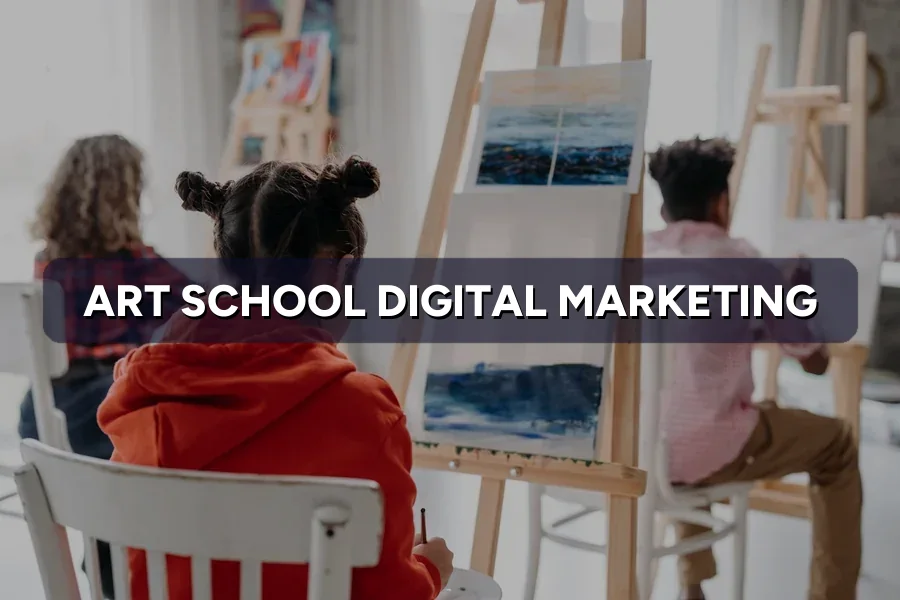
Most Malaysian art schools sell the same thing online: a bright studio photo, class times, a fee table. The parent comparing three studios at 10pm cannot tell them apart, and the one thing she wants to see — what a fourteen-year-old produced after two terms with you — is missing.
If you run an art school in Klang Valley, Penang or Johor and enrolments still come from the same neighbourhood referrals, this guide is for you. It covers the channels worth funding, how to split hobby classes from exam and portfolio streams, the registration signals that settle a parent’s doubts, and four data sets on student cost, gallery impact, empty-seat value and enquiry timing.
ZenWeb runs digital marketing for art schools across a Malaysian client base of 500+ accounts. The pattern repeats: studios with the stronger teaching reputation lose enrolments to studios that publish better evidence. ZenWeb closes that gap.
Not sure what an art school campaign should cost?
We match a monthly figure to your studio capacity and your exam-prep intake in one call. See our digital marketing pricing →
First, a short primer on the marketing basics that fill a class list.
Source video: PixelCrayons on YouTube
Quick Answer: Art is the rare service that photographs itself. Every finished piece in your studio is publishable proof, and Malaysia is online enough to see all of it. Studios that publish nothing compete on price; studios that publish student work compete on results.
Malaysia had 35.4 million internet users at the end of 2025, roughly 98 percent penetration, per DataReportal’s Digital 2026 Malaysia report. Your whole catchment can inspect you between dinner and bedtime. What separates you from other tuition and enrichment businesses is evidence: a maths centre quotes a grade, and you have something better that you hide.
Quick Answer: Younger students are chosen for; older ones choose. A parent picks a Saturday class on convenience. A teenager picks an exam or portfolio studio on the work its students produced. Two decisions, two pages.
The hobby path is short. A parent hears a name at the school gate, checks Maps near the school run, glances at photos, then messages about timing and fees. Distance and reply speed decide it.
The exam path is long and student-led. A Form Four or IGCSE candidate searches for coursework help, opens four studios, and studies the galleries for work at the level she needs. Her parent joins weeks later, at the fee conversation.
So the site needs two doors: weekend classes, priced and timetabled, and exam and portfolio streams, evidenced and dated. Then answer fast — reply speed decides more enquiries than owners expect.
Quick Answer: Digital marketing for art schools splits by stream. Local SEO and Google Business Profile fill weekend classes. Search ads and a portfolio-led website fill exam and portfolio streams. Instagram and TikTok do discovery for both. WhatsApp closes almost everything.
| Channel | Best for | Speed | Cost |
|---|---|---|---|
| Local SEO and Maps | Weekend and holiday classes | 6 to 12 weeks | Low, compounding |
| Google Ads | Exam and portfolio deadlines | Days | Medium, seasonal |
| Meta and TikTok | Discovery, holiday workshops | Days | Low to medium |
| Website and portfolio pages | Converting every channel | Immediate once live | One-off build |
| Closing and reminders | Immediate | Staff time only |
Sequence the work: start with the website and Google Business Profile, add search ads for the exam intake, and treat social as the discovery layer feeding both. WhatsApp is where the enrolment actually happens in almost every Malaysian studio we work with.
Quick Answer: Give every stream its own page. An art school with one classes page ranks for one thing. Separate pages for kids classes, SPM art, IGCSE Art and Design, portfolio prep and adult workshops rank for five.
Search here is literal: families type the exam, the medium or the age, rarely “art school”. The structure that works:
Our SEO service builds this around your timetable, and SEO pricing follows your stream count.
Quick Answer: Search ads earn their keep on deadline-driven streams, not hobby classes. Bid on exam and portfolio intent, send each ad to its own programme page, and lift budget before coursework and application deadlines.
Keep each stream in its own campaign so workshop clicks cannot eat the exam budget. Our Google Ads management runs that split by default, and Google Ads pricing scales with active campaigns.
Quick Answer: Meta is a discovery channel for art schools, and progress is the creative that works. Ten seconds of a piece going from sketch to finish beats a designed promotion, because it shows teaching instead of claiming it.
Run click-to-WhatsApp for workshops; send portfolio creative to the programme page. Instagram carries most of this audience in Malaysia, so we weight budget there for creative-education clients. See how we run Meta Ads for studios.
Quick Answer: In digital marketing for art schools, the website is a gallery with a booking button attached. It must load fast on a mid-range phone despite heavy imagery, show student work by level, publish fees, and keep WhatsApp within one thumb reach.
The recurring failure is weight. Studios upload camera-resolution photos straight from a phone, and the gallery meant to win the enquiry takes eight seconds to load on mobile data. Compress everything, load images lazily.
Our web design team builds galleries that stay fast on 4G; web design pricing depends on streams and branches.
Quick Answer: An art school teaching a structured syllabus is a private educational institution and registers with the Ministry of Education under the Education Act 1996. Publishing that registration, your teachers’ qualifications and your consent policy is a signal almost no competing studio shows.
Registration comes first. Private educational institutions register with the Registrar General under Section 79 of the Education Act 1996, through the Ministry of Education’s private education division. The MyGovernment listing puts processing at 65 working days, so apply before an intake.
Then the material you publish. Artwork carrying a student’s name or face is personal data, governed by the seven principles of the Personal Data Protection Act 2010. Take written consent at enrolment, name marketing as a use, allow withdrawal. Studios that settle this publish more.
Fees are the third signal — the reason the Ministry of Domestic Trade and Cost of Living runs registries such as MyFEX 2.0. Put all three somewhere permanent on the studio website.
Quick Answer: Weekend enrolment is a map decision. A complete Google Business Profile with real studio photos, correct class hours, steady reviews and monthly posts of student work out-ranks a better-known studio that never updates its listing.
Treat the profile as a second website. Post studio interiors and finished pieces monthly, set hours that match the weekend timetable rather than office hours, and list each stream by name.
Reviews are the harder half. Ask when a parent collects a piece they are visibly pleased with, not by mass message at term end, and reply to every one. Setting the profile up properly and working into the Maps top three are the highest-return jobs for a single-branch studio.
Quick Answer: Families enrol with a teacher, not a brand. A principal who publishes critique, technique breakdowns and honest assessments of student work becomes the reason parents drive past two nearer studios.
The content that works is teaching in public: a two-minute critique of an anonymised piece, a breakdown of what an examiner rewards in a folio, an explanation of why a portfolio needs process pages. Each demonstrates the judgement parents are buying, and short vertical video travels furthest for Malaysian service businesses. Film during class, publish weekly, keep the same face on camera.
Quick Answer: The change is rarely more enquiries alone. It is a different mix. Referral-only studios fill cheap weekend seats; studios with published streams start winning exam and portfolio students who pay several times more per term.
| Measure | Referral-only studio | After 6 months of structured marketing |
|---|---|---|
| Monthly enquiries | 6 to 14 | 28 to 60 |
| Exam or portfolio share of enrolments | 5% to 12% | 22% to 38% |
| Average term fee per student | RM 520 to RM 780 | RM 900 to RM 1,450 |
| Weekday studio utilisation | 18% to 30% | 44% to 65% |
| Enquiries arriving outside the catchment | Rare | Routine for portfolio streams |
Based on ZenWeb’s client sample of Malaysian creative-education operators, 2024-2026.
The weekday utilisation line is the one to watch — it moves only when the higher-value streams pull their own enquiries.
Quick Answer: A kids weekend enrolment costs roughly RM 57 to RM 115 in media; a university portfolio student costs RM 103 to RM 222. The portfolio student looks dear until you notice they convert at almost double the rate and pay several times the term fee.
| Programme stream | Cost per enquiry | To trial or consult | Trial to enrolled | Cost per enrolled student | Typical term fee |
|---|---|---|---|---|---|
| Kids weekend art, 5-12 | RM 14-28 | 47% | 52% | RM 57-115 | RM 480-900 |
| Teen studio art, 13-17 | RM 19-36 | 42% | 48% | RM 94-179 | RM 600-1,100 |
| SPM Pendidikan Seni Visual prep | RM 26-48 | 55% | 61% | RM 78-143 | RM 900-1,600 |
| IGCSE or A-Level Art and Design | RM 38-72 | 58% | 64% | RM 102-194 | RM 1,800-3,400 |
| University portfolio prep | RM 44-95 | 63% | 68% | RM 103-222 | RM 2,400-5,200 |
| Adult hobby and paint jam | RM 9-21 | 34% | 44% | RM 60-140 | RM 180-420 |
Source: ZenWeb client tracking, Malaysia, 2024-2026.
Read the last two columns together. Adult paint jams are the cheapest acquisition here and the worst value per ringgit, because the term fee barely clears the cost of refilling that seat. For context, see our cost per lead by channel.
Quick Answer: Yes, and the effect grows with the stakes. A labelled student gallery roughly doubles enquiry-to-enrolment on kids classes, but more than quadruples it on portfolio preparation, where the buyer is judging whether your students reach the standard she needs.
| What the website shows | Kids weekend | SPM prep | IGCSE or A-Level | Portfolio prep |
|---|---|---|---|---|
| No student work at all | 18% | 21% | 16% | 12% |
| Teacher’s own artwork only | 24% | 26% | 22% | 19% |
| Student gallery, unlabelled | 29% | 33% | 31% | 28% |
| Gallery labelled by level and year | 34% | 41% | 44% | 41% |
| Gallery plus grades or offers | 37% | 49% | 56% | 58% |
Source: ZenWeb client tracking, Malaysia, 2024-2026.
The jump from an unlabelled gallery to a labelled one is the cheapest improvement here: captioning work, not photography. The next jump, publishing grades or university offers, needs consent but repays the paperwork twice over on the portfolio stream.
Want your student work earning more than your ad budget?
We turn studio galleries into pages that rank and creative that fills exam intakes. Compare our Meta Ads pricing →
Quick Answer: One weekly seat left unfilled for a year costs about RM 1,080 on an adult class and about RM 9,600 on portfolio preparation. Against RM 60 to RM 222 of media to fill it, every empty easel is an expensive decision.
| Programme stream | Relative value at risk | Annual fees per seat | Cost to fill it |
|---|---|---|---|
| University portfolio prep | RM 9,600 | RM 103-222 | |
| IGCSE or A-Level Art and Design | RM 6,800 | RM 102-194 | |
| SPM Pendidikan Seni Visual prep | RM 3,800 | RM 78-143 | |
| Teen studio art | RM 2,600 | RM 94-179 | |
| Kids weekend art | RM 2,100 | RM 57-115 | |
| Adult hobby and paint jam | RM 1,080 | RM 60-140 |
Source: ZenWeb client tracking, Malaysia, 2024-2026. Bars show relative value.
Most studios protect Saturday and leave Tuesday afternoon empty. The money runs the other way: weekday hours are when exam and portfolio students attend, and those seats carry three to nine times the annual value of a weekend seat — which is why cost per sale beats cost per lead here.
Quick Answer: Two calendars run in opposite directions. Kids class enquiries peak in January and during school breaks. Exam and portfolio enquiries collapse in the first half of the year and peak from August to October, as coursework and application deadlines come into view.
| Month | Kids weekend | Exam prep | Portfolio prep |
|---|---|---|---|
| January | 100 | 100 | 100 |
| February | 88 | 84 | 76 |
| March | 96 | 71 | 64 |
| April | 79 | 63 | 58 |
| May | 74 | 68 | 61 |
| June | 91 | 77 | 73 |
| July | 72 | 86 | 92 |
| August | 68 | 104 | 127 |
| September | 71 | 118 | 141 |
| October | 66 | 96 | 133 |
| November | 84 | 62 | 88 |
| December | 93 | 81 | 69 |
Source: ZenWeb client tracking, Malaysia, 2024-2026. Index relative to January = 100.
The Ministry of Education’s 2026 academic calendar returns the school year to a January start, sharpening the kids peak and pulling family planning into December. Budget both curves, as with seasonal SEO.
Quick Answer: Across ZenWeb’s creative-education client base in Malaysia, 2024 to 2026, the first six months usually bring three to four times the enquiry volume, a higher average term fee, and weekday hours that stop running empty.
Average term fee rises alongside, from RM 520-780 to RM 900-1,450. Ranges hold across single studios and small chains, and vary with location, reputation and reply speed — this is what a full digital marketing programme is bought for.
Quick Answer: The expensive mistakes in digital marketing for art schools are all about evidence and structure: hiding student work, selling every stream on one page, discounting instead of demonstrating, and letting enquiries sit while three other studios reply.
Quick Answer: Three shifts matter: AI answer engines summarising “best art class near me” before anyone clicks, generative image tools raising the value of provable human process, and first-party data replacing the ad targeting that used to find parents for you.
AI Overviews and assistants now answer the discovery question directly, so being quoted in AI answers needs plain factual pages: named streams, published fees, stated locations, dated student work. Copy about nurturing creativity gives an answer engine nothing to lift.
Generative image tools cut in your favour: when any image takes seconds to produce, timestamped progress shots and marked-up critique become proof no prompt can fake. Third, keep a consented list of past students and enquiries — first-party data keeps working when ad targeting changes again.
Quick Answer: Publish a labelled student gallery, split your streams into their own pages, and advertise the weekday hours against the exam and portfolio calendar. Those three moves change an art school’s revenue more than extra ad spend.
The studios that win are not the ones with the best teachers, but the ones whose teaching is visible before anyone walks in. Every term produces the evidence for the next intake; the only question is whether it goes home in a folder or onto the website.
Start with the gallery and the stream pages, then fund the weekday seats. If you would rather have it built and run for you, our digital marketing for art schools covers the site, the search work and the campaigns as one plan.
Most single-studio art schools start between RM 1,500 and RM 3,500 a month across search, Maps and social, plus the one-off website build. Studios with exam and portfolio streams go higher from August to October, when the highest-value students are searching and cost per enrolled student still sits below one term’s fee.
If you teach a structured syllabus, you are running a private educational institution and register with the Registrar General under Section 79 of the Education Act 1996, through the Ministry of Education’s private education division. Processing runs to 65 working days, so apply before an intake.
Yes, with consent. Artwork tied to a name or face is personal data under the Personal Data Protection Act 2010. Take written parental consent at enrolment, name marketing and website use explicitly, and offer an easy way to withdraw it. Studios with a clear form publish more, which is what lifts enrolment.
Paid search can produce exam and portfolio enquiries in the first week. Local SEO and Maps usually take six to twelve weeks. Most art schools we work with see weekday utilisation move by month four, once the stream pages are indexed and the gallery has been up long enough to be found.
Ready to fill your art school’s weekday timetable?
Book a free 30-minute strategy session — we’ll review your site, your Google ranking and your competitors, then give you a 90-day plan with realistic cost per enrolled student and intake targets.
Complete the form and our team will contact you to discuss your goals. Let’s grow your business.



Meowketing Specialist
Online


























