

Share this post:
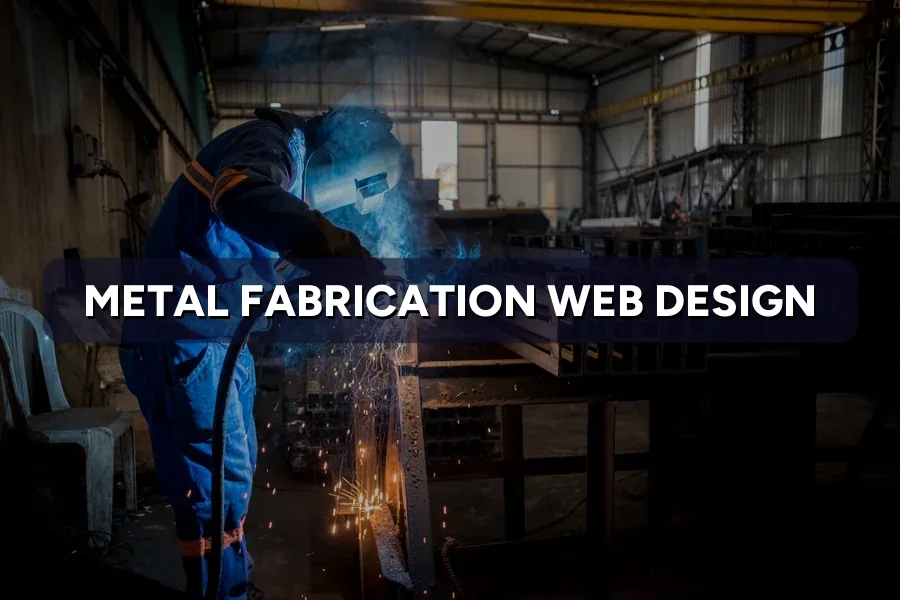
Tuesday, 10.40am. A purchasing executive at a Shah Alam packaging plant needs 240 stainless enclosures, 1.5mm, 304, bent and powder-coated. She opens four fabricator websites. Three show a welding-sparks hero, the words “Your Trusted Fabrication Partner Since 1998”, and a contact form with Name, Email, Message. The fourth lists a 3kW fibre laser with a 1500 x 3000mm bed, a 135-tonne press brake, ±0.1mm bending tolerance, and an upload box that takes her DWG. She sends the drawing to the fourth and never returns to the other three.
This guide covers web design for metal fabricators from that moment on: what belongs on the capability page, how much specification to publish, how to build an RFQ form that returns quotable enquiries, and where CIDB, DOSH and SIRIM proof sits. Four data sets follow.
ZenWeb builds websites for manufacturers and engineering firms across 500+ Malaysian accounts, and one pattern repeats in fabrication: a shop with good machines, competent welders and a decent order book — behind a website that cannot tell a buyer whether her part fits inside the machine.
Still quoting only the buyers who already know your name?
We build fabrication sites that bring in RFQs with drawings attached, not “please send quotation” emails. See the full metal fabrication marketing plan →
Before the sections, a short walkthrough of what industrial website design gets right and wrong.
Source video: 4 Manufacturing & Industrial Website Design Tips on YouTube
Quick Answer: Five things, visible without scrolling: the processes you run, your largest workable size and thickness, the industries you already supply, an RFQ button that accepts a drawing, and where the workshop is. That is the fabrication version of what a business website should actually do.
A buyer sourcing fabrication is not browsing. She is disqualifying. Within fifteen seconds she wants one answer — can this shop make my part — and a hero image of sparks does not give it. Neither does “quality, integrity, excellence”.
The fix is unglamorous. Replace the tagline with a capability line: “Laser cutting to 20mm mild steel, 3000mm press brake, TIG and MIG welding, in-house powder coating — Rawang, Selangor.” Put the RFQ button beside it. That one line qualifies better than an entire About page, and it gives Google something specific to rank, which is the basis of SEO for metal fabricators.
Quick Answer: Build one page listing every machine by type, make, capacity and working envelope — laser wattage and bed size, press brake tonnage and length, welding processes, finishing options, and the materials and grades you stock. It is the most-read page on almost every fabrication site we manage.
Buyers treat the capability page the way they treat a supplier questionnaire. They scan it for a hard no: bed too short, tonnage too light, no stainless, no coating in-house. Everything you leave off reads as a no, because a purchaser under time pressure assumes it is missing for a reason.
Write it as a table, not paragraphs: machine, capacity, materials, typical tolerance, and one line on what it is normally used for. Link each row to its process page. This is also the page AI assistants quote when someone asks for a fabricator that can cut 12mm plate in Selangor, so plain factual lines beat polished copy. Get the page hierarchy right and it becomes the hub the whole site hangs from.
Quick Answer: Publish capacities, tolerances, material grades and minimum order quantity. Sites that do produce about four times the RFQs of a profile-only site, and the median quoted job is over six times larger — because detail attracts the buyer with a real drawing and repels the one shopping for a single bracket.
| Specification published | RFQs per 1,000 sessions | Drawing attached | Quotable without a call | Median quoted job (RM) | Win rate |
|---|---|---|---|---|---|
| Company profile only | 3.1 | 12% | 18% | 6,400 | 9% |
| Service list, no numbers | 5.4 | 21% | 31% | 11,200 | 13% |
| Machine list with tonnage and bed size | 8.9 | 44% | 58% | 27,500 | 19% |
| Machines plus tolerance, grades and MOQ | 12.6 | 63% | 79% | 41,800 | 24% |
Source: ZenWeb client tracking, Malaysian metal fabrication and sheet metal accounts, 2024–2026.
The column that changes how a workshop runs is “quotable without a call”. At profile-only level, four in five enquiries need a phone call before an estimator can even start. At full-specification level, four in five can be priced straight from the file. That is estimator hours returned to the business, not just extra leads.
Two things stay off the page: unit prices and named customer contracts. Fabrication pricing moves with steel and batch size, and a published rate becomes the number you get beaten down to. Publish capability, not quotations.
Quick Answer: Give laser cutting, CNC bending, welding, rolling, machining and finishing a page each, with its own machine specs, tolerances, materials and sample parts. Buyers search by process and material, and a single services page ranks for none of those phrases.
Nobody types “metal fabrication services”. They type “laser cut 6mm stainless Shah Alam” or “press brake bending service Johor” or “stainless steel enclosure fabrication Malaysia”. Those are separate pages, and each needs the specification that matches the search — thickness range on the laser page, tonnage and maximum length on the bending page, procedures and positions on the welding page.
Add a second layer for the parts you make repeatedly: enclosures, hoppers, balustrades, machine guards, conveyor frames, stainless kitchen equipment. Those pages convert better than process pages because the buyer sees her own part, and they earn the long-tail traffic. Same discipline as any landing page that converts: one page, one job, one enquiry.
Quick Answer: A capability one-pager runs RM 3,200 to RM 5,000. The build most fabricators actually need — process pages, part pages, an RFQ form with drawing upload and a certification page — sits between RM 7,500 and RM 14,000. Job-work portals with repeat ordering start around RM 18,000, broadly in line with Malaysian web design pricing generally.
| Tier | What it includes | Build cost | Build time | Realistic ranking scope |
|---|---|---|---|---|
| Capability one-pager | Machine table, materials, photos, WhatsApp and map | RM 3,200–5,000 | 2–3 weeks | Own name plus one industrial estate |
| Process and part build | Page per process and part type, RFQ form with upload, certification page, project gallery | RM 7,500–14,000 | 5–7 weeks | Process plus material searches across the Klang Valley |
| Job-work portal | Customer login, part history, repeat ordering, drawing vault, quote status | RM 18,000–32,000 | 8–12 weeks | National process searches and OEM buyers |
| Group or manufacturer site | Multi-plant pages, English and Mandarin, ERP-linked quote intake, export section | RM 38,000+ | 12–20 weeks | Export enquiries and tender-scale buyers |
Source: ZenWeb build quotations for Malaysian fabrication, sheet metal and engineering clients, 2024–2026.
Most shops belong in the second tier. It is the cheapest build that can rank for process and material terms and take a drawing, and against a median quoted job of RM 27,500 it pays back on a couple of won orders. Full inclusions sit on the web design pricing page.
The portal tier is worth it only if you already run repeat job work. If the same five customers reorder the same parts monthly, a login that reorders from part history removes an estimator step and locks the account in. If your work is one-off contracts, spend that money on more part pages.
Quick Answer: Accept DWG, DXF, STEP, PDF and images up to at least 25MB, and ask for material, grade, thickness, quantity, finish and required date. Enquiries that arrive through a proper RFQ form are quoted in a quarter of the time and are worth roughly five times a phone-only enquiry.
| RFQ method | Share of enquiries | Usable drawing | Hours to quote | Median quoted (RM) | Win rate |
|---|---|---|---|---|---|
| Phone call only | 22% | 5% | 41 | 8,900 | 16% |
| WhatsApp chat | 34% | 38% | 9 | 14,600 | 21% |
| Short contact form | 19% | 11% | 27 | 9,800 | 14% |
| RFQ form with drawing upload | 21% | 92% | 6 | 46,300 | 27% |
| Email to a named estimator | 4% | 74% | 14 | 38,000 | 23% |
Source: ZenWeb client tracking, Malaysian fabrication accounts, 2024–2026.
Keep WhatsApp — it carries the most enquiries and it is how site supervisors work. But stop letting it be the only route, because a photo of a sketch on a workbench is not a drawing. Run both: WhatsApp for quick questions, the RFQ form for anything that needs pricing.
Ask for more fields here, not fewer. The usual advice to shorten your contact form is right for consumer businesses and wrong for fabrication. A buyer with a drawing expects to be asked for material and quantity; a form that asks nothing signals a shop that will need three phone calls anyway. Every field still has to earn its place, which is the logic behind good quote request forms. Then reply fast — at these job sizes, speed to lead decides who gets the second email.
Quick Answer: Give compliance its own page with SSM number, CIDB grade and specialisation codes if you do site work, welder qualifications, DOSH registrations for pressure vessels and lifting equipment, ISO or SIRIM QAS certificates, and your scheduled-waste handling under the Department of Environment.
Procurement teams at any serious buyer — a glove plant, a data centre contractor, an MNC in an industrial park — ask for these documents before issuing a purchase order. Publishing them changes the sequence: buyers arrive already knowing you clear their filter.
Show certificate numbers and validity dates, name the welding procedures and positions your welders are qualified for, and keep a dated review note in your calendar so nothing expires in public. If you handle scheduled waste such as spent coolant, pickling acid or paint sludge, one honest paragraph on disposal is worth more to an MNC buyer than any award logo. This is trust signalling in its most literal industrial form.
Quick Answer: Caption every photo with material, thickness, process, tolerance held and lead time. An uncaptioned gallery of shiny parts proves nothing; a captioned one is a portfolio a purchaser can match against her own drawing.
Most fabrication galleries are a grid of welded objects with no context. Buyers cannot tell whether the handrail was 1.2mm or 3mm, whether the finish was brushed or electropolished, or whether it took two weeks or two months. Six well-captioned projects beat sixty anonymous photos.
Structure each entry the way an estimator would: material and grade, processes involved, quantity, finish, lead time, and one line about the constraint you solved. Never publish a customer’s drawing or name without written permission. Compress the images too, because a gallery is usually the reason a fabrication site fails Core Web Vitals.
Quick Answer: Job work and contract work need different journeys. The job-work buyer wants specs, upload and turnaround in three clicks. The contract buyer wants capacity, certifications, past projects and a named person — and takes weeks to decide.
Trying to serve both with one path produces a site that serves neither. Split the navigation early: a “Send us a drawing” route for repeat part work, and a “Discuss a project” route for structural steel, conveyors, tanks and anything site-installed. Both live on the homepage; only one is above the fold on a process page.
The contract path carries longer content — capacity in tonnes per month, project timelines, installation crews, safety records, references. That suits normal B2B buying behaviour in Malaysia, where a specifier researches for weeks before making contact. Give that visitor a reason to come back, because the first visit rarely produces the enquiry.
Quick Answer: Aim for Largest Contentful Paint under 2.5 seconds on mobile. Roughly seven in ten fabrication sessions are on a phone, often inside a steel-framed building with poor signal, so the upload must work on mobile data and the machine table must be readable without pinching.
Fabrication sites fail mobile in a specific way: the equipment table becomes a horizontal scroll nobody scrolls, and the RFQ upload silently rejects a 30MB STEP file. Both are fixable in a day, and both cost real quotations. Test the upload on a phone, on mobile data, with a large file, before launch.
The other common failure is a slideshow of 4MB workshop photos above the fold. Compress everything, lazy-load the gallery, and if the site is already live and sluggish, work through the Core Web Vitals fixes first.
Quick Answer: Buyers now arrive deeper, decide in fewer visits and attach files far more often. Sessions landing on a process page rather than the homepage rose from 12% to 38% in four years, and RFQs with a drawing attached went from 21% to 56% — which is why fabrication Google Ads now point at process pages.
| Year | Mobile sessions | Land on a process page | Open the machine list | Sessions before first RFQ | RFQs with a file |
|---|---|---|---|---|---|
| 2022 | 51% | 12% | 24% | 3.4 | 21% |
| 2023 | 57% | 18% | 31% | 3.1 | 29% |
| 2024 | 62% | 26% | 39% | 2.7 | 38% |
| 2025 | 66% | 33% | 47% | 2.4 | 47% |
| 2026 | 69% | 38% | 54% | 2.2 | 56% |
| 2027* | 71% | 43% | 59% | 2.0 | 62% |
Source: ZenWeb-managed fabrication and sheet metal websites, Malaysia, 2022–2026. *2027 is a modelled projection from the observed trend.
Three design consequences follow. Every process page has to work as a homepage, because most visitors never see the real one. The machine list has to be one tap from anywhere. And the upload has to handle CAD files properly, because that is now how the majority of enquiries arrive.
Quick Answer: Hiding the machine list, running one services page, offering only a three-field contact form, uncaptioned galleries, no certification page, and a company profile PDF used as the website. Each one pushes the buyer to the next search result.
The most expensive one is the downloadable company profile used as a substitute for pages. It cannot be indexed properly, and buyers will not download a file from a shop they have not chosen yet. Put its content on the site as HTML and keep the PDF for vendor registration emails.
Two more worth naming. A Contact Us page with only a general office number wastes enquiries — give the estimating team a direct line and a named person. And a site that never says where the workshop is loses close jobs, because a buyer choosing between two quotes picks the one she can drive to for a first-article check.
Quick Answer: Good web design for metal fabricators publishes the machine table, gives every process and part type its own page, replaces the contact form with a real RFQ upload, and proves CIDB, DOSH and SIRIM status. Build those four first, then add the gallery, the contract path and the job-work portal.
A fabrication website does not need to look impressive. It needs to answer three questions before the buyer closes the tab: can you make this part, have you made one like it, and how do I send you the drawing.
Build in that order — capability table, process and part pages, RFQ form with upload, certification page. They cost the least and move the most, turning a brochure into an estimating queue. Once the site can take a drawing, the Meta Ads guide for fabricators covers how to fill it.
Ready for RFQs that arrive with the drawing attached?
ZenWeb builds fabrication and manufacturing websites around one measurable outcome — quotable enquiries you can count, not “please send price” emails you have to chase.
A capability one-pager with a machine table, photos and WhatsApp runs RM 3,200 to RM 5,000. The build most fabricators need — process pages, part pages, an RFQ form with drawing upload and a certification page — sits between RM 7,500 and RM 14,000 over five to seven weeks. Job-work portals with customer logins start around RM 18,000.
Yes. Machine type, capacity, working envelope, tolerance and materials are exactly what a purchaser uses to shortlist. Sites publishing full specifications produce roughly four times the RFQs of a profile-only site, and a far higher share can be quoted without a clarification call.
No. Fabrication pricing moves with steel cost, batch size, finish and lead time, and a published rate simply becomes the number buyers negotiate down from. Publish capability and minimum order quantity instead, and keep commercial numbers in the quotation.
DWG, DXF, STEP and IGES for CAD, plus PDF and common image formats for scanned or hand-drawn sketches. Allow at least 25MB and multiple files, and test the upload on a phone on mobile data — a silent failure there loses your highest-value enquiries.
Yes. WhatsApp carries the largest share of fabrication enquiries and suits quick questions. Run both: WhatsApp for availability, the RFQ form for anything needing a price, since form enquiries arrive with a usable drawing far more often.
SSM registration, CIDB grade and specialisation codes for site work, welder qualification records, DOSH registrations for pressure vessels and lifting equipment, any ISO or SIRIM QAS certificates, and your scheduled-waste handling arrangements. Show certificate numbers and validity dates rather than badge images.
Complete the form and our team will contact you to discuss your goals. Let’s grow your business.



Meowketing Specialist
Online


























