

Share this post:
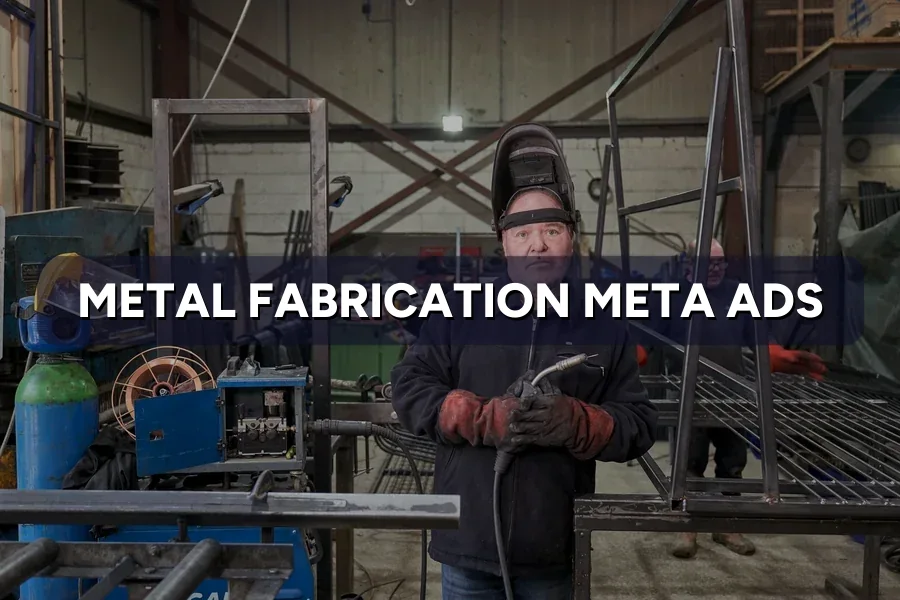
Ask five marketing blogs whether a metal fabricator should run Meta Ads and four say no — purchasing managers are not scrolling Instagram for laser cutting. True, and still the wrong conclusion.
Malaysian fabrication shops sell to two worlds: a purchasing executive at a factory in Prai, and a homeowner in Rawang who wants a stainless staircase. Meta reaches the second directly and the first indirectly. Both pay, if the account knows the difference.
This guide is for job shops, sheet metal and precision shops, structural steel fabricators, stainless and food-grade specialists, and OEM contract fabricators. Four original data sets sit inside it.
ZenWeb runs Meta Ads for 500+ Malaysian accounts, industrial workshops among them. The pattern in fabrication accounts is consistent: the money is not in the first click, it is in the second visit.
Not sure whether Meta deserves any of your shop’s budget?
We check what your site already gets before recommending a ringgit of social spend. Compare our Meta Ads plans →
The demand is real. Malaysia’s non-metallic mineral, basic metal and fabricated metal products sub-sector grew sales 6.4 per cent year-on-year in May 2026, per DOSM. The wider channel picture sits in our guide to digital marketing for metal fabricators. This one is Facebook and Instagram only.
Source: Rafael Hernandez on YouTube
Quick Answer: Meta Ads for metal fabricators are not a cold lead channel. They do three jobs well: showing capability on video, bringing back people who viewed your capability pages, and filling welder vacancies. Judged as a cold-lead machine, Meta always looks expensive.
Purchasers do not open Instagram to source a fabricator. They open it at lunch, after meeting your name elsewhere — a search, a tender list, a site engineer’s recommendation. That timing is the opportunity, and it supports three jobs:
Cold prospecting is the fourth job, and it only pays on the consumer side. Search still carries the industrial enquiries, which is why our Google Ads guide for fabricators sits alongside this one.
Quick Answer: A shop selling both auto gates and machine frames is running two businesses. Give each its own campaign, creative and budget. Mixing them teaches Meta to chase whoever is cheapest, which is always the homeowner.
This is the most common structural error in fabrication accounts. One campaign, one budget, both audiences — and within a fortnight the algorithm has decided the shop sells grilles.
| Side of the shop | Typical job | What Meta is for |
|---|---|---|
| Consumer metalwork | Auto gates, grilles, awnings, staircases, canopies | Cold prospecting and WhatsApp enquiries |
| Industrial and OEM | Machine guards, jigs, tanks, mezzanines, contract parts | Retargeting and capability proof only |
Separate campaigns also protect the reporting. Sharing a budget, an owner sees RM 11 per lead and assumes Meta works, while the estimator sees no drawings at all.
Quick Answer: Meta cannot reliably find a Malaysian purchasing manager by job title. Geography filters instead. Drop tight radiuses over industrial estates — Shah Alam, Rawang, Nilai, Pasir Gudang, Prai — and let the workplace do what the job title cannot.
Malaysian users rarely fill in employer fields, so job-title targeting thins out fast. What people cannot hide is where they spend the working day.
Interest targeting like “welding” pulls hobbyists and students, exactly as it does on search. Building these audiences starts with tracking — see our walkthrough on Meta Pixel and Conversions API setup.
Quick Answer: Fabrication is unusually watchable, which is a rare advantage on Meta. Raw phone footage of a laser head, a press brake folding or a weld bead running beats any studio brand video. Film the process; put material and thickness on screen.
Most industries must invent something visual. A fabricator does not. Sparks, steel bending, a panel dropping into place — the work stops thumbs by itself.
Avoid stock footage of foreign factories. Malaysian buyers spot it and read it as a trading company reselling somebody else’s capacity. Our notes on Facebook ad creative that converts apply, with one change: rougher wins.
Quick Answer: Use click-to-WhatsApp for industrial enquiries, because a drawing can be sent through it. Use instant forms only with qualifying questions added. Never run a three-field instant form on a fabrication campaign — cheapest leads, fewest quotations.
A fabrication enquiry is worthless without a part. Name, phone and “interested” tells the estimator nothing, and chasing it costs more than the lead did.
Keep the questions legal, too. Meta’s Advertising Standards block lead-form fields requesting financial information or government-issued identifiers without written permission, so “annual steel budget” and registration-number fields do not belong there. For routing, see our guides to Facebook lead ads and click-to-WhatsApp ads.
Quick Answer: The highest-value Meta audience a fabricator owns is people who viewed the capability, machine or certification pages and left without enquiring. They are mid-sourcing. Retargeting them produces qualified RFQs at a fifth of cold-prospecting cost.
Sourcing a fabricator is rarely one sitting. A buyer opens four websites, compares bed sizes and tonnage, then gets interrupted. By Friday only the shop that reappeared is still in play.
This is where the budget should sit first, before any cold campaign starts. The mechanics are in our explainer on how retargeting ads work, the warning signs in ad frequency climbing too high.
Getting enquiries but no drawings?
We rebuild the audiences and the enquiry route before spending more on media. See how our Meta Ads management works →
Quick Answer: For most Malaysian fabrication shops, capacity is limited by welders and fitters, not enquiries. Meta is the cheapest hiring channel for those roles, and filling a vacancy raises the revenue ceiling more than any lead campaign.
This is the use nobody writes about. Skilled fabrication roles are advertised constantly, from workshops in Sarawak to precision shops in Penang, and the people who fill them are on Facebook, not white-collar job platforms.
Treat hiring as capacity investment. One extra welder lets the shop accept jobs it currently turns away — the same constraint we cover in our SEO guide for metal fabricators.
Quick Answer: The cheapest enquiry is the dearest quotation. A boosted post produces leads at RM 9 but qualified RFQs at RM 150. Retargeting produces enquiries at RM 19 and qualified RFQs at RM 28 — five times cheaper on the number that matters.
| Meta setup | Cost per qualified RFQ | Raw enquiry (RM) | Enquiry to RFQ | Qualified RFQ (RM) |
|---|---|---|---|---|
| Boosted post, engagement | 9 | 6% | 150 | |
| Traffic ad to home page | 34 | 18% | 134 | |
| Instant form, 3 fields | 12 | 14% | 86 | |
| Landing page with drawing upload | 44 | 61% | 72 | |
| Click-to-WhatsApp, drawing requested | 31 | 52% | 60 | |
| Instant form, 6 fields plus spec question | 27 | 46% | 59 | |
| Retargeting capability-page visitors | 19 | 68% | 28 |
Aggregated from ZenWeb-managed campaigns, Malaysia, 2024–2026. A qualified RFQ means an enquiry the estimator was able to price.
Read the first and last rows together. Boosted posts look sixteen times cheaper per lead and end up five times dearer per quotation. Budget talk that stops at cost per lead lands wrong — see our note on the smallest Facebook ads budget that still works.
Quick Answer: Broad audiences supply 38 per cent of enquiries and the smallest jobs, averaging RM 4,200. Capability-page retargeting supplies 11 per cent and the largest, averaging RM 41,000, at RM 6 of media per RM 1,000 awarded.
| Audience | Share of enquiries | Enquiry to RFQ | Avg awarded job (RM) | Media per RM 1,000 awarded (RM) |
|---|---|---|---|---|
| Broad, 25 km radius | 38% | 9% | 4,200 | 168 |
| Renovation and contractor interests | 22% | 21% | 12,500 | 61 |
| Industrial estate geo-radius | 14% | 34% | 28,000 | 22 |
| Capability-page retargeting | 11% | 68% | 41,000 | 6 |
| Lookalike of awarded customers | 9% | 39% | 33,000 | 14 |
| Process-video viewers, 50 per cent plus | 6% | 27% | 9,800 | 34 |
Aggregated from ZenWeb-managed campaigns, Malaysia, 2024–2026.
The broad audience is not useless. It feeds the video-viewer and retargeting pools below it. It is only a problem when it is the whole account.
Quick Answer: Raw process video stops the most thumbs, at a 41 per cent three-second view rate. The static machine-specification card produces the highest share of priceable enquiries, 63 per cent. Run both: video builds the audience, the spec card converts it.
| Creative format | Stop rate | Cost per enquiry (RM) | Priceable share |
|---|---|---|---|
| Raw process video, no music | 41% | 14 | 44% |
| Before and after retrofit carousel | 27% | 16 | 38% |
| Finished install photo, district named | 22% | 11 | 31% |
| Static machine specification card | 9% | 26 | 63% |
| Studio brand video | 7% | 39 | 12% |
Aggregated from ZenWeb-managed campaigns, Malaysia, 2024–2026. Priceable share means the estimator could quote without chasing further information.
The studio brand video is the expensive lesson here. It is usually the one a crew was paid for, and it loses on every column.
Quick Answer: Fabrication demand on Meta swings hard. January to February collapses around Chinese New Year: industrial share drops to 31 per cent and cost per qualified RFQ climbs to RM 74. September to October is the opposite, 68 per cent industrial at RM 41.
| Period | Qualified RFQs per RM 1,000 spend | Industrial share | Cost per qualified RFQ (RM) |
|---|---|---|---|
| January to February | 13.5 | 31% | 74 |
| March to April | 18.9 | 52% | 53 |
| May to June | 15.6 | 44% | 64 |
| July to August | 20.4 | 61% | 49 |
| September to October | 24.4 | 68% | 41 |
| November to December | 17.2 | 57% | 58 |
Aggregated from ZenWeb-managed campaigns, Malaysia, 2024–2026.
Two moves follow. Shift budget to consumer metalwork over the festive months, when homeowners renovate and factories shut. Then push industrial spend from July, while buyers close projects before year end.
Want your spend to follow the fabrication season?
We plan the year against quoting capacity, not a flat monthly figure. See how we plan a full-year channel mix →
Quick Answer: Do not advertise certifications you do not hold, imply approval for pressure or lifting equipment you lack, or put a fixed price on a made-to-order part. Certification claims are the ones buyers verify, and the ones that end relationships.
Fabrication claims are checkable, which raises the risk. A buyer can confirm a CIDB contractor registration in minutes, and equipment under DOSH requirements is checked before installation.
Rejections usually come from claim wording, not the image, so the fix is a sentence rather than a new creative — see what to do when a Facebook ad is rejected.
Quick Answer: Google first, almost always. Search catches buyers who already have a drawing; Meta catches them before or after. A shop with one budget should put about 70 per cent into search and 30 into Meta retargeting until search saturates.
The exception is a shop leaning on consumer metalwork. Gates, grilles, awnings and canopies are visual and local; for that mix Meta can carry half the budget.
One rule holds whichever way the split lands: a drawing sent at 9 pm and answered at 11 am usually still wins the job. That is not true in consumer trades — a useful contrast to our comparison of Facebook Ads against Google Ads in Malaysia and our piece on speed to lead.
Quick Answer: The recurring errors: boosting posts instead of building campaigns, one budget for two audiences, three-field lead forms, sending every click to the home page, and leaving WhatsApp enquiries unanswered until the office reopens.
None are exotic. They are the same six every quarter, and each is structural rather than creative, so the fix starts with the account build — see our full fabrication marketing guide.
Meta Ads for metal fabricators work once the shop stops asking them to do search’s job. The platform is good at three things: showing the workshop is real, bringing back the buyer who was halfway through comparing suppliers, and finding the welder who lets you take the next job.
Split the two sides of the business. Start the budget at retargeting. Film the machines instead of hiring a crew. Ask enough in the form that the estimator can quote. Judge the account on cost per priceable RFQ, and let the season move the money.
Yes, but not as a cold lead channel. Meta earns its budget through retargeting people who viewed your capability pages, process video that proves the workshop is real, and welder recruitment. Retargeted enquiries produce qualified RFQs at roughly RM 28, against RM 150 from a boosted post.
Size it against the estimator’s capacity, not revenue. Retargeting audiences are small, so RM 600 to RM 1,200 a month usually saturates them. Add cold prospecting only if the shop also sells gates, grilles or awnings, where a further RM 1,500 to RM 3,000 works.
Almost always the form. A three-field instant form produces enquiries at RM 12, but only 14 per cent become priceable RFQs. Adding material, quantity and required-by-date questions raises that to 46 per cent; click-to-WhatsApp with an explicit drawing request reaches 52 per cent.
Not reliably by job title, because Malaysian users rarely complete employer fields. Geography works better. Tight radiuses over industrial estates such as Shah Alam, Rawang, Nilai, Pasir Gudang and Prai deliver 34 per cent enquiry-to-RFQ rates and awarded jobs averaging RM 28,000.
Raw phone footage of your own machines: 15 to 25 seconds, vertical, no music, material and thickness on screen. That format holds 41 per cent of viewers past three seconds. Studio brand videos hold 7 per cent and cost nearly three times as much per enquiry.
Ready to make Meta pay for your workshop?
Tell us what your shop makes and who buys it. We will show you which of the three Meta jobs is worth funding first, and what it should cost.
Complete the form and our team will contact you to discuss your goals. Let’s grow your business.



Meowketing Specialist
Online


























