

Share this post:
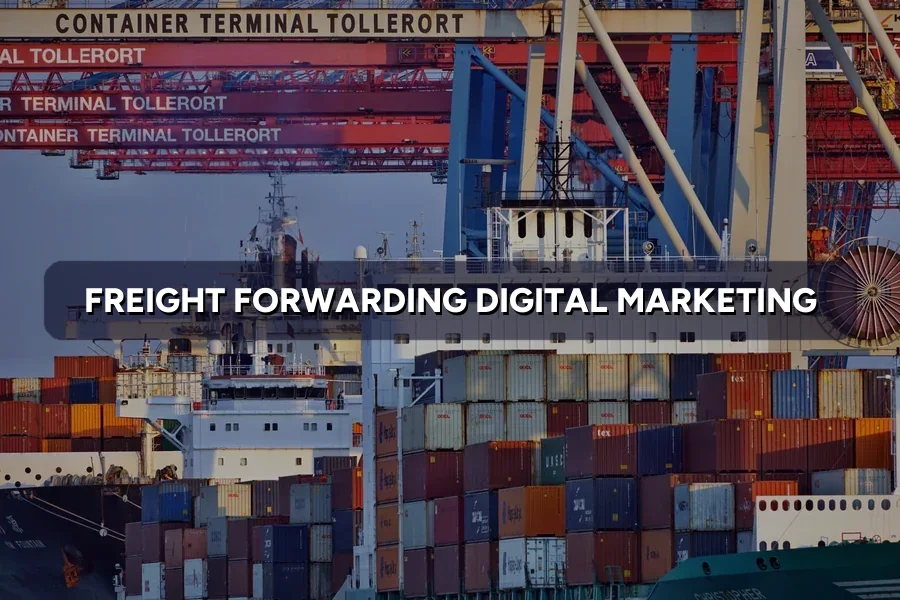
A Rawang furniture maker lands her first order from a buyer in Rotterdam and has never exported a container. She sends five enquiries. Four forwarders reply the next afternoon with a rate sheet and no explanation. One replies in forty minutes with an all-in figure, the Port Klang cut-off, and a plain note on what is not covered. That one gets the shipment, and the eleven after it.
This guide is for Malaysian freight forwarders, customs brokers, cross-border hauliers and 3PL operators. ZenWeb runs digital marketing for freight forwarders alongside 500+ Malaysian accounts. Rates get copied within a week. A quote desk that answers first is far harder to copy, and ZenWeb builds the pipeline that feeds it.
Not sure what one shipper account should cost you to win?
We size a budget against your lane mix and the volume your desk can quote. See our digital marketing pricing →
Two things changed the search picture for this trade. Logistics services became subject to a 6% service tax from 1 March 2024 under Group J, per MySST, so shippers now interrogate quotes line by line. And they do it online first — household internet access reached 97.1% in 2025, per DOSM.
Source video: Top Tips for Attracting More Customers to Your Freight Forwarding Business on YouTube
Quick Answer: Referral pipelines in forwarding are inherited, not grown. First-time importers and e-commerce sellers have no uncle in the trade, so they search — and that search decides the shortlist.
The trade sells through agents, shipping lines and the same twenty relationships. That works until the relationships retire. Meanwhile a new generation of shippers — online sellers, small manufacturers with a first export order, buyers switching supplier country — arrives with no forwarder at all.
Quick Answer: A shipment date forces the search. The shipper filters on whether you handle the exact lane, whether the quote is all-in, and how fast you answer. Rate only decides between forwarders who cleared all three.
The path runs in five steps, and each one is a page you should own:
Step four is where most forwarders lose. Almost nobody publishes what a quote excludes, because exclusions feel like fine print. To a first-time shipper they are the whole risk, and our guide on quote request forms covers capturing them properly.
Quick Answer: Search wins the shipper with a cargo ready date. LinkedIn reaches supply chain managers and overseas agents hunting a Malaysian partner. Meta reaches online sellers importing their first pallet. Check cost per lead by channel before you split the budget.
Quick Answer: Shippers never search “freight forwarding services”. They search a lane — origin, destination and mode. One page per lane outranks a four-item service menu every time.
Give every lane you genuinely service its own page, built on the same skeleton: transit time, sailing or flight frequency, cut-off day, documents required, what the rate excludes, and a quote form. Twenty honest lane pages beat two hundred thin ones. That structure also feeds AI answer engines, as our note on content AI engines can quote explains.
The second layer is the one Malaysian forwarders forget: overseas agents searching in English for a partner here. A page written for them — network memberships, ports covered, bonded facilities, office hours in GMT+8 — picks up traffic no local rival is chasing. Our guide to international SEO covers how to target it.
Quick Answer: Bid on lanes and modes, never on the trade itself. “LCL Port Klang to Surabaya” converts; “shipping company Malaysia” collects students, job seekers and parcel senders. Track the booked shipment, not the click.
Someone typing “customs clearance agent Port Klang urgent” has a container accruing storage. Three rules keep the spend honest:
Paying for clicks that want to ship one carton?
We rebuild freight campaigns around lane, mode and minimum volume. Get a free Google Ads review →
Quick Answer: Meta reaches the online seller whose supplier just asked for a forwarder’s details. LinkedIn reaches the supply chain manager who awards an annual rate contract. They do opposite jobs, and running one leaves half the pipeline unbuilt.
Meta and short video reward proof of handling: a groupage box being stuffed, a permit cleared in a morning, a reefer plugged in at the port. Sound off, cargo visible, minimum volume in the caption. LinkedIn costs more per enquiry, but one contract award covers a year of it.
Quick Answer: A freight forwarding website has one job: turn a browsing shipper into an enquiry complete enough to quote without a phone call. Origin, destination, mode, volume or weight, commodity and ready date — six fields, plus a file upload.
Most forwarder sites fail the same two ways: the form asks for a company registration number before it asks what is shipping, and there is nowhere to attach the packing list.
Fix the order. Ask what, where and when first; ask who they are last. Add the document upload, publish the port cut-off days, and show your own warehouse instead of a stock container ship. Sites with traffic but no enquiries usually fail right here — see traffic but no leads.
Quick Answer: Transacting customs business for someone else requires approval under Section 90 of the Customs Act 1967. Publishing your approval status, bond and tax treatment is the highest-converting content a forwarder can rank.
Four compliance facts decide whether a cautious shipper trusts you:
If you run the trucking leg too, the road licence sits with APAD, and integrated operators often hold International Integrated Logistics Services status from MIDA. Say so plainly on the site.
Quick Answer: Shippers search by the port or the estate their cargo sits in. North Port, Westports, Tanjung Pelepas, Pasir Gudang, Bayan Lepas and KLIA Free Commercial Zone pull enquiries that “Selangor freight forwarder” never reaches.
Two moves matter. First, a complete Google Business Profile with the right category, real photos of your office and warehouse, and posted operating hours for the documentation desk — our guide to ranking a Google Business Profile covers it. Second, a page per port or free zone you clear at, naming the terminal and the cut-off you work to.
Quick Answer: The strongest content a forwarder can publish is procedure explanation, not capability boasting. A plain guide to exporting a first container earns more qualified enquiries than any fleet photo gallery.
Quick Answer: The typical shift is from roughly 25 mostly referred enquiries a month to around 60, with direct shipper share rising sharply. The bigger change is mix: one-off clearances give way to repeat lane accounts.
| Measure | Before | After 9 months |
|---|---|---|
| Monthly enquiries | 22–28 | 54–66 |
| Share from direct shippers | 17% | 52% |
| Shipments per new account, year one | 2.4 | 7.8 |
| Annual rate contracts held | 3 | 11 |
Source: ZenWeb client sample, 500+ Malaysian SME accounts, 2024–2026.
Quick Answer: A customs brokerage enquiry costs about RM 31 to win and is worth roughly RM 14,000 a year. A project cargo account costs RM 1,297 and is worth around RM 340,000, because one job carries a year of margin.
| Service line | Cost per enquiry (RM) | Enquiry to quote | Quote to booking | Cost per won account (RM) | 12-month value (RM) |
|---|---|---|---|---|---|
| Customs brokerage only | 12 | 71% | 54% | 31 | 14,000 |
| LCL consolidation | 19 | 66% | 41% | 70 | 26,000 |
| Cross-border trucking | 27 | 62% | 38% | 115 | 48,000 |
| FCL sea freight | 34 | 58% | 33% | 178 | 96,000 |
| Air freight | 41 | 54% | 29% | 262 | 71,000 |
| Warehousing and 3PL | 58 | 47% | 22% | 561 | 210,000 |
| Project and out-of-gauge cargo | 86 | 39% | 17% | 1,297 | 340,000 |
Source: ZenWeb client tracking, Malaysia, 2024–2026.
Project cargo looks unaffordable until you divide: it returns about RM 262 of first-year revenue for every RM 1 of media, roughly six times what brokerage returns.
Quick Answer: Quotes returned within an hour win 47% of the time. Next working day wins 12%. Two days or more wins 4%. Freight is the one trade where speed of reply beats the rate on the reply.
| Quote turnaround | Share of enquiries | Win rate | Shipments in year one | Typical requester |
|---|---|---|---|---|
| Under 1 hour | 9% | 47% | 14 | Cargo already at port |
| 1–4 hours | 23% | 38% | 11 | Booking window this week |
| Same working day | 31% | 26% | 7 | Comparing three forwarders |
| Next working day | 24% | 12% | 4 | Budgeting a future lane |
| 2 or more working days | 13% | 4% | 1 | Already booked elsewhere |
Source: ZenWeb client tracking, Malaysia, 2024–2026.
Note the trap in the middle rows: 55% of enquiries get a same-day or next-day reply, and those two bands together win less often than the 9% answered inside an hour.
Quick Answer: About RM 2,000 a month opens two to four new shipper accounts; RM 8,000 supports ten to fourteen. Returns stay near linear until roughly RM 14,000, when quote desk capacity becomes the ceiling. Pick the tier you can actually quote.
| Monthly budget | Relative output | New accounts |
|---|---|---|
| RM 2,000 | 2–4 | |
| RM 4,500 | 5–8 | |
| RM 8,000 | 10–14 | |
| RM 14,000 | 16–21 |
Source: ZenWeb client tracking, 2024–2026. Bars show relative output.
A forwarder who wins twenty accounts and quotes half of them late finishes behind one who wins ten and answers every one inside the hour.
Quick Answer: Enquiries peak twice — January, before the Chinese New Year factory shutdown, and August to October, when Western holiday cargo moves. February and December are the two troughs, so organic visibility must be earned before the peak, not during it.
| Month | Enquiry index | Relative volume | What is moving |
|---|---|---|---|
| January | 118 | Rush before CNY cut-offs | |
| February | 71 | Factory shutdown trough | |
| March | 101 | Backlog clearing | |
| April | 94 | Routine industrial cargo | |
| May | 98 | Routine industrial cargo | |
| June | 82 | Festive slowdown | |
| July | 110 | Peak season build-up | |
| August | 115 | Holiday retail cargo | |
| September | 120 | Peak season high point | |
| October | 112 | Last sailings for December | |
| November | 100 | Air freight catch-up | |
| December | 79 | Year-end trough |
Source: ZenWeb client tracking, Malaysia, 2024–2026. Bars show volume relative to the busiest month.
The gap between September and February is 49 index points. Most forwarders discover this by feel and still buy ads flat across the year.
Want the lane pages ranking before peak season?
We map the lanes your shippers search and rank them ahead of the booking window. See how our SEO pricing works →
Quick Answer: Across ZenWeb’s logistics clients, monthly enquiries roughly double within six months, shipments per new account triple as lane pages attract repeat shippers, and annual rate contracts move into double figures.
Quick Answer: Writing the site for other forwarders instead of shippers, listing modes instead of lanes, hiding every charge behind “contact us”, and treating a quote request as the start of a negotiation rather than a race.
Quick Answer: Three shifts matter: shippers now ask AI assistants how a lane works before contacting anyone, instant rate quoting is becoming the baseline expectation, and sailing-schedule data is the cheapest repeat-booking prompt nobody uses.
Quick Answer: Build a page for every lane you genuinely service, publish your approval status and what a quote excludes, staff the desk to answer inside an hour, and budget ahead of the September peak. That is most of the work.
None of this needs a bigger fleet or a cheaper carrier contract. Done properly, digital marketing for freight forwarders becomes a filter — fewer one-carton enquiries, more repeat lane accounts, and rate contracts that do not depend on who your sales manager used to work with.
Most start between RM 2,000 and RM 8,000 a month across search, LinkedIn and Maps, plus the website rebuild. Set the ceiling against annual account value, not one shipment.
Publish a realistic range per lane rather than a firm rate. A range filters out shippers who were never in your bracket. Firm rates move too often to keep accurate, so state the validity and what the figure excludes.
Yes. Transacting customs business for others requires approval under Section 90 of the Customs Act 1967, granted for two years and renewed on application two months before expiry. Forwarding agent companies also carry a 51% bumiputera participation condition; shipping agents carry 30%.
Google Search supplies most lane enquiries, which arrive with a ready date attached and convert fastest. LinkedIn costs more but reaches the managers who award annual rate contracts and the overseas agents seeking a Malaysian partner.
Google Ads and a completed Google Business Profile can produce quote requests within two to four weeks. Lane pages start ranking between month four and month eight, so publish them ahead of peak season rather than during it.
Ready to be the forwarder the shipper finds first?
Book a free 30-minute strategy session — we’ll review your lanes, rankings and quote form, then hand you a 90-day plan with cost per won account by service line.
Complete the form and our team will contact you to discuss your goals. Let’s grow your business.



Meowketing Specialist
Online


























