
How to hire a web developer in Malaysia — and how we actually build
Hiring a web developer in Malaysia means choosing between a freelancer, an in-house hire and an agency — and the right answer depends on how long the system must live, not on price. ZenWeb has built for SMEs since 2000 across Japan, Vietnam and Malaysia, serving 500+ businesses, to a Kaizen engineering discipline that assumes we are still maintaining the system in year three.
- By Jian Tat Lee , Co-Founder
- Last updated: 10 August 2026
- ~16 min read
SMEs Served
Businesses built for across Malaysia, Japan and Vietnam since 2000.
Years Building
Founded in Japan in 2000; Malaysian SME engineering today.

Google Reviews


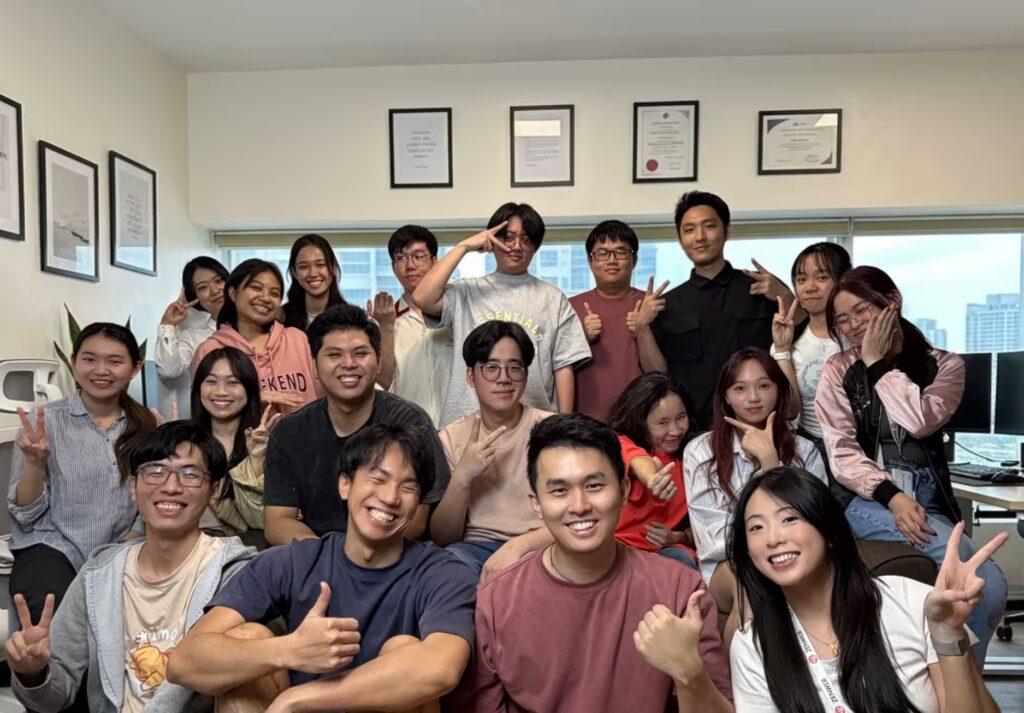
The ZenWeb team — same engineering discipline since 2000.
Malaysia, Japan, and Vietnam — one bench, one process, one quality standard for every Malaysian SME build.
3
Countries served
25+
Years operating
Hiring a web developer in Malaysia means choosing between a freelancer, an in-house hire and an agency — and the right answer depends on how long the system must live, not on price. ZenWeb has built for SMEs since 2000 across Japan, Vietnam and Malaysia, serving 500+ businesses. We work to a Kaizen engineering discipline that assumes we will still be maintaining the system in year three.
This page is written to be useful whether or not you hire us. Most guides to hiring a web developer in Malaysia are directory listings dressed as advice. What follows is the vetting process we would hand to a friend — including the questions that would expose a weak agency, ours included.
The video below is a good primer on how a professional build is actually sequenced, which is the baseline any developer you interview should be able to describe unprompted.
Hiring a web developer in Malaysia
Quick Answer: Malaysia has a deep pool of web development talent across freelancers, boutique studios and agencies. The hard part is not finding someone who can code. It is finding someone who will still be reachable, and whose work will still be changeable, two years after launch.
Almost every buyer we meet has been burned in the same way. The build went reasonably well. Then the developer became slow to reply, then unreachable, and the business discovered it could not change its own website without starting again.
That failure is not a coding failure. It is a continuity failure, and it is what the rest of this page is designed to help you avoid. If you already know what you want built, the custom web development service page covers the technical scope in detail.
What a web developer actually does
Quick Answer: Writing feature code is a minority of a developer's work. The rest is requirements clarification, data modelling, integration handling, testing, security, performance and deployment — the invisible work that decides whether the visible work survives contact with real users.
Clients see screens, so they price screens. Here is roughly where the effort actually goes on a business application:
- Understanding the process. Turning "we want a booking system" into precise rules about availability, cancellation, deposits and exceptions.
- Structuring the data. Deciding how records relate before any screen exists. This is the decision that is most expensive to reverse.
- Handling other people's systems. Payment gateways, couriers, accounting tools and messaging APIs all fail in their own ways and each failure needs a plan.
- Testing and hardening. Edge cases, permissions, input validation, and performance against Google's Core Web Vitals thresholds.
- Shipping safely. Version control, staging, release process, backups, monitoring, rollback.
A developer who talks only about frameworks and design has told you about the smallest part of the job.
Already know what you need built?
Our tiers, add-ons and hourly rates are published rather than quoted on request. See web development pricing →
Freelancer, in-house or agency?
Quick Answer: Freelancers suit small, well-defined jobs with a clear finish line. In-house hires suit products that change weekly and justify a full-time salary. Agencies suit builds that need several disciplines at once and must be supported for years afterwards.
We are an agency, so treat the comparison below with appropriate scepticism — but it is the one we genuinely use when advising clients, including when we advise them not to hire us.
| Dimension | Freelancer | In-house | Agency |
|---|---|---|---|
| Typical cost | RM 80–300/hr | RM 6k–15k/month | RM 150–250/hr |
| Best for | Defined, finite scope | Continuous product work | Multi-discipline builds |
| Main risk | Single point of failure | Hiring the wrong person | Paying for overhead you don't need |
| Support after launch | Availability-dependent | Immediate | Contracted retainer |
If your build is under about RM 20,000 and finishes cleanly, a good freelancer is often the better value. Our honest advice in that situation is to hire one — and to insist on the same ownership terms an agency would give you.
Engagement model versus project outcome
Quick Answer: Across projects ZenWeb has audited or inherited, outcomes vary sharply by engagement model and by project size. Freelance engagements perform well on small builds and degrade quickly above roughly RM 40,000, where coordination load exceeds one person's capacity.
| Engagement model | Under RM 20k | RM 20k–40k | RM 40k–90k | Over RM 90k |
|---|---|---|---|---|
| Solo freelancer | 81% | 62% | 38% | 21% |
| Small studio (2–5) | 76% | 74% | 65% | 48% |
| Full agency | 69% | 77% | 80% | 79% |
Source: ZenWeb client tracking and inherited-project audits, Malaysia, 2024–2026. Licence.
Note the top-left cell. On builds under RM 20,000, solo freelancers outperform us on delivery timing, and we would rather say so than pretend otherwise. Agencies earn their overhead in the two right-hand columns, where several disciplines have to run in parallel and someone must own the schedule.
Are you ready to hire a developer?
Quick Answer: You are ready when you can name the process being replaced, appoint one decision-maker, supply real data and content, and commit to a stable scope for the build period. Missing any of those, the project will cost more and take longer regardless of who you hire.
Hire now when:
- You can describe the manual work being removed in hours per week, with names attached.
- One person can approve decisions within 48 hours without convening a committee.
- Your data exists and is reasonably clean, or you have budgeted to clean it.
- The underlying process has been stable for at least six months.
Wait when:
- The business model is still changing monthly. Software built on a moving process becomes rework.
- Nobody internally owns the project. A part-time sponsor produces a part-time result.
- You are hoping the software will settle an internal disagreement about how the process should work. Settle it first.
Why custom builds fail, ranked
Quick Answer: Failed builds in Malaysia rarely fail on technical grounds. Unclear requirements, scope added mid-project and absent internal ownership account for most of it. Choosing the wrong technology sits well down the list.
| Primary cause | Share of failures | Share | Preventable by |
|---|---|---|---|
| Unclear requirements | 31% | Paid discovery | |
| Scope added mid-build | 24% | Change-request process | |
| No internal owner | 18% | Named sponsor | |
| Underfunded content | 13% | Separate content budget | |
| Vendor discontinuity | 9% | Documentation and code ownership | |
| Wrong technology choice | 5% | Architecture stage |
Source: ZenWeb inherited-project audits, Malaysia, 2024–2026. Licence.
Roughly three-quarters of failed builds trace back to requirements, scope and ownership — none of which are technical problems.
This is why we push so hard on paid discovery and on naming a sponsor. Those two decisions address more than half the failure modes above before a line of code is written.
The five-minute test for any web developer
Quick Answer: Five questions separate a developer who has maintained systems from one who has only launched them. Ask about their release process, their handover contents, a project that went wrong, who owns the code, and what they would refuse to build.
How to vet a web developer in five minutes
Most vetting checklists stop at portfolio, timeline and price. Those three tell you almost nothing about maintenance. Ask these instead, in order — hesitation on the first two matters more than a wrong answer on the last.
- Describe your release process. A good answer mentions version control, a staging environment and a way to roll back. A vague answer means changes are made live.
- What exactly is in the handover? Look for source code, database, environment configuration, deployment steps and credentials — named specifically, not gestured at.
- Tell me about a project that went badly. Anyone with real delivery history has one. An answer that blames only the client is the warning sign.
- Who owns the code and the accounts? The answer should be "you do", without qualification, and it should already be in their contract.
- What would you refuse to build for us? A developer who will build anything you ask has no opinion, and you are paying for opinion.
Apply the same five to us. We would rather lose a project to these questions than win one and disappoint you in month six.
What a proper quote itemises
Quick Answer: Most quotes reviewed during our project audits itemised fewer than half the elements that later caused disputes. Change-request terms, testing responsibility and post-launch cover are the three most frequently missing — and the three most expensive to leave undefined.
| Quote element | Present in quotes | Later disputed |
|---|---|---|
| Feature list | 98% | 12% |
| Total price | 96% | 9% |
| Phase-level pricing | 44% | 21% |
| Named integrations | 39% | 34% |
| Testing responsibility | 27% | 41% |
| Change-request terms | 23% | 57% |
| Post-launch cover | 19% | 46% |
| Code ownership | 17% | 28% |
Source: ZenWeb inherited-project audits, Malaysia, 2024–2026. Licence.
The pattern is almost perfectly inverted. The elements quotes always contain are the ones nobody argues about. The elements quotes usually omit are the ones that generate disputes. Insist on the bottom four rows before signing anything.
Comparing quotes right now?
Send us the one you have and we will tell you what it leaves undefined, whether or not you work with us. Request a quote review →
How we build — Kaizen engineering
Quick Answer: ZenWeb was founded in Japan in 2000, and our delivery method still follows four Kaizen principles: go and see the real work, review honestly after launch, keep a steady delivery cadence, and design systems that make mistakes hard to make.
- Genchi Genbutsu — go and see. During discovery we sit with the people who run the process today. Session recordings and observed behaviour beat opinions in a meeting room.
- Hansei — honest reflection. Every project gets a self-audit 30 days after launch, including what we got wrong. The findings go to the client, not into a drawer.
- Heijunka — level the workload. Steady two-week sprints instead of a quiet middle and a panicked finish. Predictable pace is what makes dates believable.
- Poka-Yoke — mistake-proofing. Staging environments, automated tests on money paths and permission checks by default, so a bad change is caught before customers meet it.
These are not decorative principles. They map directly onto the failure causes in section 6 — which is precisely why we kept them.
Our delivery record over time
Quick Answer: Three measures tell you whether a development team is improving: how often projects launch on the agreed date, how many clients stay on a support retainer, and how quickly critical issues are resolved. All three have moved in the right direction since we standardised paid discovery.
| Measure | 2022 | 2023 | 2024 | 2025 | 2026 | 2027* |
|---|---|---|---|---|---|---|
| On-time launch | 64% | 69% | 74% | 78% | 82% | 85% |
| Retainer retention | 71% | 74% | 79% | 83% | 86% | 88% |
| Critical fix (hours) | 19 | 16 | 13 | 10 | 8 | 7 |
Source: ZenWeb operational data, Malaysia, 2022–2026; 2027 projected. Licence.
* Projection continues the 2022–2026 trend at its trailing rate; no method change assumed.
We publish the on-time figure at 82% rather than rounding it up, because 18% of our projects still slip and pretending otherwise would fail the Hansei principle two sections above. The slipped ones are overwhelmingly the projects that began without discovery.
Why work with ZenWeb
Quick Answer: ZenWeb has operated since 2000 across Japan, Vietnam and Malaysia and has served more than 500 businesses. Our development work is delivered from Petaling Jaya, priced transparently, and handed over with full code and account ownership as standard.
Longevity is not a virtue by itself. What it gives you is a team that has had to live with its own decisions long enough to know which ones age badly. That is why our contracts default to your ownership and our quotes name integrations individually.
You can read more about how we work in our approach, who you will actually deal with on our team page, and where the company came from in our story.
Conclusion
Quick Answer: Hiring a web developer in Malaysia comes down to four checks: match the engagement model to your build size, insist on paid discovery, verify the release and handover process, and get ownership in writing before work starts.
Run those four checks on every developer you shortlist, including us. The businesses that end up happy with their build are almost always the ones that asked uncomfortable questions early, while it was still cheap to walk away.
Frequently Asked Questions
1. How much does a web developer cost in Malaysia?
Freelancers typically charge RM 80 to RM 300 an hour, agencies RM 150 to RM 250, and an in-house mid-level developer costs roughly RM 6,000 to RM 15,000 a month before overheads. Project pricing is usually more useful than hourly comparison — our tiers are published on the web development pricing page.
2. Should I hire a freelancer or an agency?
Hire a freelancer for well-defined builds under roughly RM 20,000 with a clear finish line, because they deliver those faster and cheaper. Hire an agency when the build needs several disciplines running in parallel, when it must be supported for years, or when losing one person mid-project would stall everything.
3. What questions should I ask before hiring a web developer?
Ask them to describe their release process and list exactly what the handover contains. Then ask about a project that went badly, who owns the code and accounts, and what they would refuse to build. Hesitation on the first two questions is more revealing than an imperfect answer to the last.
4. How do I know if a developer's work is any good?
Test the sites they built rather than the portfolio images. Load two of them on mobile, check whether they meet Core Web Vitals thresholds, and ask the client whether the developer was still responsive twelve months later. Portfolio screenshots show design taste, not engineering quality or reliability.
5. Can ZenWeb work with our existing in-house developer?
Yes. We regularly work alongside internal teams, taking either the architecture and heavy build work or the ongoing maintenance, whichever your team is stretched on. We use shared version control and documented handover so your developer keeps full visibility rather than inheriting a black box.
Ready to talk to a developer who asks the hard questions first?
Tell us what you are trying to build. We will review your current setup, your data and your integrations, then come back with an honest recommendation — including telling you if a freelancer or an off-the-shelf product would serve you better.
Get a free project proposal →Take the 2-minute fit check — is ZenWeb the right development partner?
The fastest way to find out if ZenWeb is the right web developer in Malaysia for your build is not to read another section.
Client Feedback & Google Reviews
Discover real feedback and authentic reviews from clients who have used our digital marketing services and achieved real, measurable business results.
wilbur ngTrustindex verifies that the original source of the review is Google. Reasonable price and the team is very friendly. They really focus on customer service and make sure our questions are answered quickly. xieershao krisTrustindex verifies that the original source of the review is Google. Our SEO organic traYic improved a lot after passing it to Zenweb. Elois is very detailed with our every meeting and monthly SEO reports. Nice team to work with. Joshua CheahTrustindex verifies that the original source of the review is Google. I highly recommend Zenweb for their SEM services. They really take the time to understand our business and target audience before launching the Google Ads. Beng hock yokeTrustindex verifies that the original source of the review is Google. One of the better agencies out there. They don't overpromise for the Google Ads but they actually focus on giving good service and fast communication. Thumbs up Zenweb! Tan Eng HockTrustindex verifies that the original source of the review is Google. We needed a website urgently and they can really delivered. The whole team worked very fast. Very satisfied with the final design. Chang AlbertTrustindex verifies that the original source of the review is Google. Thanks to Zenweb team for helping us build our company website. The design process was very smooth and they made sure everything look nice. Service very nice and quick respond. Kris KrisTrustindex verifies that the original source of the review is Google. Engaged Zenweb for SEO and our website ranking definitely got improve. Jian and PX was the PIC and he is very patient in explaining the process to us. Fast response too! ChuenTrustindex verifies that the original source of the review is Google. Asked for meta ads service, responsible team👍🏻 Regene RealtorTrustindex verifies that the original source of the review is Google. As a SaaS company expanding in Southeast Asia, we needed a digital marketing agency that understands both SEO and performance marketing at scale. ZenWeb helped us refine our website structure, improve organic search rankings, and optimise Google Ads campaigns for lead generation. Their team also provided insights on landing page optimisation and conversion rate improvements. What stood out was their ability to balance technical SEO with practical marketing execution. Reporting was clear and aligned with our internal KPIs, making collaboration efficient across teams. ZenWeb is a strong partner for companies looking for SEO services, Google Ads optimisation, and scalable digital marketing support in the Malaysian and regional market. cinhoe yapTrustindex verifies that the original source of the review is Google. We have used a few digital marketing agency in Malaysia before, but they couldn’t catered to our needs because we are top Fortune 500 US MNC that required more extensive digital marketing strategy. ZenWeb listened to our requirements and did a perfect execution as well. Our google ads and seo performance improved so much. At first we thought ZenWeb is digital marketing agency for SME in Malaysia, but turn out we were wrong, ZenWeb can handle big MNC requirements better than a lot of other digital marketing companiesGoogle rating score: 5.0 of 5, based on 54 reviewsVerified by TrustindexTrustindex verified badge is the Universal Symbol of Trust. Only the greatest companies can get the verified badge who has a review score above 4.5, based on customer reviews over the past 12 months. Read more
Ready to talk?
Book a free 30-minute call. We will look at what you need built, say plainly whether we are the right fit, and point you elsewhere if we are not.
Fixed-price quotes with phase milestones. CMS choices that do not lock you in. Real client references and live case-study URLs on request.