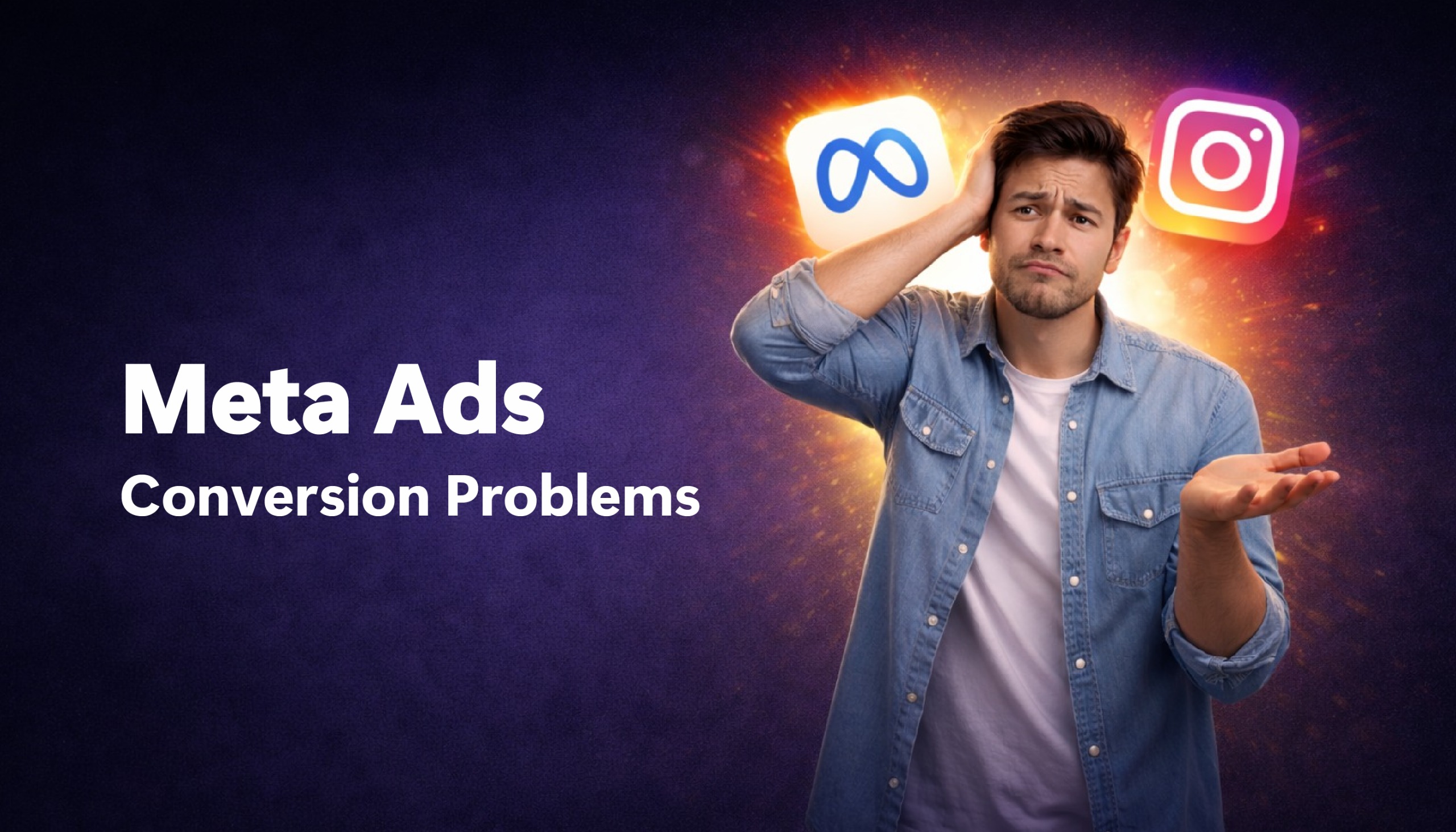
Your Meta Ads look great. The color palette is perfect. The copy is snappy. The visuals pop.
And yet—after spending hundreds or even thousands of ringgit on Meta campaigns—there’s a quiet frustration that creeps in:
“Why am I not getting more sales?”
This disconnect lies at the heart of most Meta Ads conversion problems today.
Here’s the uncomfortable truth most advertisers don’t want to admit:
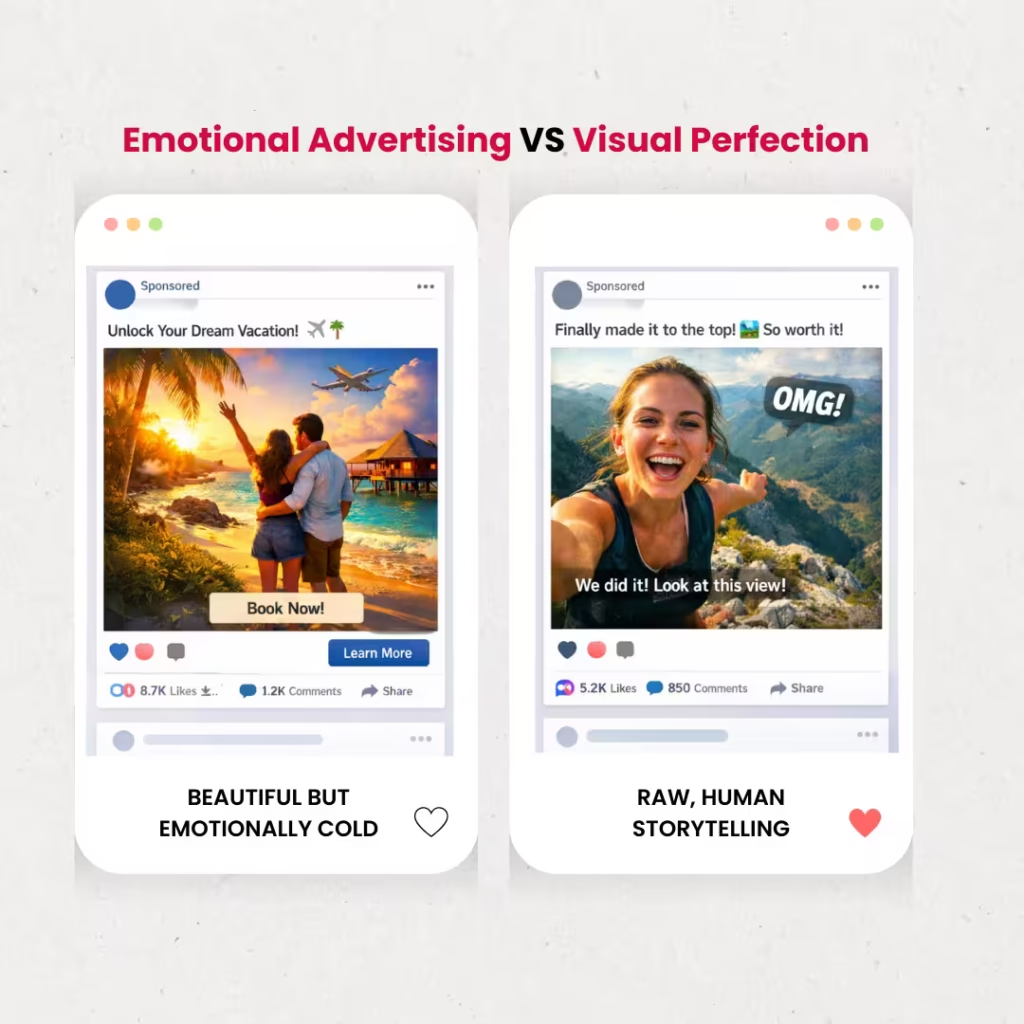
Design doesn’t sell. Emotion does. Emotional advertising drives results.
In today’s digital advertising landscape, aesthetic perfection has replaced psychological connection. Brands obsess over how ads look instead of how they make people feel.
And that’s exactly why so many Meta Ads fail.
A stunning visual might stop the scroll for half a second. But if it doesn’t trigger the right emotional or cognitive response, your ad will be ignored—often subconsciously—before it even registers.
The Hidden Cost of “Looking Good”
Meta’s ad ecosystem doesn’t reward beauty.
It rewards relevance.
According to Meta’s own advertising documentation, Meta Ads don’t succeed solely because they look good; ads are ranked in an auction based on relevance, engagement probability, and total value, making emotional resonance and relevance more important than production quality.
This means a perfectly designed carousel can easily lose to a raw, emotional iPhone video filmed in someone’s bedroom.
Why?
Because people are not scrolling through Instagram or Facebook looking for ads.
They’re looking for:
- Stories
- Validation
- Entertainment
- Emotional connection
This is where many Meta Ads conversion problems begin. Users aren’t in a buying mindset. They’re in a feeling mindset. Your Meta Ads strategy should focus on emotional hooks rather than just aesthetics.
Your job as a marketer isn’t to disrupt aggressively—it’s to interrupt emotionally and naturally.
The Psychology Behind Meta Ads Conversion Problems
Every Meta Ad fights for milliseconds of attention. In that tiny window, the brain applies three psychological filters that decide whether your ad is seen or skipped. Understanding these filters is essential if you want to fix Meta Ads conversion problems at scale.
1. The Relevance Filter — “Is this for me?”
If your hook, headline, or opening frame doesn’t immediately signal relevance, the brain dismisses it.
People scroll past anything that feels generic or misaligned with their identity—no matter how beautiful it is.
This is why strong messaging often outperforms advanced targeting. Relevance isn’t just about demographics. It’s about recognition. Learn more about Meta Ads targeting that stops wasting your ad budget.
Relevance also requires context. If your ad is about skincare for men but shows a woman applying cream, your ad may fail despite perfect visuals. The brain instantly categorizes it as irrelevant. That’s the subtlety of Meta Ads conversion problems many marketers overlook.
2. The Emotional Filter — “Do I feel something?”
Humans don’t buy logically. They justify logically after they decide emotionally.
Research by Nielsen shows that ads with strong emotional engagement significantly outperform purely informational ads in both recall and conversion.
If your Meta Ad explains but doesn’t evoke curiosity, urgency, pride, empathy, or desire, it will struggle to convert. This emotional gap is one of the most overlooked Meta Ads conversion problems.
For instance, an ad showing a sleek gadget with specs may look beautiful, but it doesn’t show how it makes someone’s life easier. Compare that to a short video showing a stressed parent using the gadget to save time—the latter triggers an emotional response and will almost always convert better.
Emotional advertising isn’t limited to happiness or excitement. Fear, urgency, curiosity, and belonging are just as powerful.
3. The Credibility Filter — “Can I trust this?”
Even if an ad feels relevant and emotional, trust is the final gate.
Without credibility signals—real people, testimonials, consistent messaging—your ad feels like “just another pitch.”
This is why UGC-style ads, customer clips, and founder-led videos consistently outperform polished brand commercials.
Think of it this way: people are bombarded with ads constantly. A highly-produced video may look perfect, but viewers know it’s crafted. Their brains instinctively resist it. Raw, human content feels more trustworthy.
Credibility can also be reinforced through social proof, statistics, and real results. For example, including “5,000 satisfied customers” or “As featured in Forbes” can make an enormous difference in conversions.
When “Good Design” Becomes Bad Marketing
Beautiful doesn’t always mean effective.
High-production ads often underperform because they feel like ads. Modern users are extremely ad-aware. They recognize sales tactics instantly and instinctively resist them.
Right now, the highest-performing Meta Ads share one trait: they don’t look like ads.
- Raw videos
- Casual storytelling
- Imperfect lighting
- Real voices
These formats often outperform glossy creatives by 2–3x in CTR, especially in cold traffic.
Why?
Because they activate authenticity bias—the brain’s preference for real human communication over manufactured polish.
At ZenWeb, we often say:
“If your ad looks too much like an ad, it’s already lost.”
Even small touches of authenticity—like a shaky camera or natural lighting—can dramatically improve performance. This is central to our Meta Ads strategy and often overlooked by advertisers chasing “perfection.”
Understanding Scroll Psychology on Meta Platforms
To truly solve Meta Ads conversion problems, you must understand what happens in the user’s brain while they scroll.
When someone opens Instagram or Facebook, the rational brain (prefrontal cortex) isn’t in control. The limbic system takes over—the part of the brain responsible for:
- Emotion
- Impulse
- Reward
- Social belonging
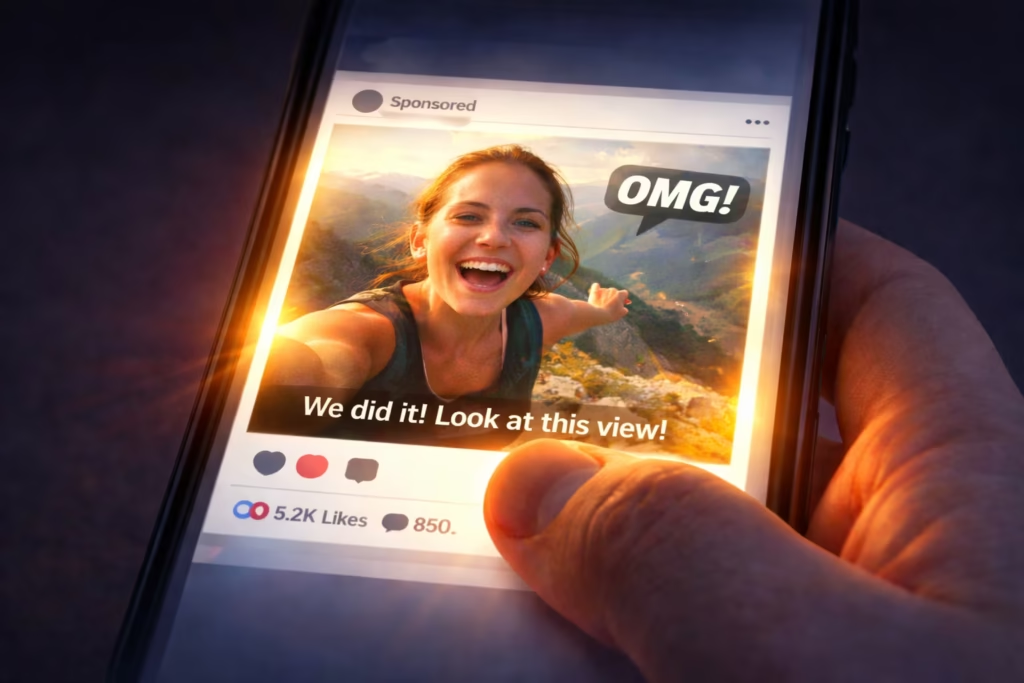
That’s why a single emotional trigger—a relatable sentence, a familiar pain, a genuine smile—can determine whether your ad wins attention or disappears.
Effective Meta Ads aren’t logical arguments. They’re emotional nudges disguised as everyday moments.
Even the smallest cues—like a friendly voiceover, a relatable reaction, or a quick testimonial—can help your ad bypass cognitive filters and connect instantly with users. This is the power of emotional advertising within a conversion-focused Meta Ads framework.
Why Meta Ads Fail (Even When You Follow the “Rules”)
Many advertisers blame Meta’s algorithm when results drop. But in reality, most Meta Ads conversion problems come from the message, not the platform.
Here are the most common reasons campaigns fail:
- They talk about the brand, not the buyer
People don’t care about your company story. They care about how their problem gets solved. - They chase engagement instead of action
Likes and comments feel good, but they rarely translate into sales. - They’re too clever
Ads that require thinking don’t convert. Clarity beats creativity—every time. - They ignore targeting fundamentals
Poor audience strategy leads to wasted spend. ZenWeb breaks this down in detail in Meta Ads targeting that stops wasting your ad budget. - They forget the funnel
Meta Ads work best as part of a system. This is where search engine marketing strategy becomes critical.
Many campaigns also fail because they ignore behavioral data. Clicks alone don’t tell the full story. Watching post-click behavior, scroll depth, and engagement time can reveal why ads underperform. Learn how to capture this with Google Tag Manager.
Conversion Is More Than Clicks
A click is not a conversion. Traffic is not revenue.
Advertisers often celebrate vanity metrics: impressions, likes, shares. But real success comes from measuring conversion-focused Meta Ads performance:
- Leads generated
- Purchases made
- Customer retention
- Revenue growth
If you want deeper clarity, ZenWeb explains this clearly in what conversion rate really means for your business.
Many Meta Ads “work” on the surface but fail to generate ROI because post-click behavior is ignored. That’s why combining ad strategy with landing page optimization, retargeting, and funnel management is essential.
From Aesthetics to ROI: ZenWeb’s Meta Ads Framework
At ZenWeb, we’ve spent years studying why some Meta Ads scale while others stall. Our framework combines psychology, storytelling, and data into a single conversion-focused system that emphasizes Meta Ads optimization at every step.
- Emotional Hook Mapping
Identify emotional drivers—fear, desire, belonging, curiosity—and build creative around them. - Behavioral Data Integration
Rely on proper event tracking, not guesses. Clicks alone don’t tell the full story. - Story-Led Creative Strategy
Every campaign tells a story. Stories convert. Slogans don’t. - Iterative Testing
Test hooks, thumbnails, copy, and CTAs to remove emotional friction. - Conversion Optimization
Ads don’t work in isolation. They’re part of a long-term digital growth strategy.
By combining psychology with behavioral data, ZenWeb ensures that every ad isn’t just visually appealing—but also emotionally and cognitively effective. This is the essence of Conversion-focused Meta Ads and a winning Meta Ads strategy for long-term growth.
Case Study: The “Pretty but Poor” Campaign
A premium lifestyle brand approached ZenWeb frustrated. Their Meta Ads looked incredible with professional videos, influencer partnerships, cinematic visuals—but their ROAS was stuck below 0.7.
After auditing the campaigns, the issue was clear: the ads were visually luxurious—but emotionally cold.
We rebuilt the strategy around human storytelling:
- Raw customer videos
- Real voices
- Simple transformation-focused messaging
Results in 45 days:
- CTR increased by 212%
- ROAS improved to 3.4x
The breakthrough wasn’t better design. It was emotional relevance. This proves that emotional advertising consistently outperforms aesthetic perfection alone.
The Future of Meta Advertising
As AI and automation continue to evolve, the brands that win will be those that remember:
Ads are for people, not pixels.
Meta’s algorithms can optimize delivery, but only humans can craft emotion.
And emotion, not targeting, drives conversion.
Trends show that by 2026, over 80% of successful Meta Ads will focus on authentic storytelling and neuro-marketing psychology — not heavy production or visual perfection.
This is where ZenWeb’s approach stands out:
We don’t chase the algorithm.
We decode the human behavior behind the click.
Final Thoughts
Before approving your next beautiful ad, ask yourself:
- Does it make someone feel something?
- Does it speak to a human need?
- Would you stop scrolling for it?
Because if your Meta Ad doesn’t stop the thumb, it doesn’t matter how good it looks.
At ZenWeb, we believe:
Good design attracts. Emotional design converts.
Ready to fix your Meta Ads conversion problems? Visit ZenWeb to learn how psychology-driven Meta Ads turn attention into revenue.