Share this post:
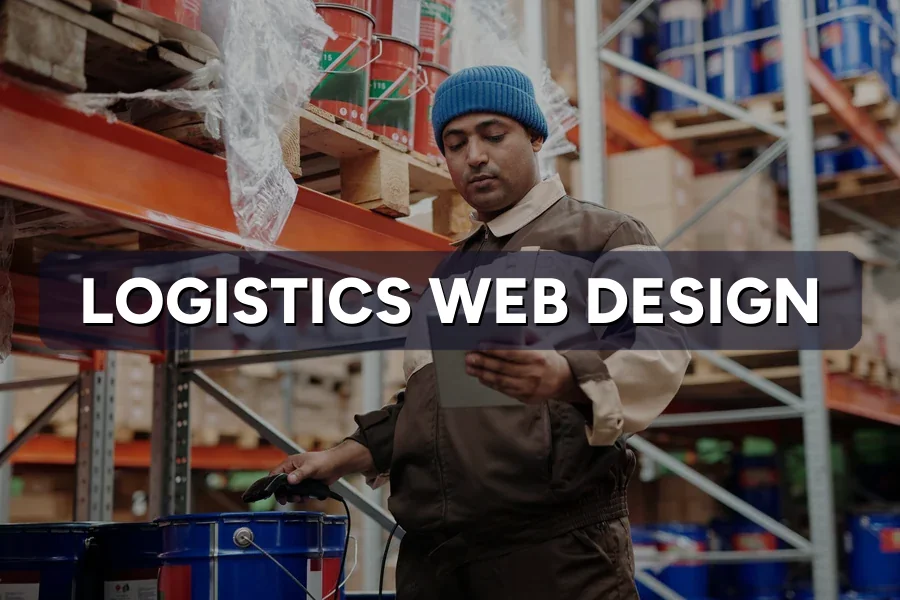
Most Malaysian logistics websites look like they were last updated when DHL still ran fax-based booking. Procurement is phone-first, yet the typical 3PL or forwarder site is built around a contact form sent to an inbox nobody checks. That gap is where leads leak. This is the practitioner playbook for web design for logistics in Malaysia — what to build, what to skip, what it costs, and how it fits with paid and organic acquisition.
Watch the overview below — the conversion-first process you’ll lean on for almost every Malaysian rebuild.
Source video: Codex Community on YouTube
Quick Answer: Web design for logistics in Malaysia matters in 2026 because procurement starts on mobile, not a desk PC. Shippers shortlist providers in under two minutes by scanning hero copy, trust marks, and how quickly the quote form responds. A slow site loses the conversation before sales picks up.
Malaysian shippers and SME sellers Google a provider, open three to five sites on a 4G phone, and pick the one that loads first and answers the obvious questions. If the site renders in more than three seconds or hides the quote pathway, the tab closes. Running paid traffic to a slow brochure site is paying for competitor impressions.
Web design for logistics in Malaysia matters because the people you want — procurement heads, Shopee sellers, MNC supply-chain leads — don’t fill long forms. They tap WhatsApp, scan rate cards, and want a human reply inside the hour. The demand-side picture lives in our logistics digital marketing pillar.
Quick Answer: A logistics site converts when the hero names a specific service (Penang–KL same-day, Shopee FBS overflow), the quote pathway is visible without scrolling, and three trust signals — MOT licence, ISO badges, client logos — sit within the first viewport. Everything else is secondary.
Five drivers we measure on every rebuild: clarity of service, speed of quote, trust depth, mobile fluency, price transparency. A 3PL site that wins inquiries leads with a specific route in the H1, not “Trusted Logistics Partner”. A forwarder site that wins RFQs shows a rate ballpark before asking for an email. A last-mile site shows pickup zones and cut-off times before the fold.
Good web design for logistics in Malaysia answers the buyer’s question — not “who are you”, but “can you move my pallet from Shah Alam to Bayan Lepas by Friday for under RM 600”. Answer that above the fold and conversion follows.
Quick Answer: A practical logistics site needs five top-level pages — Home, Services (one child per service line), About, Track Shipment, Contact — plus landing pages per route or vertical. More than that dilutes ranking and confuses procurement.
The structural mistake we see most often in web design for logistics in Malaysia is over-engineering the menu — twelve top-level items, six dropdown layers, a “Solutions vs Services vs Industries” split nobody understands. Strip the menu to five items, give each service line its own child page (Freight Forwarding, 3PL Fulfilment, Last-Mile, Cross-Border, Warehousing), and let landing pages handle route- or vertical-specific traffic.
Service pages should follow one template — hero, scope, who it’s for, pricing band, FAQ, RFQ form — so users learn the pattern after one visit. For organic depth, mirror the keyword work in our logistics SEO guide.
Quick Answer: A high-converting hero pairs a specific H1 (“Same-day pallet delivery between Klang Valley, Penang, and JB”), one number proof (“4,200 shippers served”), a quote CTA, and a Click-to-WhatsApp button. Keep the hero under two viewports on mobile.
The hero is where 60 percent of bounce decisions happen. Three rules: name the service and geography in the H1, place one credibility number near the headline, and put two CTAs side by side — a primary “Get a quote” button and a secondary “WhatsApp us” pill. Background imagery should be one clean photo of your own fleet or warehouse, not a stock cargo ship at sunset.
Service pages need their own grammar. Open with “who this is for” — typical client size, origin-destination pairs, peak-season fit — then pricing band, FAQ, RFQ. Hide nothing behind a “request more info” wall. Good web design for logistics in Malaysia trusts the buyer to self-qualify.
Want a hero that converts on the first scroll?
We ship Malaysian logistics sites every month. See our web design services →
Quick Answer: Web design for logistics in Malaysia ranges from RM 8,000 for a tight five-pager up to RM 35,000+ for a forwarder site with quote engine and CRM sync. Sub-RM 5,000 builds rarely include the speed, trust, and conversion elements that move the needle.
| Build tier | Freelancer (RM) | SME agency (RM) | Enterprise agency (RM) |
|---|---|---|---|
| Starter (5 pages) | 3,500 – 6,000 | 8,000 – 14,000 | 18,000 – 28,000 |
| Standard (10–15 pages) | 7,000 – 12,000 | 14,000 – 22,000 | 28,000 – 45,000 |
| Premium (with quote engine) | 12,000 – 18,000 | 22,000 – 38,000 | 45,000 – 85,000 |
| Enterprise (TMS / CRM sync) | N/A | 40,000 – 75,000 | 85,000 – 180,000 |
Source: ZenWeb client briefs and competitive quotes, Malaysia, 2024–2026.
Quick Answer: About 70 percent of Malaysian B2B logistics traffic is mobile. Hit LCP under 2.5 seconds, INP under 200 milliseconds, CLS under 0.1. Anything slower bleeds 20 to 40 percent of paid traffic before the form loads.
Core Web Vitals — Google’s three real-world speed metrics — directly affect both ranking and conversion for web design for logistics in Malaysia. LCP measures how fast the biggest above-the-fold element renders. INP measures how snappy the page feels when tapped. CLS measures how much things jump around. All three should be green in Google Search Console on mobile and desktop.
The fastest fixes: compress hero images to WebP under 150 KB, lazy-load below-the-fold assets, defer non-critical JavaScript, and host on a Malaysian or Singapore edge node. A bloated WordPress theme with a dozen sliders is the most common reason logistics sites fail Core Web Vitals — see our logistics digital marketing guide for the wider performance trade-off.
Quick Answer: WordPress is the safest default for most Malaysian logistics SMEs — cheap, flexible, SEO-friendly. Webflow suits design-led forwarders. Custom Next.js is reserved for enterprise carriers needing real-time tracking. Wix and Shopify rarely fit B2B logistics.
| Platform | Build cost | Speed score | SEO fit | Best for |
|---|---|---|---|---|
| WordPress + Elementor | Low | Medium | Excellent | Most SME forwarders, 3PL, last-mile |
| Webflow | Medium | High | Strong | Design-led freight forwarders |
| Next.js / Headless | High | High | Strong | Enterprise carriers with TMS sync |
| Wix / Shopify | Low | Medium | Weak | Rarely fits B2B logistics |
Source: ZenWeb platform benchmarks, Malaysia, 2024–2026.
Quick Answer: Every Malaysian logistics site needs three conversion elements — a four-field quote form, a floating WhatsApp pill, and a track-shipment lookup in the header. A self-serve freight calculator raises qualified RFQs by 25 to 40 percent for forwarders with public rate cards.
The quote form is the most over-designed element on a typical logistics website — twenty fields, a captcha, and a “we’ll get back to you in 48 hours” message that kills conversion. Trim it to four fields (name, mobile, origin-destination, brief cargo description) and route submissions to a sales WhatsApp group with a 15-minute reply SLA. Long forms belong on the thank-you page.
A floating WhatsApp pill should open a templated greeting with the page URL pre-filled. Track-and-trace — even a simple lookup hitting your TMS via API — doubles as a trust signal: visitors browse, drop a consignment number, remember the brand. These elements separate web design for logistics in Malaysia from a digital brochure. For the paid side, see our logistics Google Ads guide.
Quick Answer: The trust signals that move Malaysian shippers are named client logos (not blurred), MOT licence number in the footer, ISO 9001 or ISO 28000 badges where applicable, and a PDPA compliance line on every form. Stock-photo testimonials hurt more than they help.
Procurement teams checking a Malaysian provider look for five trust signals in order — SSM number, MOT or AMS licence, ISO certifications relevant to cargo or supply chain, real client logos with permission, and a verified address with a Google Maps pin. Show all five and you remove a procurement objection before it forms.
PDPA — the Personal Data Protection Act 2010 — applies the moment you collect a name or phone number. A short consent line under the quote form, a clean privacy policy, and a clear marketing opt-in are the minimum. Sophisticated buyers also look for cyber- and cargo-insurance partners.
Quick Answer: A starter build runs 4 to 6 weeks; standard 8 to 12 weeks; premium with quote engine and CRM sync 12 to 18 weeks. Below RM 8,000, expect template work without the conversion elements that matter for web design for logistics in Malaysia.
| Build budget (RM) | Timeline | Pages | Conversion features | 6-month lead lift |
|---|---|---|---|---|
| 5,000 | 3 – 5 weeks | 4 – 6 | Form only | +10 – 20% |
| 12,000 | 6 – 8 weeks | 8 – 12 | Form + WhatsApp + tracking | +35 – 55% |
| 22,000 | 10 – 14 weeks | 15 – 20 | Full conversion stack + landing pages | +60 – 90% |
| 45,000 | 14 – 18 weeks | 25 – 40 | Quote engine + CRM sync | +90 – 140% |
| 85,000+ | 18 – 26 weeks | 40+ | TMS / portal / multi-language | +140 – 220% |
Source: ZenWeb logistics rebuilds, Malaysia, 2024–2026. Lift measured against pre-launch 6-month baseline.
Not sure which tier fits your lead targets?
We benchmark scope against pipeline goals. See our web design pricing →
Quick Answer: The highest-impact element is a visible Click-to-WhatsApp pill — it lifts qualified inquiries by 35 to 60 percent. Above-fold trust marks lift form submissions by 18 to 25 percent. LCP under 2.5 seconds lifts mobile conversion by 15 to 30 percent.
| Element | Avg inquiry lift | Build effort | Best for |
|---|---|---|---|
| Click-to-WhatsApp pill | +35 – 60% | Low | All B2B logistics |
| Above-fold trust marks | +18 – 25% | Low | Forwarders, 3PL |
| LCP < 2.5s on mobile | +15 – 30% | Medium | All paid-traffic sites |
| Self-serve quote calculator | +25 – 40% | High | Last-mile, e-commerce 3PL |
| Route-specific landing pages | +30 – 50% | Medium | Freight forwarders, cross-border |
Source: ZenWeb analytics across 38 logistics rebuilds, 2024–2026.
Quick Answer: Web design for logistics in Malaysia is the conversion floor under everything else. Paid ads and SEO drive traffic; the website decides whether it becomes a quote. Skimping on the site while pouring money into Meta or Google is the most common waste pattern.
Picture the funnel: Google Ads and Meta buy the click, SEO earns the click, and the website converts it. A slow or confusing site drops every paid and organic position by 40 to 60 percent. We’ve audited campaigns where fixing web design for logistics in Malaysia would have moved pipeline more than doubling ad spend.
A useful spend rule for an SME entering paid acquisition: budget the rebuild at two to three months of planned ad spend. RM 8,000 monthly in ads supports a RM 16,000 to RM 24,000 site that pays itself off in lift inside the first half year. For the click-side numbers, see our logistics Meta Ads guide.
Quick Answer: The five most expensive mistakes in web design for logistics in Malaysia: vague hero copy, no WhatsApp button, form-only quote pathway, stock-photo overload, and treating the site as a one-off project instead of a living asset.
Five common ways logistics companies burn money on web design:
Quick Answer: The 90-day plan runs in three phases. Days 1 to 30: audit, scope, wireframe, approve design direction. Days 31 to 60: build, copy, integrate WhatsApp and tracking. Days 61 to 90: QA, launch, iterate on first-month behaviour data.
A serious build sits between RM 8,000 and RM 35,000 for most SME freight forwarders, 3PL operators, and last-mile providers. Enterprise builds with TMS and CRM integration run RM 45,000 to RM 180,000. Sub-RM 5,000 builds rarely include the speed and conversion elements that actually move pipeline.
A starter five-page site ships in 4 to 6 weeks. A standard 10 to 15-page site takes 8 to 12 weeks. A premium build with a quote engine, CRM sync, and route-specific landing pages takes 12 to 18 weeks. Anyone promising under 3 weeks is selling a template.
WordPress is the right default for most Malaysian SME logistics companies — cheap hosting, deep talent pool, predictable SEO behaviour. Webflow suits design-led forwarders who want pixel-level control. Headless Next.js is reserved for enterprise carriers needing real-time tracking or multi-language portals.
A visible Click-to-WhatsApp pill on every page. It lifts qualified inquiries by 35 to 60 percent across our portfolio. Trust marks above the fold and a fast LCP follow close behind, but WhatsApp wins every test we’ve run.
Overseas teams can ship a decent site but rarely understand local trust signals — MOT licence, SSM number, PDPA wording, Manglish micro-copy. For a B2B audience that vets providers carefully, the small cost premium of a local partner usually pays back inside six months. Picking specialists in web design for logistics in Malaysia matters more than agency size.
A full rebuild every 4 to 5 years is normal. Conversion iterations, though, should run continuously — heatmap review monthly, copy and CTA tests fortnightly, fresh landing pages quarterly. Treating the site as a living asset is what separates compounding businesses from stagnant ones.
Ready to grow your logistics business?
Book a free 30-minute strategy session — we’ll review your site, your ranking, and your competitors, then give you a 90-day plan with realistic build cost and lead-lift targets.
Complete the form and our team will contact you to discuss your goals. Let’s grow your business.