

Share this post:
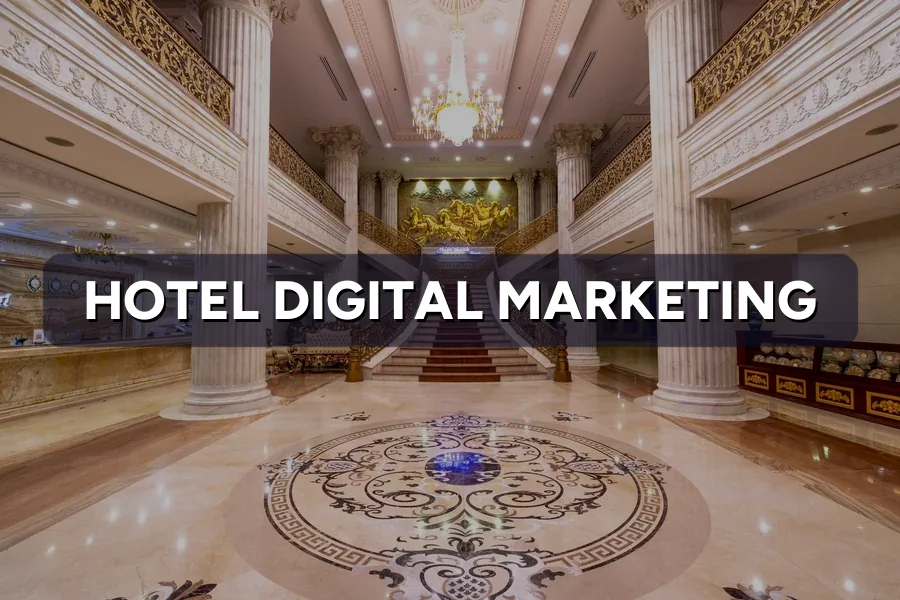
Whether you run a boutique hotel in George Town, a Langkawi resort, a KL business hotel or a budget chain, the playbook used by a dental clinic or property developer will not work for you — your buyer is comparing five tabs at once across OTAs, Google Hotels and your direct site. This guide walks Malaysian hoteliers through what actually drives direct bookings in 2026, with benchmarks from ZenWeb-managed campaigns across KL, Penang, Langkawi and Sabah.
The video below covers the modern playbook for digital marketing for hotels in Malaysia; the channels translate cleanly once you swap email-first markets for WhatsApp-first ones.
Source video: How to Do Hotel Marketing on YouTube
Quick Answer: Digital marketing for hotels in Malaysia must respect three realities — the buyer comparison-shops across OTAs and your direct site at once, decides on a smartphone abroad, and has a short post-stay loyalty window. Direct-booking capture, OTA rate parity and visible trust signals move occupancy; generic brand campaigns burn budget.
Malaysia closed 2025 with a record 42.2 million international tourist arrivals, an 11.2% jump that made it Southeast Asia’s most-visited country (Malay Mail, January 2026). Visit Malaysia 2026 should push arrivals higher, and most travellers choose their hotel from a phone abroad, weeks before they land.
Three structural realities shape any plan of digital marketing for hotels in Malaysia:
Leaning entirely on OTA distribution leaves margin on the floor — Booking.com and Agoda charge 15-25% commission, while your direct channel earns the same booking at near-zero cost. See our hotel industry hub for context.
Quick Answer: Digital marketing for hotels in Malaysia is the system that turns a traveller shopping across Agoda, Google Hotels and Instagram into a direct booking and a repeat guest. It covers your booking engine and website, direct-booking SEO, paid search, paid social, short-form video, OTA rate management and a tight Google Business Profile.
A four-star KL city hotel does not behave like a beachfront Langkawi resort — the booking window, comparison set and OTA dependency all differ. A clean hotel marketing stack in 2026 has five layers:
This guide focuses on layers one to three — what fills the booking calendar.
Quick Answer: SEO is the cheapest long-run channel in digital marketing for hotels in Malaysia, but it fights OTAs for the same keywords. Win on neighbourhood queries (“hotel near KLCC”), travel-guide content that ranks above Booking.com listicles, and a tight Google Business Profile for the local Maps pack.
Hotel SEO is brutal — going head-to-head on “hotels in Kuala Lumpur” against decade-old OTA domains is a fool’s errand. Rank where OTAs are weakest: neighbourhood pages, travel content and location-anchored landing pages. The SEO checklist that moves direct bookings:
For the full playbook, see our deep dive on SEO for hotels in Malaysia, built on our SEO services.
Quick Answer: Google Ads and Google Hotels metasearch work best as a tight bottom-funnel system on three pillars — branded search to defend your name from OTAs, Hotel Ads metasearch to compete on rate, and neighbourhood category terms. Expect cost per direct booking of RM 28 to RM 110 by tier.
Branded search is the easiest win in hotel paid media: when someone Googles “G Hotel Gurney Penang”, OTAs bid on your name and intercept a direct booking — branded search blocks that and recovers the margin. A working structure for Malaysian hotels:
Our full breakdown sits in the Google Ads for hotels in Malaysia guide, with budgets on the Google Ads pricing page.
Quick Answer: Meta Ads and TikTok capture demand before it hits Google. Use 15- to 30-second vertical videos of real guest experiences in English, Bahasa Malaysia and Mandarin, geo-targeted by source market — Singapore, Jakarta, Shanghai and Mumbai beat blanket Malaysia targeting.
Google captures travellers who already want a hotel; paid social captures everyone else. A 30-second clip of your rooftop bar at golden hour, with a swipe-up to book direct, out-pulls any glossy still image. Rules of thumb:
For creative briefs and cost benchmarks, see our guide on Meta Ads for hotels in Malaysia, executed through our Meta Ads service.
Quick Answer: The website is the booking engine that ties together every other layer of digital marketing for hotels in Malaysia. Five elements lift direct bookings — a fast booking widget above the fold, room photography that matches the listing, a transparent best-rate guarantee, embedded Google reviews, and a sticky WhatsApp button.
Even the best ad programme converts badly if the booking experience is slow, hidden, or routes guests back to the OTA. The patterns that earn direct bookings:
For layout, booking-engine integration and Google Hotels schema, see web design for hotels in Malaysia, with cost ranges on the web design pricing page.
Quick Answer: Across ZenWeb-managed Malaysian hotel accounts in 2026, blended cost per direct booking is RM 28 for budget and three-star, RM 52 for four-star, RM 78 for upper-upscale, and RM 110 for luxury five-star and resort properties. Higher tiers justify higher acquisition cost because room revenue per booking is many multiples larger.
| Hotel tier | Avg cost/booking (RM) | Visual |
|---|---|---|
| Budget & three-star city | RM 28 | |
| Four-star city & resort | RM 52 | |
| Upper-upscale four- and five-star | RM 78 | |
| Luxury five-star & resort | RM 110 |
Source: ZenWeb operational data, 2024–2026.
The cost ladder looks steep, but room revenue scales faster: a three-star stay at RM 280 against RM 28 is a 10% marketing share, a luxury stay at RM 2,800 against RM 110 just 4%. The numbers force discipline about which segment your digital marketing for hotels in Malaysia is built to win.
Quick Answer: Across Malaysian hotel accounts we manage, OTAs still deliver about 42% of room nights, with direct website 24%, Google metasearch and paid search 16%, Meta and TikTok 9%, and walk-in plus corporate 9%. Budget hotels lean harder on OTAs; four- and five-star properties win back more share on direct.
| Channel | Share of room nights | Visual |
|---|---|---|
| OTAs (Booking.com, Agoda, Trip.com) | 42% | |
| Direct website & booking engine | 24% | |
| Google Hotel Ads & paid search | 16% | |
| Meta Ads & TikTok | 9% | |
| Walk-in, corporate & group | 9% |
Source: ZenWeb operational data, 2024–2026.
OTAs still dominate the funnel, so moving five points of share to direct is worth more than doubling any single channel — 15-25% commission comes off every OTA booking, and the upside is the next five-point shift.
Quick Answer: Across ZenWeb hotel clients, properties spending RM 3,000–6,000/month lift average daily rate (ADR) by 6-9% and occupancy by 3-5 points within 12 months; those at RM 10,000–18,000/month see ADR lift 10-14% and occupancy gains of 6-9 points — mostly from shifting OTA share to direct.
| Monthly marketing spend | Occupancy lift (pts) | ADR lift | Direct share shift |
|---|---|---|---|
| RM 1,500–3,000 (foundation) | +1 to +2 | +2 to +4% | +2 pts |
| RM 3,000–6,000 (growth) | +3 to +5 | +6 to +9% | +5 pts |
| RM 6,000–10,000 (scale) | +5 to +7 | +8 to +12% | +8 pts |
| RM 10,000–18,000 (multi-channel) | +6 to +9 | +10 to +14% | +11 pts |
Source: ZenWeb client tracking, 14 hotel accounts, 2024–2026.
The math holds across tiers: a four-star, 100-room hotel at RM 320 ADR adding RM 5,000/month recovers it inside 90 days — five points of OTA-to-direct migration at 65% occupancy saves roughly RM 6,000 of commission a month.
Quick Answer: Across the same cohort, blended cost per direct booking rose 22% from 2023 to 2026 on Google Hotel Ads bid inflation, while direct share climbed from 18% to 24% — proof the investment is shifting the funnel, not just paying more.
| Metric | 2023 | 2024 | 2025 | 2026 |
|---|---|---|---|---|
| Google Hotel Ads (RM/booking) | RM 48 | RM 55 | RM 62 | RM 70 |
| Branded paid search (RM/booking) | RM 12 | RM 14 | RM 16 | RM 18 |
| Meta + TikTok (RM/booking) | RM 58 | RM 62 | RM 65 | RM 68 |
| Organic search (RM/booking) | RM 32 | RM 30 | RM 28 | RM 26 |
| Direct share of room nights | 18% | 20% | 22% | 24% |
Source: ZenWeb operational data, same cohort, 2023–2026.
The pattern argues for a portfolio. Hoteliers who load up on metasearch alone face compounding cost inflation, while those who pair paid acquisition with SEO, a strong direct-booking site and active social hold a stable blended cost and a compounding direct share — which is why durable digital marketing for hotels in Malaysia rarely depends on one channel.
Quick Answer: The five most expensive mistakes in digital marketing for hotels in Malaysia: letting OTAs undercut the direct rate, no branded paid search, a slow or hidden booking widget, ignoring Google reviews, and treating Meta or TikTok as an afterthought. Each is fixable in under 60 days.
Quick Answer: Choose a partner who has run hospitality accounts in Malaysia, not a generalist. Ask for hotel case studies, cost per direct booking by tier and source market, and how they measure OTA-to-direct share shift — not just clicks or impressions.
Generalist agencies treat hotels like generic local businesses, but the funnel, tracking, OTA dynamics and multilingual creative all differ. Before signing, ask five questions: their average cost per direct booking for a hotel of your tier; how they measure OTA-to-direct share shift rather than just leads; a hotel landing page and booking flow they have built; their view on Google Hotel Ads versus Booking.com Genius pricing; and how they handle multilingual creative across English, Bahasa, Mandarin and source markets.
ZenWeb runs digital marketing for hotels in Malaysia across all of these layers — see our SEO agency page, or contact us to scope an engagement.
Quick Answer: A practical 90-day plan for digital marketing for hotels in Malaysia: month one, fix the website booking flow and rebuild the Google Business Profile; month two, switch on branded plus Google Hotel Ads and launch video on Meta and TikTok; month three, add OTA parity, review automation and source-market retargeting — expect first direct-share lifts inside 60 days.
Discipline beats ambition. The hotels that win at digital marketing for hotels in Malaysia pick three channels and stick with them long enough for direct share to compound. Visit Malaysia 2026 lifts demand for everyone — but only properties visible at the comparison moment capture more than their share.
Plan for 3-6% of monthly room revenue, plus a fixed minimum of RM 3,000 to RM 6,000 a month for paid acquisition. Boutique hotels under 30 rooms can start at RM 1,500 a month; four- to five-star properties typically run RM 8,000 to RM 18,000.
No. OTAs are still the largest exposure engine for inbound demand, and going direct-only typically loses 25-40% of bookings overnight. Run parity plus a small direct-only discount, and aim for 30-40% direct share over 18-24 months, not 100%.
Yes, as a warm-demand channel, not a hard-conversion one. Views translate into Google searches for your hotel name, so measure it on assisted conversions and branded-search lift. Three to five vertical videos a week lifts booking volume within 90 days.
Yes — the single highest-leverage tactic in digital marketing for hotels in Malaysia. A 5-10% member rate gated behind a free signup typically lifts direct share by 4-7 points within six months, giving travellers a reason to leave the OTA tab. Pair it with parity on your other rate plans.
Branded Google Ads and Hotel Ads can produce bookings in week one, while SEO takes 4 to 8 months. A full blended mix usually lifts monthly direct room nights inside 45 to 75 days.
Ready to grow your Malaysian hotel?
Book a free 30-minute hotel marketing strategy session — we review your direct-booking flow, OTA mix and top three local competitors, then hand you a concrete 90-day plan with realistic cost-per-booking and direct-share targets.
Complete the form and our team will contact you to discuss your goals. Let’s grow your business.



Meowketing Specialist
Online


























