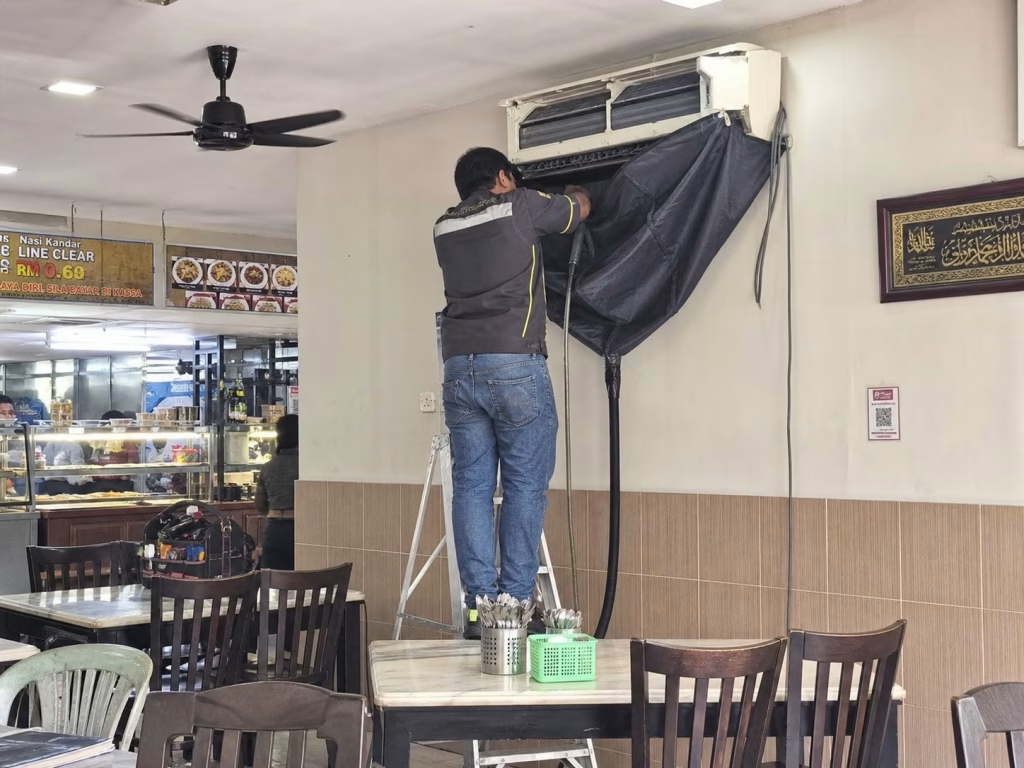
Why generic agencies struggle with aircond service marketing.
Aircond service in Malaysia sits at the intersection of emergency demand, low average ticket sizes, and refrigerant-handling regulation. Most generic agencies miss at least one, which is why ad spend leaks into tyre-kicker calls that never close.
Quick answer: A digital marketing agency for aircond service companies in Malaysia needs four things. Licensed-contractor proof, channel mix tuned for emergency calls plus planned servicing, per-service landing pages, and a sub-three-minute call-back loop. Skip any one and cost per booked job balloons.
Licensing and refrigerant rules constrain who can install.
Aircond installation needs a Suruhanjaya Tenaga (ST) registered wireman, R32 and R410A refrigerant handling sits under DOE Montreal Protocol rules, and commercial work above a certain scope needs CIDB Green Card and grade. Cowboy contractors break all three, and your ads should not blend in with them.
Low ticket size, brutal response-time decay.
A residential chemical wash runs RM 100 to RM 200. A gas top-up RM 180 to RM 350. Margins are thin and homeowners shop three quotes inside ten minutes. If your call-back takes an hour, the job is already booked with the next contractor on Google Maps.
Demand spikes hot months and CNY deep-clean season.
Aircond searches climb from March to May (pre-monsoon heat) and again in August and September (haze plus heavy use). They also spike before Chinese New Year for deep-cleaning. Flat-budget campaigns waste spend in cooler months and run out of leads when it matters.
Residential service and commercial contracts are different campaigns.
A homeowner needing one unit cleaned is a different buyer from a property manager running ten cassette units in a strata building. Same trade, but different keywords, different ad creatives, different landing pages, and very different cost-per-job ceilings.
Key takeaway: A digital marketing agency for aircond service companies has to plan around ST licensing, refrigerant rules and Malaysia’s heat-cycle calendar, then segment campaigns by service type and customer scale. ZenWeb’s playbook is built on those constraints, not retrofitted around them.