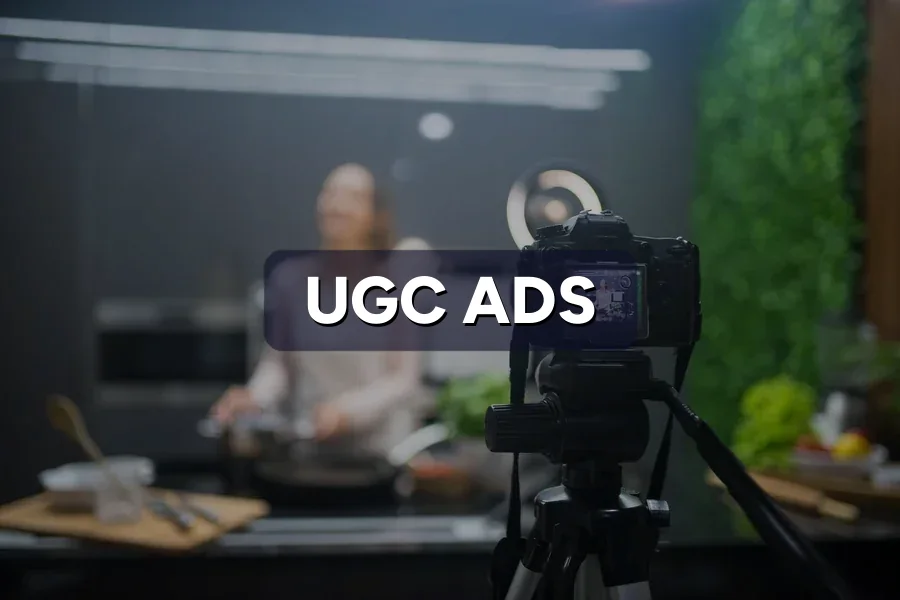
Somewhere around 2023, Malaysian feeds changed shape. The beautiful ads — lighting rig, colour grade, drone shot of the showroom — started getting scrolled past. What stopped the thumb was a girl in a Puchong kitchen holding a bottle up to her phone: “okay, I’ve used this two weeks, let me be honest with you.”
That shift has a name now: UGC ads. It also produced one of marketing’s most repeated claims — that authenticity beats polish, so film everything on a phone and watch your costs fall.
The claim is half right, which is the dangerous kind of right. Creator-style ads do win, but not for the reason most people give, and not everywhere. They win because a native-looking hook is cheaper attention, not because Malaysians can sense sincerity through a screen. Miss that distinction and you spend RM 6,000 on twelve creator videos that all die in three weeks.
Source video: Dara Denney on YouTube
Quick Answer: A UGC ad is a paid ad built from content that looks customer-made rather than brand-made — one person, a phone camera, a plain room, an unscripted-sounding opinion. Most are commissioned from paid creators, not volunteered by users.
Start with the honest part: the name is wrong. “User-generated content” implies a customer made something and you found it. That is rare. Most UGC ads in Malaysian feeds are commissioned — a brand paid a creator a few hundred ringgit to film a video that looks unpaid.
UGC is not amateur content. It is professional content wearing casual clothes — and the costume is the product.
So you are not buying authenticity. You are buying a format that matches the feed around it. Three shapes cover almost everything running today:
All three sit inside the wider Meta Ads playbook for Malaysia, and all three run on TikTok, where the format was born — TikTok Ads for Malaysian SMEs covers that platform call.
Not sure which of the three fits your offer?
We run creator campaigns for Malaysian businesses across every price point, and the shape follows the maths. Explore our Meta Ads management →
Quick Answer: UGC wins the first three seconds and the cost per lead; polished wins the lifespan. Across ZenWeb-managed Malaysian accounts, creator-style ads hold 31% of viewers past the hook against 24% for studio work, and cut CPL from RM 47 to RM 38 — but fatigue in 18 days against 34.
Almost every article on this topic stops at the first two rows, declares UGC the winner and moves on. The last row is the one that decides your budget.
| Measure | UGC / creator-style | Polished / studio | Winner |
|---|---|---|---|
| Hook rate (3-sec views) | 31% | 24% | UGC |
| Click-through rate | 1.71% | 1.32% | UGC |
| CPM | RM 11.20 | RM 13.80 | UGC |
| Cost per lead (all verticals) | RM 38 | RM 47 | UGC |
| Cost per purchase, offers above RM 2,000 | RM 340 | RM 291 | Polished |
| Days before fatigue (CPL +30%) | 18 | 34 | Polished |
Source: ZenWeb client sample, 500+ Malaysian SME accounts, 2024–2026. Licence.
Read it as a trade, not a verdict. UGC buys attention cheaply and spends it fast; polished buys dearly and makes it last. A creator video dying at 18 days needs replacing twenty times a year, and that cost belongs in the CPL you quote yourself. Same pattern as carousel ads: the format only wins where the objective agrees with it. For the account setup underneath all this, the complete Facebook Ads playbook covers it.
Quick Answer: Malaysian brands typically pay RM 180 to RM 600 per creator video, against RM 3,500 to RM 12,000 for a studio day. The number that matters is cost per tested hook: creator content lands near RM 250, studio work near RM 1,900. That is the real reason UGC won.
Here is where the format’s advantage actually lives, and it is arithmetic rather than authenticity. Testing is how paid social gets solved, and UGC made testing cheap.
| Route | Cost per tested hook | Typical spend | Usable ads |
|---|---|---|---|
| Real customer video | RM 90 | 1 | |
| Nano creator (RM 180–250) | RM 230 | 1–2 | |
| Micro creator (RM 350–600) | RM 460 | 2–3 | |
| Studio shoot (RM 3,500–12,000/day) | RM 1,900 | 3–4 |
Source: ZenWeb operational data, Malaysian SME campaigns under management, 2024–2026. Bar length shows cost per tested hook. Licence.
At RM 230 a video you can test eight hooks for the price of one studio morning. Seven will fail. That is fine — the eighth pays for all of them. At RM 1,900 a hook you cannot afford to be wrong seven times, so you guess instead of testing, and guessing is what loses money.
Two costs get forgotten. Paid usage rights are extra — a creator fee usually covers organic use only, so agree the ad window upfront. Briefing time is real — a bad brief produces an unusable video at full price. Before commissioning anything, spend twenty minutes in the Meta Ad Library watching the creator ads your competitors already run. It is free, and it will change your brief.
Quick Answer: Write the hook before hiring anyone, brief one objection per video, cast for the customer rather than the follower count, and never approve a script the creator would not say out loud. The first three seconds carry the ad.
This assumes an offer that already converts and a working Meta or TikTok account.
On Instagram the same file usually needs a tighter cut and captions burned in, since most of that audience watches muted — Instagram Ads in Malaysia covers the placement detail.
Ready to put these benchmarks to work?
ZenWeb is a Google Partner agency running creator campaigns for 500+ Malaysian businesses, and we brief from account data rather than trends. See our Meta Ads pricing →
Quick Answer: UGC wins where the purchase is small and emotional — F&B, fashion, beauty, education. It loses where the purchase is large and researched: property, automotive and B2B all deliver cheaper leads from polished creative. Ticket size predicts the winner better than industry does.
Sort the same accounts by vertical and one line appears. It is not about industry taste, but about how much money the viewer is being asked to risk.
| Industry | Typical ticket | UGC | Polished | Winner |
|---|---|---|---|---|
| F&B | RM 40 | 12 | 17 | UGC |
| Fashion / retail | RM 120 | 21 | 29 | UGC |
| Beauty / aesthetics | RM 350 | 44 | 58 | UGC |
| Education | RM 600 | 34 | 41 | UGC |
| Dental | RM 1,800 | 52 | 57 | UGC (narrow) |
| Automotive | RM 90,000 | 55 | 49 | Polished |
| Property | RM 500,000 | 68 | 61 | Polished |
| Professional services / B2B | RM 25,000 | 88 | 79 | Polished |
Source: ZenWeb client sample, 500+ Malaysian SME accounts, 2024–2026. Licence.
The line sits around a RM 2,000 ticket. Below it, a stranger’s opinion justifies the risk. Above it, the viewer wants proof you are a real company with real premises, and a phone video in a kitchen argues the opposite. F&B is the clearest win, which is why Facebook Live selling works there too — same instinct, longer format. B2B rarely rewards a creator video; that budget goes further on LinkedIn Ads reaching B2B decision-makers. For the wider platform split, see where to spend your social budget in 2026.
Quick Answer: Five expensive errors: scripting the creator into a spokesperson, buying followers instead of resemblance, running one video until it dies, skipping paid usage rights, and using a creator video to sell a RM 500,000 condo. Each removes the reason UGC works.
Quick Answer: UGC now takes 47% of ZenWeb-managed Meta spend, up from 9% in 2022, while average hook rate has slipped from 38% to 31% and creative lifespan has fallen from 31 days to 18. The format is crowding itself out.
Three lines move together and explain each other. When everything in the feed looks handmade, handmade stops being a pattern interrupt.
| Measure | 2022 | 2023 | 2024 | 2025 | 2026 | 2027* |
|---|---|---|---|---|---|---|
| Share of Meta spend | 9% | 17% | 28% | 39% | 47% | 54% |
| Average hook rate | 38% | 36% | 34% | 32% | 31% | 29% |
| Avg creative lifespan (days) | 31 | 27 | 23 | 20 | 18 | 16 |
* 2027 projected from the 2022–2026 trend. Source: ZenWeb client sample, 2022–2026. Licence.
This is not a reason to abandon the format. The audience is enormous — DataReportal counted 30.7 million social media user identities in Malaysia in October 2025, about 85% of the population — and creator-style still wins the hook. It is a reason to plan for the churn. The advertisers still profitable in 2027 will be the ones with a creator on retainer producing three videos a month, not the ones who commissioned twelve in January and wondered why February hurt.
Quick Answer: Check hook rate first, cost per result second, and ignore comments. A creator ad holding under 25% of viewers past three seconds has a hook problem no budget will fix. Always run a polished control alongside so the comparison is real.
Two numbers tell you almost everything, and they diagnose different illnesses.
Give any creative 50 results or two weeks before judging it. That discipline is the whole of creative testing, whatever the format.
Quick Answer: Creator-style ads beat polished ones on low-ticket offers because they buy attention cheaply and let you test eight hooks for the price of one. They lose on expensive purchases and burn out in 18 days. Use UGC to find the message, polish to sell the big thing.
The honest version of the 2026 advice is duller than the popular one. UGC ads are not winning because Malaysians crave authenticity. They win because a RM 230 video lets you be wrong seven times on the way to being right once. That is an economic fact rather than a spiritual one, and it has an expiry date the fatigue curve is already showing.
So keep a creator on retainer, brief one objection at a time, write the hook yourself, and put polish where the ticket is big enough to need it. Paid is only half the room: the same buyer will search your name afterwards, which is what ranking on Google in Malaysia is for. For the channel-level decision, Meta Ads in Malaysia for 2026 covers it. ZenWeb has made this call for over 500 Malaysian businesses, and the answer is almost never all of one.
UGC ads are paid ads built from content that looks customer-made rather than brand-made — one person, a phone camera, a real room, an unscripted-sounding opinion. Despite the name, most are commissioned from paid creators rather than volunteered by users. The format is the product, not the origin.
Malaysian brands typically pay RM 180 to RM 250 per video for nano creators and RM 350 to RM 600 for micro creators, against RM 3,500 to RM 12,000 for a studio day. Paid usage rights cost extra, so agree the window in writing before filming.
On low-ticket offers, yes. Across ZenWeb-managed Malaysian accounts, creator-style ads hold 31% of viewers past three seconds against 24% for studio work, and cut cost per lead from RM 47 to RM 38. Above roughly a RM 2,000 ticket the result flips.
Roughly every three weeks. Creator-style creative in Malaysian accounts fatigues at about 18 days against 34 for polished work, so cost per lead climbs before the first month is out. Queue the next video rather than raising the budget to compensate.
Yes, always in writing. For content running from the creator’s own handle, Meta’s partnership ads and TikTok’s Spark Ads handle it formally — TikTok creators issue an authorisation code valid for 7, 30, 60 or 365 days. For a customer video on your own page, a written agreement covering paid usage is the minimum.
Ready to get more from your Meta ad spend?
Book a free 30-minute strategy session — we’ll review your ad account, your creative mix and the creator ads your competitors are running right now, then give you a 90-day plan with realistic CPL and pipeline targets.
Complete the form and our team will contact you to discuss your goals. Let’s grow your business.



Meowketing Specialist
Online