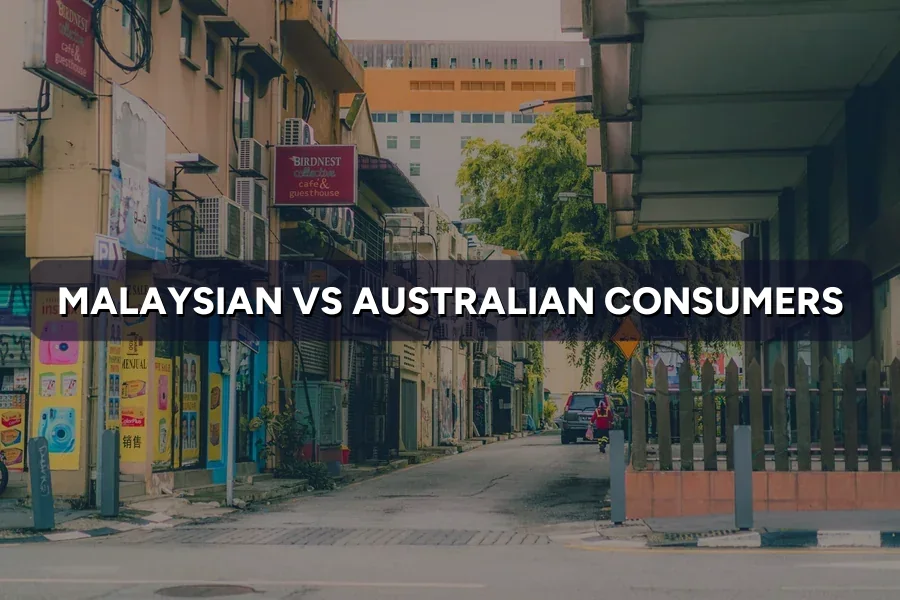
An Australian product that sells well at home has a good chance in Malaysia. Australian brands carry a reputation for quality, safety and clean food, and many Malaysians have studied, worked or holidayed there. But a good reputation does not change how a Malaysian family decides what to buy.
This guide compares Malaysian vs Australian consumers across the habits that shape your marketing: household and age profile, pre-purchase research, payment, promotions, family influence and trust. Each section ends with what to change in your campaigns. It comes from ZenWeb, a Google Partner agency with 500+ clients that runs Malaysian campaigns for overseas brands. If you are still weighing the move, read our guide for an Australian business expanding to Malaysia first.
Selling to Malaysians for the first time?
We map your Australian customer journey against how Malaysians actually buy, then plan the channels to match. See our digital marketing services for Malaysia →
Festive films are a quick window into what Malaysian buyers value. This PETRONAS Hari Raya film shows the family, generosity and togetherness themes that run through Malaysian spending, and it feels very different from a typical Australian retail ad.
Source video: PETRONAS on YouTube
Quick Answer: The Malaysian consumer is younger, more social and more likely to buy for a household than the Australian one. Malaysia’s median age is about seven years lower, its average household holds 3.8 people, and a larger share of the population uses social media. Fewer, bigger buying units change how you target and message.
The table puts the basic profile of Malaysian vs Australian consumers side by side, using DataReportal’s Digital 2026: Malaysia and Digital 2026: Australia reports, plus DOSM’s 2020 census findings on household size.
| Indicator | Malaysia | Australia |
|---|---|---|
| Population | 36.1 million | 27.0 million |
| Median age | 31.0 years | 38.3 years |
| Urban share | 79.8% | 86.9% |
| Social media user identities | 85.0% of population | 77.7% of population |
| Average household size | 3.8 people | Smaller; more one- and two-person homes |
Source: DataReportal, Digital 2026: Malaysia and Digital 2026: Australia (October 2025 data); DOSM, Key Findings of the Population and Housing Census of Malaysia 2020. Table by ZenWeb. Licence.
What this means for buying behaviour:
For the wider picture beyond Australia, see our guide to Malaysian consumer behaviour for foreign brands.
Quick Answer: Malaysians check more places and ask more questions before a first purchase. They search on Google, compare the same item on Shopee or Lazada, watch reviews on TikTok or YouTube, then message the seller on WhatsApp. Australians more often read reviews, then buy directly on the brand’s website without talking to anyone.
The table compares the pre-purchase journey for the same Australian brands selling at home and in Malaysia.
| Behaviour before first purchase | Australia (home) | Malaysia |
|---|---|---|
| Asked the seller a question by chat | 18% | 58% |
| Checked a marketplace listing of the same product | 21% | 46% |
| Watched a short video review | 29% | 51% |
| Median days from first ad click to purchase | 6 days | 9 days |
Source: From ZenWeb client tracking of consumer brands from Australia and other overseas markets, Malaysian campaigns compared with the same brands’ home-market reports, 2024–2026. Typical pattern; figures vary by category. Licence.
The longer, busier journey is not hesitation. It is how Malaysians protect themselves from fake sellers and grey imports. Search still starts the journey: StatCounter shows Google handling over 90% of Malaysian searches, often in a mix of English, Bahasa Malaysia and Chinese. Our guide to SEO in Malaysia for Australian firms covers how to show up at that first step.
Quick Answer: Australians pay mostly by card, often tapped from a phone. Malaysians use cards too, but many prefer paying straight from a bank account through FPX, scanning DuitNow QR or using an e-wallet. A checkout that only accepts cards and PayPal loses a large share of Malaysian buyers at the last step.
On the Australian side, the Reserve Bank’s 2025 Consumer Payments Survey found cards made up most consumer payments, with cash at about 15%. Malaysia’s payment rails look different, as Bank Negara Malaysia’s payment statistics for FPX, DuitNow and e-money show. Here is how the checkout splits on the Malaysian sites we manage:
| Payment method | Share of paid orders | % |
|---|---|---|
| FPX online banking | 38 | |
| Credit and debit cards | 31 | |
| E-wallets and DuitNow QR | 22 | |
| Buy now, pay later | 6 | |
| Other methods | 3 |
Source: Aggregated from ZenWeb-managed e-commerce websites for overseas brands selling in Malaysia, 2024–2026. Typical consumer-goods pattern; high-ticket and B2B sites see more cards and bank transfers. Licence.
Three payment habits catch Australian teams out:
Our guide to localising a Malaysia website for Australian companies lists the payment and pricing set-up in detail, and what a payment gateway does explains the basics.
Quick Answer: Yes. Malaysians wait for vouchers, free shipping and sale days far more than Australians do. Double-date sales like 11.11 and 12.12, payday campaigns and festive promotions pull a large share of the year’s orders into a few short windows. Australians also love Black Friday, but buy at full price more of the year.
The comparison below shows how strongly each market reacts to promotions for the same brands.
| Measure and market | Share of online orders | % |
|---|---|---|
| Placed during major sale events – Australia | 27 | |
| Placed during major sale events – Malaysia | 41 | |
| Used a voucher or discount code – Australia | 34 | |
| Used a voucher or discount code – Malaysia | 62 | |
| Used a free-shipping offer – Australia | 38 | |
| Used a free-shipping offer – Malaysia | 71 |
Source: Aggregated from ZenWeb-managed campaigns for Australian and other overseas consumer brands, Malaysian orders compared with the same brands’ home-market order reports, 2024–2026. Sale events = Black Friday to Cyber Monday, EOFY and Boxing Day in Australia; 11.11, 12.12, payday sales, Chinese New Year and Hari Raya in Malaysia. Licence.
This does not mean you should discount all year. It means your promotions need a plan:
Want a festive and sale-day calendar built for your brand?
We plan Google Ads and Meta Ads budgets around Malaysia’s peak buying windows, billed and reported in RM. Plan Google Ads for your Australian brand in Malaysia →
Quick Answer: Malaysia’s Malay, Chinese, Indian and indigenous communities each bring their own language, food rules and festivals, and family opinion carries more weight than in Australia. A product is often judged on whether it suits the whole household, fits religious needs such as halal, and would be respected by relatives and friends.
Australia is multicultural too, but mainstream marketing speaks mostly in one language to individuals. In Malaysia, the same campaign often has to work across communities. The main differences for Malaysian vs Australian consumers:
| Factor | Typical Australian buyer | Typical Malaysian buyer |
|---|---|---|
| Who decides | Mostly the individual | Often shared with spouse or parents |
| Language of the ad | English | English, BM or Chinese, depending on segment |
| Food and personal care | Ingredients and origin | Halal status is a first filter for Muslim buyers |
| Gifting | Christmas and birthdays | Festive hampers, open houses and visiting relatives |
For your marketing, this means separate creative for each key segment, not one ad translated three ways. Our guide to multicultural marketing across Malay, Chinese and Indian audiences shows how to split campaigns, and halal marketing in Malaysia covers food, cosmetics and health brands. For Meta creative that respects these differences, see Meta Ads for Australian brands in Malaysia.
Quick Answer: Generally yes, and “Made in Australia” is a selling point for food, health, education and skincare. But origin alone does not close a sale. Malaysians want proof that you are really here: a local number, RM prices, local reviews, easy returns and an official marketplace store, not only an overseas website.
Australian consumers trust a clean website, card security badges and a clear returns policy. Malaysians look for signs that a real team will answer if something goes wrong. The trust signals that matter most:
Our list of trust signals Malaysians expect from foreign brands goes through all nine, and Shopee and Lazada for foreign brands explains cross-border versus local stores. To run chat properly, read WhatsApp marketing in Malaysia.
Quick Answer: Match each habit with a channel. Google Ads and three-language SEO meet buyers while they research. Meta and TikTok video with click-to-WhatsApp ads answer their questions. A localised website with FPX and RM pricing closes the sale, and a festive calendar times your spend. Run it all as one plan, reported in RM.
Here is how the buying habits of Malaysian vs Australian consumers translate into a practical channel mix, and which ZenWeb service covers each part:
| Malaysian habit | What to do | ZenWeb service |
|---|---|---|
| Searches in three languages | Rank English, BM and Chinese pages on Google | SEO |
| Compares before buying | Search ads on brand and product terms | Google Ads |
| Asks questions first | Video ads that open a WhatsApp chat | Meta Ads |
| Pays by bank or e-wallet | Localised site with FPX, DuitNow and RM prices | Web design |
| Buys in festive bursts | One budget flexed across the year | Digital marketing |
Costs are lower than at home, but judge them on qualified leads, not clicks. Our comparison of digital marketing cost in Malaysia vs Australia converts the numbers from AUD to RM. For local ranges, see Google Ads cost in Malaysia and Facebook Ads cost in Malaysia.
To stage the rollout, follow our 90-day digital plan for an Australian brand launch, and compare digital marketing packages in Malaysia. If you are choosing a partner, see how Australian firms pick a Malaysian marketing agency. Company set-up sits outside marketing; start with MIDA and SSM.
Quick Answer: The gap between Malaysian vs Australian consumers is less about wanting different products and more about how they reach a decision. Malaysians research across more touchpoints, ask before they buy, pay through local rails, respond strongly to promotions and involve family. Plan for those habits and your Australian brand advantage will convert.
Australian brands that treat Malaysia as a copy of home usually see strong interest but weak conversion. Those that adapt the journey see both. For the channel-by-channel view, read Malaysia vs Australia digital marketing. If you are comparing Malaysia with other markets, our guide to expanding your business to Malaysia gives the wider picture. When you are ready, ZenWeb’s digital marketing services bring search, social, SEO and a localised website together under one Kuala Lumpur team.
How they decide. Australians often read reviews and buy directly on a website by card. Malaysians check Google, marketplaces and video reviews, message the seller on WhatsApp, then pay by FPX, DuitNow QR, e-wallet or card, often during a sale.
They are more promotion-driven. Many will pay for quality, but they expect vouchers, bundles and free shipping, and they time bigger purchases around 11.11, 12.12, payday and festive sales.
Some do, but most prefer a Malaysian storefront with RM prices, local payment options and local delivery, or an official store on Shopee or Lazada. An overseas-only site raises doubts about returns and genuine stock.
Yes, especially for food, health supplements, skincare and education. Pair it with local proof such as Malaysian reviews, a +60 WhatsApp number and halal certification where relevant.
Google Ads and SEO for search, Meta and TikTok video for discovery, WhatsApp for conversations, and marketplaces for price-checking buyers. Most Australian brands run these together from one RM budget.
Ready to win Malaysian customers?
Book a free 30-minute call. We will show where your Australian funnel loses Malaysian buyers and how to fix it in the first 90 days.
Complete the form and our team will contact you to discuss your goals. Let’s grow your business.



Meowketing Specialist
Online