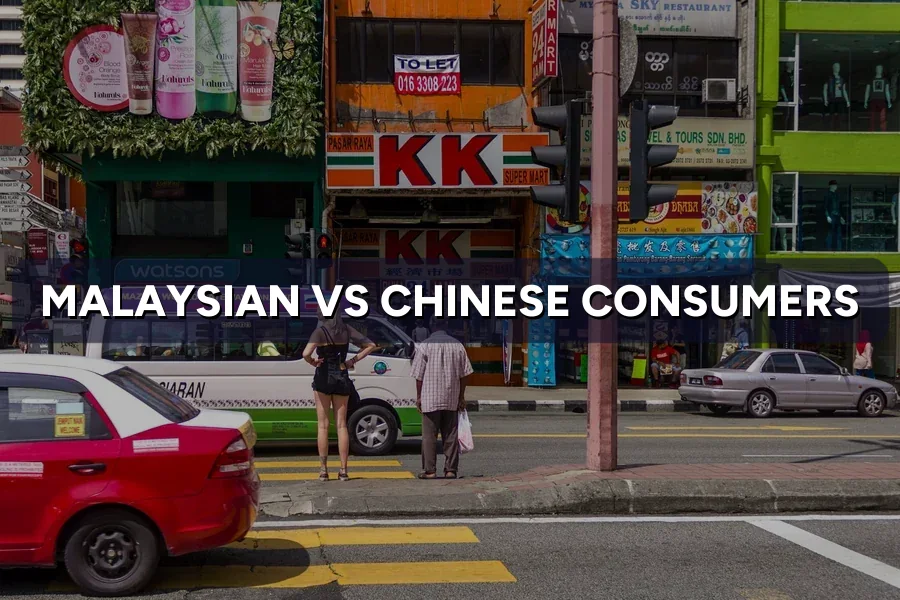
A marketing lead from Shenzhen or Hangzhou often lands in Kuala Lumpur, hears Mandarin in the mall and assumes the playbook from home will work. It usually does not. The Malaysian Chinese shopper speaks a different Mandarin, chats on WhatsApp, checks Google reviews and shops next to Malay and Indian neighbours who make up most of the market.
This guide compares Malaysian vs Chinese consumers from a marketer’s point of view: who buys, how they build trust, how they pay, when they spend and which channels reach them. It is written for decision-makers at mainland Chinese companies planning a Malaysian launch, by ZenWeb, a Kuala Lumpur Google Partner agency with 500+ clients. For the full business case, start with our marketing guide for a Chinese company expanding to Malaysia.
Not sure which Malaysian audience to target first?
We help Chinese brands pick the right language, channel and city for their first campaign, with RM budgets your head office can approve. See our digital marketing services in Malaysia →
Before the comparison, this Evolve Podcast episode is a useful primer. Malaysian Chinese hosts talk about what it means to be Chinese and Malaysian at the same time, which is exactly the nuance mainland teams tend to miss.
Source video: Evolve HQ on YouTube
Quick Answer: The main difference between Malaysian vs Chinese consumers is context, not taste. Mainland buyers live inside super apps and trust sales volume and KOL buzz. Malaysian buyers move across Google, Meta, WhatsApp and Shopee, want proof that a brand is present locally, and split into several language and cultural groups with their own habits.
Here is a quick side-by-side your team can use in planning meetings.
| Dimension | Mainland Chinese consumer | Malaysian consumer |
|---|---|---|
| Audience | Largely one language and culture | Malay, Chinese, Indian and other groups |
| Language | Simplified Chinese, Putonghua | BM, English and Malaysian Chinese, often mixed |
| Discovery | Douyin, Xiaohongshu, Baidu | Google, TikTok, Facebook, Instagram, YouTube |
| Trust proof | Sales counts, KOL endorsements | Google reviews, local address, +60 number, halal status |
| Asking questions | In-app customer service on Tmall or WeChat | WhatsApp chat with a real person |
| Paying | Alipay, WeChat Pay | FPX, DuitNow QR, e-wallets, cards, cash on delivery |
| Peak seasons | Spring Festival, 618, Double 11 | CNY, Hari Raya, Deepavali, 11.11, 12.12, year-end |
Each row is a change to your funnel, not just to your copy. The platform side of this shift is covered in Malaysia vs China digital marketing: WeChat to WhatsApp. This article stays with the buyer: what they believe, check and expect.
Quick Answer: Malaysia has about 34.4 million people. Among citizens, Malays form 58.3%, Chinese 22.1%, other Bumiputera 12.3% and Indians 6.5%. A campaign that only speaks to Malaysian Chinese reaches roughly one in five citizens. Most consumer brands need Malay and English audiences to reach real scale.
| Ethnic group | Share of citizens | % |
|---|---|---|
| Malay | 58.3 | |
| Chinese | 22.1 | |
| Other Bumiputera | 12.3 | |
| Indian | 6.5 |
Source: Department of Statistics Malaysia (DOSM), Demographic Statistics Malaysia, First Quarter 2026. Citizens only; non-citizens make up 9.9% of the population. Chart by ZenWeb. Licence.
The figures come from DOSM’s Demographic Statistics for the first quarter of 2026. For a China team, three points follow:
Our guide to multicultural marketing across Malay, Chinese and Indian audiences shows how to build separate ad sets, and halal marketing in Malaysia covers what Muslim buyers check first.
Quick Answer: Only partly. Malaysian Chinese share festivals, food and many values with mainland buyers, but they grew up in a different country. They follow local Chinese media, speak dialects and English, use WhatsApp and Google, and see themselves as Malaysian first. Mainland slang and tone can feel foreign to them.
This is where many Chinese brands lose money in the first quarter. They run their mainland creative with a Malaysian price and expect it to land. It usually underperforms for these reasons:
Have Malaysian writers adapt, not translate, your Chinese copy. Our marketing localisation guide for BM, English and Chinese walks through the process. On the site side, see Chinese and BM pages for a Malaysian website, and read where WeChat still fits in Malaysia before you move budget there.
Quick Answer: Malaysian buyers look for signs that a brand is really here. They check for local Google reviews, a Malaysian address, a +60 WhatsApp number, RM prices and a clear warranty or return policy. Some also weigh quality worries about imported goods. Local proof removes that doubt faster than any mainland sales ranking or celebrity endorsement.
We tested common trust signals across landing pages for Chinese and other overseas brands. The chart shows the typical lift in enquiry rate when each signal is added.
| Trust signal added | Lift | % |
|---|---|---|
| Malaysian Google reviews shown | 34 | |
| +60 WhatsApp button | 29 | |
| RM prices with local payment logos | 22 | |
| Malaysian address and service centre | 18 | |
| Local warranty and returns policy | 15 | |
| China sales ranking badge | 4 |
Source: Aggregated from ZenWeb-managed campaigns for Chinese and other overseas entrants, Malaysia, 2024–2026. Typical pattern across landing-page tests; results vary by category. Licence.
The gap between the top and bottom rows is the lesson. Mainland proof barely moves Malaysian buyers, while local proof does. Our list of trust signals Malaysians expect from foreign brands goes through all nine, and how to get more Google reviews helps you build the first one quickly.
Quick Answer: Most Malaysian buyers search on Google, watch a video or two, read reviews and then message the seller on WhatsApp before paying. Mainland buyers often decide inside one app. In Malaysia, your enquiries arrive through several channels at once, so you must track and answer each one.
Google handles almost all Malaysian search, per StatCounter, and DataReportal’s Digital 2026 Malaysia report shows YouTube, Facebook and TikTok each reaching tens of millions of Malaysians. The result is a spread-out journey. Here is where first enquiries typically come from for Chinese consumer brands we manage:
| Audience | Google search | Meta ads | WhatsApp direct | Marketplace chat | Mix |
|---|---|---|---|---|---|
| Malaysian Chinese | 38% | 27% | 20% | 15% | |
| Malay | 26% | 36% | 18% | 20% | |
| English-speaking mixed | 45% | 25% | 17% | 13% |
Source: Aggregated from ZenWeb-managed campaigns for Chinese consumer brands, Malaysia, 2024–2026. Mix bar colours: navy = Google search, blue = Meta ads, green = WhatsApp direct, amber = marketplace chat. Typical pattern only. Licence.
Two patterns stand out. Malaysian Chinese and English-speaking buyers lean on Google search, so paid and organic search matter. Malay buyers respond more to Facebook and Instagram, so Meta Ads in BM carry weight. In every group, a large share of buyers still want to chat before they pay, which is why WhatsApp marketing in Malaysia sits at the centre of the plan. For the paid side, see Google Ads set-up for Chinese brands and Facebook and Instagram basics for Chinese brands.
Enquiries arriving from five apps at once?
We connect Google Ads, Meta Ads and WhatsApp tracking so your China team sees which Malaysian audience turns into sales. Explore Google Ads management in Malaysia →
Quick Answer: Malaysian buyers are value-conscious and love vouchers, free shipping and bundle deals, but they rarely see the deep, platform-funded discounts of a mainland shopping festival. They pay through FPX online banking, DuitNow QR, e-wallets, cards and, for some marketplace orders, cash on delivery. Alipay and WeChat Pay are not their default.
| Habit | Mainland China | Malaysia |
|---|---|---|
| Promotion style | Pre-sale deposits, stacked coupons | Vouchers, free shipping, bundles, gift with purchase |
| Price display | RMB | RM, with SST where it applies |
| Checkout | Alipay, WeChat Pay | FPX, DuitNow QR, e-wallets, cards, instalments |
| Big-ticket items | Buy online after livestream demo | Chat on WhatsApp, visit a showroom, then pay |
You can see how local payment rails have grown in Bank Negara Malaysia’s payment statistics. The practical fix is simple: show RM prices and local payment logos on every landing page. Marketplace buyers also expect Shopee and Lazada vouchers, covered in Shopee and Lazada for foreign brands. For the cost side of the comparison, read digital marketing cost in Malaysia vs China.
Quick Answer: Malaysia has more spending peaks than China. Chinese New Year, Hari Raya Aidilfitri, Deepavali and Christmas each lift demand for different communities, and marketplace sales days like 11.11 and 12.12 sit on top. Ad auctions get busier before each peak, so plan creative and budget weeks ahead.
The table shows a typical monthly pattern of ad click costs for Chinese consumer brands, indexed to an average month of 100. Festive dates move each year, so the exact peak shifts.
| Month | Index | Main driver |
|---|---|---|
| January | 118 | Chinese New Year build-up |
| February | 112 | Chinese New Year, early Ramadan shopping |
| March | 108 | Hari Raya Aidilfitri |
| April | 96 | Post-festive dip |
| May | 88 | Quiet month, good for testing |
| June | 90 | Mid-year sales, 6.6 |
| July | 92 | 7.7 sales |
| August | 95 | Merdeka promotions |
| September | 97 | Malaysia Day, 9.9 sales |
| October | 104 | Deepavali, 10.10 sales |
| November | 122 | 11.11 and Black Friday |
| December | 115 | 12.12, Christmas, school holidays |
Source: Aggregated from ZenWeb-managed Google Ads and Meta Ads campaigns for Chinese consumer brands, Malaysia, 2024–2026. Typical pattern; festive months shift with the lunar and Islamic calendars. Licence.
For a mainland team, the surprise is how many “golden weeks” Malaysia has. Use quiet months such as May to test creative, then scale into peaks with proven ads. Our planners for Chinese New Year marketing in Malaysia, Hari Raya marketing and 11.11 campaigns set out the lead times.
Quick Answer: Start with one product line and two audiences, usually Malaysian Chinese plus English or BM speakers. Build a localised website with local trust signals, then run Google search ads and click-to-WhatsApp Meta Ads. Answer chats fast, and review cost per sale after 90 days before adding more audiences, cities or channels.
Our 90-day digital plan for a China brand launch in Malaysia turns these steps into weekly tasks, and SEO in Malaysia for Chinese companies covers step six. For wider context on buyer habits, read Malaysian consumer behaviour for foreign brands and our overview of expanding a business to Malaysia. Company registration and licences sit outside this guide; start with MIDA and SSM.
Quick Answer: A localised website, Google Ads, Meta Ads and SEO together cover how Malaysians find, check and contact a brand. The website carries the trust signals and Google Ads catches active searchers. Meta Ads reaches Malay and mixed audiences and starts WhatsApp chats, while SEO lowers your cost per lead over time.
| Method | Consumer behaviour it answers | Best-fit audience |
|---|---|---|
| Web design and localisation | Checks for local presence, reviews and RM prices | All audiences |
| Google Ads | Searches before buying | Malaysian Chinese, English speakers |
| Meta Ads | Discovers on Facebook and Instagram, then chats | Malay and mixed audiences |
| SEO | Researches and compares over weeks | High-consideration buyers in every group |
If you want one team to run all four, read what Chinese firms should expect from a Malaysian marketing agency and compare our digital marketing packages in Malaysia.
Want one RM plan for every Malaysian audience?
We run your website, Google Ads, Meta Ads and SEO under one monthly budget, with reports your head office can read in English or Chinese. View digital marketing pricing →
Quick Answer: Malaysian vs Chinese consumers differ in audience mix, trust signals, research habits, payment and seasons. Chinese brands that win in Malaysia speak to several communities, show local proof, answer on WhatsApp and pay attention to every festive peak, not just Chinese New Year.
Your product strength, creative speed and e-commerce skill all travel well. What needs rebuilding is how you earn trust from a mixed, Google-and-WhatsApp market. ZenWeb’s Kuala Lumpur team helps mainland brands do that through our digital marketing services for brands entering Malaysia, in the same time zone as your head office.
Malaysia is a multicultural market, while mainland China is largely one language and culture. Malaysian buyers also use open platforms like Google, Facebook and WhatsApp instead of super apps, and they trust local reviews and a local presence more than sales rankings.
You can start there, but Chinese citizens are about 22% of Malaysian citizens. Most consumer brands need Malay and English-speaking audiences to reach real scale, so plan BM and English campaigns alongside Chinese ones.
Usually not without changes. Malaysian Chinese use different vocabulary and prefer a calmer tone, and they respond to local proof. Have Malaysian writers adapt the copy and replace China sales claims with Malaysian reviews.
Not as their main method. Malaysian buyers mostly pay by FPX online banking, DuitNow QR, local e-wallets and cards. Show RM prices and local payment logos on your site and store.
Launch in a quieter month such as April or May to test creative at lower cost. Then scale into your audience’s festive peak, whether Chinese New Year, Hari Raya, Deepavali or the 11.11 and 12.12 sales.
Ready to win Malaysian buyers, not just Malaysian Chinese?
Book a free 30-minute call. We will map your target audiences, trust signals and festive calendar, and outline a 90-day test plan in RM.
Complete the form and our team will contact you to discuss your goals. Let’s grow your business.



Meowketing Specialist
Online