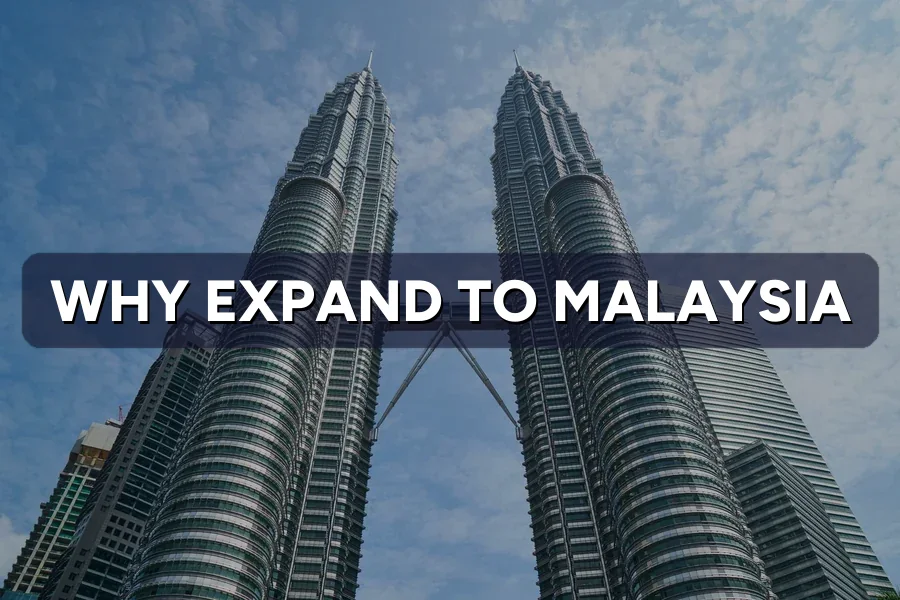
Most answers to “why expand to Malaysia” talk about tax rates, trade deals and factory land. Those matter, but they do not tell a marketing director whether the brand will find customers. This guide answers from the other side: what makes Malaysia a good place to win buyers, not just to register a company.
It is for decision-makers at overseas companies building the business case for a Malaysian launch. Each reason shows how Malaysia differs from your home market and which channel it points to, followed by a short entry plan. It comes from ZenWeb, a Google Partner agency with 500+ clients, founded in Japan in 2000 and now launching overseas brands from Kuala Lumpur. For the full step-by-step view, pair it with our guide to expanding your business to Malaysia.
Building the Malaysia business case for head office?
See how search, social, web and reporting come together for overseas brands under one Kuala Lumpur team. Explore our digital marketing services →
First, this short MIDA interview sets the economic backdrop. The sections after it turn that backdrop into reasons your customers will respond to.
Source video: Do More - Today on YouTube
Quick Answer: Foreign brands expand to Malaysia for near-total internet use, one dominant search engine, English-friendly buyers, lower media costs, three cultural audiences, several sales peaks, chat-and-pay habits and strong investor confidence. Together, these make it a cheap, fast place to prove demand before scaling across Southeast Asia.
Here is the short answer to why expand to Malaysia, ready for a board slide:
| # | Reason | What it means for your marketing |
|---|---|---|
| 1 | Fully connected, mobile-first | Digital channels reach almost every buyer |
| 2 | One search engine, English works | You can launch with English ads and add languages later |
| 3 | Lower media costs in RM | A test budget buys more clicks than at home |
| 4 | Multicultural test market | Learn Malay, Chinese and Indian buyers in one country |
| 5 | Several festive peaks | More than one big selling window each year |
| 6 | WhatsApp and digital payments | Short path from ad to chat to payment |
| 7 | Record investment momentum | B2B buyers and new competitors keep arriving |
| 8 | Fast feedback | Paid tests give answers in weeks, not quarters |
Already decided? Our digital-first Malaysia market entry strategy is the next read.
Quick Answer: Very. About 35.4 million people, or 98% of the population, use the internet, social media reaches around 85%, and mobile connections outnumber people. The median buyer is about 31 and urban. Digital channels can reach almost the whole market from day one.
In many markets, a new brand needs retail shelves before digital pays off. In Malaysia, the audience is already online, as figures from DataReportal’s Digital 2026: Malaysia report and DOSM’s Malaysia Digital Economy 2025 release show.
| Indicator | Figure |
|---|---|
| Internet users | 35.4 million (98.0%) |
| Social media identities | 30.7 million (85.0%) |
| Cellular mobile connections | 44.0 million (122%) |
| Median age / urban share | 31.0 years / 79.8% |
| ICT share of economy | 23.4% of GDP (2024) |
| E-commerce income | RM1,184.1 billion, +5.1% (2023) |
Source: DataReportal Digital 2026: Malaysia; DOSM Malaysia Digital Economy 2025. Compiled and interpreted by ZenWeb. Licence.
One digital plan covers Kuala Lumpur, Penang, Johor Bahru and the smaller towns. Our Malaysia digital landscape stats break down platform reach, and our guide to Malaysian consumer behaviour shows how these buyers research and decide.
Quick Answer: Yes, to start. English is widely used in business and by urban buyers, and Google handles about 93% of searches, so an English site and English Google Ads can open the market. But Bahasa Malaysia and Chinese searches are large, so plan to add them once the first results come in.
That is unlike Japan, Korea or China, where you face a new language and often another search engine. In Malaysia, Google holds 92.99% of searches in August 2026, per StatCounter. A sensible language path:
Our SEO guide for foreign companies ranking on Google.com.my explains how to structure one site for all three, and multilingual SEO in BM, English and Chinese covers the keyword work.
Quick Answer: Usually, yes. For similar keywords, clicks in Malaysia often cost a fraction of what they cost in Singapore, Australia, the UK or the US. Ads are billed in ringgit, and Malaysian-registered accounts pay 8% SST. A modest test budget therefore buys enough data to judge demand.
Lower costs matter most in the test phase, when you are paying to learn. The chart indexes typical cost per click for comparable keywords, with Malaysia at 100. Treat it as a direction, not a quote.
| Market | Relative CPC | Index |
|---|---|---|
| Malaysia | 100 | |
| Japan | 200 | |
| Singapore | 250 | |
| United Kingdom | 260 | |
| Australia | 280 | |
| United States | 350 |
Source: Illustrative scenario by ZenWeb, based on comparisons of overseas clients’ home-market and Malaysian Google Ads accounts, 2024–2026. Directional only; actual CPCs depend on industry and competition. Licence.
Two cautions. Google Ads Help confirms 8% SST on Google Ads sales in Malaysia, so budget for it, and cheap clicks only help if the landing page converts. See local ranges in Google Ads cost in Malaysia and Facebook Ads cost in Malaysia, and size your launch with our Malaysia market entry marketing budget guide.
Quick Answer: One country holds Malay-Muslim, Chinese and Indian audiences on the same platforms. You can test halal-sensitive messaging, Chinese creative and English offers side by side, then take the winners to Indonesia, Singapore, Thailand or further afield.
DOSM’s first-quarter 2026 demographic release puts Malaysia’s population at 34.4 million, with Malay and other Bumiputera, Chinese and Indian communities as the main groups. For a marketer, that is several test cells in one market:
For regional brands, this is often the strongest answer to why expand to Malaysia. But one ad rarely fits all three. Our guide to marketing localisation for Malaysia shows how to adapt without tripling your costs. If you plan to use Malaysia as your regional launchpad, see how foreign brands run Malaysia as an ASEAN marketing hub.
Quick Answer: Malaysia has several demand peaks a year, not one. Chinese New Year lifts January or February, Ramadan and Hari Raya lift the weeks before Eid (dates move yearly), and Deepavali, 11.11, 12.12 and year-end sales lift the last quarter. Plan launches around these windows.
Many home markets have one big season, such as Christmas or Golden Week. Malaysia spreads demand across the year, a less obvious answer to why expand to Malaysia.
| Month | Enquiry index | Index | Main driver |
|---|---|---|---|
| Jan | 118 | Chinese New Year build-up | |
| Feb | 97 | Post-CNY dip | |
| Mar | 114 | Ramadan and Raya shopping | |
| Apr | 86 | Raya holiday slowdown | |
| May | 94 | Baseline | |
| Jun | 93 | School holidays | |
| Jul | 95 | Baseline | |
| Aug | 98 | Merdeka promotions | |
| Sep | 92 | Malaysia Day, quiet month | |
| Oct | 101 | Deepavali (Oct or Nov) | |
| Nov | 119 | 11.11 sales | |
| Dec | 113 | 12.12, Christmas, year-end |
Source: From ZenWeb client tracking across 12 industries, 2024–2026, consumer-facing accounts. Chinese New Year, Ramadan and Deepavali move each year, so their peaks shift between months. Licence.
Launch four to six weeks before a peak, not during it: ad costs rise in festive weeks and new accounts need time to learn. Our playbooks for Hari Raya marketing in Malaysia and Chinese New Year marketing cover creative and budgets for the two biggest windows.
Want your first Malaysian campaign live before the next festive peak?
We set up RM ad accounts in your name, build the landing page and launch search ads in weeks. See our Google Ads management service →
Quick Answer: Malaysians often see an ad, message the business on WhatsApp, then pay by online banking or e-wallet. That short path from ad to chat to payment helps new brands close sales fast, if someone replies quickly and checkout offers local payments.
In Europe or North America, a web form and a follow-up email are normal. Malaysian buyers expect a chat, and digital payment is routine: Bank Negara Malaysia’s Annual Report 2025 records e-payment transactions growing 25% to 18.4 billion in 2025.
Our guide to WhatsApp marketing in Malaysia covers the chat-to-sale flow, and Meta Ads for foreign advertisers in Malaysia explains click-to-message campaigns.
Quick Answer: Yes. Malaysia approved a record RM426.7 billion of investment in 2025, up 11%, and foreign investment rose about 21% to RM207.1 billion. Singapore and China led. For marketers, that means more B2B buyers, more expat demand and more foreign competitors.
The figures come from MIDA’s 2025 investment performance release.
| Source country | Approved investment | RM billion |
|---|---|---|
| Singapore | 58.3 | |
| China | 58.0 | |
| United States | 15.1 | |
| Japan | 7.6 | |
| Hong Kong SAR | 7.1 |
Source: MIDA, Malaysia’s 2025 approved investment performance (released March 2026). Chart by ZenWeb. Licence.
New offices, factories and data centres bring B2B buyers and professional staff searching for services, and possibly competitors from your home market. Country guides for Singapore businesses expanding to Malaysia, Australian businesses and Japanese companies show what changes for each home market. For company set-up, incentives and licences, go to official bodies such as MIDA and SSM and take professional advice.
Quick Answer: Fast. With RM ad accounts and a localised landing page, overseas brands we launch usually see a first paid lead in about three weeks and enough data to judge the offer in three months, before committing to offices and staff.
For many overseas firms, this is the deciding answer to why expand to Malaysia first. A digital test answers four questions before large fixed costs:
Our step-by-step guide on how to enter the Malaysian market in 10 steps places this test inside the full launch. For cheap ways to read demand before you spend, see Malaysia market research on a budget.
Quick Answer: Start small and local. Open RM ad accounts in your company’s name, localise one landing page, launch English search ads, add WhatsApp, then test Meta Ads and a second language. Review cost per lead at 90 days and scale what works.
The answer to why expand to Malaysia only pays off once it becomes a plan. These are the steps we follow with overseas brands:
Avoid running Malaysia from head office in one language or copying home-market ads word for word. Our list of marketing mistakes foreign brands make in Malaysia covers ten of them.
Quick Answer: Most foreign brands should start with Google Ads for demand already searching, a localised website to convert it, and Meta Ads with WhatsApp to build awareness. SEO starts in parallel because it takes months. A combined package keeps these connected under one monthly RM budget.
Each answer to why expand to Malaysia points to a channel:
| Channel | Reasons it uses | When to start |
|---|---|---|
| Google Ads | One search engine, lower CPCs, fast feedback | Week 1 |
| Web design and localisation | Mobile-first buyers, trust signals, local payments | Week 1–6 |
| Meta Ads | High social reach, WhatsApp habit, festive peaks | Week 3–4 |
| SEO | Google dominance, three languages, early-mover rankings | Month 1–2 |
For each channel in depth, read our guide to digital marketing in Malaysia for foreign companies. For one fixed fee, compare our digital marketing packages, and see what to look for in a Malaysian agency for foreign companies.
Need a 90-day Malaysia test plan with clear RM numbers?
We combine Google Ads, Meta Ads, SEO and localisation into one plan, reported to head office in English. View our digital marketing pricing →
Quick Answer: Why expand to Malaysia? Because it lets a foreign brand reach an almost fully online, English-friendly and multicultural market through one search engine, at lower media costs, with several sales peaks a year. Test it with a focused 90-day digital plan, then scale what works across the region.
So, why expand to Malaysia? It is not Asia’s biggest market, but it may be the most useful first one. It shows how Muslim, Chinese and English-speaking buyers respond to your brand, at a cost finance can accept. ZenWeb brings strategy, ads, SEO and web localisation under one Kuala Lumpur team as part of our digital marketing services in Malaysia, with the Japanese-rooted reporting habits overseas head offices expect.
Malaysia has a far larger consumer population, lower media costs and three major cultural audiences in one market. Singapore is smaller and costlier to advertise in. Many brands run both, using Malaysia to test volume and messaging.
Not at first. English works for many B2B buyers and urban consumers. Adding Bahasa Malaysia and Chinese content later raises reach and conversion, especially for consumer products.
It depends on your industry, but a focused test with Google Ads, one localised landing page and WhatsApp can run on a modest monthly RM budget. Plan for at least three months so the data is reliable.
Google for search; Facebook, Instagram, TikTok and YouTube for social and video; WhatsApp for enquiries; Shopee and Lazada for e-commerce. Most foreign brands start with Google Ads and Meta Ads.
You can advertise to Malaysians from an overseas account, but a local entity simplifies RM billing and builds trust. For registration and incentives, check official bodies such as MIDA and SSM.
Ready to test Malaysia before you commit?
Book a free 30-minute call. We will size the opportunity for your product, suggest a starting channel mix and outline a 90-day plan in RM.
Complete the form and our team will contact you to discuss your goals. Let’s grow your business.



Meowketing Specialist
Online