

Share this post:
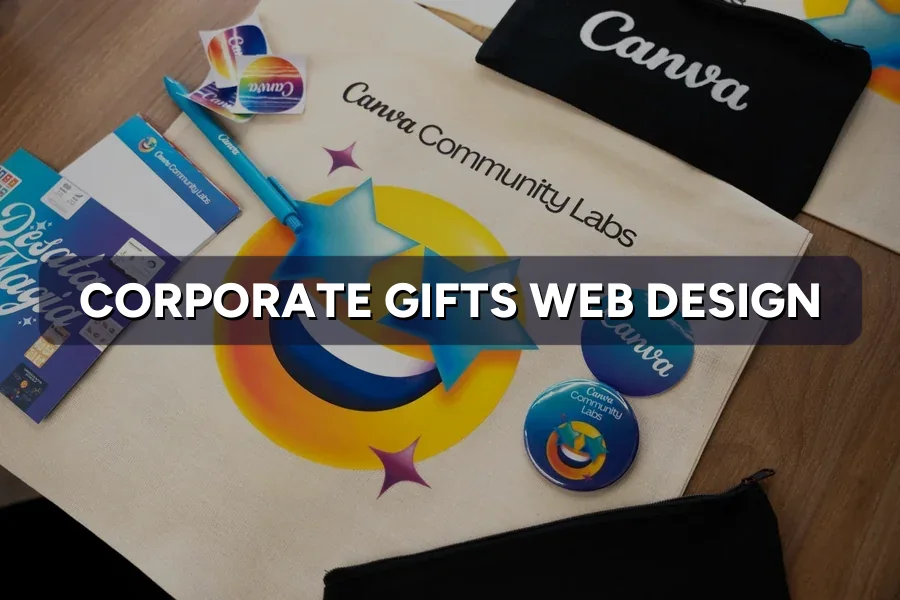
An admin executive in Cyberjaya has been told to sort out 220 door gifts for a company dinner. She has a budget per head, a date, and a boss who will decide.
She will not order from your website. She will pick three options, screenshot them, and paste them into a chat with her manager. Whatever is inside that screenshot is your whole sales pitch.
ZenWeb rebuilds trade supplier websites across a client base of 500+ Malaysian accounts. Audience is not the constraint: DataReportal recorded 35.4 million internet users in Malaysia at 98% penetration in its Digital 2026 report. The constraint is a page a second reader can approve without a phone call.
This guide covers the homepage, occasion and budget navigation, branding pages, the quote form, the festive cutoff calendar, credentials, four datasets and the mistakes that cost suppliers won orders. The video below sets out the B2B page logic underneath it.
Source video: B2B website design examples on YouTube
Quick Answer: Corporate gift buyers are researchers, not deciders. They collect two or three options and forward them to a manager or finance. Web design for gift suppliers should make every product page self-explanatory to a second reader who never visited your site.
This is the split most gifting websites miss. The visitor and the approver are different people, and the approver only ever sees a fragment — a screenshot, a pasted link.
That fragment carries the whole argument alone. Price per head, not “enquire for price”, because a manager cannot approve a blank. The item shown with a logo on it, because a plain mug proves nothing. The minimum order beside it, so nobody discovers at approval stage that 220 pieces was below your floor.
Our digital marketing guide for gift suppliers covers how she found you. This one covers whether the page survives the forward.
Wondering what your current catalogue does with those visitors?
We rebuild supplier websites around one measurable action — an enquiry that arrives with the quantity, the occasion and the date already attached. See how our web design service works →
Quick Answer: Five things: the occasions you supply, a budget-per-head entry point, your minimum order, the artwork-to-delivery lead time in working days, and a WhatsApp button. A hero slider of gift boxes with no prices on them is not one of them.
Above the fold on a phone is roughly one thumb-length. Spend it on the facts the buyer is copying into her comparison sheet.
The general must-have features for a Malaysian business website still apply. The published minimum and the budget doorway separate a supplier’s site from a lookbook.
Quick Answer: Nobody arrives wanting a tumbler. They arrive wanting 220 items under RM 35 each for a dinner in six weeks. Build the navigation around occasion, budget band and quantity, and let product category be the third filter, not the first.
Most gifting sites are organised the way the warehouse is: drinkware, bags, stationery, tech, hampers. That serves your stock system, not a buyer who has a brief and no product opinion yet.
Reorganise around how the request actually arrives:
Product category still exists underneath as a filter. It just stops being the front door. Settling that structure first saves a rebuild later — see our guide to planning website content.
Quick Answer: A blank product photo sells nothing, because the buyer is not buying a bottle — she is buying her company’s logo on a bottle. Show branded samples on every product page, and give each branding method its own page with real close-up photographs.
The gift is the carrier. The branding is the product. Yet most catalogues show importer stock photos of unbranded items, so every enquiry begins with “can you show me a mock-up first”.
Two cheap fixes. Put a branded example on every product page, using past jobs the client is happy to have shown. And give each decoration method its own page covering price, minimum and lead time:
State the artwork you need for each — vector file, Pantone reference, print area in millimetres. That removes a day of back-and-forth per order.
Quick Answer: Budget-band pages and branded product pages get shared upward far more often than the all-products catalogue, and they produce several times the enquiries per visit. The generic catalogue page attracts the most traffic and converts the least.
| Page type | Share of sessions | Link copied or image saved | Enquiries per 100 sessions |
|---|---|---|---|
| Budget-per-head band page | 14% | 31% | 7.4 |
| Product page with branded mock-up | 23% | 27% | 6.1 |
| Occasion landing page | 19% | 18% | 4.8 |
| Branding method guide | 6% | 12% | 2.9 |
| Product page without mock-up | 17% | 9% | 2.2 |
| All-products catalogue page | 21% | 5% | 1.3 |
Source: aggregated from ZenWeb-managed corporate gift and premium supplier websites, Malaysia, 2024–2026.
The catalogue page takes a fifth of all traffic and returns the worst result on the site. The pages built for a decision — budget bands and branded mock-ups — take less traffic and carry the orders.
Quick Answer: Publish a per-head band per item with the quantity tiers behind it, not one “from” figure. A band such as RM 28–46 per pax by quantity and finish commits you to nothing and gets you into the approval email.
The usual objection is that the shop next door will undercut you. That shop already knows your rate. The buyer is the only person in the chain who does not.
The trap is not the number, it is the missing tier. A buyer at 220 pieces reading “from RM 18” assumes RM 18 is her price, then treats the real quote as bait. Put four things beside the band:
That turns a price page into a qualifying page, the job of landing pages that convert.
Quick Answer: Publishing the minimum order, a per-head band and the artwork cutoff cuts raw enquiry volume but roughly triples the share you can quote without a follow-up message, and shortens the time from first contact to purchase order.
| What the site publishes | Enquiries per 1,000 sessions | Quotable without follow-up | Enquiry to PO | Median days to PO |
|---|---|---|---|---|
| Nothing — “enquire for price” | 41 | 21% | 6% | 17 |
| Minimum order only | 33 | 38% | 11% | 13 |
| Per-head band only | 29 | 52% | 16% | 11 |
| Minimum + band + artwork cutoff | 24 | 67% | 23% | 8 |
Source: aggregated from ZenWeb-managed corporate gift and premium supplier websites, Malaysia, 2024–2026.
Enquiry count falls by about two-fifths. Purchase orders rise, because the enquiries that stop arriving are the ones that were never going to convert. Traffic that never becomes orders usually has this exact cause — see why a website gets visits but no leads.
Quick Answer: Ask for occasion, quantity, budget per head, preferred item or category, delivery date and a logo file. Ask who she is last. Those six fields price most corporate gift orders without a single follow-up message.
Most gifting forms fail in the same two places. They ask for a company registration number before asking what the buyer needs, and there is nowhere to attach the logo file.
Fix the order of the questions and add the upload:
Name and contact details come after all six. Reordering questions this way is the cheapest conversion work available — the principle behind most conversion rate optimisation in Malaysia. Keep a WhatsApp button alongside for buyers who prefer to type.
Enquiries arriving with half the information missing?
A six-field quote path with a logo upload is usually a fortnight of work, not a rebuild. Check our web design pricing →
Quick Answer: Give every festive window a dated cutoff page showing the last artwork approval date, the last order date and what is still possible after each one. Malaysian festive dates move each year, so this page has to be updated, not written once.
Chinese New Year follows the lunar calendar and Hari Raya the Islamic calendar, so both drift against the Gregorian year. “Order early for the festive season” tells nobody whether next Tuesday is too late.
The page that works has four columns per festive window:
Two notes. Any hamper containing food needs certified contents for a mixed workforce, checkable on JAKIM’s Halal Malaysia portal — say so on the page, not in a reply. And keep cutoffs consistent with what your Google Ads for gift suppliers campaigns promise.
Quick Answer: Enquiries cluster in two long ramps — one ahead of the first-quarter festive window and a much larger one from September to November for year-end. Lead time shortens as each peak approaches, which is when a published cutoff page earns its keep.
| Month | Enquiry index | Names an occasion | Days to delivery date |
|---|---|---|---|
| January | 88 | 74% | 26 |
| February | 71 | 69% | 21 |
| March | 96 | 72% | 29 |
| April | 79 | 61% | 34 |
| May | 74 | 55% | 37 |
| June | 70 | 52% | 39 |
| July | 82 | 58% | 41 |
| August | 94 | 63% | 44 |
| September | 128 | 76% | 46 |
| October | 159 | 83% | 33 |
| November | 173 | 86% | 24 |
| December | 106 | 81% | 15 |
Source: aggregated from ZenWeb-managed corporate gift and premium supplier websites, Malaysia, 2024–2026. Index of 100 = yearly average enquiry volume.
Two design consequences. Build the cutoff page before September, not during it. And keep the December fallback route obvious, because by then the median buyer is fifteen days from her event and looking for whatever is still possible.
Quick Answer: Larger Malaysian buyers screen gift suppliers on documentation before comparing prices. One credentials page carrying SSM and SST registration, halal status for edible items, Ministry of Finance registration and a downloadable company profile decides eligibility.
This is the most under-used page in the trade, and the one that separates you from a home-based reseller. Corporate liability provisions under the MACC Act pushed most large Malaysian employers to write formal gift policies — usually a per-head ceiling and a declaration form. Your buyer works inside that policy whether she mentions it or not.
Put the following on one page, linked from every product page footer:
These are the signals in our piece on website trust signals, applied to a procurement reader rather than a consumer. Sending that reader to a WhatsApp button loses the largest orders on your site.
Quick Answer: Gift catalogues are image-heavy, and image weight is what makes them slow. Compress every product photo, load images only as they scroll into view, and reserve the image space in the layout so nothing jumps while the page is still loading.
A gifting site carries more photographs than almost any other supplier site. Uncompressed, one category page can weigh several megabytes, and a buyer checking options on mobile data will not wait.
Google’s Core Web Vitals thresholds give three targets: largest contentful paint within 2.5 seconds, interaction to next paint at 200 milliseconds or less, and cumulative layout shift at 0.1 or below. The third matters most here, because unreserved image space makes the grid jump and the buyer taps the wrong product.
The fixes are ordinary: modern image formats, lazy loading below the fold, genuinely thumbnail-sized thumbnails, and filtering instead of dumping 400 items onto one page. Our guide to fixing website loading speed covers the sequence, and a phone-first layout is where most gift enquiries are decided.
Quick Answer: A quote-path catalogue with occasion pages, budget bands, branding-method guides and a six-field form runs roughly RM 6,400 to RM 10,500 over five to seven weeks. Adding a client reorder portal and a tender pack moves it into the RM 13,000 to RM 21,000 range.
| Tier | Cost band | What it includes | Build time |
|---|---|---|---|
| Brochure catalogue | RM 3,200–5,400 | Home, about, product grid, contact form | 2–3 weeks |
| Quote-path catalogue | RM 6,400–10,500 | Occasion pages, budget bands, branding guides, six-field form with logo upload | 5–7 weeks |
| Quote path plus credentials | RM 9,800–14,600 | Adds cutoff calendar, credentials page, company profile download, mock-up gallery | 7–9 weeks |
| B2B portal | RM 13,000–21,000 | Adds client login, saved artwork, reorder path, tender document pack | 10–14 weeks |
Source: aggregated from ZenWeb-managed corporate gift and premium supplier website builds, Malaysia, 2024–2026.
Most suppliers belong in the second tier. The third pays for itself once government or GLC panels are in play, and the fourth only makes sense when repeat corporate accounts are already a meaningful share of revenue. Wider market context sits in our website design price guide for Malaysia.
Quick Answer: The recurring ones are unbranded stock photos, a hidden minimum order, “enquire for price”, one giant catalogue page, an open message box and vague festive urgency. Each hands the order to whoever published a number.
Fixing three of these is a fortnight of work, not a rebuild. The same discipline runs through your Meta Ads for gift suppliers, where the creative promises exactly what the landing page has to deliver.
Quick Answer: Good web design for gift suppliers publishes what the approver needs to say yes — a branded mock-up, a per-head band, a minimum order and a dated cutoff — then collects the occasion, quantity and logo file in six fields.
Corporate gifting is one of the few trades where the person browsing has no authority and the person deciding never visits your site. Almost nothing on a typical supplier catalogue is written for the second reader.
Start with branded mock-ups and the six-field form, then add the budget-band pages. They cost the least and move the most.
Ready to turn your gift catalogue into a quote machine?
ZenWeb builds corporate gift and premium supplier websites around one measurable outcome — enquiries that arrive with the occasion, the quantity, the budget per head and the logo file already attached.
A quote-path catalogue with occasion pages, budget bands, branding guides and a six-field form with logo upload runs RM 6,400 to RM 10,500 over five to seven weeks. A client reorder portal and tender pack moves it to RM 13,000 to RM 21,000.
Publish a per-head band per item with the quantity tiers behind it, not a single “from” figure. The buyer is not negotiating yet — she is deciding whether to put you in an approval email, and a band gets you shortlisted.
By occasion first, budget per head second, product category third. Buyers arrive with a brief, a headcount and a date rather than a product in mind, so warehouse-style navigation makes them work before they can compare.
Occasion, quantity, budget per head, preferred item or category, delivery date and a logo upload, with contact details last. Those six fields price most corporate orders without a follow-up message.
Yes. Buyers are purchasing their logo on an item, not the item, and unbranded importer stock photos are identical across every competing site. One branded example per page removes the “show me a mock-up first” reply.
SSM registration, SST status, halal certification for edible items, Ministry of Finance registration, monthly production capacity, a downloadable company profile, and quotation validity with payment terms. Large buyers screen on documentation before comparing prices.
Complete the form and our team will contact you to discuss your goals. Let’s grow your business.



Meowketing Specialist
Online


























