

Share this post:
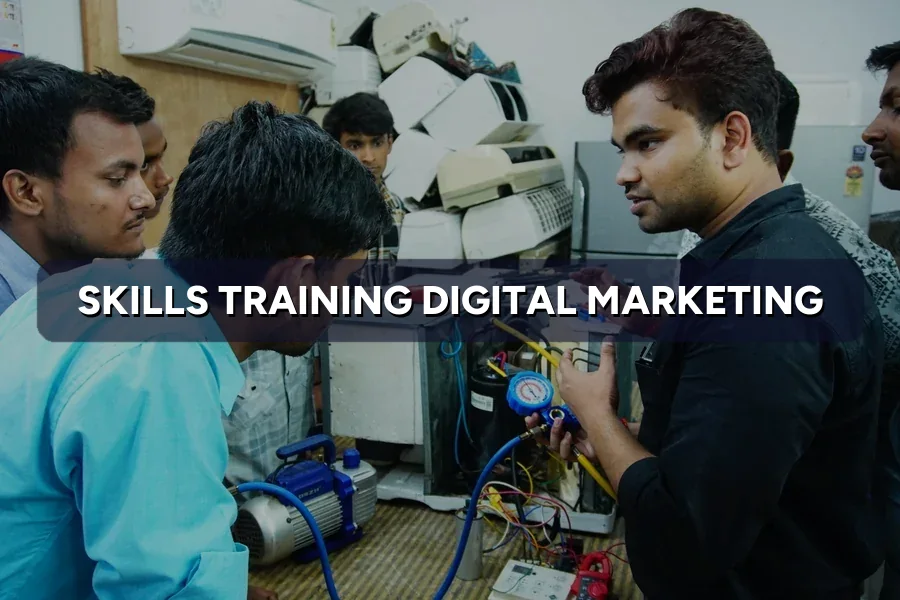
Ask a TVET centre manager why an enquiry went cold and the answer is usually the same: “he never replied after we sent the fee.” That is not a follow-up problem. It is a page problem.
This guide is for accredited skills training providers — a welding centre in Pasir Gudang, a beauty academy in Ipoh, a safety provider selling classes to Klang Valley factories. Malaysia recorded 587,000 TVET enrolments in 2025 and targets 650,000 across 1,395 institutions. Demand is not the constraint. Conversion is.
ZenWeb runs digital marketing for TVET institutes across 500+ Malaysian accounts. The pattern repeats: course lists with no fee, no PTPK mention, no accreditation code. Below are the channels that matter and four original data sets.
Not sure what a training centre campaign should cost?
We size it against your intake dates and seats to fill. See our digital marketing pricing →
First, a short video on marketing an education provider online.
Source: How to use Digital Marketing for Educational Institutes, Umar Tazkeer.
Quick Answer: Nobody enrols because the syllabus looks interesting. They enrol for a licence, a promotion, or a better-paying first job. Sell the outcome, not the module list.
A typical course page lists modules, duration, entry requirement, contact us. Now look at what the enquirer typed into Google: “kursus welding ada sijil”, “SKM level 3 gaji berapa”. Job questions in course clothing. Lead with the destination:
Quick Answer: A TVET enquiry passes through four hands: the learner searches, a parent checks the fee, someone verifies accreditation, and an employer or PTPK decides whether the money exists.
That multi-decider path is what makes skills training different. A dental patient decides alone; a trainee rarely does:
Most centres pour budget into step one and leave the rest to a human replying at 9am. Reply speed matters, but the page must qualify first.
Quick Answer: Google Ads fills urgent short courses, Meta fills school-leaver intakes, SEO compounds on certificate and funding searches, and the website decides whether any of it converts.
| Channel | Best for | Speed | Typical monthly cost |
|---|---|---|---|
| Google Search Ads | Licensed trades, safety courses, “near me” | Days | RM 2,000–8,000 media |
| Meta Ads | School-leaver intakes, parents, open days | Days | RM 1,500–6,000 media |
| SEO | Certificate, funding and salary questions | 3–6 months | RM 1,500–4,500 |
| Website and landing pages | Turning the above into enrolments | One-off build | Project-based |
Quick Answer: SEO for TVET institutes is won on three page types most centres never build: one per certificate level, one per funding path, one per career outcome.
The searches are literal — the certificate name, the funding scheme, or the job. Build a page for each instead of burying all three in one course list.
Our SEO service treats these as one cluster so funding pages pass authority to the pages that convert.
Quick Answer: Run three tight keyword groups — certificate names, licensed trades, compliance short courses — each to its own page. Broad terms like “kursus kemahiran” burn budget on people hunting a free seat.
The clearest wins come from urgency. A factory needing six scaffolders certified before an audit books this week at full fee; a school leaver takes three months. Structure around that:
See Google Ads pricing and monthly budget sizing for SMEs.
Quick Answer: Facebook still carries the school-leaver intake, largely because parents are there. Workshop footage, graduate placement stories and a clear “PTPK available” line beat polished brochure creative almost every time.
Meta creates demand rather than capturing it, which changes the creative brief:
Click-to-WhatsApp is the default destination — see what click-to-WhatsApp ads cost — but send high-value programmes to a landing page first, so the fee is seen before the chat. Our Meta Ads team splits campaigns this way.
Quick Answer: A training centre website has one job: let a stranger confirm the fee, the accreditation and the funding path in thirty seconds on a phone.
Most TVET websites read like a brochure for someone who already trusts the centre. The traffic is the opposite — cold, mobile, price-sensitive. Build for that reader:
Our web design service builds these as templated programme pages your team can extend without a developer; web design pricing.
Quick Answer: Malaysian skills certification runs through the Department of Skills Development, from SKM Level 1 to the Advanced Diploma at Level 5. Publishing your accredited programme names on every course page is the cheapest trust win you have.
The Department of Skills Development sets the ladder: SKM Levels 1 to 3, the Skills Diploma at Level 4, the Advanced Diploma at Level 5. Accreditation is per programme, which is why learners want theirs listed.
Quick Answer: Training centres get walk-ins. A complete Google Business Profile with your course list, workshop photos and recent reviews converts searchers who never scroll past the map pack.
This is under-used. Many centres sit in industrial areas where the map listing is the only thing a nearby factory supervisor sees. The checklist:
Our guide to ranking a Google Business Profile covers the setup.
Quick Answer: Two funding systems drive most Malaysian skills enrolments — PTPK loans for individuals, the HRD Corp levy for employers. Different calendars, different decision-makers, separate campaigns.
This is the structural fact most centres market straight past: you are running two funnels, not one.
| Dimension | PTPK funnel | HRD Corp funnel |
|---|---|---|
| Who decides | Learner and parent | HR or plant manager |
| Trigger | SPM results, intake dates | Levy balance, audit deadlines |
| Channel that works | Meta plus WhatsApp | Google Search plus email |
| Deal size | One trainee, long course | Staff batch, short course |
The Skills Development Fund Corporation handles individual loans; HRD Corp registers training providers for levy-claimable delivery. Registered for both? Run two campaigns, not one mentioning both.
Running one campaign for two very different buyers?
We split PTPK and levy demand into separate accounts. See how we structure Google Ads →
Quick Answer: The shift is not more enquiries but better ones — people who know the fee, qualify for funding, and are asking when the next intake starts.
| Measure | Before | After 6 months |
|---|---|---|
| Monthly enquiries | 30–60, referral-led | 140–260 tracked |
| Enquiry to enrolment | 8–12% | 19–26% |
| “How much?” as first message | Around 7 in 10 | Around 2 in 10 |
| Corporate batch bookings | 1–2 per quarter | 4–7 per quarter |
ZenWeb client tracking, Malaysian skills training accounts, 2024–2026.
Quick Answer: A safety short course costs about RM 55 in media to fill a seat. A corporate in-house programme costs RM 1,255 but bills RM 18,500. Cheap seats are not profitable seats.
| Programme type | Cost per enquiry | Enquiry to enrolment | Cost per enrolment | Typical fee |
|---|---|---|---|---|
| Safety and compliance short course | RM 18 | 33% | RM 55 | RM 950 |
| Prior achievement certification | RM 26 | 30% | RM 87 | RM 3,400 |
| SKM Level 1–2, full-time | RM 22 | 24% | RM 92 | RM 7,800 |
| SKM Level 3 and Diploma | RM 29 | 21% | RM 138 | RM 12,400 |
| Licensed trade course | RM 47 | 27% | RM 174 | RM 4,600 |
| Digital or IT bootcamp | RM 61 | 14% | RM 436 | RM 9,200 |
| Corporate in-house, levy funded | RM 138 | 11% | RM 1,255 | RM 18,500 |
Source: ZenWeb client tracking, Malaysian skills training accounts, 2024–2026.
Corporate work costs roughly twenty-three times more per enrolment than a safety class, yet bills about fourteen times the fee — and arrives in batches. Our cost per lead explainer covers why the cheapest lead is rarely the best.
Quick Answer: Publishing the fee alongside the funding path lifts enrolment rate by 8 to 19 percentage points. The biggest gain sits with PTPK-eligible learners, who carry the risk personally.
| Funding path | Share of enquiries | Fee published | Fee hidden | Gap |
|---|---|---|---|---|
| PTPK loan | 38% | 31% | 12% | +19 pts |
| HRD Corp levy | 24% | 26% | 9% | +17 pts |
| Self-paid instalment | 19% | 22% | 11% | +11 pts |
| Employer sponsored, no levy | 11% | 34% | 19% | +15 pts |
| Agency sponsored place | 8% | 29% | 21% | +8 pts |
Source: ZenWeb client tracking, Malaysian skills training accounts, 2024–2026.
Notice the last column: the less certain the money, the more the published fee matters. Agency-sponsored learners know someone else is paying, so transparency moves them least.
Quick Answer: Efficiency peaks around RM 5,000 a month in media, at roughly 38 enrolments and RM 132 each. Below RM 3,000 the account never gathers enough data; above RM 8,000 cost rises again.
| Monthly media budget | Enrolments per month | Cost per enrolment | Fees booked |
|---|---|---|---|
| RM 1,500 | 9 | RM 167 | RM 21,000 |
| RM 3,000 | 21 | RM 143 | RM 54,000 |
| RM 5,000 | 38 | RM 132 | RM 103,000 |
| RM 8,000 | 55 | RM 145 | RM 158,000 |
| RM 15,000 | 82 | RM 183 | RM 246,000 |
Source: ZenWeb client tracking, Malaysian skills training accounts, 2024–2026.
Fees booked keep climbing even as cost per enrolment worsens, so the real question is whether you have the seats and trainers to absorb 82 new trainees a month. Capacity, not media, is the usual ceiling.
Quick Answer: The two demand curves run almost opposite. School-leaver enquiries peak in April after SPM results; employer enquiries peak in October and November as levy budgets run down.
| Month | School leaver | Employer | What drives it |
|---|---|---|---|
| January | 112 | 68 | January intake |
| February | 82 | 62 | Festive slowdown |
| March | 128 | 74 | SPM results |
| April | 181 | 81 | Post-results peak |
| May | 136 | 88 | Mid-year intake |
| June | 93 | 96 | Curves cross |
| July | 80 | 109 | Second-half planning |
| August | 75 | 116 | Training calendars set |
| September | 107 | 122 | September intake |
| October | 84 | 146 | Levy spend-down |
| November | 68 | 160 | Year-end levy rush |
| December | 54 | 78 | Shutdown |
Source: ZenWeb client tracking, Malaysian skills training accounts, 2024–2026. Index: 100 = average month.
Two peaks, seven months apart, two different buyers. Weight the school-leaver campaign March to May and the employer campaign August to November, and the quiet stretch costs far less.
Quick Answer: Across skills training accounts, the six-month pattern is three to four times the tracked enquiry volume, enrolment rate roughly doubling, and corporate bookings becoming predictable.
These ranges hold across trade and location. Centres replying within an hour sit at the top of each band.
Quick Answer: The recurring mistakes in digital marketing for TVET institutes: hiding the fee, burying accreditation on the About page, running one campaign for two audiences, ignoring the levy calendar, leaving WhatsApp unstaffed.
Quick Answer: More trainees ask AI assistants “which centre offers this certificate near me” before opening Google. Centres with structured fee and accreditation data get named. PDF brochures do not.
Three shifts worth preparing for:
ZenWeb’s agency team structures pages so Google and AI assistants read fee, level and accreditation as data.
Quick Answer: Digital marketing for TVET institutes comes down to three moves: publish the fee and funding path on every programme page, split the learner and employer campaigns, and weight the budget toward April and November.
Demand is not the problem. What separates a full workshop from an empty one is whether a stranger on a phone at 10pm can confirm the fee, the certificate and who pays.
For a sized plan, our team works with Malaysian training providers on this sequence.
Most single-campus providers spend RM 3,000 to RM 8,000 a month on media plus management. Efficiency peaks near RM 5,000, at roughly 38 enrolments and RM 132 each. Beyond that, workshop capacity is usually the real limit, not budget.
Yes, and on every programme page rather than only the About page. Malaysian skills certification runs from SKM Level 1 to the Advanced Diploma at Level 5, and accreditation is granted per programme, so write the accredited programme name in full.
Yes. They involve different decision-makers, triggers and channels. PTPK-funded learners arrive through Meta and WhatsApp around intake dates; levy-funded employers arrive through Google Search around year-end deadlines. One combined campaign makes both perform worse.
There are two peaks. School-leaver enquiries run highest March to May, peaking in April after SPM results at an index of 181 against an average month of 100. Employer enquiries peak in October and November at 146 and 160.
Usually because the page left fee and funding unanswered, so the conversation opens on price. Publishing both lifts enrolment rate by 8 to 19 percentage points, with the largest gain among PTPK-eligible learners — around 38% of enquiries.
Ready to fill more seats at your training centre?
Book a free 30-minute strategy session — we’ll review your programme pages, your Google ranking and your competitors, then give you a concrete 90-day plan with realistic cost per enrolment and intake targets.
Complete the form and our team will contact you to discuss your goals. Let’s grow your business.



Meowketing Specialist
Online


























