

Share this post:
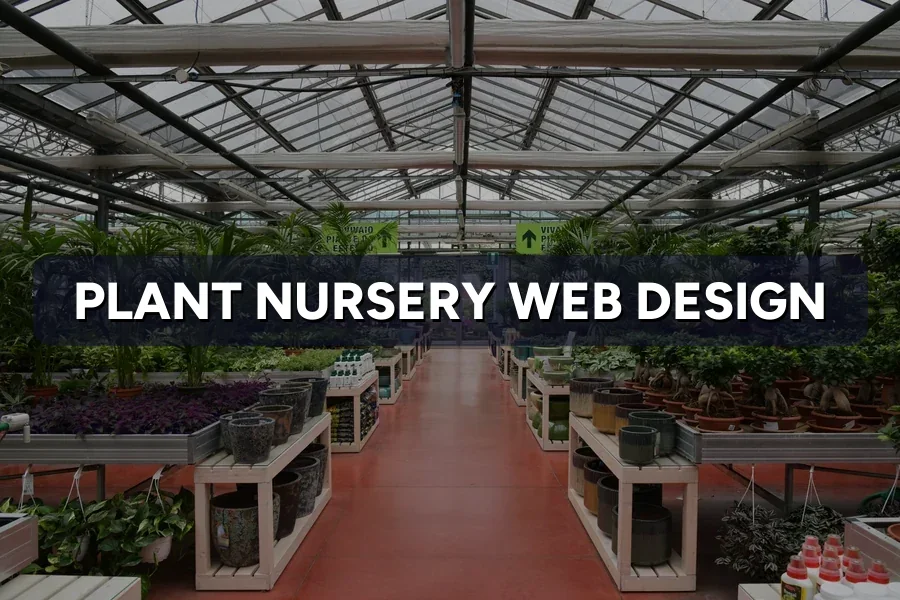
Most Malaysian nursery websites are a wall of plant photos with a phone number at the bottom. The visitor wanted to know one thing — do you have a mature frangipani today, and can you deliver it to Puchong — and the site answered neither.
This guide is for garden centres, roadside nurseries, indoor-plant shops and landscape suppliers across Malaysia: the Sungai Buloh plant belt, family nurseries in Kajang, Rawang and Semenyih, boutique aroid sellers in PJ, and turf suppliers quoting developers. It covers page structure, image weight, delivery logic, the online-selling rules that apply from 2026, and four data sets from live Malaysian garden retail accounts.
ZenWeb builds web design for garden centres and other stock-heavy retailers across 500+ Malaysian accounts. The pattern repeats: beautiful photography, no answer to the question that would have caused a drive.
Site full of plant photos but the carpark still quiet?
We rebuild nursery sites around stock, delivery and quotes before touching the styling. Compare our web design packages →
Start with what the site is actually being asked to deliver.
Source video: She Designs Things on YouTube
Quick Answer: Almost nobody buys a two-metre palm from a photo. Web design for garden centres has to convert a scroll into a Saturday visit or a landscaping enquiry, which means stock, location and price come before styling. The full channel picture for garden retail sits on the same split.
Two visitors arrive with different questions. One wants to know whether the drive to your gate is worth it. The other has an empty compound and a budget, and wants to know what a finished garden costs.
Both leave when the site answers neither. What each of them needs:
Quick Answer: Town, opening hours, delivery coverage and a WhatsApp button. A hero photo of a monstera with the words “Grow With Us” answers nothing a Malaysian buyer asked. The features every Malaysian business site needs apply here with sharper stakes.
The first screen on a phone should carry five things:
Quick Answer: Plants change size, price and availability weekly, so a fixed catalogue goes stale within a month and trains people to call instead of clicking. Run a short, dated availability list you can update in ten minutes.
The most useful page on a Malaysian nursery site is rarely a product grid. It is a plain “This week at the nursery” page, dated, listing perhaps forty items with pot size and price, and a line saying what just arrived.
Why it works better than a full catalogue:
Quick Answer: Plant care articles pull the most traffic to a Malaysian nursery site and produce the fewest enquiries, at 34% of sessions and a 0.9% enquiry rate. The landscaping service page takes 9% of sessions and converts at 7.8%, roughly eight times better.
| Page type | Share of sessions | Enquiry rate |
|---|---|---|
| Plant care guides and blog | 34% | 0.9% |
| Homepage | 22% | 2.1% |
| Weekly availability list | 16% | 3.4% |
| Contact and directions | 11% | 5.6% |
| Delivery and self-collect | 8% | 4.2% |
| Landscaping service page | 9% | 7.8% |
Source: ZenWeb client tracking, Malaysia, 2024-2026. Bar width is proportional to enquiry rate.
The care guides are worth keeping — they are how strangers find you. The mistake is leaving them as dead ends. Every guide should carry a line pointing to the availability list or the quote form, because that is where the 0.9% turns into something better.
Quick Answer: Nurseries upload phone photos straight from the camera roll, and a homepage of forty of them lands near 8 MB. On a Klang Valley 4G connection that is a 7.4-second load and a 71% bounce, against Google’s 2.5-second guideline for Largest Contentful Paint.
Google’s Core Web Vitals guidance asks for LCP within 2.5 seconds, INP of 200 milliseconds or less and CLS at 0.1 or below, measured at the 75th percentile. Plant-heavy sites fail the first one almost by default.
| Homepage weight | LCP on 4G | Mobile bounce rate |
|---|---|---|
| Under 1.5 MB | 1.9s | 34% |
| 1.5 to 3 MB | 2.6s | 41% |
| 3 to 5 MB | 3.8s | 52% |
| 5 to 8 MB | 5.1s | 63% |
| Over 8 MB | 7.4s | 71% |
Source: ZenWeb client tracking, Malaysia, 2024-2026. Bar width is proportional to bounce rate.
The fix is unglamorous and takes an afternoon: resize every image to 1,600 pixels wide, serve WebP, lazy-load anything below the first screen, and cap the homepage gallery at eight photos with a link to the rest. A slow site costs real money, and in this trade it is nearly always the pictures.
Quick Answer: Plants are heavy, awkward and fragile, so a flat “RM 10 shipping” line is a promise you will lose money on. Publish a delivery table by zone and pot size, and make self-collect a visible, free option.
Most Malaysians cannot fit a mature palm in a Myvi, and the ones who can are not sure. Put the answer on the page:
Quick Answer: The highest-converting page on a garden centre site is a before-and-after gallery where each job carries a size, a duration and a price band. Vague “custom quotation” pages filter out the serious buyer, not the tyre-kicker.
Six or eight jobs is enough. For each one, give the township, the compound size in square feet, what was done, how many days it took and a band such as RM 6,000 to RM 9,000. Same camera angle for both photos.
Underneath, ask for a photo rather than a specification. A homeowner cannot describe a garden but can snap one in two seconds, and that upload turns a form fill into a quotable enquiry. The same instinct drives the creative that works in paid social.
No landscaping page, or one nobody enquires from?
We build the gallery, the price bands and the photo-upload quote form as one piece. See how we build nursery sites →
Quick Answer: If you take orders online you are an online business supplier under the Consumer Protection (Electronic Trade Transaction) Regulations 2024, which came into force on 25 December 2024 and replaced the 2012 regulations. Business name, registration number, contact details, full price and terms must be disclosed on the site.
Three compliance items sit specifically on a garden centre’s pages:
A plain, honest terms and returns page also does quiet conversion work. Say what happens if a plant arrives damaged, and how many days a buyer has to tell you. Trust signals matter more when the product is alive.
Quick Answer: A working nursery site runs from RM 1,800 for a one-page visit-and-WhatsApp build to RM 55,000 for a trade portal with tiered pricing. Most Malaysian garden centres land between RM 3,500 and RM 14,000. E-commerce build costs explain the jump at the checkout tier.
| Build tier | Cost range | Build time | Best fit |
|---|---|---|---|
| One-pager: hours, map, WhatsApp | RM 1,800 – 3,500 | 2 – 3 weeks | Roadside nursery, walk-in only |
| Brochure site + landscaping quote form | RM 3,500 – 7,000 | 3 – 5 weeks | Garden centre doing garden jobs |
| Catalogue + weekly availability list | RM 7,000 – 14,000 | 5 – 8 weeks | Multi-section nursery, no checkout |
| Online shop with zone and pot-size freight | RM 14,000 – 30,000 | 8 – 14 weeks | Indoor-plant and collector sellers |
| Trade portal, tiered pricing and quotations | RM 25,000 – 55,000 | 12 – 20 weeks | Turf and wholesale suppliers |
Source: ZenWeb project pricing, Malaysia, 2024-2026. Excludes hosting, domain and monthly care.
Add RM 150 to RM 900 a month for hosting, backups, security and content updates. If you have never claimed it, the SME digitalisation grant can cover a meaningful slice of the middle tiers.
Quick Answer: Adding a dated weekly stock page lifted enquiry rate from 2.1% to 3.9%, an 86% gain and the largest single change measured. Building a plant care hub moved the same metric by 12%, which is why care content should be judged as reach rather than conversion.
| Change made | Before | After | Lift |
|---|---|---|---|
| Dated weekly stock page | 2.1% | 3.9% | +86% |
| Delivery zone and pot-size fee table | 1.8% | 3.0% | +67% |
| Before-and-after gallery with price bands | 2.4% | 3.8% | +58% |
| Own nursery photos replacing stock images | 2.2% | 3.1% | +41% |
| WhatsApp button pre-filled with plant name | 2.6% | 3.4% | +31% |
| Plant care guide hub | 2.5% | 2.8% | +12% |
Source: ZenWeb client tracking, Malaysia, 2024-2026. Bar width is proportional to percentage lift.
Notice the shape of the list. The top four changes all remove doubt — what do you have, what does it cost to bring here, what does a finished garden look like, is this really your nursery. Nothing on it is a redesign.
Quick Answer: The recurring errors are a hidden address, a desktop-first layout, a price list nobody updates and a contact form instead of WhatsApp. Roughly four in five Malaysian visitors arrive on a phone, so mobile-first is not optional.
Quick Answer: Publish what is in stock, publish what delivery costs, show finished gardens with prices, and keep the homepage under 3 MB. That is most of a garden centre website that works.
Web design for garden centres rewards honesty over beauty. The buyer is deciding whether to spend forty minutes in traffic, or whether to hand you a five-figure garden job. Both decisions are made on information your competitors are still hiding.
Start with two pages this month — a dated availability list and a delivery table. Add the before-and-after gallery next. By then you will know exactly which tier of build your nursery actually needs, and the paid search side will finally have somewhere worth sending clicks.
Quick Answer: Nursery owners ask most about cost, whether to sell plants online at all, how to keep stock accurate and how fast the site must load. Plan detail sits on our web design pricing page.
From RM 1,800 for a one-page visit-and-WhatsApp site to RM 55,000 for a trade portal. Most Malaysian garden centres sit between RM 3,500 and RM 14,000, plus RM 150 to RM 900 a month for hosting and care.
Take enquiries first. Live stock, freight by pot size and damage claims make a checkout expensive to run. Indoor plants, seeds, pots and soil sell online comfortably; mature trees and turf almost always close over WhatsApp.
Do not try to track every plant. Publish one dated “this week at the nursery” page with about forty items and pot-size prices, and update it every Monday. In our tracking that single page lifted enquiry rate from 2.1% to 3.9%.
Aim for Largest Contentful Paint within 2.5 seconds, matching Google’s Core Web Vitals guidance. A homepage under 3 MB loads in about 2.6 seconds on Malaysian 4G with a 41% bounce; over 8 MB it takes 7.4 seconds and bounces 71%.
Ready for a nursery website that fills the carpark?
Book a free 30-minute review. We go through your current pages, stock workflow and delivery rules, then give you a build plan with costs and a realistic timeline.
Complete the form and our team will contact you to discuss your goals. Let’s grow your business.



Meowketing Specialist
Online


























