

Share this post:
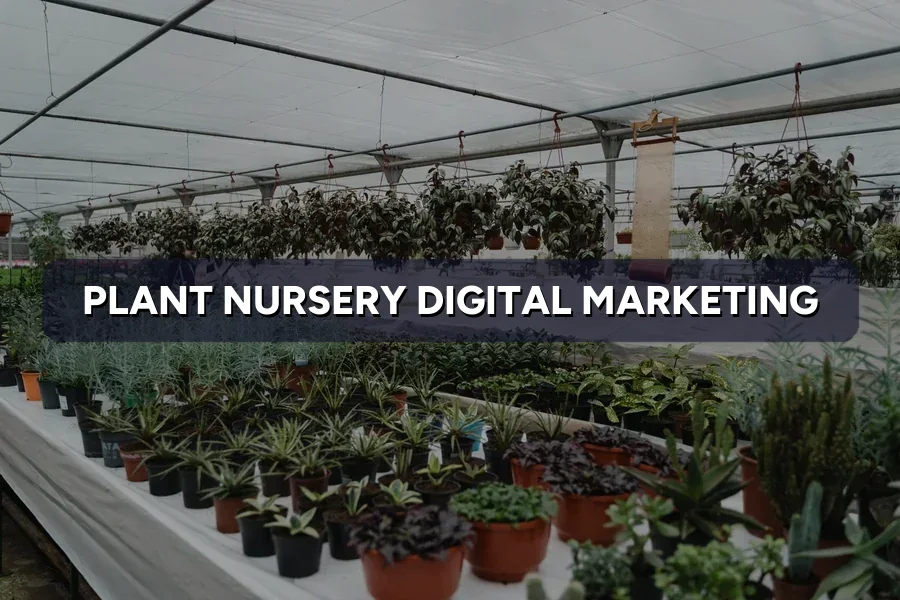
A homeowner in Kajang has just collected the keys to a new terrace house. Over one weekend she searches “landscaping contractor Selangor”, “cost to turf a small garden Malaysia” and “nursery near me open Sunday”. She will spend somewhere near RM 7,000. She has driven past four nurseries on Jalan Reko without stopping, because none of them told her they do soft landscaping at all.
This guide is written for Malaysian plant nurseries and garden centres: roadside retail nurseries, indoor plant specialists, wholesale growers, landscape supply yards and the operators who run all four out of the same plot. It covers which channel feeds which revenue stream, the licence and plant-import rules that quietly shape what you can advertise, and four original data sets we built from garden retail and landscape accounts — what a customer costs by segment, how reply speed decides who wins the quote, what each RM 1,000 of budget returns, and how the twelve-month demand curve really moves.
ZenWeb runs digital marketing for garden centres inside a Malaysian client base of 500-plus accounts. The pattern is consistent: the nurseries that grow are not the ones with the widest plant range. They are the ones that show up when someone is planning a garden, not just buying a plant. ZenWeb builds that visibility.
Not sure which of your revenue streams to market first?
We size a monthly budget against your basket mix and the contract work you actually want more of. See our digital marketing pricing →
Start with why the gap between foot traffic and search traffic has widened so fast.
Source video: Fraser Valley Rose Farm on YouTube
Quick Answer: Roadside visibility used to be the whole marketing plan for a Malaysian nursery. It still fills the weekend, but it cannot reach the landscaping, office-plant and contractor budgets, because those buyers plan online for weeks before anyone drives anywhere.
Malaysia had 35.4 million internet users at 98% penetration, per DataReportal’s Digital 2026 report. Your entire catchment can compare six nurseries from a sofa. Most of them will never see your signboard.
Nurseries that treat the website as an online catalogue stall. The ones that treat it as a place to answer garden questions pull the bigger jobs in behind the answers.
Quick Answer: Plant buyers split by risk, not by price. A RM 25 pothos is bought on impulse from whoever is nearest or fastest. A RM 900 frangipani, a full turfing job or a monthly office plant contract is bought from whoever proved they know what they are doing.
Four buyers walk through a Malaysian garden centre, and they behave nothing alike.
Almost every nursery site in Malaysia is built for the first buyer only. The other three are the ones with recurring or five-figure spend, and they are choosing on evidence you have not published yet. Our guide to how one blog brings customers in covers how that evidence gets built.
Quick Answer: Google Maps and local SEO carry walk-in retail. Search ads carry landscaping and contract enquiries. Instagram and TikTok carry indoor plants and pots. WhatsApp carries the quote itself. Marketplaces move small accessories at thin margin.
| Channel | Best for | Speed | Cost |
|---|---|---|---|
| Google Maps & local SEO | Walk-in retail, “nursery near me” | Weeks | Near zero media |
| Google Search Ads | Landscaping, turfing, bulk supply | Days | Moderate per click |
| SEO & garden content | Plant care, species and design questions | 4 to 8 months | Low, compounding |
| Instagram & TikTok | Indoor plants, pots, new arrivals | Weeks | Low reach cost |
| Marketplaces | Seeds, tools, small accessories | Immediate | High commission, thin margin |
| WhatsApp & quoting | Site visits, quotes, repeat trade orders | Immediate | Very low |
Section 12 shows how far the economics diverge between these buyers — and why one blended budget almost always funds the cheapest customer twice over.
Quick Answer: A product page for “Monstera deliciosa” competes with every marketplace listing in the country. A page answering “which plants survive full afternoon sun in Malaysia” competes with almost nobody, and the person reading it is planning a whole garden.
Malaysian garden search is unusually shallow. Growers know the answers and rarely publish them, so the ranking pages are often generic international content that gets the climate wrong.
Two technical faults hold most nursery sites back: enormous uncompressed plant photos, and no structured data on stock or pricing. Fix the second so AI assistants and Google can read your range, and pair it with the fundamentals in our SEO service. If you sell online as well, our guide to selling on TikTok Shop, Shopee and Instagram covers running own-site and marketplace channels side by side.
Quick Answer: Put paid budget behind work, not plants. Landscaping, turfing, tree supply, office plant rental and bulk soil justify a click cost. Individual RM 20 plants never will, because the click can cost more than the margin on the pot.
Four keyword groups carry the value for a Malaysian nursery:
Exclude “free”, “seeds”, “wholesale price list”, “job vacancy” and “DIY”. Keep landscaping and retail in separate campaigns so the cheap clicks cannot eat the expensive budget. Our Google Ads service splits them by margin band from day one, and Google Ads pricing shows what a serious landscaping campaign costs to run.
Quick Answer: Plants are the easiest product in Malaysia to film. Meta and TikTok reward transformation and process — the bare corridor that becomes a green wall, the repotting close-up, the truck unloading mature palms. Save the offers for stock you actually need to clear.
Malaysia counted 30.7 million active social media user identities in October 2025, per DataReportal. What performs, in order:
Run Meta Ads on retail plants, pots and event demand while search carries the contract work. If short-form video is already your best channel, our guide to TikTok marketing in Malaysia covers how to make it consistent rather than accidental.
Quick Answer: Nursery websites lose enquiries on missing information, not ugly design. Opening hours, whether you deliver, whether you do installation, plant sizes, pot sizes and a way to send a photo of the garden are the fields Malaysian buyers look for and rarely find.
Build the site so a stranger can decide without calling you.
Our web design service builds nursery sites around those fields, and web design pricing sets out what a site with a proper services structure costs.
Quick Answer: Three rules shape what a Malaysian nursery can sell and advertise: selling pesticides needs a Department of Agriculture licence, importing plants needs a permit under the plant quarantine regime, and exporting to Singapore is far easier if your nursery is MPCA-accredited. All three make excellent content.
Every one of these is also a search query with almost no good Malaysian answer online. Publishing them is compliance and SEO at the same time.
Sitting on accreditation nobody can see?
We turn licences, certifications and stock capability into pages that trade buyers actually find. See what our SEO plans cost →
Quick Answer: A nursery has one advantage no online seller can copy: people can walk the rows, see the actual size of the tree and take it home the same day. Google Maps is how that advantage gets found, so the profile should sell the visit, not the inventory.
Set your Google Business Profile up around what people can do on site: browse, load into a car, ask a person, arrange delivery, book a garden consultation. Google’s own guidance on adding services and attributes to a Business Profile is worth following exactly, because most nurseries leave the service fields empty.
Photos matter more here than in almost any other retail category. Post the rows, the mature stock, the loading area and the parking. And chase reviews that name a job — “they turfed our back garden in Semenyih in one day” wins the next search far better than “nice plants”.
Quick Answer: Write for the person whose plants keep dying, not the person with a shopping list. Malaysian climate content — humidity, monsoon, full tropical sun, condo balconies — is thin online, and the grower who publishes it becomes the default answer.
Four content types earn their keep in Malaysian horticulture:
The owner is the credibility here. A grower with thirty years of Malaysian planting experience is a stronger authority signal than any brand voice, and putting that person on camera and in the bylines is the cheapest differentiation available.
Quick Answer: The change is rarely in retail footfall. It shows up in the mix — landscaping and contract enquiries appearing where there were none, and the average transaction climbing because bigger jobs are arriving.
| Measure | Before | After 6 to 9 months |
|---|---|---|
| Monthly landscaping enquiries | 2 to 5, all referral | 18 to 35 |
| Average transaction value | RM 60 to RM 90 | RM 130 to RM 210 |
| Trade and contract accounts | Word of mouth only | 3 to 8 recurring |
| Revenue outside weekends | Roughly 25% | Roughly 45% |
Ranges based on ZenWeb’s client sample of Malaysian garden retail and landscape accounts, 2024–2026. Individual results vary with catchment, stock depth and how fast quotes go out.
Quick Answer: A walk-in plant buyer costs about RM 10 to win and spends RM 85. A contractor supply account costs around RM 1,318 and spends RM 24,000. Both look like “a customer” in a report, and treating them the same is how nursery budgets get wasted.
| Segment | Average order (RM) | Cost per enquiry (RM) | Enquiry to sale | Cost per customer (RM) |
|---|---|---|---|---|
| Walk-in retail plant buyer | 85 | 6 | 62% | 10 |
| Festive and gifting plants | 320 | 9 | 51% | 18 |
| Pots, soil and fertiliser | 240 | 12 | 44% | 27 |
| Indoor plant online order | 180 | 14 | 31% | 45 |
| Home landscaping job | 6,800 | 68 | 18% | 378 |
| Office plant rental contract | 1,400 a month | 92 | 14% | 657 |
| Contractor or developer supply | 24,000 | 145 | 11% | 1,318 |
Source: ZenWeb client tracking, Malaysian garden retail and landscape accounts, 2024–2026.
Read the last two columns together. Contractor supply looks expensive at RM 1,318 until you divide it by a RM 24,000 order and repeat business. Retail looks cheap until you notice it takes 280 walk-in customers to match one supply account. If you want a benchmark for what the retail side should cost to run, our breakdown of local SEO prices in Malaysia is the closest comparison.
Quick Answer: Yes, more than price does. Landscaping and bulk supply enquiries answered inside 15 minutes convert at 46%. The same enquiry answered the next day converts at 4%. Most Malaysian nurseries reply in the 1 to 4 hour band, where the rate has already fallen to 21%.
| First reply within | Win rate | Quote to job | Share of enquiries |
|---|---|---|---|
| Under 15 minutes | 46% | 18% | |
| 15 to 60 minutes | 34% | 24% | |
| 1 to 4 hours | 21% | 27% | |
| 4 to 24 hours | 11% | 19% | |
| Over 24 hours | 4% | 12% |
Source: ZenWeb client tracking, Malaysian landscape and bulk supply enquiries, 2024–2026.
The uncomfortable part is the share column. Nearly 6 in 10 enquiries are answered after the hour mark, which is when the customer has usually already messaged two other nurseries. Nothing in a marketing budget beats fixing this first — our guide to handling WhatsApp enquiries properly covers how.
Losing quotes you never knew you had?
We set up enquiry routing so landscaping leads get a real answer before the customer messages the next nursery. Read how WhatsApp turns chats into sales →
Quick Answer: Returns climb until roughly RM 8,000 a month, where the median garden retail account sees RM 37,600 of attributable revenue, or RM 4.70 back per RM 1. Below RM 3,000 the budget is too thin to run search and landscaping campaigns at once, so the return sits near RM 2.80.
| Monthly budget | Attributable revenue | Revenue (RM) | Return per RM 1 |
|---|---|---|---|
| RM 1,500 | 4,200 | RM 2.80 | |
| RM 3,000 | 11,400 | RM 3.80 | |
| RM 5,000 | 21,500 | RM 4.30 | |
| RM 8,000 | 37,600 | RM 4.70 | |
| RM 12,000 | 51,600 | RM 4.30 |
Source: ZenWeb client tracking, Malaysian garden retail and landscape accounts, 2024–2026. Medians, months 7 to 12.
The curve flattens after RM 8,000 because a single nursery’s catchment for landscaping work has a real ceiling. Past that point the growth comes from adding a service — plant rental, maintenance contracts, delivery to a second state — not from bidding harder on the same searches.
Quick Answer: Three calendars run at once and they barely overlap. Festive plants peak in February at 172. Landscaping peaks in August at 138 and collapses to 71 in December when the monsoon stops outdoor work. Retail plants stay comparatively flat all year.
| Month | Retail plants & pots | Festive & gifting | Landscape & contract |
|---|---|---|---|
| January | 100 | 100 | 100 |
| February | 108 | 172 | 88 |
| March | 115 | 118 | 112 |
| April | 112 | 96 | 124 |
| May | 104 | 74 | 131 |
| June | 109 | 68 | 127 |
| July | 98 | 62 | 134 |
| August | 94 | 70 | 138 |
| September | 101 | 78 | 129 |
| October | 113 | 86 | 118 |
| November | 96 | 92 | 82 |
| December | 91 | 121 | 71 |
Source: ZenWeb client tracking, Malaysian garden retail and landscape accounts, 2024–2026.
The practical use is budget timing. Festive spend has to land in December and early January, weeks before the February peak. Landscaping spend belongs in the dry middle of the year, and should be cut hard in November and December rather than left running into a monsoon nobody books work in. Our guide to managing a seasonal slump in Google Ads covers how to shift budget without losing account momentum.
Quick Answer: Across ZenWeb’s garden retail and landscape client base from 2024 to 2026, the consistent pattern is a shift in revenue mix rather than a jump in footfall — contract and project work grows from a trickle to a third of turnover within a year.
These ranges hold across Klang Valley, Penang and Johor accounts, and across retail-led and grower-led operations. Most of the early movement comes from Maps, which our guide to ranking in the Google Maps top three covers in detail. Individual results vary with catchment density, stock depth and how quickly quotes actually go out.
Quick Answer: The recurring errors are structural, not creative: hiding the services, pricing nothing, replying slowly, posting only stock photos, and spending the same budget in December as in July.
The Maps profile is where most of these show up first — if yours is invisible, start with why a Google Business Profile stops ranking.
Quick Answer: Plant care questions are moving into AI answers, developer green-space requirements are pushing commercial demand up, and video is becoming the default way Malaysians shop for plants. All three favour the nursery that publishes real expertise.
The practical starting point is treating local visibility as an AI problem as well as a Google one — our guide to using AI to boost local SEO in Malaysia covers the overlap.
Quick Answer: Three moves change a Malaysian nursery’s economics: give every service its own page, answer enquiries inside 15 minutes, and shift budget with the seasonal curve instead of against it.
Retail plants pay the wages. Landscaping, contracts and trade supply build the business, and all three are decided online before anyone visits. Digital marketing for garden centres is not about photographing more stock — it is about making the work you already do findable, quotable and fast to buy.
Start with the services pages, because they cost nothing but writing and they unlock both search and ads. Fix reply speed next, because it is worth more than any budget increase. Then let the seasonal curve tell you when to push. If you want that built and run for you, our digital marketing service covers the whole loop, and Meta Ads pricing shows where a social-led nursery usually starts.
Most nurseries see a sensible return from RM 3,000 to RM 5,000 a month, which funds local SEO, a landscaping search campaign and light social. Below RM 3,000 the budget is usually too thin to run retail and project work at the same time. Returns improve up to about RM 8,000 a month, then flatten as the local catchment for landscaping fills up.
Both, for different jobs. Google Ads brings landscaping and bulk supply enquiries within days, which is what pays for the campaign. SEO takes four to eight months but compounds, and it is the only affordable way to own the hundreds of plant care and growing condition questions Malaysians search every month.
Selling or storing pesticides for sale requires a licence from the Department of Agriculture under the Pesticides Act 1974, with fees from RM 250 to RM 750 depending on class and a three-year validity. A short list of household items such as insecticide aerosols and mosquito coils is exempted. Check the current DOA requirements before you advertise any chemical products.
Give landscaping its own page with real project photos, a rough price band and a way to send a picture of the space. Then run a separate search campaign on service-plus-location keywords. Nurseries that do only this usually see landscaping enquiries move from a couple of referrals a month to well over a dozen.
It sells indoor plants, pots and gifting extremely well, and it sells landscaping indirectly through transformation videos. It rarely sells trees, turf or bulk supply on its own, because those buyers search rather than scroll. Treat social as the top of the funnel and search as the place the money is decided.
Ready to grow your garden centre?
Book a free 30-minute strategy session — we’ll review your site, your Google ranking, and your competitors, then give you a concrete 90-day plan with realistic cost-per-enquiry and pipeline targets.
Complete the form and our team will contact you to discuss your goals. Let’s grow your business.



Meowketing Specialist
Online


























