

Share this post:
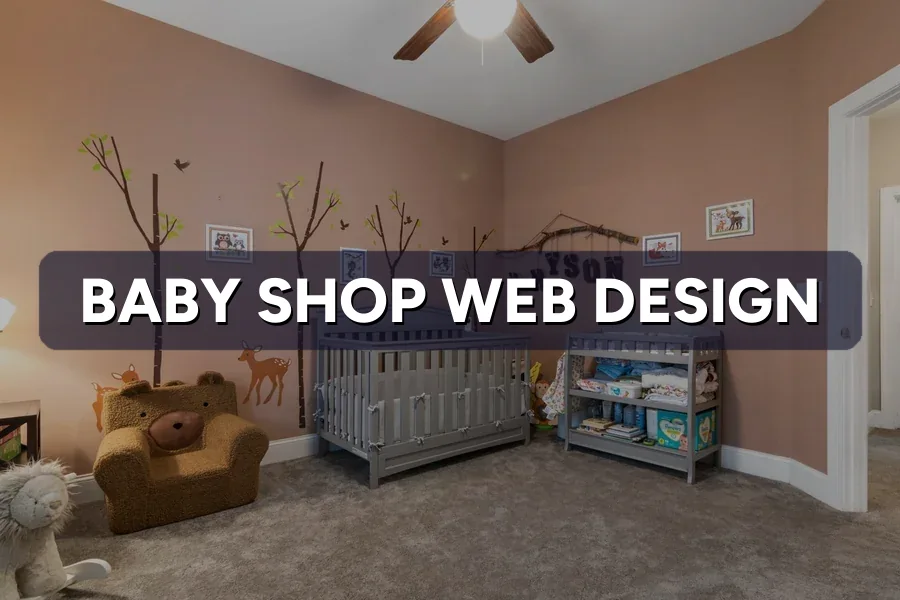
A Malaysian parent can buy a pram on Shopee at midnight without leaving bed. So the question every baby retailer has to answer is simple: what does my website do that a marketplace listing cannot?
The answer is usually fit, safety and advice. Which car seat fits a 2019 Myvi. Whether the stroller folds into a Saga boot. Whether the shop will install the seat for you. Marketplaces cannot answer any of that, and a well-built shop site can answer all three before the parent gets in the car.
This guide is for baby and maternity retailers in Klang Valley, Penang, Johor Bahru and Kuching. It covers homepage structure, age-based navigation, the car seat page, formula compliance, appointment booking, and four data sets.
ZenWeb builds and runs retail websites for Malaysian shops across 500+ accounts. Baby retail sits in an unusual spot: the products are regulated, the basket is bulky, and the same household comes back for two years. Structure earns more here than styling does.
Losing pram shoppers to marketplaces every month?
We rebuild the navigation and the fitting flow before touching the theme. Compare our web design packages →
Before the structure, here is a walkthrough of how a product page is built to convert rather than just to display.
Source video: How To Design High Converting Product Pages in 2025 (Shopify) on YouTube
Quick Answer: Marketplaces win on price and speed. A shop site wins on fit, safety and after-sales, because those need a real outlet behind them. Web design for baby shops should push every one of those advantages to the front, the same argument behind our baby shop marketing overview.
Copying a marketplace layout is the most common mistake. A grid of products with a price and a buy button is a fight you lose on stock, delivery speed and vouchers.
Malaysia recorded 414,918 live births in 2024, the lowest since 1980, per DOSM. Fewer babies means every household matters more, and price-only positioning is the fastest way to lose them.
Quick Answer: Four things above the fold: what stage of baby you serve, where your outlet is, that fitting is free, and a search box. Not a hero photo of a smiling family, which is what most Malaysian mobile visitors scroll straight past.
Most parents land on a baby shop homepage from a phone, mid-search, with a specific question. The hero banner answers none of it.
Push promotions below those four. Heavy banner sliders cost load time, answer nothing, and are a common reason a store loads too slowly on 4G.
Quick Answer: A parent does not think “feeding accessories”. They think “my baby is starting solids next month”. Age-stage navigation matches how they actually shop, and it is the single change that most improves conversion on a Malaysian store.
Category menus are built for the warehouse, not the shopper. Age-stage menus are built for the household, and they carry a second advantage: they tell you exactly when to speak to that customer again.
Keep the category menu as a secondary path for people who know what they want. Lead with age. It also gives your baby shop SEO a clean set of landing pages that match how parents search.
Quick Answer: Every car seat page needs the approval standard, the E-mark, the weight and height band, and the fitting method stated in plain words. Malaysian parents are buying a legal requirement, not an accessory, and the page should read that way.
Child restraint use has been mandatory in private vehicles since January 2020. JPJ requires every seat to carry UN Regulation R44 or R129 approval, and applies the rule to children under 12 years, under 36 kg or under 136 cm.
So put those facts on the page instead of in a brochure PDF:
A car compatibility checker is the highest-value custom feature on a baby retail site. It answers the one question that stops the purchase.
Quick Answer: Infant formula sits under Malaysia’s Code of Ethics for the Marketing of Infant Foods. Keep those pages plain: no promotional claims, no bundling, no imagery that positions formula against breastfeeding. Build the template so staff cannot break it by accident.
The Ministry of Health’s Code of Ethics for the Marketing of Infant Foods and Related Products restricts promotion of formula for infants, including samples and claims that undermine breastfeeding. Most retailers know this in the shop and forget it online.
The design fix is to make compliance the default rather than a habit:
Not sure your product templates are compliant?
We audit the formula, feeding and car seat templates before a single page goes live. See how our web design process works →
Quick Answer: Three taps: pick the outlet, pick a slot, name the model. Ask for a phone number and nothing else. The appointment is worth more than the online order because a fitted seat rarely gets returned and often comes with a pram.
Bulky items are where a shop site beats a marketplace outright. Parents want to push the pram, fold it, and lift it before they spend RM 1,500.
Keep the booking form to outlet, date, time and phone number. Every extra field costs a booking, and staff can collect the rest on the call. Send a WhatsApp confirmation with the model name filled in, so the parent arrives at a counter that already knows why they came.
Show the fitting bay and the person who does the fitting. A named staff member with a photo beats a stock image, which is the same logic behind adding proper trust signals.
Quick Answer: A shareable registry turns one expecting mother into fifteen gift buyers. Build it around a WhatsApp share link, mark items as claimed in real time, and let gifters check out as guests. It is the cheapest new-customer channel a baby shop has.
Gifting is enormous in Malaysian baby retail and almost nobody designs for it. Colleagues, cousins and aunties all want to buy something useful and all end up buying the same set of rompers.
Every gifter who checks out is a new customer record with a known due date. That is the cheapest list a baby retailer will ever build.
Quick Answer: Shoot the fold, the boot test and the scale. A pram photographed folded next to a Myvi boot sells better than five studio angles, and compressing those images properly is what keeps a mobile visitor from bouncing.
Baby gear is bought on questions of size and effort. Will it fold with one hand while holding a baby. Will it fit in the car. How heavy is it really.
Then compress. Uncompressed galleries are the most common cause of a slow baby retail store, and a slow store loses the shopper before the photos load.
Quick Answer: Stores with age-stage navigation and a registry convert 4.6% of visitors, against 2.9% for a standard category store. Add fitting bookings and it reaches 5.7%, with more than half those households buying again within twelve months, which is what makes an e-commerce build pay back.
| Website type | Visitor to order | Repeat within 12 months | Average first order |
|---|---|---|---|
| Link-in-bio page with WhatsApp only | 1.1% | 14% | RM 78 |
| Catalogue site, no online checkout | 1.8% | 19% | RM 96 |
| Full store, product category navigation | 2.9% | 27% | RM 132 |
| Store with age-stage navigation and registry | 4.6% | 41% | RM 168 |
| Age-stage store with fitting appointments | 5.7% | 53% | RM 214 |
Source: ZenWeb client tracking, Malaysian baby and maternity retail websites, 2024-2026.
The interesting column is the third one. Repeat purchase almost doubles between a category store and an age-stage store, because the site now knows when to speak to that household again.
Quick Answer: Showing the car seat approval mark and standard lifts orders 31%, more than any badge or review widget. Outlet photos and a stated warranty process follow. Parents reward checkable facts and ignore decoration, which shapes how Google Ads landing pages should be built too.
| Trust element added | Relative lift | Order lift |
|---|---|---|
| Approval standard and E-mark shown per car seat | +31% | |
| Outlet photos, address and fitting bay | +24% | |
| Warranty and local service process written out | +19% | |
| Live stock status per outlet | +14% | |
| Brand or association badge in the footer | +3% |
Source: ZenWeb client tracking, before-and-after measurement on Malaysian baby retail websites, 2024-2026.
The pattern repeats across every retail vertical we measure. Facts a parent can verify move orders. Symbols do not.
Quick Answer: Forced account creation. Only 43% of mobile shoppers get past it, against 58% on desktop. Card-only payment and delivery-slot pickers for bulky items come next, and fixing all three is usually cheaper than recovering abandoned carts afterwards.
| Checkout step | Mobile completion | Desktop completion | Action |
|---|---|---|---|
| Cart to contact details | 91% | 93% | Keep |
| Delivery address | 84% | 88% | Keep |
| Delivery slot for bulky items | 66% | 74% | Default it |
| Card entry with no e-wallet option | 52% | 71% | Add FPX |
| Required account creation | 43% | 58% | Remove |
Source: ZenWeb client tracking, Malaysian baby retail checkouts, 2024-2026.
Gifters feel the account wall hardest. They are buying once, for someone else, often from a shared link, and they will not create a password to do it.
Quick Answer: A custom store with age navigation, registry and fitting bookings produces around 312 orders a month by month six, against 38 for marketplace and social selling alone. Cost per order falls as the tier rises, the same pattern seen across Malaysian web design price tiers.
| Build tier | Relative output | Orders / month | Year-one cost per order |
|---|---|---|---|
| Custom store, age navigation, registry and bookings | 312 | RM 9 | |
| Custom store with age navigation only | 194 | RM 12 | |
| Template store, lightly customised | 96 | RM 19 | |
| Marketplace and social selling only | 38 | RM 27 |
Source: ZenWeb client tracking, Malaysia, 2024-2026. Equal traffic assumed across tiers. Marketplace tier excludes platform commission.
The bottom row looks cheap until you read the last column. Selling only through platforms costs three times as much per order, before commission, and the customer record belongs to the platform rather than to you.
Planning a rebuild before the next baby fair season?
Six to eight weeks is realistic for age navigation, a registry and a fitting booking flow. See our web design package pricing →
Quick Answer: Copying the marketplace layout, hiding the outlet address, forcing account creation, and running formula promotions online. All four are fixable in under a month, and all four show up on most off-the-shelf store builds.
Fix the address, the checkout and the car seat template first. All three are cheap and all three show up in the numbers within a fortnight.
Quick Answer: Navigate by baby age, prove car seat compliance on the page, keep formula pages inside the MOH code, build a shareable registry, book fittings in three taps, and strip the account wall out of checkout. That is web design for baby shops doing its job.
None of this needs a large budget. The age menu is a week of restructuring, the car seat template a few days, and removing the account wall an afternoon. What it needs is the decision to stop competing with marketplaces on their terms and start competing on yours: fit, safety, advice and a real fitting bay. Our web design team can scope it with you, and Google Ads for baby shops can fill the store once it converts.
Quick Answer: Baby retailers ask most about build cost, whether a website can beat a marketplace, and what is allowed on formula pages. Package detail sits on our web design pricing page.
A lightly customised template store runs a few thousand ringgit. A custom build with age-stage navigation, a gift registry and fitting appointments sits higher and produces roughly three times the monthly orders, so cost per order falls as the build tier rises.
Not on price or delivery speed. It competes on fit, safety proof, fitting appointments and after-sales, which a marketplace listing cannot offer. Build around those and the site wins the bigger baskets.
Infant formula falls under Malaysia’s Code of Ethics for the Marketing of Infant Foods and Related Products. Keep those product pages plain, with no promotional claims, no samples and no bundling. The safest approach is a separate product template with promotional features switched off.
The UN Regulation R44 or R129 approval, the E-mark label photo, the height and weight band, the install method, and whether fitting is available at your outlet. Parents are checking legal compliance before style, so put those facts above the buy button.
Want a baby shop website that books fittings while you serve the counter?
Book a free 30-minute review. We go through your navigation, your car seat pages and your checkout on a real phone, then map the fastest route to more orders and more booked fittings.
Complete the form and our team will contact you to discuss your goals. Let’s grow your business.



Meowketing Specialist
Online


























