

Share this post:
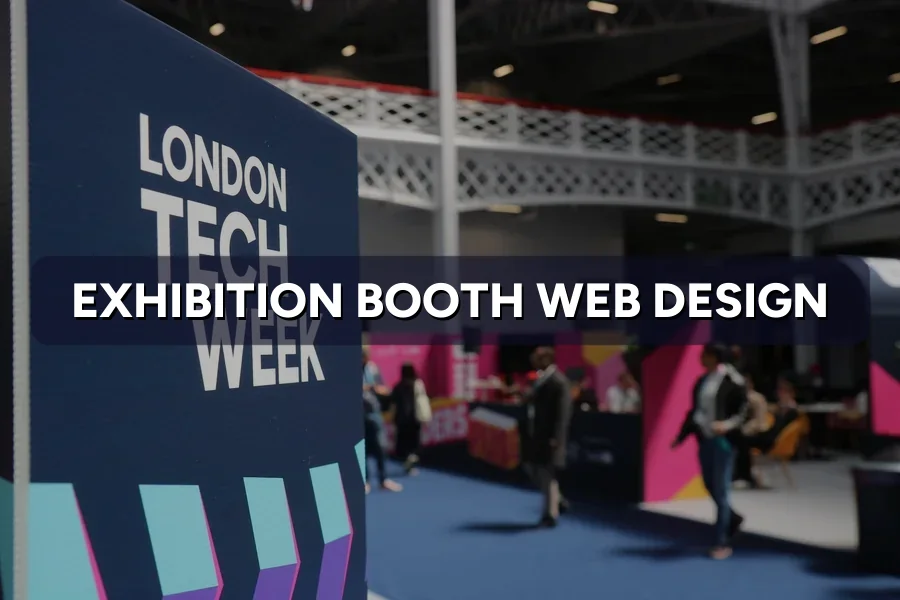
Most booth contractors in Malaysia own a website that reads like a company profile. A hero photo of a double-decker stand, a paragraph about passion and craftsmanship, then a form asking for name, email and message.
The person looking at it is not browsing. They signed a space contract last week and have 18 square metres at MITEC in eleven weeks. Right now they have four contractor sites open in four tabs, deciding who gets the drawings.
ZenWeb builds websites for booth contractors and other project-based trades across 500+ Malaysian accounts. In this trade the pattern is consistent: the photography is good, the sorting is missing. Good web design for booth contractors starts there, not with the visuals.
Getting enquiries but never the drawings?
We rebuild the brief path before touching the visuals. Compare our web design packages →
Before the page-by-page detail, a short look at where design standards sit now.
Source video: Elementor on YouTube
Quick Answer: The visitor is not deciding whether to exhibit. They already are. Your site decides whether you make a three-name shortlist, so it is judged on comparable proof, not on atmosphere, whatever the wider marketing stack sends you.
A retail website persuades someone to want a thing. A booth contractor website does something narrower, because the want already exists, funded and dated. The page is a filter, and the visitor is asking the same four questions of every tab:
Answer those four and the drawings arrive with the enquiry. Miss them and you get “can I have your price list”, which is what a contractor gets when the site made comparing impossible.
Quick Answer: Four things. What you build and where, the stand sizes you take, one credential line, and a single action that accepts a floor plan. Everything else waits for the second scroll on a properly structured site.
The first phone screen is roughly 600 pixels, and most contractors spend all of it on a rotating showreel. A stronger version reads like one plain sentence: Custom and shell-scheme stands from 9 to 100 sqm at MITEC, KLCC and PWTC. CIDB-registered. Send us your floor plan.
Two habits waste that space. Sliders bury the second message before anyone sees it, and twin equal buttons split the decision. Pick one primary action, and keep the WhatsApp button as a quiet secondary.
Quick Answer: By stand size, by show and by build type, not by year or by client logo. The visitor is matching your work to a specific 18 sqm space, so a gallery they cannot filter forces them to scroll past everything irrelevant.
Almost every booth contractor gallery in Malaysia is one long grid sorted by date, which hides the only thing the buyer came for: your work at their size. Three filters cover nearly every visit.
Each filter combination deserves its own URL. A page for stands at MITEC and a page for double-decker builds are proof for a buyer and a landing page for your paid search at the same time. That shared infrastructure is also what booth contractor SEO has to rank.
Quick Answer: Show name, year, venue, stand size in square metres, build type and build window. Twenty documented stands beat two hundred untitled photos, and each record answers a question a buyer would otherwise have to ask on a call.
Treat each finished stand as a short case record rather than an image. The written line under the photo is what makes it comparable.
Where a client agreed to be named, name them. Where they did not, “a regional packaging brand” still works, because the size and the show carry the proof. A buyer checking a portfolio properly is looking for those specifics, not for logos.
Quick Answer: Six fields and a file upload. Name, company, phone, show and date, stand size, budget band, plus the floor plan or brief. Drop the message box entirely, because it is why traffic arrives without leads.
The usual advice is to shorten the form, and for booth work that is only half right. Fewer fields lift submissions but strip out everything that makes a quotation possible, and a wasted quotation costs a draughtsman half a day. So swap fields instead of deleting them.
Two build details matter more than the field list: tap targets instead of dropdowns, and a numeric keypad on the phone field. Give the form its own page too, which is why a dedicated landing page beats the homepage for paid traffic.
Enquiries arriving without a brief attached?
We rebuild the quotation path first, then the pages around it. See how we build contractor websites →
Quick Answer: Publish a rate band per square metre by build type, never a fixed quotation. A page showing what shell upgrades, custom builds and double-deckers typically run, with inclusions and exclusions, filters out unfunded enquiries before they reach your team.
Contractors resist this for a fair reason. Every stand differs, and a published figure invites an argument in the first phone call. But the buyer searches for booth pricing regardless, and silence means a competitor sets the expectation instead.
A rate-band page works when it carries four things.
Quick Answer: Print the actual registration numbers and link the public registers. Anyone can save a badge image. A checkable CIDB grade, a named insurer and a stated public liability sum turn a claim into evidence on a site built to be verified.
Corporate exhibitors carry real procurement risk. If a stand fails inspection or a build overruns, the marketing executive who chose you answers for it. Your site can remove that fear cheaply.
Skip the wall of client logos and safety seals. One verifiable number beats twelve images a buyer cannot check.
Quick Answer: Two audiences most contractor sites ignore. Overseas exhibitors need a turnkey page written in plain English with a timezone and a WhatsApp number. Organisers need a downloadable capability pack for appointed-contractor tenders.
A large share of the stands at Malaysian trade shows belong to companies with no office here. They cannot visit your workshop and they will not read a site that assumes local knowledge.
Give them a page that answers the questions a foreign marketing team actually has. Who receives their exhibits, who handles customs and delivery to hall, whether you can install without their staff present, and how approvals get signed off across timezones. State your business hours in MYT and put a WhatsApp number beside the form.
The second audience is the organiser. A short capability pack as a PDF, with your grade, insurance, past shows and crew size, is what gets you considered as an official stand-fitting contractor. Where the audience is mixed, a bilingual site structure is worth planning before the build, not after.
Quick Answer: A filterable portfolio moves qualified enquiries furthest, then written project records and a published rate band. Showreel video and testimonial sliders barely register against the proof your ads already carry.
| Element added | Relative lift | Index | Build effort |
|---|---|---|---|
| Portfolio filtered by size, show and build type | 100 | Medium | |
| Written project records with sqm and venue | 84 | Medium | |
| Published RM per sqm rate bands | 71 | Low | |
| Floor-plan upload on the enquiry form | 58 | Low | |
| Stated build window per build type | 44 | Low | |
| CIDB grade and insurance credential line | 31 | Low | |
| Hero showreel and testimonial slider | 7 | Medium |
Source: ZenWeb client tracking, Malaysia, 2024-2026.
Read the effort column beside the index. Four of the top six are low-effort work: rate bands, an upload field, a build-window line and a credential strip all ship inside a fortnight. That is the useful thing about web design for booth contractors: most of the lift sits in cheap work.
Quick Answer: A working booth contractor site sits between RM 6,500 and RM 20,000, depending on whether the portfolio filters and floor-plan upload are custom-built. Below RM 3,500 you are buying a template with a contact form.
| Tier | Build cost | Build time | What it includes | Qualified enquiries a month |
|---|---|---|---|---|
| Template starter | RM 1,800 to RM 3,500 | 1 to 2 weeks | Five pages, untitled gallery, generic contact form | 1 to 3 |
| Portfolio site | RM 6,500 to RM 12,000 | 4 to 6 weeks | 20 project records, size and show filters, six-field brief form, credential strip | 7 to 14 |
| Quotation-path site | RM 13,000 to RM 20,000 | 6 to 9 weeks | Everything above plus rate-band pages, floor-plan upload, show and venue pages | 16 to 30 |
| Tender and export build | RM 20,000 to RM 32,000 | 9 to 14 weeks | Adds an overseas exhibitor path, organiser capability pack, client drawing portal | 26 to 48 |
Source: ZenWeb client tracking, Malaysia, 2024-2026. Enquiry figures assume the site is supported by active search and paid traffic.
That last column only holds if traffic exists, so the build belongs in the same conversation as the media plan. Broader build costs sit in our website pricing guide.
Quick Answer: Booth galleries are the heaviest pages in the trade, and every second past three costs enquiries. Above 6 MB, form completion falls by more than half, which is why fixing load speed beats raising ad budget.
| Gallery page weight | Median mobile load | Enquiry completion | Bounce on 4G |
|---|---|---|---|
| Under 1.5 MB | 1.9 s | 6.8% | 34% |
| 1.5 to 3 MB | 2.8 s | 5.4% | 41% |
| 3 to 6 MB | 4.3 s | 3.6% | 52% |
| 6 to 12 MB | 6.6 s | 2.1% | 64% |
| Over 12 MB | 9.4 s | 1.2% | 73% |
Source: ZenWeb client tracking, Malaysia, 2024-2026. Mobile load measured on a mid-range Android device over 4G.
Most contractor galleries land in the 6 to 12 MB band because the photographer’s files went up untouched. Compression, correct sizing and lazy loading usually cut that by 80% without a visible quality drop, and the research happens on a phone, as our mobile-first guide sets out.
Quick Answer: Enquiries peak in July and January, two to three months ahead of the biggest show clusters, and bottom out in December. Rebuild in the trough so the site is ready before the January briefs land.
| Month | Session index | Enquiry index | Brief attached | Note |
|---|---|---|---|---|
| January | 118 | 128 | 34% | New-year space contracts signed |
| February | 112 | 121 | 31% | Q1 and Q2 show briefs land |
| March to April | 94 | 90 | 22% | Build season, teams on the floor |
| May to June | 101 | 97 | 26% | Mid-year planning restarts |
| July | 126 | 131 | 36% | Annual peak, second-half cluster |
| August to September | 108 | 104 | 29% | Consumer show cycle |
| October to November | 88 | 79 | 21% | Budgets closing for the year |
| December | 71 | 62 | 18% | Floor of the year, best rebuild window |
Source: ZenWeb client tracking, Malaysia, 2024-2026. Index set against each account’s own annual average.
The brief-attached column is the useful one. In the peak months a third of enquiries arrive with a floor plan, because buyers working to a deadline behave properly. Public show calendars such as the MITEC event calendar tell you which clusters drive your own curve.
Planning a rebuild before the January briefs?
The quiet months are the only time a contractor site can be rebuilt properly. See web design pricing →
Quick Answer: Untitled galleries, uncompressed photography, no price signal, no upload field, and renders shown as finished work. Most Malaysian sites carry at least three of the five, and each one is a solved problem in web design for booth contractors.
None of these are expensive to fix. Together they explain the gap between a site that photographs well and one that fills the fabrication calendar. Design decisions like these are what separate a website that works from one that simply exists.
Quick Answer: Web design for booth contractors works when the site sorts, proves and quotes. Filter the portfolio by size and show, caption every stand, publish a rate band, and accept a floor plan on a site built for enquiries.
Almost none of this requires a full redesign. Rate bands take a day. The upload field takes an afternoon. Twenty captioned project records take a fortnight of photos your site crew already has on their phones.
The harder part is resisting the company-profile instinct. Spend the budget on sorting and proof, and you end up with a site your sales team is happy to send a procurement manager to.
Quick Answer: Contractors ask most about build cost, build time, publishing rate bands, and how many projects a portfolio needs. Package detail sits on our web design pricing page.
Between RM 6,500 and RM 12,000 for a portfolio site with size and show filters, and RM 13,000 to RM 20,000 once rate-band pages and a floor-plan upload are included. Template builds under RM 3,500 rarely produce quotable enquiries.
Four to six weeks for a portfolio site, and six to nine weeks for a quotation-path build. Start in the October to December trough so the site is indexed and tested before January briefs arrive.
Publish a rate band per square metre by build type, with clear inclusions and exclusions, rather than fixed quotations. It filters out unfunded enquiries and anchors serious buyers to your pricing before the first call.
Around twenty properly captioned stands, spread across your size bands and the shows you work most. Depth of detail beats volume, because the buyer is looking for their own size and venue, not for a long scroll.
Ready to turn your booth website into a quotation pipeline?
Book a free 30-minute strategy session. We review your portfolio structure, page speed and competitors, then give you a 90-day plan with realistic enquiry and quotation targets.
Complete the form and our team will contact you to discuss your goals. Let’s grow your business.



Meowketing Specialist
Online


























