

Share this post:
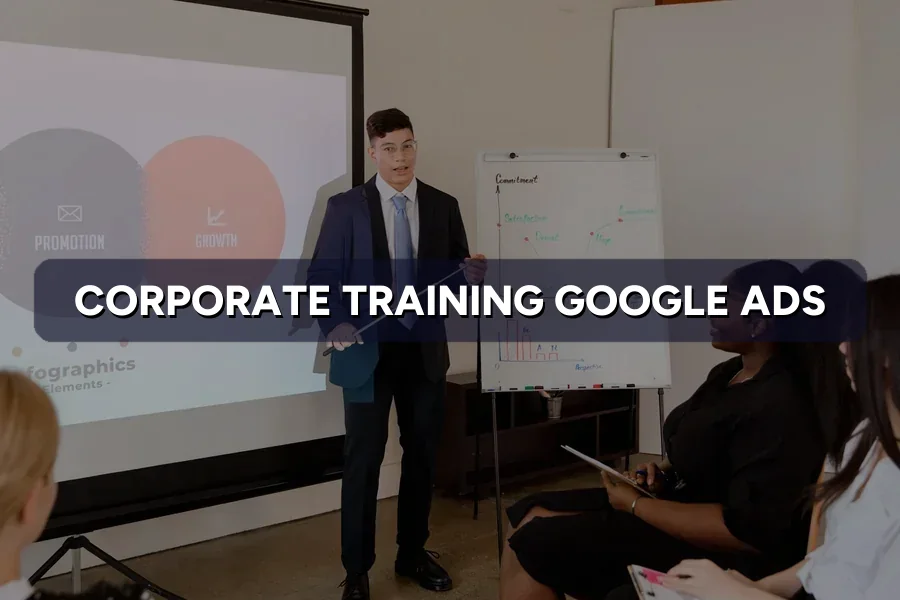
An HR executive opens e-TRiS on a Tuesday with a levy balance and a supervisory skills gap. She does not search for a training company. She searches for the course, adds “HRD Corp claimable”, and starts collecting quotations from whoever publishes one.
That is a narrow window and a very specific buyer. This guide covers what to bid on, what to block, what the ad should say, and what the click needs to find when it lands. Four data sets follow, on click costs, campaign economics, the levy calendar, and what each budget tier returns.
ZenWeb runs Google Ads across 500+ Malaysian accounts, and B2B training sells on a rhythm that most service accounts never see.
Not sure what a course enquiry should be costing you?
We benchmark your account against other HRD Corp registered providers, then rebuild the half that leaks. See our Google Ads plans →
Start with the approval calendar, because it decides everything else.
Source video: Surfside PPC on YouTube
Quick Answer: Because the buyer must find you, get a quotation, and have a grant approved before the training date. Paid search reaches her during that gap, which is why Google Ads for training providers sits ahead of the slower course-page SEO work rather than replacing it.
HRD Corp states that from 15 June 2026, in-house programmes may be conducted 14 days after grant approval and must commence within 90 calendar days. Public programmes run on a three-day window until 31 December 2026, returning to the 14-day rule on 1 January 2027.
Read those as lead times, not compliance notes. The employer must apply before the training date, so the search that starts everything happens two to eight weeks earlier. An ad running that week gets shortlisted. An ad switched on the week of the course is too late.
Quick Answer: An HR executive or an operations manager, typing a skill plus a qualifier. Almost never a company name. This is classic B2B paid search where the clicker researches and someone else signs.
Three people touch the decision, and only one of them clicks:
Write ads and landing pages for the first person, but give her what she needs to convince the other two. A downloadable course outline does more work than any adjective in the ad copy.
Quick Answer: Split by delivery mode first, then by course cluster. Google Ads for training providers breaks when in-house and public programmes share one budget, because they carry different ticket sizes, different approval windows and different buyers. The slow one quietly starves the fast one.
| Campaign | Search terms it buys | Landing page must show |
|---|---|---|
| Public programmes | Course title plus claimable | Fee per pax, next dates, venue |
| In-house programmes | In-house training, corporate training | Group pricing band, customisation, lead time |
| Certification | Named standards and safety passports | Awarding body, pass criteria, validity |
| Brand | Your name, your trainers’ names | Full catalogue and trainer profiles |
| Remarketing | Course viewers who did not enquire | Upcoming intake dates and quotation form |
Keep the trainer names in a separate brand campaign. HR often searches the person after a colleague recommends them, and those clicks are cheap and close fast.
Quick Answer: Named certifications first, claimable course terms second, both on phrase and exact. Leave “training provider Malaysia” alone until the rest pays, and keep broad match out of the account entirely in month one.
The starting list is short:
Mandatory beats desirable every time. A leadership course competes with forty providers and a maybe; a safety certification competes with four providers and a deadline.
Quick Answer: The word “training” collects jobseekers, students, free-course hunters and internship applicants. A tight negative keyword list typically returns a third of a training provider’s first-month spend.
Block these before the first click:
The trainer-side traffic is the expensive one. People wanting to become trainers search almost the same phrases as employers wanting to buy training, and they never convert.
Quick Answer: The course name, the claimable status and the next date. “Supervisory Skills, HRD Corp Claimable, Next Intake 12 Mac” beats “Transform Your Team”, because it answers the three questions the HR executive has open in another tab.
Every provider says they are experienced, certified and results-driven. None of that survives four tabs. A date and a fee do.
Use headline slots for facts, not adjectives: the exact course title as she typed it, the claimable status, the duration in hours, the next intake. Push “customised to your industry” into a sitelink and keep the copy specific.
Matching the course title word for word also lifts ad relevance, which is one of the three inputs behind Quality Score and the cheapest way to lower click costs on a small budget.
Quick Answer: On a single course page carrying the fee, the outline and the trainer profile, never the catalogue. Those are the exact three documents HRD Corp lists for the grant application, and the landing page fixes that matter most here simply put them on the page.
HRD Corp’s application process asks the employer to submit a quotation or invoice, the training schedule or course content, and the trainer profile. A page that hands over all three lets her file the same afternoon. A page that says “contact us for details” adds two days and a competitor.
What belongs above the fold:
Quick Answer: Not early. Performance Max needs conversion volume to learn, and a provider generating fifteen enquiries a month cannot feed it — the same constraint that makes PMax awkward for most Malaysian SMEs.
Left unrestricted, it finds the cheapest clicks available, which in this industry means students and jobseekers. Add it only once Search produces thirty or more enquiries a month, with brand exclusions, account-level negatives and audience signals built from past corporate clients.
Quick Answer: Track the confirmed programme, not the quotation request. Weeks separate the two, so offline conversion import is the only way the account learns which clicks became delivered courses.
An account optimising on quotation requests will happily buy hundreds of them from HR executives who are only benchmarking prices. Three fixes:
Once value flows back, the account starts favouring the RM 18,000 in-house programme over the RM 900 single seat by itself. Until then, every enquiry looks identical to the bidding algorithm.
Quick Answer: Certification terms cost about RM 6.10 a click and convert at 7.1 percent. Free-course terms cost RM 1.40 and convert at 0.9 percent, so the cheap keyword is roughly six times more expensive per booked programme — the pattern seen across Malaysian industries.
| Keyword type | Avg CPC | Click to enquiry | Enquiry to programme |
|---|---|---|---|
| Named certification | RM 6.10 | 7.1% | 41% |
| Course plus claimable | RM 7.80 | 8.4% | 34% |
| In-house and corporate | RM 9.40 | 5.6% | 38% |
| Provider and agency terms | RM 5.70 | 2.6% | 15% |
| Course topic, no qualifier | RM 4.50 | 3.4% | 19% |
| Grant and process queries | RM 3.20 | 2.2% | 11% |
| Free course and kursus percuma | RM 1.40 | 0.9% | 4% |
Source: ZenWeb client tracking, Malaysia, 2024-2026. HRD Corp registered training provider search campaigns.
Certification terms are the quiet winner. Cheaper than claimable terms, closing at 41 percent, and usually repeating annually because the certificate expires.
Quick Answer: Remarketing produces the cheapest enquiries at RM 41, but certification Search produces the cheapest booked programmes at RM 215. Unrestricted Performance Max costs nearly seven times more per programme, which is why campaign mix beats bid tinkering.
| Campaign type | Cost per programme | Cost per enquiry | Enquiry to booking |
|---|---|---|---|
| Search, certification exact | RM 215 | RM 88 | 41% |
| Search, claimable intent | RM 282 | RM 96 | 34% |
| Remarketing | RM 342 | RM 41 | 12% |
| Search, in-house corporate | RM 442 | RM 168 | 38% |
| Performance Max, unrestricted | RM 1,467 | RM 132 | 9% |
| Display, cold audiences | RM 1,933 | RM 58 | 3% |
Source: ZenWeb client tracking, Malaysia, 2024-2026. Corporate training accounts with offline conversion import in place.
In-house Search looks expensive at RM 442 until you weigh the ticket. One in-house programme often bills more than twenty public seats, which is why it deserves its own budget rather than the leftovers.
Paying more than RM 400 per booked programme?
We rebuild training accounts around certification intent and offline conversion import. Get a free Google Ads account review →
Quick Answer: October peaks at 47 percent above average as employers clear unspent levy before year end. February and June sit lowest. Enquiries are actually cheapest in October at RM 86 because intent, not competition, drives the curve here.
| Month | Demand index | Avg CPC | Cost per enquiry |
|---|---|---|---|
| January | 88 | RM 5.60 | RM 104 |
| February | 74 | RM 5.10 | RM 112 |
| March | 98 | RM 6.20 | RM 98 |
| April | 92 | RM 6.00 | RM 101 |
| May | 84 | RM 5.70 | RM 107 |
| June | 74 | RM 5.00 | RM 118 |
| July | 98 | RM 6.30 | RM 97 |
| August | 106 | RM 6.70 | RM 94 |
| September | 124 | RM 7.40 | RM 89 |
| October | 147 | RM 8.20 | RM 86 |
| November | 134 | RM 7.90 | RM 88 |
| December | 86 | RM 5.80 | RM 106 |
Source: ZenWeb client tracking, Malaysia, 2024-2026. Demand index where 100 is the annual average.
December drops even though the levy year is still open, because the 14-day approval rule plus a 90-day commencement window means the paperwork has to be filed well before the calendar closes. The buying happens in the fourth quarter; the teaching happens later.
Quick Answer: RM 2,000 a month buys about 19 enquiries and 6 booked programmes. RM 6,000 buys 63 enquiries and 22 programmes, and cost per programme falls from RM 333 to RM 273 as tighter targeting becomes affordable.
| Monthly budget | Enquiries | Booked programmes | Cost per programme | Spend on high-intent terms |
|---|---|---|---|---|
| RM 2,000 | 19 | 6 | RM 333 | 62% |
| RM 4,000 | 40 | 13 | RM 308 | 69% |
| RM 6,000 | 63 | 22 | RM 273 | 75% |
| RM 10,000 | 108 | 39 | RM 256 | 80% |
| RM 15,000 | 164 | 60 | RM 250 | 84% |
Source: ZenWeb client tracking, Malaysia, 2024-2026. HRD Corp registered providers with conversion tracking in place.
The curve flattens after RM 10,000 because a provider with twelve courses runs out of terms worth buying. At that point the next trainer, not the next thousand ringgit, is the constraint.
Quick Answer: Say it in a headline, not a footer. Registration decides whether the employer can claim at all, so it is the single strongest qualifier available in a training ad and it filters out enquiries you cannot serve.
Providers must be registered with HRD Corp for their programmes to be claimable, and employers check before they shortlist. Three places it belongs: one headline, the landing page hero beside the fee, and a sitelink to your registration and trainer credentials.
Add the minimum four-hour duration and whether SST applies to the quoted fee. HR executives who have had a claim rejected once check every line of this before they file again.
Quick Answer: Target the industrial and commercial corridors where levy-paying employers cluster, and set location targeting to presence rather than interest. Otherwise you buy clicks from people abroad researching Malaysian certifications.
Levy contributions come from registered employers under the PSMB Act, and those employers are concentrated: Klang Valley, Penang’s manufacturing belt, Iskandar Malaysia, Kuching and Kota Kinabalu for the eastern states. HRD Corp collected a record RM 2.3 billion in levy during 2024, and the money follows the factories and head offices.
Two settings providers get wrong: leaving location on “presence or interest”, and ignoring ad scheduling. Enquiries cluster on weekday mornings between 9am and noon, because this is somebody’s job. Bid up there, down at weekends.
Quick Answer: Hiding the fee, landing on the catalogue, counting quotation requests as sales, replying the next day, and switching off after October. Each is fixable in weeks, and reply speed is usually the cheapest of the five.
These are the same failures behind most of the budget-wasting mistakes we see in service accounts. What makes them costlier in Google Ads for training providers is the approval deadline sitting behind every enquiry, which turns a slow reply into a lost quarter.
Quick Answer: Bid on certification and claimable course terms, block the jobseeker and free-course traffic, publish the fee and trainer profile on the course page, and feed confirmed programmes back into the account. Those four moves carry most of the result.
Google Ads for training providers rewards paperwork more than persuasion. The employer already knows she wants the training and already has the levy. She is only deciding who makes the application easiest, and that decision is made on a page, not in a meeting.
Fix the negative list first, then the course page, then the tracking. Once confirmed programmes flow back with their real values, bidding does the rest. Pair it with the wider marketing plan and the calendar stops depending on the fourth quarter.
Quick Answer: Providers ask most about starting budgets, click costs, timing against the levy year, and whether ads beat SEO. Plan detail sits on our Google Ads pricing page.
RM 2,000 a month is a fair starting test, producing roughly 19 enquiries and 6 booked programmes once the negative list is tight. RM 6,000 lifts that to about 63 enquiries and 22 programmes while dropping cost per programme from RM 333 to RM 273. Below RM 2,000 the account rarely gathers enough conversion data to improve.
Named certification terms average about RM 6.10, course-plus-claimable terms RM 7.80, and in-house corporate terms RM 9.40. Free-course and grant-process terms are cheaper at RM 1.40 to RM 3.20 but convert so poorly that they cost far more per booked programme. Compare on cost per programme, not cost per click.
September through November. Demand runs 24 to 47 percent above the annual average as employers clear unspent levy, and enquiries are cheapest then at RM 86 to RM 89 because intent is high. February and June are the quiet months, so keep a smaller budget running rather than switching off.
Ads first, SEO alongside. Paid search reaches HR during the grant application window within days, while course pages usually take about five months to rank. Most providers keep both running and let organic enquiries take over the volume from month nine onwards.
Ready to fill next quarter’s training calendar?
Book a free 30-minute session. We review your account, your course pages and what other providers are bidding, then give you a 90-day plan.
Complete the form and our team will contact you to discuss your goals. Let’s grow your business.



Meowketing Specialist
Online


























