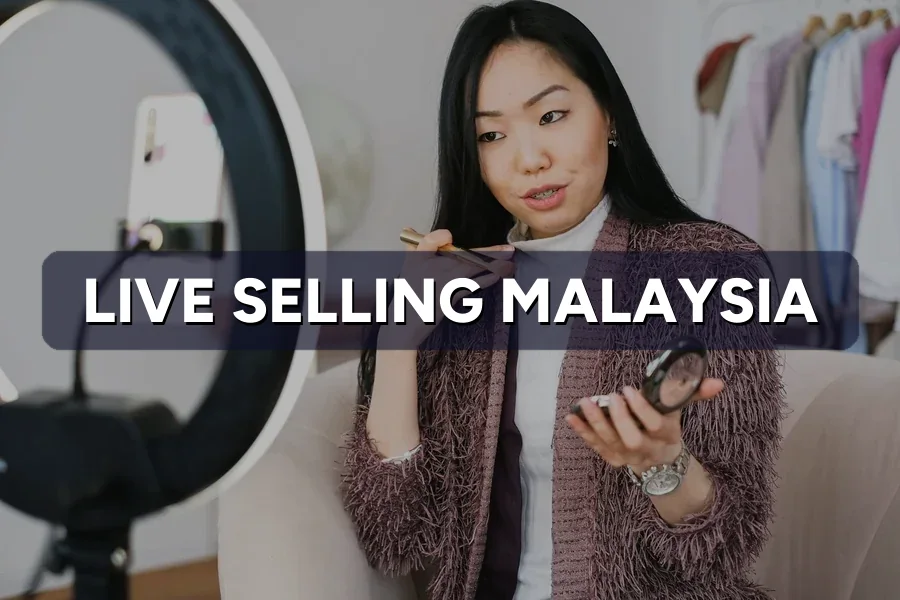
Somewhere in Malaysia right now, a seller is holding a tudung up to a phone camera while 300 people type “mine” in the comments. No landing page, no cart — just a host, a phone, and a clerk copying comments into a WhatsApp order list.
That is live selling, and it works here for a reason. Malaysia has 30.7 million social media user identities — 85.0% of the population, per DataReportal’s Digital 2026 report, with Facebook reaching about 65% of Malaysian internet users. The audience is already in the app, and a livestream is the one format that lets a small seller answer “ada size M tak?” in two seconds.
What confuses owners is the gap between the hype and the workflow. Live selling is not a feature you switch on. It is a weekly operation with a host, a rundown, a comment-capture process and a payment link. This guide covers what it earns in ringgit, which platform suits which product, what a setup costs, and how to tell whether to keep going. The benchmarks come from live accounts ZenWeb runs for Malaysian sellers. First, the mechanics.
Source video: Live Selling for Beginners: The 5 Rules You Must Follow to Succeed on YouTube
Quick Answer: Live selling is real-time selling on a livestream. The host shows a product, states the price, and viewers claim it in the comments. On Facebook the order is captured manually or by a comment-to-order tool and paid by WhatsApp or bank transfer; on TikTok and Shopee the buyer checks out inside the app.
Here is the part most guides skip. Facebook has no native live shopping product — Meta retired product tagging inside live streams in 2022 and pushed sellers toward Reels. Instagram’s live shopping tools followed. Yet live selling on Facebook in Malaysia did not die. It grew.
It grew because the transaction never depended on the feature. It depended on the comment box. Malaysian sellers built a workflow the platform never gave them:
So live selling in Malaysia is not a Facebook feature. It is a manual sales process borrowing a free broadcast tool, which means results ride on your host and your order-capture discipline. It sits beside your paid channels rather than replacing them — the stream creates demand, and Meta Ads put that demand in front of people who have never heard of you.
Not sure live selling fits what you sell?
We map the channel to your product, margin and stock before you buy a single ring light. See how ZenWeb runs Meta Ads for Malaysian sellers →
Quick Answer: A working Facebook Live sale runs on six steps: fix a weekly slot, prepare a numbered product rundown, warm the audience an hour before, go live for 45–90 minutes, capture every claim in a shared sheet, then collect payment on WhatsApp within two hours while intent is still hot.
Sellers who make money live are boring about process. Same show, same night, same order sheet, until the audience knows when to turn up.
Two-person crews beat solo sellers in almost every account we manage, for a simple reason: a host who stops to type has stopped selling.
Quick Answer: Across ZenWeb-managed Malaysian sellers, a mature weekly Facebook Live session pulls 400–1,500 unique viewers and converts 3%–8% of them into claimed orders, at an average basket of RM 55–RM 180 depending on category. Fashion converts on volume; beauty and gadgets convert on basket size.
The number that matters is not viewers. It is claims that turn into paid orders. A stream with 2,000 viewers and a 40% payment-drop rate earns less than one with 500 loyal buyers who pay the same night. The table below shows what a settled weekly show looks like by category.
| Category | Viewers / session | Claim rate | Avg basket (RM) | Paid orders |
|---|---|---|---|---|
| Fashion & tudung | 800–1,500 | 6%–8% | 55–90 | 40–90 |
| Beauty & skincare | 500–1,000 | 4%–6% | 90–150 | 25–55 |
| Snacks & F&B | 400–800 | 5%–7% | 45–75 | 20–50 |
| Gadgets & accessories | 400–700 | 3%–5% | 120–180 | 15–35 |
| Home & kitchen | 300–600 | 4%–6% | 70–130 | 15–35 |
Source: ZenWeb client tracking, Malaysian sellers, 2024–2026. Licence.
A settled weekly fashion live in Malaysia clears 40–90 paid orders a night — roughly what a small shoplot does in a week.
Two patterns repeat. Claim rate barely moves once a show is mature, so growth comes from more viewers — which is where paid distribution enters. And payment-drop is the silent killer: invoice within two hours and you lose under 10%; invoice next morning and you lose a quarter of the room. If your numbers look nothing like this, the diagnosis mirrors our guide to Facebook ads that bring no sales: the traffic is fine, the offer and the follow-up are not.
Quick Answer: Facebook Live gives you the loyal repeat buyer and no platform commission, but no in-app checkout. TikTok LIVE gives you cold discovery and native checkout, with commission and a younger crowd. Shopee Live gives you buyers already holding a wallet, but you compete on price inside someone else’s marketplace.
Most Malaysian sellers end up running two of the three. The grid below compares the four things that decide which earns for you.
| Platform | In-app checkout | Cold discovery | Platform cut | Best for |
|---|---|---|---|---|
| Facebook Live | No — comment claim + WhatsApp | Moderate (shares, groups, ads) | None on the order | Repeat buyers, 30–55, higher margin |
| TikTok LIVE | Yes — TikTok Shop | Highest — algorithmic | Commission per order | New buyers, 18–34, impulse price points |
| Shopee Live | Yes — Shopee cart | Moderate — in-app browsers | Commission + voucher cost | Price-led sellers with stock depth |
| Instagram Live | No — DM to close | Low — follower-led | None on the order | Warm followers, premium products |
Source: Platform documentation and ZenWeb-managed Malaysian seller accounts, 2024–2026. Licence.
The practical read: Facebook keeps the money you make, TikTok finds you people you could never reach. Facebook-only sellers plateau at the size of their following; TikTok-only sellers build volume on thin margin with no customer list. Running both — and pushing TikTok’s new buyers into your Facebook group and WhatsApp list — is how the strongest Malaysian sellers compound. Our guide to selling on TikTok Shop, Shopee and Instagram covers the account setup, and TikTok Ads in Malaysia covers filling the room.
Two audience notes. If your buyers are Chinese-speaking, Xiaohongshu marketing in Malaysia reaches a crowd that never opens Facebook. And if you sell B2B, live selling is the wrong tool — LinkedIn Ads in Malaysia reaches those buyers far more cheaply.
Quick Answer: A phone-on-tripod solo live costs nothing but earns little. The step that pays for itself is the second person on comment capture, then paid distribution to fill the room. Most Malaysian sellers see revenue per session roughly triple between the solo tier and the two-person plus paid-reach tier.
Live selling looks free, so owners resent spending on it. The chart shows what each upgrade returns per session in a settled account.
| Setup tier | Revenue per session | Avg (RM) | Monthly cost (RM) |
|---|---|---|---|
| Solo, phone on tripod | 1,400 | 0–200 | |
| + Lighting & mic | 2,100 | 300–600 | |
| + Second person on comments | 3,600 | 1,800–2,800 | |
| + Paid reach to fill the room | 5,400 | 3,800–6,000 | |
| + Retargeting & creator host | 7,900 | 6,500–11,000 |
Source: ZenWeb client tracking, Malaysian sellers, 2024–2026. Licence.
Read the middle row twice. One admin logging claims is the highest-return upgrade in live selling. Paid reach is the next lever — not the same as hitting “boost”, which wastes money for the reasons in boost post vs Ads Manager. Run reminder and replay campaigns through Facebook Ads in Malaysia, aimed at people who watched a previous live, and the cost per viewer drops sharply.
Room too empty when you go live?
We build the campaigns that fill a live session with buyers, not passers-by. See how Meta Ads work in Malaysia →
Quick Answer: Across ZenWeb-managed Malaysian social-commerce sellers, the share of revenue coming from live sessions has climbed steadily since 2022, with TikTok LIVE taking most of the growth while Facebook Live holds its base. Both are rising; the mix is shifting, not flipping.
Sellers keep asking whether Facebook Live is finished. Our accounts say otherwise: Facebook is flat-to-growing while TikTok grows faster off a smaller base. The 2027 column is a projection.
| Platform | 2022 | 2023 | 2024 | 2025 | 2026 | 2027* |
|---|---|---|---|---|---|---|
| Facebook Live (%) | 11 | 14 | 17 | 19 | 21 | 22 |
| TikTok LIVE (%) | 3 | 8 | 15 | 22 | 28 | 33 |
* 2027 projected from 2024–2026 trend. Source: ZenWeb client tracking, Malaysia, 2022–2026. Licence.
The strategic read: do not abandon a Facebook show that is paying your rent because a TikTok trend piece told you to. Add TikTok, keep Facebook, let each do the job it is good at. The same logic drives the channel mix in social media advertising in Malaysia — the winning answer is rarely one platform.
Quick Answer: Most failed live selling attempts in Malaysia die from the same five causes: an empty room at minute one, no numbered rundown, the host doing admin, slow invoicing, and a schedule nobody can predict. Fix the process before blaming the platform.
Two more. Sellers rarely check what rivals run — a free scan in the Meta Ad Library takes ten minutes. And high-ticket sellers try to close RM 3,000 items live, when the honest job of the stream is to generate an enquiry — a job Facebook lead ads do more reliably.
Quick Answer: Track five numbers per session: unique viewers, claims, paid orders, payment-drop rate, and revenue per hour live. Give the show eight weeks. If paid orders and repeat buyers both climb while payment-drop falls, live selling is working — regardless of view counts.
Judge live selling like a night-market stall: takings per night, and whether the same faces come back.
Two habits make those numbers trustworthy. Install tracking so ad-driven viewers are attributed — the setup in Meta Pixel and Conversions API handles it. Then compare your live cost per order against the benchmarks in Facebook cost per lead in Malaysia. If a live order costs less than a paid lead, the show has earned its slot.
Quick Answer: Live selling in Malaysia rewards process, not equipment. A fixed weekly slot, a numbered rundown, a second person capturing claims, same-night invoicing, and paid reach to fill the room will out-earn any camera upgrade you can buy.
Facebook took away the shopping feature and Malaysian sellers kept selling anyway. That tells you where the value sits: in the host, the rundown and the WhatsApp follow-up — not in a button.
Sellers who scale wire the live into everything else — ads that fill the room, a creator host who brings an audience, retargeting that catches watchers who did not claim, product ads that sell between shows. That is where KOL marketing in Malaysia, carousel ads, Instagram Ads in Malaysia and ad creative that converts earn their keep. Over time, the audience you built live is the one that searches for you by name — which is why SEO in Malaysia compounds behind every social-first brand.
Quick Answer: The questions Malaysian sellers ask most about live selling: whether Facebook Live still works without the shopping feature, what it costs to start, how long to test, and which platform to pick first. Short answers below.
Yes. Facebook retired product tagging in live streams, but Malaysian buyers barely used it — they claim in the comments and pay by WhatsApp. Facebook Live still delivers loyal repeat buyers, and you keep the full order value because there is no platform commission.
You can start with a phone, a tripod and stock you already own. The upgrade that changes your revenue is a second person capturing claims during the show — typically RM 1,800–RM 2,800 a month, and it lifts revenue per session sharply.
Give it eight weeks of consistent weekly shows. The first two or three sessions are almost always quiet. Habit is what makes live selling work, and habit needs a fixed slot repeated long enough for people to remember it.
Start where your buyers already are. If you have a Facebook Page or group with engaged followers, start there — the room is warm. If you are starting cold with impulse-priced products under RM 100, TikTok LIVE finds you strangers faster.
Ready to turn your live sessions into a sales channel?
Book a free 30-minute strategy session — we’ll review your live show, your Page audience and your competitors, then give you a concrete 90-day plan with realistic cost-per-order and revenue targets.
Complete the form and our team will contact you to discuss your goals. Let’s grow your business.



Meowketing Specialist
Online