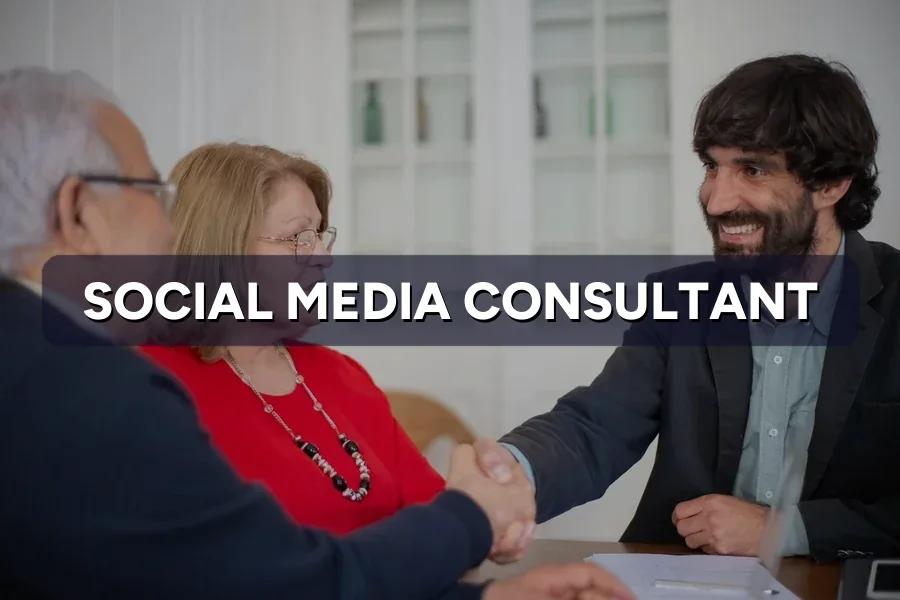
Search for a social media consultant in Malaysia and you land on two kinds of page. Freelance marketplaces list hourly rates with no context. Salary aggregators tell you what a consultant earns, which is a different question entirely from what one costs you.
Neither answers the thing an owner is actually weighing up: whether to buy advice at all, or skip straight to buying delivery.
That distinction is the whole decision. An agency posts, films, buys media and reports. A consultant looks at what you already have and tells you what to stop and what to change. Confusing the two is how a business ends up paying RM3,000 for a strategy deck when it needed someone to run the ads.
At ZenWeb, a Google Partner agency working with 500+ Malaysian businesses, we sit on both sides of this. We run social and paid social programmes, and we regularly get called in to review a plan someone else wrote. This guide covers what consultants charge in Malaysia, the five engagement models, what owners actually hire them to fix, and the honest test for when a consultant is the wrong purchase.
Before the rates, the short video below explains the pricing models consultants and freelancers use — useful background for reading any quote you receive.
Source video: Freelance Pricing Models Explained (retainer, hourly, project) on YouTube
Quick Answer: A social media consultant diagnoses and decides. They audit what you have, choose platforms, set the metric, design the content approach and write the plan. They rarely produce the posts, buy the media or reply to comments. Delivery is what a social media marketing agency is for.
The clearest way to think about it is by what you hold at the end. From a consultant you hold documents and decisions: an audit, a platform choice with reasons, content pillars, a measurement plan, sometimes a rate card to judge quotes against. From an agency you hold published work and campaigns running.
Consultants typically own these five things:
Notice how little of that is production. Set against the seven service lines in the full scope of social media marketing services, a consultant covers strategy and reporting well and touches almost nothing else. Our guide to the SEM consultant versus SEM agency question maps the same divide on the paid search side.
Not sure whether you need advice or delivery?
Fifteen minutes on your current setup is usually enough to tell. See how our Meta Ads and social team works →
Quick Answer: A social media consultant in Malaysia is usually bought in one of five shapes: a paid strategy session, a team workshop, a written audit and plan, a monthly advisory retainer, or a fractional lead. Fees run from around RM400 for a session to RM9,000 a month for two days of senior time.
Rates vary less by seniority than owners expect, and far more by how much of the consultant’s calendar you are booking. Here is the ladder as it is actually quoted in the Malaysian market.
| Engagement model | Typical Malaysian fee | What you hold afterwards | Suits |
|---|---|---|---|
| Strategy session (1–2 hours) | RM400–900 | Notes and two or three clear decisions | One specific stuck question |
| Half-day team workshop | RM1,200–2,500 | Shared pillars and a working calendar | Teams that disagree internally |
| Written audit + 90-day plan | RM2,500–6,000 | A document you can hand to any executor | Before hiring or switching agency |
| Monthly advisory retainer (4–8 hours) | RM1,800–4,500/month | Monthly review, decisions and course corrections | In-house team that needs steering |
| Fractional lead (2 days a month) | RM5,000–9,000/month | Someone accountable for the number | Growing teams without a senior marketer |
Source: Compiled by ZenWeb from advisory and consulting quotes observed across Malaysian SME accounts, 2024–2026. Indicative ranges, excluding ad spend and tool licences.
Ad spend and tool licences sit outside every one of these fees. The top of the ladder also overlaps with agency pricing, so past roughly RM5,000 a month, check the fair market rates for social media management in Malaysia before committing. A Google Ads consultant is priced the same way — by calendar time, not account size.
Quick Answer: Half of all advisory briefs come down to two complaints: paid social is spending without producing enquiries, or the page posts constantly and nothing converts. Platform choice, proposal reviews and team setup make up most of the rest. Almost nobody hires a consultant to grow followers.
Malaysia is not short of audience. DataReportal counted 30.7 million social media user identities in Malaysia in October 2025, around 85% of the population. When a business struggles on social, reach is almost never the constraint. The pattern below shows what owners actually put in the brief.
| Problem named in the brief | Share of briefs | % |
|---|---|---|
| Paid social spends but no enquiries | 27% | |
| Posting constantly, nothing converts | 23% | |
| Unsure which platform to drop | 16% | |
| Reviewing an agency proposal or result | 13% | |
| Setting up an in-house team or process | 11% | |
| Recovering after a reputation issue | 6% | |
| Preparing a launch or new market | 4% |
Source: Aggregated from ZenWeb-managed campaigns and advisory conversations, Malaysia, 2024–2026.
The top two rows look similar and need different work. “Spending without enquiries” is usually an offer or targeting problem, and a social media audit finds it in a day; “posting without converting” is more often a measurement problem, where the page is judged on likes instead of against Malaysian engagement benchmarks. The 6% recovering from a reputation issue are the cases where social listening earns its fee.
Quick Answer: Over six months, advisory-only is the cheapest route and the fastest to a first decision, but nothing happens unless your team executes. An agency costs more and produces output. An in-house hire costs most in the first six months once EPF, SOCSO and tools are counted.
A social media consultant is not really competing with an agency on price. The routes compete on who does the work, and how long you wait before anything changes.
| Route | 6-month cost (RM) | Who executes | First decision | What you hold at month 6 |
|---|---|---|---|---|
| Consultant, advisory only | 10,800–27,000 | Your existing team | 2–3 weeks | A plan, a scorecard, better-trained staff |
| Agency retainer | 15,000–36,000 | The agency | 4–6 weeks | Published output and live campaigns |
| In-house manager (loaded cost) | 27,000–39,000 | The new hire | 6–10 weeks | An employee and internal knowledge |
| Consultant plus junior executive | 24,000–34,000 | Junior, guided monthly | 3–5 weeks | A plan and a person executing it |
Illustrative six-month cost model built on ZenWeb operational data and prevailing Malaysian market rates, 2026. In-house figures include EPF, SOCSO and tool licences; all routes exclude ad spend.
The fourth row is the one most Malaysian SMEs under-consider. A consultant paired with a junior executive costs less than a senior in-house hire and moves faster, because the thinking arrives on day one instead of week ten. Our breakdown of hiring a social media manager versus an agency works through the same trade-off from the staffing side. A PPC agency is bought the same way: for execution capacity, not advice.
Weighing advice against a retainer?
We’ll price both honestly, including the cases where advice alone is enough. Compare what a full service scope includes →
Quick Answer: Consulting advice only pays when someone implements it. Where the owner executes alone, fewer than half the recommendations are live after six months. Where a dedicated executive or an agency executes, implementation reaches roughly 78% and 91% respectively over the same period.
This is the number nobody quotes you, and it decides whether a consulting fee was money well spent. Below is how the same 90-day plan gets implemented depending on who is holding it.
| Month | Owner executes alone | In-house executive | Agency executes |
|---|---|---|---|
| Month 1 | 18% | 26% | 41% |
| Month 2 | 29% | 44% | 63% |
| Month 3 | 36% | 58% | 76% |
| Month 4 | 40% | 67% | 84% |
| Month 5 | 43% | 73% | 88% |
| Month 6 | 45% | 78% | 91% |
Source: ZenWeb operational data, Malaysian SME accounts where an external plan was inherited, 2024–2026. Measured against the recommendation list in each plan.
The owner-executed line effectively stops by month four. What is left outstanding by then is the production work — filming, ad creative, landing pages — and that always loses to running the business. An Instagram marketing agency, a TikTok ads agency or a YouTube ads agency exists because that load does not fit around an owner’s week.
Quick Answer: Skip the consultant if you already know what to do, if nobody has hours to execute, if the real bottleneck is sales follow-up, or if your monthly ad budget is under roughly RM1,500. In those four cases advice adds a document, not revenue.
An honest guide has to include the cases where the purchase fails. These are the four we see most often.
The third case is the costliest to misdiagnose. When enquiries arrive and die, the fix is process, not strategy. Often the missing piece is content that answers questions before anyone asks, which is where a content marketing agency does more good than an advisor. The same logic holds in search: an SEO consultant beats a full agency only when someone in-house can act on the recommendations.
Quick Answer: Write the problem as one sentence, name the executor and their weekly hours, give read access to your accounts, fix the decision the engagement must produce, and require the output as a prioritised list rather than a deck. Five steps, done before the first meeting.
Most disappointing consulting engagements were badly briefed rather than badly delivered. Work through these in order.
Step five is the one that separates a usable engagement from an expensive PDF. If your consultant’s brief widens beyond social into search, ads and web, treat it as a different purchase — that scope belongs with a digital marketing consultant rather than a social specialist.
Quick Answer: Hiring a social media consultant in Malaysia is worth it when you have a real decision to make and someone with hours to act on the answer. Match the engagement size to the decision, name the executor first, and the fee stays small relative to what it saves.
The businesses that get value from a social media consultant are rarely the ones with the biggest budgets. They are the ones that arrived with a specific question, gave proper access, and had a named person waiting to execute the answer.
Still unsure which side of the line you sit on? That usually means the problem has not been written down yet. Write the sentence first, then talk to our Meta Ads and social media team — including about the cases where short advisory work serves you better than a retainer.
Expect RM400–900 for a one-off strategy session, RM1,200–2,500 for a half-day team workshop, RM2,500–6,000 for a written audit with a 90-day plan, and RM1,800–4,500 a month for ongoing advisory. Fractional leads booked for around two days a month sit at RM5,000–9,000. Ad spend and tool licences are always separate.
A consultant produces decisions and documents — audits, platform choices, measurement plans. An agency produces work — content, campaigns, community management and reporting. Consultants are bought by the hour or by the project. Agencies are bought by the month, sized to the volume of delivery you need.
It is worth it when you face a specific decision and have someone with real hours to implement the answer. It is not worth it when your team is already at capacity, or when monthly ad spend is under about RM1,500. In those situations the same money buys more as delivery or as testing budget.
Most useful engagements are short. An audit and 90-day plan takes two to four weeks. Advisory retainers work best reviewed at three months, then renewed only if decisions are still being made. Open-ended advisory without a decision to produce usually turns into an expensive monthly meeting.
Ask what decision the engagement will produce, what access they need, whether the output includes a prioritised action list with owners and dates, and who they expect to implement it. Also ask what they would do if the honest answer is that you do not need them — the reply tells you a lot.
Want a straight answer on advice versus delivery?
Book a free 30-minute strategy session — we’ll review your pages, your paid social account and your follow-up process, then tell you plainly whether you need a plan, a team, or neither yet.
Complete the form and our team will contact you to discuss your goals. Let’s grow your business.



Meowketing Specialist
Online