Share this post:
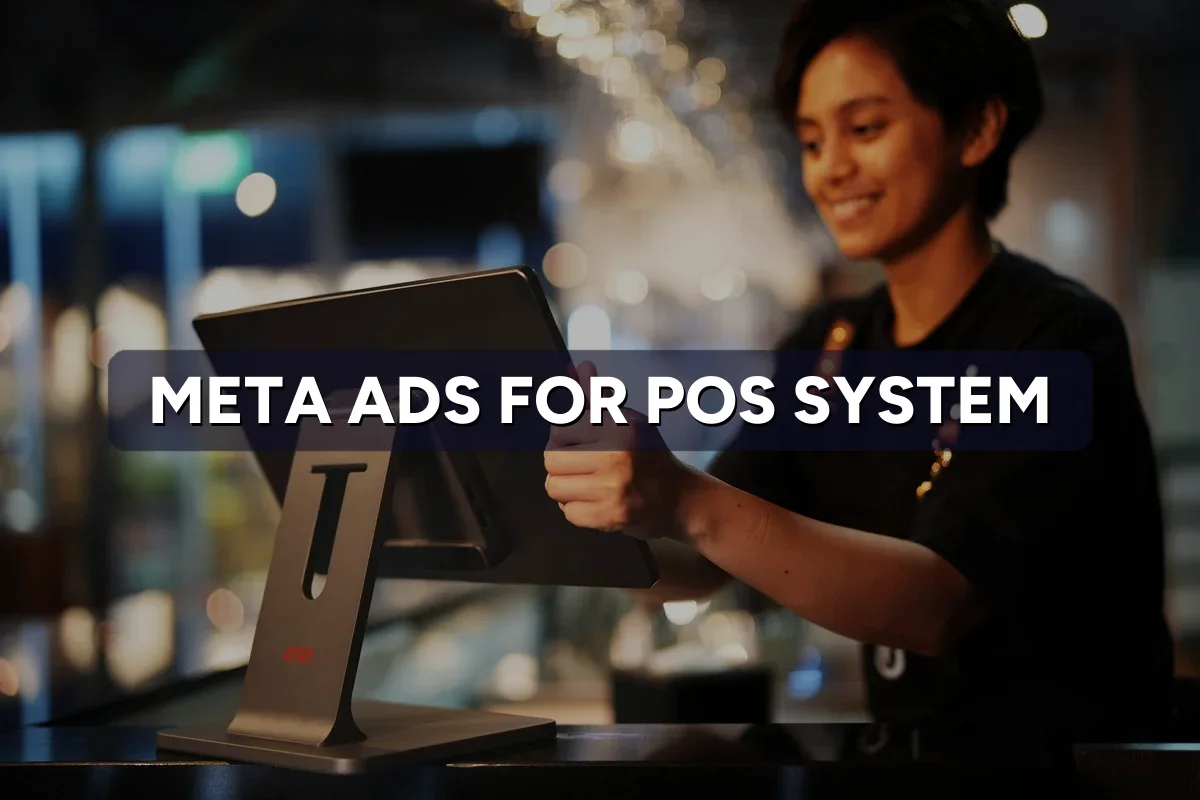
A Malaysian merchant does not wake up wanting a point-of-sale system. She wakes up frustrated that her F&B queue is slow, her stock count never matches, or her salon keeps losing walk-ins to no-shows. Meta Ads for POS system providers in Malaysia works when your ad speaks to that frustration first and names the software second. On Instagram and Facebook, a fifteen-second Reel of your POS ringing up a busy kopitiam counter does more than any spec sheet.
This guide is our 2026 Meta Ads playbook for POS vendors selling across F&B, retail, salon, and mart. It sits under our POS digital marketing guide and pairs with our POS Google Ads playbook. Across the sections below we cover funnel structure, creative that converts merchants, audience targeting, retargeting the buying cycle, the Conversions API, compliance, and four ZenWeb datasets — CPL by creative, channel contribution, spend-to-pipeline, and the Malaysian POS Meta CPL trend. The video below sets up the rest of this guide.
Want a free Meta Ads review of your POS account?
We audit your creative, audiences, and Conversions API setup in 30 minutes and show you where demo requests are leaking. See our Meta Ads service →
Source video: The NEW Way to Run Facebook Lead Gen Ads in 2025 on YouTube
Quick Answer: Meta Ads for POS system providers in Malaysia matters because merchants research on Instagram and Facebook long before they fill a demo form. With over 83% of Malaysians active on social media, Meta is where a cafe owner first sees your system in action and decides you are worth a call.
POS is a considered B2B purchase, but the discovery still happens on consumer platforms. A retail owner scrolling at 10pm is the same person who signs the merchant contract. Meta lets you reach her by vertical, location, and behaviour, then stay in front of her through the whole comparison window.
Malaysia’s digital reach makes this efficient. DataReportal’s Digital 2025 Malaysia report records 28.7 million social media user identities and 83.1% active usage, with Meta platforms dominating time spent. For a POS vendor, that means near-total coverage of F&B, retail, and services owners at a cost per lead most B2B channels cannot match.
Quick Answer: POS Meta Ads sells a business tool, not an impulse buy, so the funnel is longer and the lead must be qualified. You optimise for demo requests from real business owners, not cheap form fills, and you accept a higher cost per lead in exchange for merchant lifetime value.
Consumer lead gen chases volume. POS lead gen chases fit. A RM 15 lead that never runs a shop is worthless; a RM 60 lead who owns three cafes is gold. That changes how you write ads, what you ask on the form, and how patiently you retarget.
Quick Answer: Run three stages on Meta: awareness Reels that show the POS solving a vertical problem, consideration ads that carry proof and pricing, and a demo-booking layer that captures the enquiry. Budget roughly 40% awareness, 35% consideration, 25% conversion.
Each stage has one job. Awareness earns attention with a real-use Reel. Consideration answers “why you” with proof and a clear offer. Conversion makes booking a demo effortless through a lead form or WhatsApp.
Keep the audiences separate so budget flows to what works. Awareness feeds consideration; consideration feeds retargeting; retargeting closes.
Not sure how much to budget across the funnel?
See transparent Meta Ads packages built for Malaysian SMEs before you commit spend. View our Meta Ads pricing →
Quick Answer: Reels of the POS in real use win for POS system providers in Malaysia. Show the screen, the receipt, the queue moving, and a real owner talking. Static feature graphics underperform because merchants want proof it works in a shop like theirs.
The best-performing POS creatives are unpolished and specific. A phone-shot clip of a busy F&B counter beats a studio render every time. Match the vertical to the viewer.
Quick Answer: Target by business vertical and owner behaviour, then let lookalikes scale. Layer small-business-owner interests with F&B, retail, or salon signals, and build lookalikes from your best past merchants and demo bookers for the cheapest qualified reach.
Meta’s broad targeting works once the pixel has data, but at the start you steer it. Keep audiences named clearly so you know what is spending.
Quick Answer: Malaysian merchants compare POS systems for three to eight weeks, so retargeting is the highest-ROI layer. Serve proof, pricing clarity, and objection-handling ads to video viewers and page visitors across a 60-day window until they book.
Most demo requests come on the third or fourth touch, not the first. Build retargeting tiers by intent and match the message to the stage.
Quick Answer: Use both and split-test. Instant lead forms capture volume and qualify with questions; WhatsApp click-to-chat wins with Malaysian merchants who prefer to message. Route WhatsApp leads to a fast human reply, because speed to first response decides the demo.
WhatsApp is the default business channel in Malaysia, so many owners will only ever message. But lead forms let you ask qualifying questions up front. The right answer is usually to run both and see which books better demos per Ringgit.
Quick Answer: Install the Meta Pixel and the Conversions API together so signal survives browser tracking loss. Track four events — lead submitted, demo booked, qualified by sales, and merchant activated — and feed the deeper events back so Meta optimises for buyers, not clicks.
Browser-only tracking now misses a large share of conversions. The Conversions API sends server-side events that recover that signal, which matters when each demo is worth thousands in merchant lifetime value.
Quick Answer: Handle personal data under Malaysia’s PDPA, keep e-invoicing and LHDN claims accurate, and follow Meta’s business-practices policy. Say your POS “supports LHDN e-invoicing”, not that it “guarantees compliance”, and store lead data with consent.
POS vendors ride real demand from Malaysia’s e-invoicing rollout, but overclaiming is both a policy and a trust risk. Keep the language specific and defensible.
Quick Answer: Across ZenWeb-managed POS campaigns, Reels deliver the lowest cost per lead and static feature posts the highest. F&B and salon verticals convert cheapest; enterprise retail chains cost the most per lead but carry the highest merchant value.
| Creative format | F&B | Retail | Salon | Mart |
|---|---|---|---|---|
| Real-use Reel | RM 24 | RM 33 | RM 27 | RM 31 |
| Testimonial video | RM 29 | RM 38 | RM 32 | RM 36 |
| Before/after carousel | RM 35 | RM 46 | RM 40 | RM 44 |
| Static feature post | RM 52 | RM 68 | RM 58 | RM 63 |
Source: ZenWeb operational data, POS-vendor Meta campaigns under management, Malaysia, 2024–2026. Figures are blended CPL ranges for warm demo-request leads.
Quick Answer: Meta creates demand and Google captures it. For POS vendors, Meta drives the bulk of awareness and mid-funnel interest, while Google Search closes the high-intent “POS system Malaysia” queries. Running both beats either alone.
| Funnel stage | Meta Ads | Google Ads |
|---|---|---|
| Awareness | 78% | 22% |
| Consideration | 61% | 39% |
| High-intent / booking | 34% | 66% |
Source: ZenWeb operational data, blended across POS-vendor accounts running both channels, Malaysia, 2024–2026.
Quick Answer: Meta Ads for POS system providers in Malaysia scales predictably to a point. At RM 3,000 per month expect roughly 55–75 warm demo requests; by RM 15,000 the volume grows but cost per lead creeps up as you exhaust the cheapest audiences.
| Monthly spend | Warm demo requests | Count |
|---|---|---|
| RM 3,000 | 55–75 | |
| RM 6,000 | 110–140 | |
| RM 10,000 | 175–215 | |
| RM 15,000 | 240–300 |
Illustrative scenario modelled on ZenWeb POS-campaign CPL ranges, Malaysia, 2026. Actual results vary with creative, vertical, and follow-up speed.
Quick Answer: Cost per lead on Meta has risen steadily as competition and CPMs climb, but Reels and the Conversions API have softened the increase. Expect continued upward pressure through 2027, which makes creative quality and signal accuracy the deciding factors.
| 2022 | 2023 | 2024 | 2025 | 2026 | 2027* |
|---|---|---|---|---|---|
| RM 26 | RM 31 | RM 36 | RM 41 | RM 45 | RM 50* |
Source: ZenWeb operational data, POS-vendor Meta accounts, Malaysia, 2022–2026. *2027 is a projection based on the prevailing CPM trend.
Quick Answer: The biggest mistakes are selling features instead of outcomes, using one creative for every vertical, optimising for cheap leads instead of demos, and replying to enquiries too slowly. Fix these four and cost per qualified demo usually drops within a month.
Quick Answer: Shoot five real-use Reels per vertical, wire up the Conversions API to optimise for demos booked, and build a 60-day retargeting layer. Those three moves give Meta Ads for POS system providers in Malaysia its best chance to book qualified merchant demos.
You do not need a bigger budget to win on Meta — you need sharper creative, cleaner signal, and patience through the buying cycle. Start with the three moves above and let the pixel compound.
Ready to grow your POS business?
Book a free 30-minute strategy session — we’ll review your Meta account, your creative, and your competitors, then give you a concrete 90-day plan with realistic CPL and demo-pipeline targets.
Start at RM 3,000–RM 6,000 per month. That is enough to run a three-stage funnel with a five-creative weekly cadence and gather pixel data. Scale once your sales team can handle the demo volume and your cost per qualified demo is stable.
Warm demo requests typically cost RM 22–RM 60 depending on vertical and creative, with Reels cheapest and static posts dearest. Enterprise retail-chain leads can exceed RM 120 but carry far higher merchant lifetime value.
Run both. Lead forms qualify at scale with outlet-count and vertical questions; WhatsApp click-to-chat suits Malaysian merchants who prefer to message. The deciding factor is reply speed — answer within minutes to win the demo.
Expect the first demos within two to three weeks, but the channel compounds. Because merchants compare systems for three to eight weeks, the strongest results come from month two onward once retargeting is live.
They do different jobs. Meta creates demand and mid-funnel interest; Google captures high-intent searches. Vendors who run both book more demos per Ringgit than either channel alone — see our POS Google Ads playbook.
Complete the form and our team will contact you to discuss your goals. Let’s grow your business.



Online