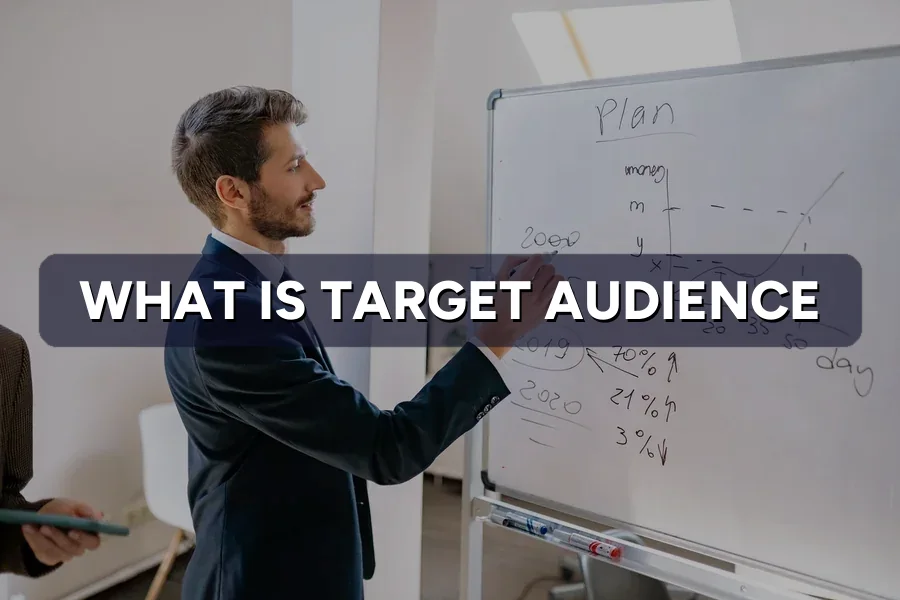
Most Malaysian business owners want “more customers”. The natural instinct is to reach as many people as possible. Yet the opposite move — narrowing down to one clear group — almost always brings more sales for less money.
This guide explains what a target audience is, in plain language. We separate it from two terms it gets mixed up with, show the four ways to describe one, and use real numbers to prove why a defined audience beats casting a wide net. No theory, no jargon.
The short video below from marketing strategist Adam Erhart sets the idea up in a few minutes. After that, we break it down step by step.
Source video: Adam Erhart on YouTube
Quick Answer: A target audience is the specific group of people your marketing is meant to reach — the ones most likely to want, afford, and buy what you offer. Instead of selling to “everyone”, you point your budget, message, and channels at the people who actually become customers.
A target audience is not everyone who could possibly buy from you. It is the slice worth paying to reach. Picture a café in Petaling Jaya that sells premium single-origin coffee at RM18 a cup. Its audience is not “all coffee drinkers”. It is office workers and students nearby who care about quality and can pay for it. Aiming at everyone produces bland marketing that moves no one.
A clear audience answers three simple questions: who these people are, what they really want, and where you can reach them. Once you can answer those, the rest of your digital marketing gets sharper and cheaper. It is the same foundation the team at ZenWeb sets before any campaign.
Not sure who you’re really selling to?
We help Malaysian SMEs pin down the audience that actually converts, then build around it. See how our digital marketing team works →
Quick Answer: A target market is the broad pool of people who might buy. A target audience is the narrower group you aim a specific campaign at. A buyer persona is one detailed, named character that represents that audience. They zoom in from wide, to focused, to a single face.
These three terms get used as if they mean the same thing, which is where the confusion starts. Keeping them apart makes everything else click:
| Term | What it means | Example |
|---|---|---|
| Target market | The whole pool that could buy | Malaysians who eat out |
| Target audience | The focused group for one campaign | Young families in Shah Alam wanting halal weekend brunch |
| Buyer persona | One named character for that audience | “Aishah, 34, mum of two, books on Instagram” |
The simplest way to remember it: the target market is the crowd, the audience is the row you speak to, and the buyer persona is one person in that row. The same focus underpins your whole branding — you cannot sound like “you” to people you have not defined.
Quick Answer: You describe an audience across four lenses: demographic (who they are), geographic (where they are), psychographic (what they value), and behavioural (how they act). Strong audiences are defined on all four, not just age and location, because values and behaviour predict buying far better.
Most businesses stop at “women, 25 to 40, KL”. That is a start, but it is thin. Layer in all four lenses and the picture sharpens fast:
| Lens | What it covers | Example |
|---|---|---|
| Demographic | Age, gender, income, job, family | Working mums, 30s, mid-income |
| Geographic | Where they live and shop | Klang Valley, urban |
| Psychographic | Values, interests, lifestyle | Health-conscious, time-poor |
| Behavioural | Buying habits, app use, loyalty | Shops on weekends via Instagram |
The last two lenses do the heavy lifting. Two people can share the same age and postcode yet buy completely differently. Working through all four is one of the basics we cover in our digital marketing guide for Malaysian beginners.
Quick Answer: Reaching “everyone” feels safe but performs worst. When the same budget runs against a defined audience instead of a broad one, click-through rates and conversions rise sharply while the cost per lead drops by more than half. Vague targeting is not cheaper — it just hides the waste.
Here is the same RM5,000 campaign run two ways: once at a broad “reach everyone” audience, once at a tightly defined one.
| Metric | Broad “everyone” | Defined audience |
|---|---|---|
| Click-through rate | 0.9% | 2.4% |
| Landing-page conversion | 1.6% | 4.3% |
| Cost per lead | RM92 | RM38 |
Based on ZenWeb operational data across 500+ Malaysian SME campaigns, 2024–2026. Illustrative of the broad-vs-defined pattern.
Same money, less than half the cost per lead. The broad campaign was not “reaching more people” in any useful way — it was paying to show ads to people who were never going to buy. A defined audience simply stops that leak.
Paying too much per lead?
Sharper targeting is usually the fastest fix. Compare our digital marketing services →
Quick Answer: Targeting works like a ladder. Start with location, then add age and gender, then interests, then behaviour and remarketing. Each rung filters out poorer-fit people, so conversion climbs at every step. The biggest jump usually comes from behavioural data — what people have already done.
You do not have to define an audience perfectly on day one. You layer signals and watch conversion improve with each rung:
| Targeting layer | Conversion | |
|---|---|---|
| Location only | 1.8% | |
| + Age & gender | 2.6% | |
| + Interests & needs | 3.5% | |
| + Behaviour & remarketing | 4.8% |
Illustrative model based on typical Malaysian SME campaign patterns, 2024–2026.
The platforms make this easy. The same layering logic sits behind how Google Ads works, where audience signals decide who sees your ad and what you pay for the click.
Quick Answer: Defining your audience is only half the job — you also need to know where to find them. Malaysia is almost entirely online, with 34.9 million internet users at the start of 2025. But each platform reaches a different crowd, so your channel choice should follow your audience, not the other way round.
Malaysia had 34.9 million internet users and 25.1 million social media identities in early 2025, per DataReportal. Here is roughly how many people each major platform reached:
| Platform | Users (m) | |
|---|---|---|
| YouTube | 25.1 | |
| 23.1 | ||
| TikTok (18+) | 19.3 | |
| 15.5 | ||
| 9.1 |
Source: DataReportal, Digital 2025: Malaysia. TikTok figure is users aged 18+.
Reach is not the same as fit. LinkedIn is smaller, but for a B2B service it may hold more of your real buyers than TikTok’s larger crowd. Match the platform to the audience — that is exactly how we pick channels in a Facebook ads campaign for Malaysian businesses.
Quick Answer: A defined audience pays off more each month. As the platform learns who converts and you feed it cleaner signals, the cost per lead keeps falling. A broad audience stays stuck near the same high cost because it never learns who your real buyer is.
This is the gap most owners never see, because they only run one version. Tracked over six months, a defined audience and a broad one drift far apart:
| Month | Defined audience | Broad audience |
|---|---|---|
| Month 1 | RM68 | RM95 |
| Month 2 | RM57 | RM93 |
| Month 3 | RM47 | RM92 |
| Month 4 | RM39 | RM94 |
| Month 5 | RM33 | RM93 |
| Month 6 | RM29 | RM95 |
ZenWeb operational data, 500+ Malaysian SME campaigns, 2024–2026. A guide, not a guarantee.
By month six, the defined audience cost less than a third per lead of the broad one — for the same product and budget.
That widening gap is the real argument for the work. A defined audience turns your ad account into an asset that gets cheaper to run, while a broad one keeps paying full price forever.
Want leads that get cheaper, not pricier?
Start with the basics of audience-led marketing for Malaysian SMEs. Read our beginner’s marketing guide →
Quick Answer: Your target audience is the decision that sets up every other one. It shapes your message, your visual style, your website design, your content, and your channels. Skip it and each of those choices becomes a guess — which is why vague audiences lead to scattered, forgettable marketing.
Once you know exactly who you are speaking to, the downstream choices almost make themselves:
Quick Answer: To find them, study who already buys from you, talk to a few real customers, check your data and competitors, write it up as one buyer persona, then test and refine. You do not guess it once — you sharpen it as evidence comes in.
You do not need a big research budget. You need to look honestly at who already pays you, then tighten from there:
Quick Answer: The usual mistakes are defining the audience too broadly, basing it on who you wish bought from you rather than who does, and setting it once then never updating it. Each one quietly drags down your conversions and pushes your cost per lead back up.
Most weak targeting is not one big error. It is a few common slips repeated:
A target audience is simply the focused group of people most likely to buy what you sell, described across who they are, where they are, what they value, and how they act. It is the first real decision in marketing, and it sets up every choice that follows — your message, your design, your content, and your channels.
The numbers back it up: a defined audience can more than halve your cost per lead, and that gap only widens over time. For a Malaysian SME, narrowing down is not a limit — it is how you get more sales from the same budget. When you want help defining yours and building around it, the team at ZenWeb’s digital marketing agency is ready to help.
A target audience is the specific group of people your marketing is meant to reach — the ones most likely to want, afford, and buy what you offer. Instead of trying to sell to everyone, you focus your message, budget, and channels on the people who actually become customers.
A target market is the broad pool of people who could buy from you. A target audience is the narrower group you aim a specific campaign or message at. Think of the target market as the whole crowd and the target audience as the row you actually speak to.
Start with who already buys from you. Look at your best customers, talk to a few of them, and check your website and ad data for patterns in age, location, interests, and behaviour. Turn that pattern into one buyer persona, then refine it as real campaign results come in.
Yes. Many businesses serve two or three distinct audiences — for example, a gym targeting young professionals and retirees separately. The key is to define each one clearly and speak to them with different messages, rather than blurring them into a single vague “everyone”.
Because it makes every other marketing decision easier and cheaper. A defined audience can more than halve your cost per lead on the same budget, lift conversions, and sharpen your message. Without one, your marketing spreads thin and pays to reach people who will never buy.
Ready to reach the right customers?
Book a free 30-minute strategy session. We’ll help you define your target audience, pick the right channels, and map a 90-day plan with realistic cost-per-lead targets for your business.
Complete the form and our team will contact you to discuss your goals. Let’s grow your business.



Meowketing Specialist
Online